Industry Briefing
A single destination for timely, editor-curated robotics news from around the world.
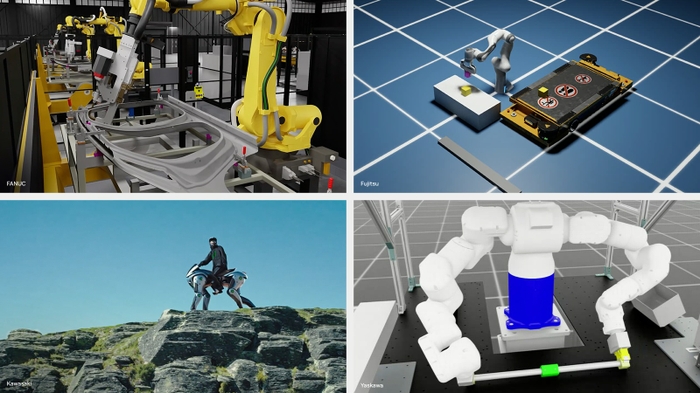
Japan's Leaders in Robotics and Manufacturing Leverage NVIDIA Cosmos for Physical AI Advancements
NVIDIA has announced that Japan's leaders in physical AI are utilizing the NVIDIA Cosmos™, Isaac™, Metropolis, and Jetson™ platforms to enhance the deployment of intelligent machines across various sectors including manufacturing and robotics. The introduction of Cosmos 3 Edge aims to provide advanced capabilities for real-time reasoning and action prediction in robots, marking a significant step in integrating intelligence into physical systems. This initiative is crucial as Japan's established strengths in robotics and manufacturing position it to lead in the next wave of AI development. Jensen Huang, NVIDIA's CEO, emphasized the unique opportunity for Japan to reinvent modern manufacturing through intelligent technologies, combining its heritage in precision engineering with NVIDIA's advanced platforms. Looking ahead, NVIDIA is expanding the Cosmos Coalition to include Japan's physical AI leaders, enabling collaboration on open world models. This coalition will facilitate the testing and optimization of physical AI systems, potentially transforming operations across various industries such as logistics, healthcare, and construction. No further timeline was disclosed at the time of publication.
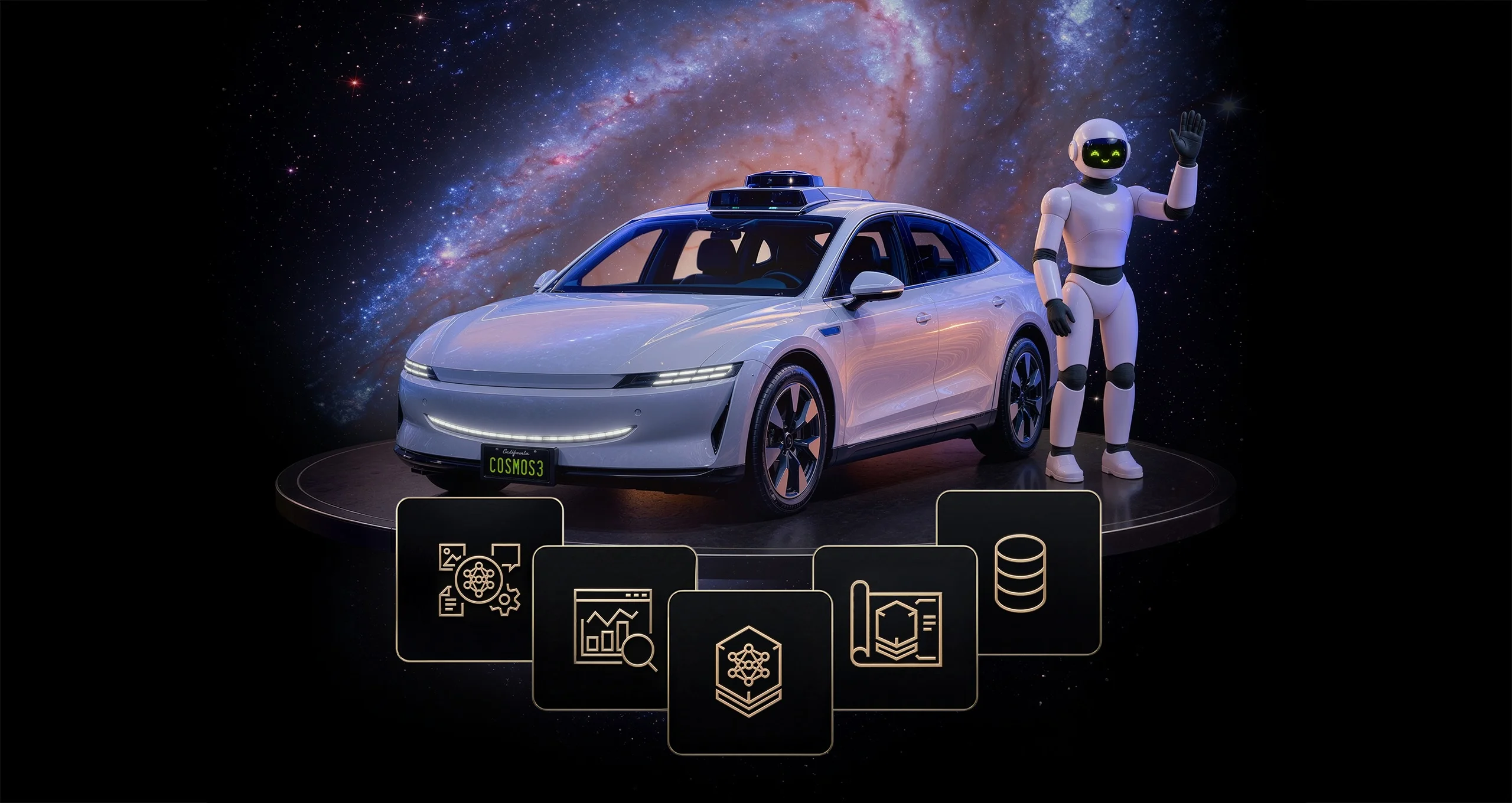
NVIDIA Launches Cosmos 3 to Advance World Action Models in Robotics
At COMPUTEX in Taipei, NVIDIA unveiled Cosmos 3, a groundbreaking open world foundation model designed to integrate vision reasoning, physical simulation, and action prediction. This launch represents a significant shift in the robotics industry, moving from language-centric frameworks to video-first World Action Models (WAMs), as emphasized by Jim Fan, NVIDIA’s Lead of Embodied Autonomous Research. Cosmos 3 addresses the critical challenge of physical AI by enabling robots and autonomous vehicles to operate effectively in unstructured environments with limited training data. The model employs a mixture-of-transformers architecture that combines reasoning and generation blocks, allowing for accurate outputs in various formats, including numerical action data essential for complex robotic tasks. As NVIDIA releases Cosmos 3 across three tiers, developers can customize the model to suit specific applications. The model has already demonstrated its capabilities by topping leaderboards in simulated environments, indicating its potential to redefine standards in robotics and AI applications. No further timeline was disclosed at the time of publication.
NVIDIA WAM Cosmos world-model
Lucid Motors Delays Launch of Affordable Cosmos EV to Late 2027
Lucid Motors has postponed the release of its affordable electric vehicle, the Cosmos, to the second half of 2027. This decision comes as part of new CEO Silvio Napoli's strategy to address quality issues that have plagued the company’s existing models. The delay aims to ensure that the Cosmos meets the high standards expected by consumers. This postponement is significant as it reflects Lucid's ongoing struggles to establish a broader customer base beyond its niche market. Napoli acknowledged the company's past failures in execution and product readiness, emphasizing the need for a more disciplined approach to avoid repeating previous mistakes. The Cosmos was anticipated to be a key model in Lucid's lineup, built on a new platform designed to lower production costs and attract more buyers. Looking ahead, the delay of the Cosmos may impact customer expectations and the company's supply chain. While Napoli's cautious approach aims to improve product quality, it also raises concerns about Lucid's ability to regain momentum in a competitive EV market. No further timeline was disclosed at the time of publication.
Transportation electric vehicles EVs Lucid Motors
Nvidia Launches Cosmos 3 Edge AI Model and Expands Physical AI Ecosystem in Japan
Nvidia has introduced its new AI model, Cosmos 3 Edge, aimed at enhancing physical AI applications in Japan. This model is designed to help systems perceive and navigate real-world environments, marking a significant step in Nvidia's strategy to penetrate the physical AI market. The expansion is part of CEO Jensen Huang's visit to Japan, where Nvidia is forming partnerships with local industrial leaders such as Fujitsu, Hitachi, and Kawasaki Heavy Industries. Huang emphasized the potential for Japan to reinvent its manufacturing sector for intelligent industries, highlighting the country's historical significance in modern manufacturing. Looking ahead, Nvidia is also targeting Japan's healthcare and biotechnology sectors, collaborating on initiatives like the Tokyo-1 AI drug discovery consortium. With Japan's AI market projected to reach $27.9 billion by 2029, Nvidia's efforts could significantly influence the landscape of AI adoption in the region. No further timeline was disclosed at the time of publication.

Japan's Leading Robot Manufacturers Collaborate with Nvidia on AI-Enabled Hardware
Nvidia Corp. has announced an expanded collaboration with four prominent Japanese industrial automation companies to enhance robot development. This partnership aims to support Jensen Huang's initiative to advance AI-enabled hardware in the robotics sector. The collaboration is significant as it underscores the growing importance of integrating AI capabilities into robotics, which can lead to more efficient and intelligent automation solutions. By leveraging Nvidia's expertise in AI, these Japanese companies are positioning themselves to remain competitive in the rapidly evolving industrial landscape. Looking ahead, it will be crucial to monitor the outcomes of this collaboration and how it influences the development of AI-driven robotic technologies. No further timeline was disclosed at the time of publication.
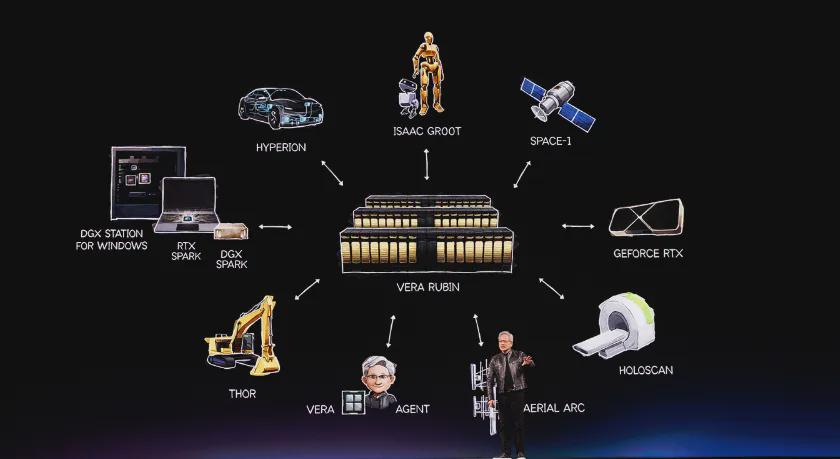
NVIDIA's Cosmos Ecosystem: A Paradigm Shift in Physical AI and Robotics
NVIDIA has unveiled its latest innovation, Cosmos 3, which represents a major leap forward in physical AI technology. This new system redefines computational infrastructure's role in the fields of robotics and autonomous driving. By utilizing a hybrid Transformer architecture, Cosmos 3 enhances capabilities in world modeling and action generation, effectively tackling issues related to data gaps and simulation accuracy. This advancement positions NVIDIA as a pivotal force in shaping the future of robotics, underscoring its commitment to driving innovation in this rapidly evolving sector.
Physical AI Robotics Simulation NVIDIA Machine Learning
How Cosmos 3 Helps Physical AI Think Before It Acts
NVIDIA has introduced a new Factory Operations Blueprint aimed at transforming traditional manufacturing processes by integrating artificial intelligence across entire plants. This initiative comes as manufacturers seek to evolve from isolated automation systems to a more cohesive plant-wide intelligence framework. The blueprint enables factories to connect real-time machine signals, quality control systems, work instructions, and operational alerts, facilitating unified decision-making. By leveraging AI, manufacturers can enhance efficiency, improve product quality, and respond more effectively to operational challenges. This development marks a significant shift in how factories operate, emphasizing the importance of interconnected systems in modern manufacturing.
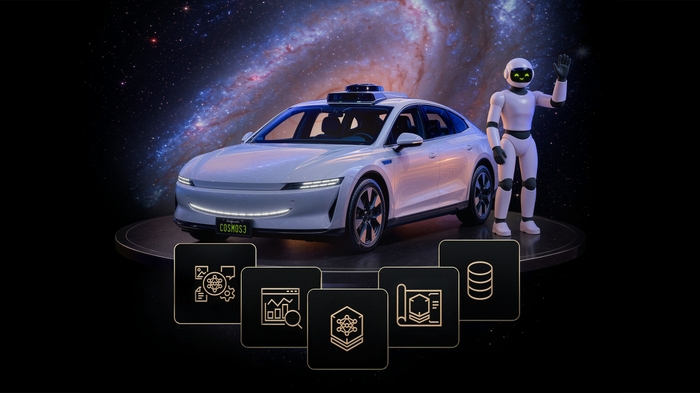
NVIDIA Launches Cosmos 3, the Open Frontier Foundation Model for Physical AI
NVIDIA has unveiled its latest innovation, the NVIDIA Cosmos™ 3, a groundbreaking open world foundation model designed for physical AI. This advanced system integrates a mixture-of-transformers architecture that seamlessly combines vision reasoning, world generation, and action prediction into one cohesive platform. The launch, which took place today, marks a significant step forward in the development of artificial intelligence, aiming to enhance the capabilities of AI in understanding and interacting with the physical world. By leveraging this sophisticated technology, NVIDIA seeks to push the boundaries of AI applications across various industries, paving the way for more intelligent and responsive systems.
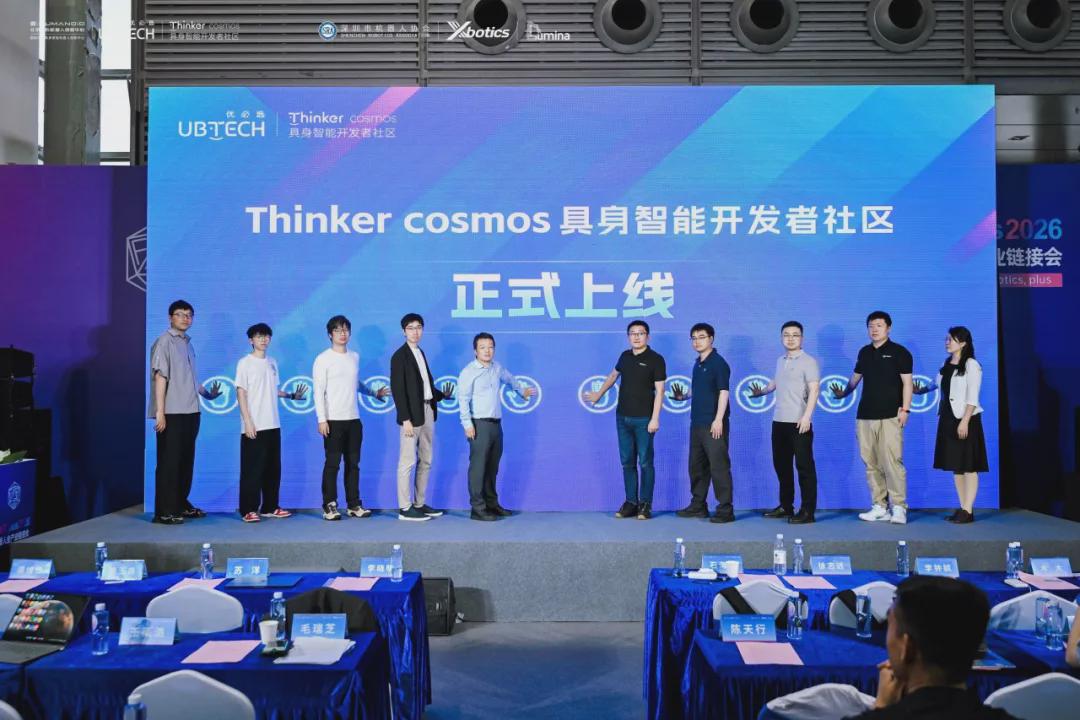
UBTECH Launches Thinker Cosmos: Enhancing Developer Ecosystem to Drive Humanoid Robots Towards Scalability
At the FAIR plus 2026 robotics conference, UBTECH introduced the Thinker Cosmos developer community, designed to enhance collaboration within the humanoid robotics industry. This new platform provides a robust resource-sharing environment for developers, encouraging innovation and tackling significant challenges related to technology application and scalability. By fostering a collaborative space, UBTECH aims to drive advancements in humanoid robotics and support developers in overcoming obstacles in the field.
Humanoid Robots Developer Ecosystem Robotics Innovation AI Open SourceRobotics needs a service framework.
RSF defines a common language for robot service capability, lifecycle operations, certification pathways, and service-provider networks.
Join the RobotToday community on LinkedIn
Daily robotics news, in-depth analysis, conference highlights, and discussions with professionals worldwide.