

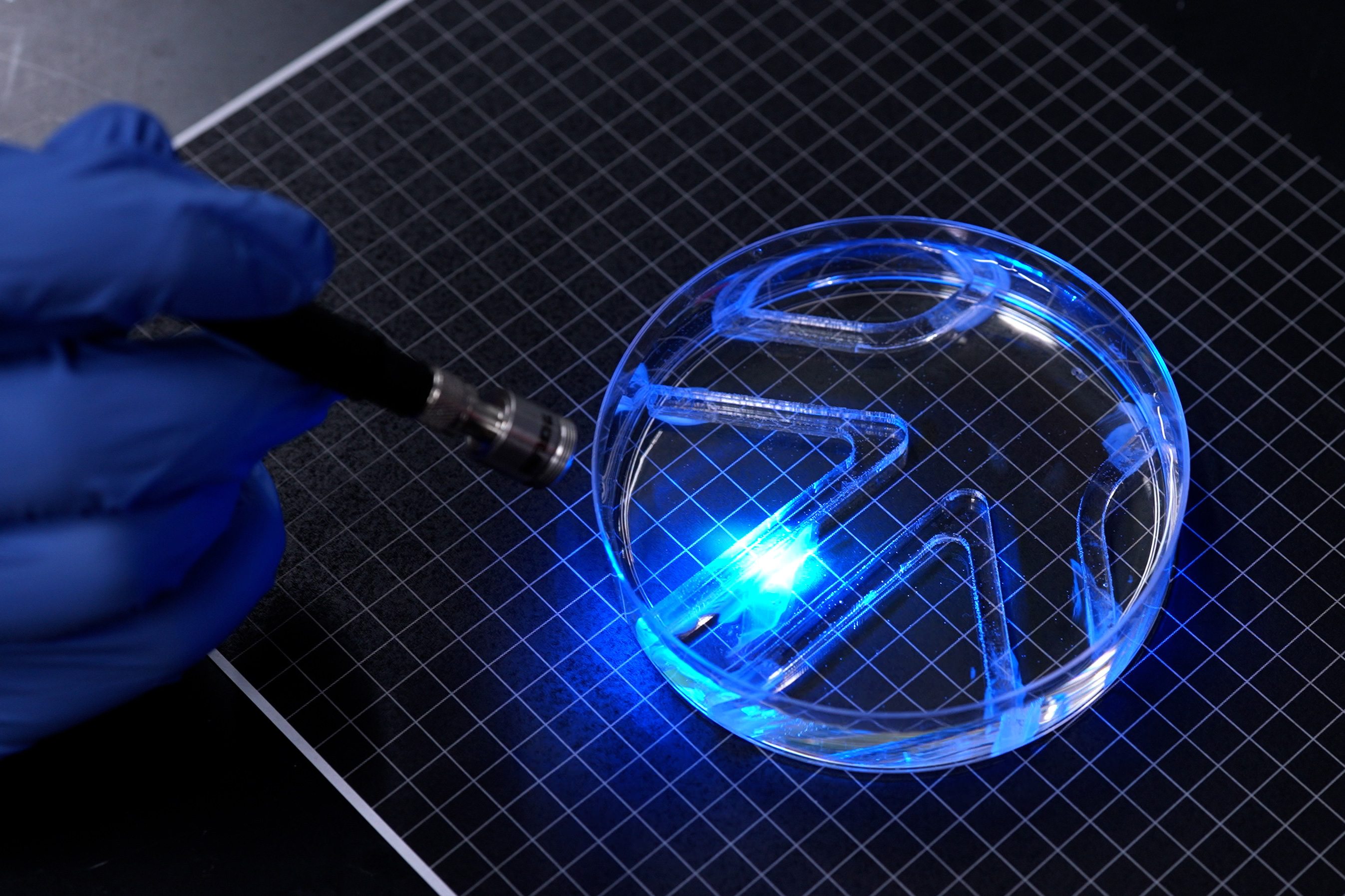
MIT engineers have unveiled a groundbreaking design for a paper-thin, muscle-powered swimming robot, as detailed in the journal Advanced Functional Materials. This innovative aquabot features a gel film skeleton and live muscle cells that respond to light, enabling it to swim through water by flapping its fins. The robot can swim a distance of about four times its body length in one minute, showcasing its potential for efficient movement.
The significance of this development lies in its potential applications for biohybrid robots, which could perform delicate tasks in environments unsuitable for traditional hardware. The design is less bulky than previous models, making it cheaper to produce and more efficient in movement. The research highlights the advantages of using living muscle tissue, which is soft, responsive, and capable of self-healing, in robotic applications.
Looking ahead, the team aims to further optimize the muscle movements and skeleton design to enhance the robot's capabilities. The study's findings could pave the way for future advancements in biohybrid robotics, expanding their use in various fields where conventional robots may struggle.
Editor's Note
The development of muscle-powered robots represents a significant advancement in biohybrid technology, offering new possibilities for robotics in sensitive environments. As the industry moves towards more adaptable and efficient robotic solutions, this innovation could lead to increased investment and research in biohybrid systems, particularly in applications requiring delicate handling and responsiveness.






























Leave a comment