

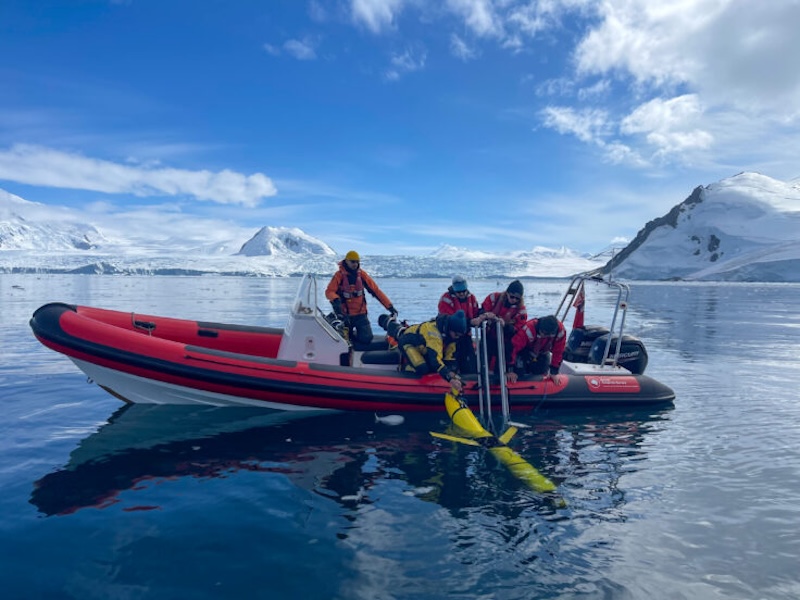
The British Antarctic Survey reports that autonomous vehicles are significantly transforming polar science. These robots operate beneath Antarctic sea ice, on Greenland glaciers, and in remote areas, gathering crucial data without human operators. Their deployment allows scientists to explore dangerous and inaccessible environments, enhancing research on glaciers, oceans, wildlife, and climate processes.
The importance of these autonomous robots lies in their ability to monitor and collect data over extended periods, which was previously unimaginable. Dr. Alex Brearley from the British Antarctic Survey highlights the convenience of controlling these gliders remotely from Cambridge while they operate thousands of miles away in Antarctica. This technology enables researchers to gain insights into complex phenomena like internal tsunamis caused by glacier ice calving.
Looking ahead, the continued integration of autonomous vehicles in polar research will likely expand the scope and depth of scientific exploration in these extreme environments. No further timeline was disclosed at the time of publication.
Editor's Note
The adoption of autonomous robots in polar research signifies a pivotal shift in how scientists gather data in extreme environments. This technology not only enhances the efficiency of data collection but also mitigates risks associated with human presence in hazardous locations. As the capabilities of these robots evolve, they will play an increasingly critical role in understanding climate change and its impacts on polar regions.
































Leave a comment