


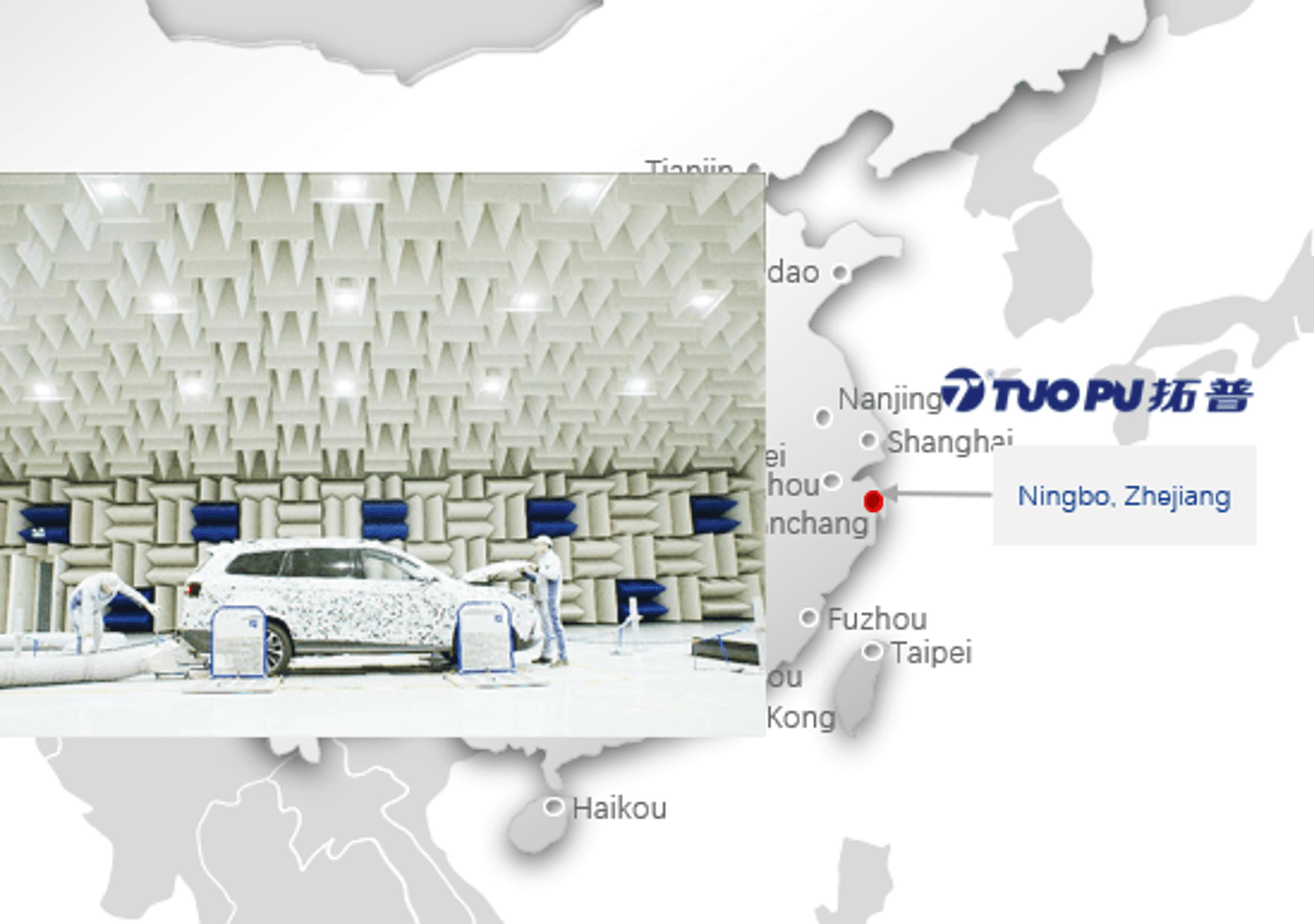
Ningbo Tuopu Group has evolved from a traditional NVH and chassis supplier into one of the most strategically positioned companies within Tesla’s next-generation humanoid robot ecosystem. Founded in 1983 and now a global top-100 auto parts supplier with more than 22,000 employees and over 90 factories worldwide, Tuopu generated approximately RMB 26.5 billion in revenue and RMB 3.0 billion in net profit in 2024. Its market capitalization—around USD 15 billion—reflects growing investor conviction that Tuopu is transitioning from an EV supplier into a humanoid-era component integrator.
Tuopu’s deep relationship with Tesla began in 2016, when it won its first nomination for Model 3 lightweight chassis components. As Tesla’s global deliveries expanded, Tuopu’s product content per vehicle rose steadily—from NVH and chassis components to thermal management, interior systems, air suspension and electronics. By 2023, Tesla contributed an estimated 40% of Tuopu’s revenue, making it the company’s largest and most influential customer.
Over the past two years, Tuopu has quietly entered the humanoid robotics space by extending its electric drive business into robotic linear actuators, rotary actuators and integrated joint modules. Several independent sources—including Wallstreetcn, Tianfeng Securities and industry platforms—indicate that Tuopu has shipped multiple rounds of actuator samples to a major customer widely believed to be Tesla’s Optimus program. Tuopu itself has disclosed that its robot actuators have been “delivered and recognized by customers multiple times,” though without naming Tesla.
Unlike typical robotics suppliers, Tuopu brings a powerful combination of automotive-scale manufacturing, system-level integration and global logistics. The company already operates production centers in China, Poland, Mexico, Malaysia and Brazil—mirroring Tesla’s global footprint. This is critical because Tesla’s long-term humanoid strategy requires a supplier capable of producing hundreds of thousands of actuators per year, with automotive-grade reliability, precision and cost structure. Tuopu’s existing chassis machining lines, NVH expertise, and e-drive platform make it uniquely capable of transitioning into high-volume humanoid joint production.
Tuopu’s robot business is backed by real capital expenditures: as of early 2025, two electric-drive actuator production lines were already operational with a combined capacity of 300,000 sets per year, while a large robotics factory in Thailand—covering roughly 150,000 m²—is expected to support up to RMB 10 billion in annual output once fully ramped. These investments align with the broader industry expectation that Tesla’s Optimus Gen3 will enter accelerated production in 2026–2027, creating a multi-year window of opportunity for Tier-0.5 actuator suppliers.
However, the opportunity comes with risks. Tuopu remains heavily dependent on Tesla, and no official confirmation has been made regarding Optimus. Customer concentration, potential in-sourcing by Tesla, quality ramp challenges and global regulatory exposure all introduce uncertainty. Nonetheless, Tuopu stands out as one of the few companies with the scale, engineering depth and global manufacturing footprint to support Tesla’s humanoid ambitions at industrial volume.
For RobotToday readers tracking Tesla’s supply chain transition from EVs to humanoids, Tuopu is a critical company to watch. It is not yet an officially confirmed supplier for Optimus—but the industrial logic, operational footprint and market signals strongly suggest that Tuopu is positioning itself as a major actuator integrator in the Tesla humanoid era.
Tesla’s Humanoid Robot Supply Chain coverage articles:
- Tesla’s Humanoid Robot Supply Chain Comes Into Focus
Overview of Tesla Optimus' emerging supply chain, highlighting key partners, production challenges, and broader implications. - How Sanhua Became Tesla’s Key Humanoid Robot Actuator Candidate: Inside the Optimus Supply Chain
Explores why Sanhua Intelligent Controls stands out as a leading candidate for supplying critical actuators to Tesla's Optimus.. - Wuzhou Xinchun The Rising Mechanical Power Behind Tesla‘s Optimus Humanoid Robot
Highlights Wuzhou Xinchun's growing role as a key mechanical component (likely motors or drive elements) supplier powering Optimuss. - Rongtai‘s Surge In The Tesla Optimus Supply Chain
Details Rongtai's rapid rise and specialized contribution (e.g., in materials or safety-related parts) within the Optimus ecosystem. - Tesla Supply Chain: How Zhaowei Powers Optimus Humanoid Gearboxes
Examines Zhaowei's strategic position as a vital provider of precision gearboxes and micro-drives for Optimus joints. - How Tuopu Became a Core Player in Tesla’s Emerging Humanoid Robot Ecosystem
Covers Tuopu Group's ascent to a central role, particularly in actuators, motors, or related joint technologies for Optimus. - Tesla Optimus Supply Chain Analysis: Moons' Strategic Role in Motion Control and Mini Actuators
Analyzes Moons' important involvement in delivering motion control systems and compact actuators tailored for Optimus. - How Zhenyu Technology Is Becoming a Key Linear Actuator Supplier Candidate for Tesla’s Optimus Humanoid Robot
Discusses Zhenyu Technology's emergence as a strong contender for supplying linear actuators essential to Optimus movement. - Why the Tesla Supply Chain for Optimus is Consolidating in Chinese Yangtze River Delta
Explains the geographic and industrial reasons behind the heavy concentration of Optimus suppliers in China's Yangtze River Delta region.
Continue exploring Optimus coverage for updates on mass production timelines, Gen 3/4 progress, or comparisons with Chinese humanoid competitors (e.g., Unitree, Agibot). For broader context, check recent industry reports on the "Optimus chain" and how Chinese suppliers (50-70%+ of core components) shape Tesla's humanoid ambitions despite U.S. final assembly plans.
- Tesla Launches Final Audits of Potential Suppliers for Optimus (Mass Production I)
- Why Tesla's Audit Standards Redefine Humanoid Manufacturing (Mass Production II)
- China VS TESLA Two Paths to Humanoid Robot (Mass Production III)




Leave a comment