

1. A Hidden Giant Behind Tesla’s Hardware Ambitions
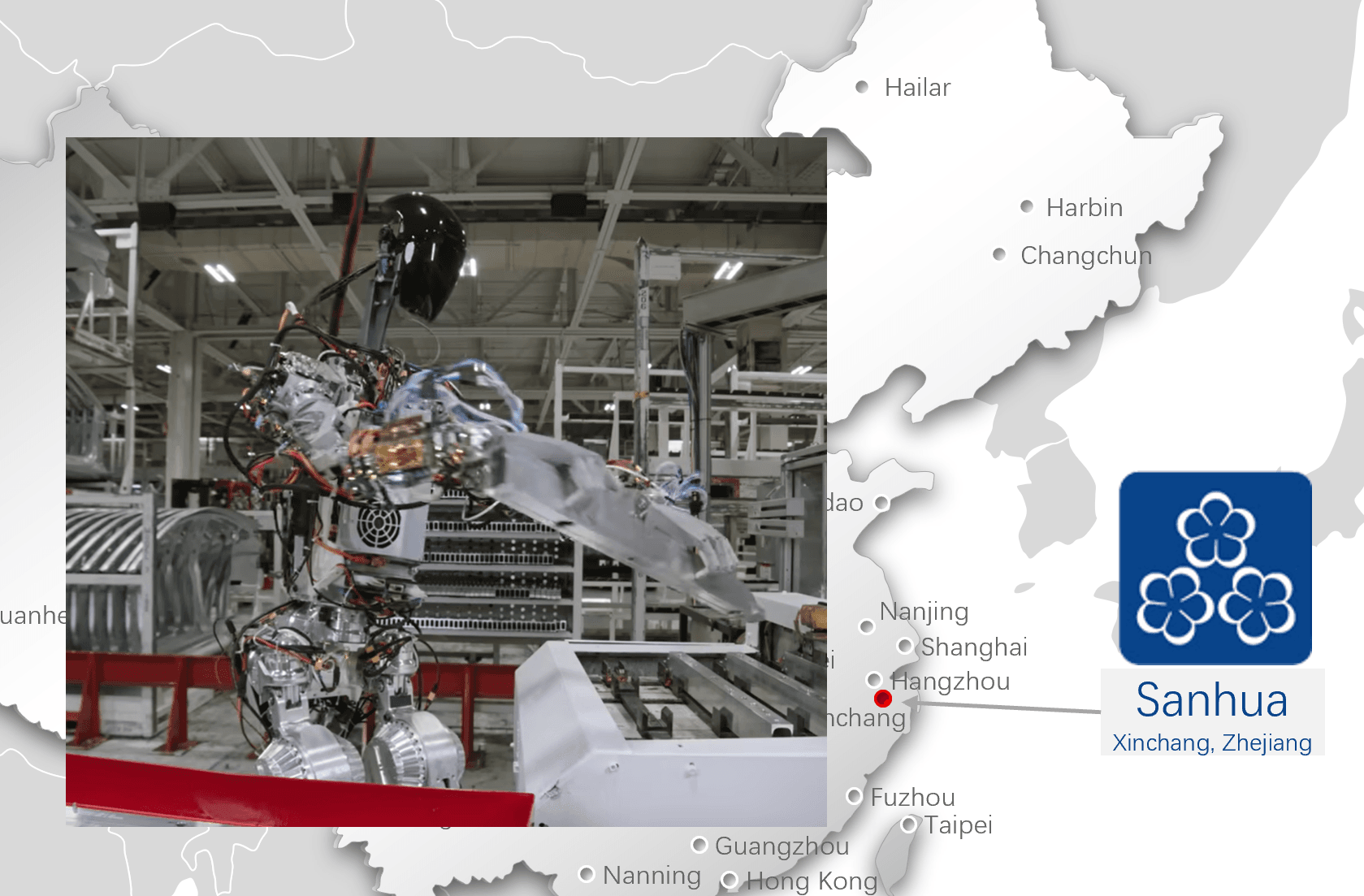
Sanhua Intelligent Controls has quietly become one of the most critical industrial partners orbiting Tesla’s broader ecosystem. Founded in 1994 (with roots back to 1967) and headquartered in Xinchang, Zhejiang, the company today generates around RMB 27.9 billion in annual revenue (roughly USD 4.3 billion), with net profit of RMB 3.1 billion and a market capitalization near USD 25 billion. With nearly 19,800 employees and global factories across China, the U.S., Mexico and Europe, Sanhua looks like a traditional industrial manufacturer—but is increasingly viewed as a strategic enabler for Tesla’s future in humanoid robotics.
2. Global No.1 in Thermal Control: The Foundation of Sanhua’s Power
Sanhua’s rise is built on decades of mastery in thermal and fluid control systems. In the HVAC and refrigeration sector, the company holds the world’s No.1 market share in multiple core thermal control components, including four-way reversing valves and electronic expansion valves—often estimated at around 50% global share. This “industrial backbone” provides reliable, high-margin cash flow and forms the skill base that later enables Sanhua to move into more complex electromechanical technologies.
3. Tesla EV Supply: A Deep and Growing Dependency
This foundation has been leveraged decisively into the EV industry. Sanhua is widely believed to be Tesla’s largest single external thermal-management supplier, although the company does not confirm customer-level revenue. Analysts estimate that Tesla contributes 25–30% of Sanhua’s total sales, while its top five customers together represent about one-third. Sanhua supplies Tesla with electronic expansion valves, high-pressure CO₂ valves, heat-pump switching valves, microchannel heat exchangers and integrated thermal management modules—components that directly impact range, efficiency and battery performance across Model 3, Model Y and other platforms.
4. The Move Into Robotics: Building the “Actuator Factory” of the Future
Sanhua has begun expanding into robot actuators, leveraging its competency in high-precision, high-volume electromechanical production. The company is building capacity for linear and rotary actuators—critical elements in humanoid joints—through new factories in Ningbo and Mexico. These facilities aim for hundreds of thousands of actuators per year, a scale few robotics suppliers can match. The financial incentive is clear: robot actuators could deliver far higher margins than HVAC components and become a new growth engine beyond the RMB 5.9 billion automotive thermal business.
5. Why Analysts See Sanhua as a Natural Optimus Supplier
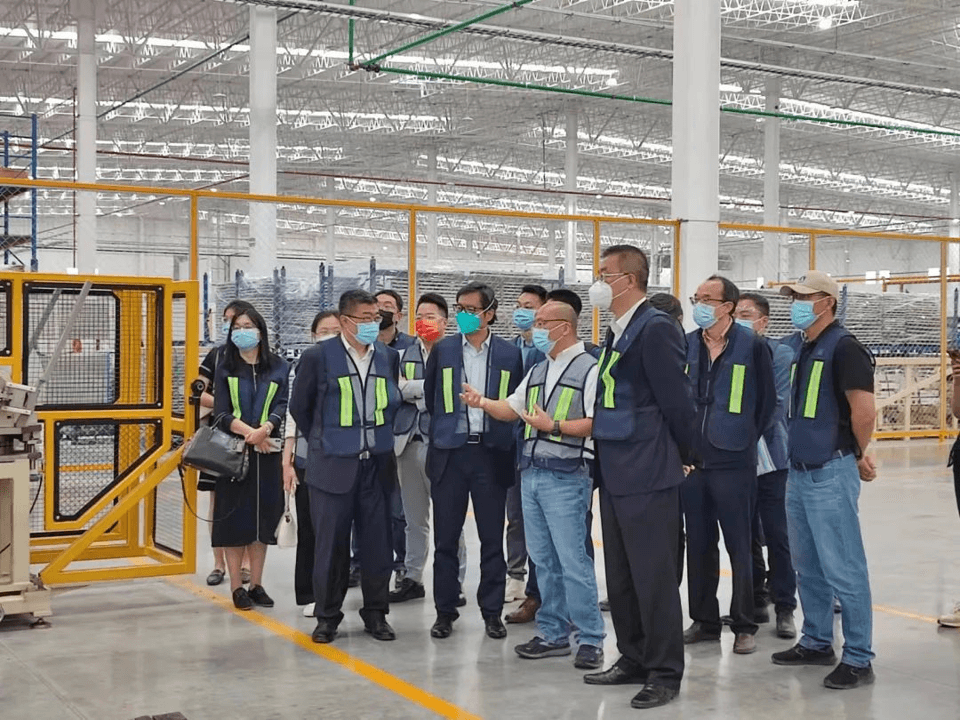
From an engineering perspective, Sanhua is one of the rare companies with both industrial-grade reliability and consumer-scale manufacturing. Most humanoid startups can assemble a few hundred actuators; Sanhua ships hundreds of millions of precision components annually. Its global footprint aligns perfectly with Tesla’s needs—including U.S. and Mexico production, where Tesla plans large-scale humanoid manufacturing. This combination of quality, geographic alignment and production scalability explains why analysts repeatedly cite Sanhua as a likely actuator supplier for Tesla’s Optimus robot.
6. The $685 Million Rumor — and Sanhua’s Official Denial
A viral story claimed Tesla had placed a USD 685 million humanoid actuator order with Sanhua—equivalent to roughly 180,000 Optimus units. The rumor triggered a market surge, but Sanhua issued an official Hong Kong Stock Exchange announcement stating the report was not true, confirming that:
- There is no undisclosed major Tesla robot order,
- No significant robot-related revenue,
- No interviews supporting the claim.
Thus, while market expectations remain high, no official humanoid contract exists as of now.
7. The Reality Gap: Market Expectations vs. Actual Revenue
This creates a familiar tension: industrial logic strongly supports Sanhua as a future Optimus supplier, yet regulatory filings show zero confirmed humanoid revenue. Sanhua’s valuation already reflects substantial “robot optionality,” and institutions such as Goldman Sachs have warned that robotic expectations may be years ahead of actual cash flow. If Tesla diversifies actuator sourcing or internalizes key components, Sanhua’s growth curve could shift significantly.
8. Sanhua’s Position in Tesla’s Humanoid Roadmap
For RobotToday readers focused on the humanoid supply chain, Sanhua is best viewed as a high-probability enabler rather than a confirmed supplier. The company already plays an essential role in Tesla EVs, likely contributing a quarter to a third of total revenue. Its unmatched capacity for high-volume actuator manufacturing and its proximity to Tesla’s future humanoid plants make it uniquely positioned. Yet robot income is still undeclared, and all reports of giant Optimus orders remain speculative.
If Tesla scales Optimus as planned and Sanhua’s actuator investments turn into real revenue, the company could evolve from “the world’s leading HVAC component maker” into “one of the backbone suppliers of Tesla’s humanoid robot joints.” If not, it remains a highly profitable industrial technology leader—without the robotics upside currently priced into its valuation.
Tesla’s Humanoid Robot Supply Chain coverage articles:
- Tesla’s Humanoid Robot Supply Chain Comes Into Focus
Overview of Tesla Optimus' emerging supply chain, highlighting key partners, production challenges, and broader implications. - How Sanhua Became Tesla’s Key Humanoid Robot Actuator Candidate: Inside the Optimus Supply Chain
Explores why Sanhua Intelligent Controls stands out as a leading candidate for supplying critical actuators to Tesla's Optimus.. - Wuzhou Xinchun The Rising Mechanical Power Behind Tesla‘s Optimus Humanoid Robot
Highlights Wuzhou Xinchun's growing role as a key mechanical component (likely motors or drive elements) supplier powering Optimuss. - Rongtai‘s Surge In The Tesla Optimus Supply Chain
Details Rongtai's rapid rise and specialized contribution (e.g., in materials or safety-related parts) within the Optimus ecosystem. - Tesla Supply Chain: How Zhaowei Powers Optimus Humanoid Gearboxes
Examines Zhaowei's strategic position as a vital provider of precision gearboxes and micro-drives for Optimus joints. - How Tuopu Became a Core Player in Tesla’s Emerging Humanoid Robot Ecosystem
Covers Tuopu Group's ascent to a central role, particularly in actuators, motors, or related joint technologies for Optimus. - Tesla Optimus Supply Chain Analysis: Moons' Strategic Role in Motion Control and Mini Actuators
Analyzes Moons' important involvement in delivering motion control systems and compact actuators tailored for Optimus. - How Zhenyu Technology Is Becoming a Key Linear Actuator Supplier Candidate for Tesla’s Optimus Humanoid Robot
Discusses Zhenyu Technology's emergence as a strong contender for supplying linear actuators essential to Optimus movement. - Why the Tesla Supply Chain for Optimus is Consolidating in Chinese Yangtze River Delta
Explains the geographic and industrial reasons behind the heavy concentration of Optimus suppliers in China's Yangtze River Delta region.
Continue exploring Optimus coverage for updates on mass production timelines, Gen 3/4 progress, or comparisons with Chinese humanoid competitors (e.g., Unitree, Agibot). For broader context, check recent industry reports on the "Optimus chain" and how Chinese suppliers (50-70%+ of core components) shape Tesla's humanoid ambitions despite U.S. final assembly plans.
- Tesla Launches Final Audits of Potential Suppliers for Optimus (Mass Production I)
- Why Tesla's Audit Standards Redefine Humanoid Manufacturing (Mass Production II)
- China VS TESLA Two Paths to Humanoid Robot (Mass Production III)





Leave a comment