

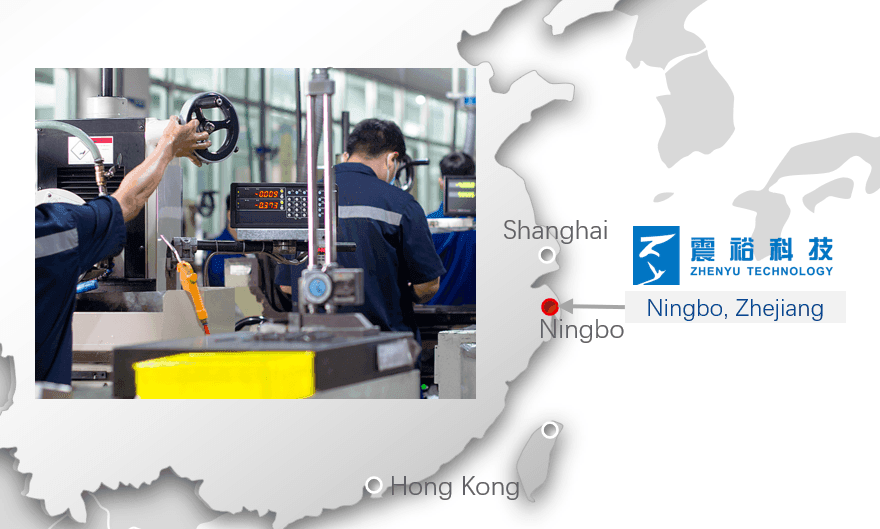
- From Tesla EV to Tesla Optimus
Zhenyu Technology (SZSE: 300953) is evolving from a long-established Tesla EV component supplier into a strategic Tier-0.5 candidate in Tesla’s Optimus humanoid robot supply chain. The company has long provided drive-motor iron cores and battery structural components to Tesla’s Shanghai and Austin Gigafactories, forming a proven base of manufacturing trust.
Since 2024, Zhenyu has entered the humanoid ecosystem by supplying planetary roller screws, actuator motor iron cores, reducer housings, and complete linear actuator modules, giving it an estimated USD 3,000 content value per Optimus robot. With significant production expansion underway in Ninghai and Mexico, Zhenyu is positioning itself as one of the most important mechanical-actuator suppliers for Tesla’s future humanoid scale-up.
- The Foundation: How Tesla EV Builds the Path Into Optimus
Tesla requires years of validation before allowing suppliers to participate in high-value, mission-critical programs. Zhenyu’s entry into Optimus is built directly on the credibility it earned through Tesla’s electric-vehicle business.
2.1 Drive-Motor Iron Cores (Primary Tesla EV Business)
Zhenyu supplies stator and rotor laminations for Model 3/Y production in Shanghai and Austin. Key strengths include:
0.05 mm magnetic lamination tolerance
In-house progressive stamping die development
1.2 GW annual EV motor-core capacity
Automotive-grade durability and thermal stability
This makes Zhenyu one of Tesla’s trusted Tier-1 suppliers in the EV magnetic-material domain.
2.2 Precision Battery Structural Components
Zhenyu also provides precision-stamped 4680 battery components.
0.01 mm stamping accuracy
100% inline visual inspection
Delivered to Tesla Texas 4680 lines
Zhenyu’s EV business proves its engineering maturity, giving Tesla confidence to consider the company for more complex systems like humanoid actuators.
- Technical Capabilities — A Manufacturing Base That Translates Directly Into Humanoid Robotics
Zhenyu’s position in the Tesla Optimus ecosystem stems from a 30-year manufacturing base that aligns closely with humanoid actuator requirements. The same qualities that define high-efficiency EV motor cores—micron tolerances, thermal stability, magnetic consistency, and repeatable mass production—are fundamental to linear actuators.
Its advanced progressive-stamping lines for motor laminations now support actuator iron cores. High-accuracy grinding processes developed for EV components translate seamlessly into C3/C5 planetary roller screw production, one of the most demanding elements of humanoid mechanics. CNC machining, originally used for structural EV parts, provides the rigidity and precision needed for Tesla-grade reducer housings.
Zhenyu’s in-house heat treatment, designed for automotive fatigue life, serves the load-bearing screws and shafts that power Optimus joints. Automated EV assembly lines now build integrated LAM systems with torque validation, thermal analysis, and endurance testing.
For most suppliers, entering humanoid robotics requires retooling. For Zhenyu, it is an extension of capabilities already proven in the EV sector.
- Zhenyu’s Deliverables — Core Mechanical Systems Inside Optimus
Zhenyu provides one of Optimus’s most critical mechanical subsystems: the linear actuation architecture driving major joints including the knee, elbow, ankle, and wrist.
Its planetary roller screws—C5 precision, 16–25 mm in diameter—convert motor rotation into controlled, high-force linear motion with low backlash and long service life. Only a handful of global suppliers can meet this combination of precision and scale, placing Zhenyu in a select group capable of supporting Tesla’s actuator consistency requirements.
The company also supplies iron-core stacks for linear actuators, leveraging EV motor-core expertise to deliver high magnetic flux with low energy loss—essential for robots balancing strength and efficiency. Its reducer housings follow the same principle: lightweight, rigid, and optimized for Tesla’s integrated mechanical architecture.
Most importantly, Zhenyu is believed capable of assembling the full Linear Actuator Module—including the motor core, roller screw, housing, bearings, sensors, and control PCB. This positions the company on a similar integration tier as Tuopu, but with deeper specialization in precision mechanical transmission.
- Project Timeline — Zhenyu’s Path Into the Optimus Program
Zhenyu’s participation in the Optimus program has progressed through a sequence of increasingly critical milestones. In 2024, the company delivered its first roller-screw prototypes for the Optimus v2 platform and supplied actuator-motor iron cores for Tesla’s validation cycles. Early LAM prototypes were tested during this phase, marking Zhenyu’s transition from a component provider to a system-level supplier.
By 2025, Zhenyu had launched automated roller-screw production and began pilot-scale assembly of linear actuator modules. At peak pilot throughput, Zhenyu could deliver approximately 120 LAM units per day, supporting Optimus v3 verification and internal durability testing. The company has positioned itself to scale in parallel with Tesla’s planned industrial ramp in 2026 and 2027, when Optimus is expected to transition from development into factory-deployment readiness.
- Capacity Expansion — Building for Tesla’s Long-Horizon Scale
To align with Tesla’s long-term vision—potentially hundreds of thousands of robots per year—Zhenyu has committed substantial capital to expand its manufacturing footprint. The Ninghai Robotics Manufacturing Campus represents the core of this strategy: a USD 300 million investment covering 34,000 square meters, designed to produce up to 7.5 million planetary roller screws and one million actuator modules annually.
In parallel, Zhenyu is establishing a manufacturing base in Mexico, strategically located near Tesla’s Nevada and planned Mexico Gigafactory sites. This gives Zhenyu the ability to support Tesla’s EV and humanoid programs with localized supply, reducing logistics cost and improving response time—an increasingly important requirement as Tesla pushes toward vertically integrated robot manufacturing in North America.
Few suppliers are investing at this scale. Even fewer are doing so with the precision and global dispersion required to serve a product as complex as Optimus.
- Financial Trajectory — Robotics as the Next Platform Cycle
Zhenyu’s financial results in 2025 reflect a company entering a new platform cycle. Revenue for the first nine months reached USD 0.93 billion, up 31 percent from the previous year, while net profit rose an extraordinary 139 percent to USD 58 million. Much of this performance is driven by the early stages of robotics component demand and the improving gross margins associated with high-precision mechanical products.
If Tesla proceeds with its deployment roadmap, Zhenyu’s Optimus-related revenue could reach USD 9 million in 2025, scale to roughly USD 300 million in 2026, and surpass USD 1.3 billion by 2027. In that scenario, humanoid robotics could represent nearly half of Zhenyu’s total revenue by the end of the decade—a radical transformation for a company whose origins lie in stamping dies and EV components.
- Position Within Tesla’s Supply Chain — The Mechanical Core Layer
Within Tesla’s humanoid supply chain, each Chinese supplier occupies a distinct technical niche. Sanhua dominates thermal control and fluid-management valves. Tuopu provides integrated rotary and linear actuators. XCC focuses on planetary roller screws and high-precision bearings. Zhenyu, meanwhile, sits at the apex of the mechanical stack: it delivers the full linear actuator module, including the screw, motor core, housings, and electronics.
In Tesla’s architecture, this is the layer that translates electrical energy into force, precision, and repeatability. Zhenyu’s role therefore has both high value density and high strategic importance.
- Risks and Uncertainties
Zhenyu’s rapid ascent also introduces several structural risks. The company remains deeply dependent on Tesla and CATL, making it vulnerable to volume fluctuations and pricing pressure. Roller-screw production, especially at automotive scale, requires ppm-level yield performance that may take time to stabilize. Competition from established players such as TBI, Estun, HWA, and several Japanese transmission suppliers remains intense. In addition, raw-material volatility, particularly in steel and copper, could squeeze margins. Finally, Tesla’s humanoid timeline—while ambitious—may shift as technical and regulatory realities evolve.
- Strategic Outlook — A Central Player in Optimus’s Mechanical Future
Zhenyu’s convergence of EV manufacturing pedigree, precision mechanical expertise, and rapid global scaling positions it as one of the most strategically important mechanical suppliers in Tesla’s humanoid roadmap. Its ability to produce and integrate high-performance linear actuator modules gives it a unique role—one that sits at the very heart of Optimus’s motion system.
If Tesla succeeds in bringing humanoid robots into widespread factory deployment, Zhenyu could emerge as one of the world’s most significant actuator suppliers, marking not just an evolutionary step for the company, but a landmark moment for China’s high-precision manufacturing industry.
Tesla’s Humanoid Robot Supply Chain coverage articles:
- Tesla’s Humanoid Robot Supply Chain Comes Into Focus
Overview of Tesla Optimus' emerging supply chain, highlighting key partners, production challenges, and broader implications. - How Sanhua Became Tesla’s Key Humanoid Robot Actuator Candidate: Inside the Optimus Supply Chain
Explores why Sanhua Intelligent Controls stands out as a leading candidate for supplying critical actuators to Tesla's Optimus.. - Wuzhou Xinchun The Rising Mechanical Power Behind Tesla‘s Optimus Humanoid Robot
Highlights Wuzhou Xinchun's growing role as a key mechanical component (likely motors or drive elements) supplier powering Optimuss. - Rongtai‘s Surge In The Tesla Optimus Supply Chain
Details Rongtai's rapid rise and specialized contribution (e.g., in materials or safety-related parts) within the Optimus ecosystem. - Tesla Supply Chain: How Zhaowei Powers Optimus Humanoid Gearboxes
Examines Zhaowei's strategic position as a vital provider of precision gearboxes and micro-drives for Optimus joints. - How Tuopu Became a Core Player in Tesla’s Emerging Humanoid Robot Ecosystem
Covers Tuopu Group's ascent to a central role, particularly in actuators, motors, or related joint technologies for Optimus. - Tesla Optimus Supply Chain Analysis: Moons' Strategic Role in Motion Control and Mini Actuators
Analyzes Moons' important involvement in delivering motion control systems and compact actuators tailored for Optimus. - How Zhenyu Technology Is Becoming a Key Linear Actuator Supplier Candidate for Tesla’s Optimus Humanoid Robot
Discusses Zhenyu Technology's emergence as a strong contender for supplying linear actuators essential to Optimus movement. - Why the Tesla Supply Chain for Optimus is Consolidating in Chinese Yangtze River Delta
Explains the geographic and industrial reasons behind the heavy concentration of Optimus suppliers in China's Yangtze River Delta region.
Continue exploring Optimus coverage for updates on mass production timelines, Gen 3/4 progress, or comparisons with Chinese humanoid competitors (e.g., Unitree, Agibot). For broader context, check recent industry reports on the "Optimus chain" and how Chinese suppliers (50-70%+ of core components) shape Tesla's humanoid ambitions despite U.S. final assembly plans.
- Tesla Launches Final Audits of Potential Suppliers for Optimus (Mass Production I)
- Why Tesla's Audit Standards Redefine Humanoid Manufacturing (Mass Production II)
- China VS TESLA Two Paths to Humanoid Robot (Mass Production III)





Leave a comment