


INTRODUCTION
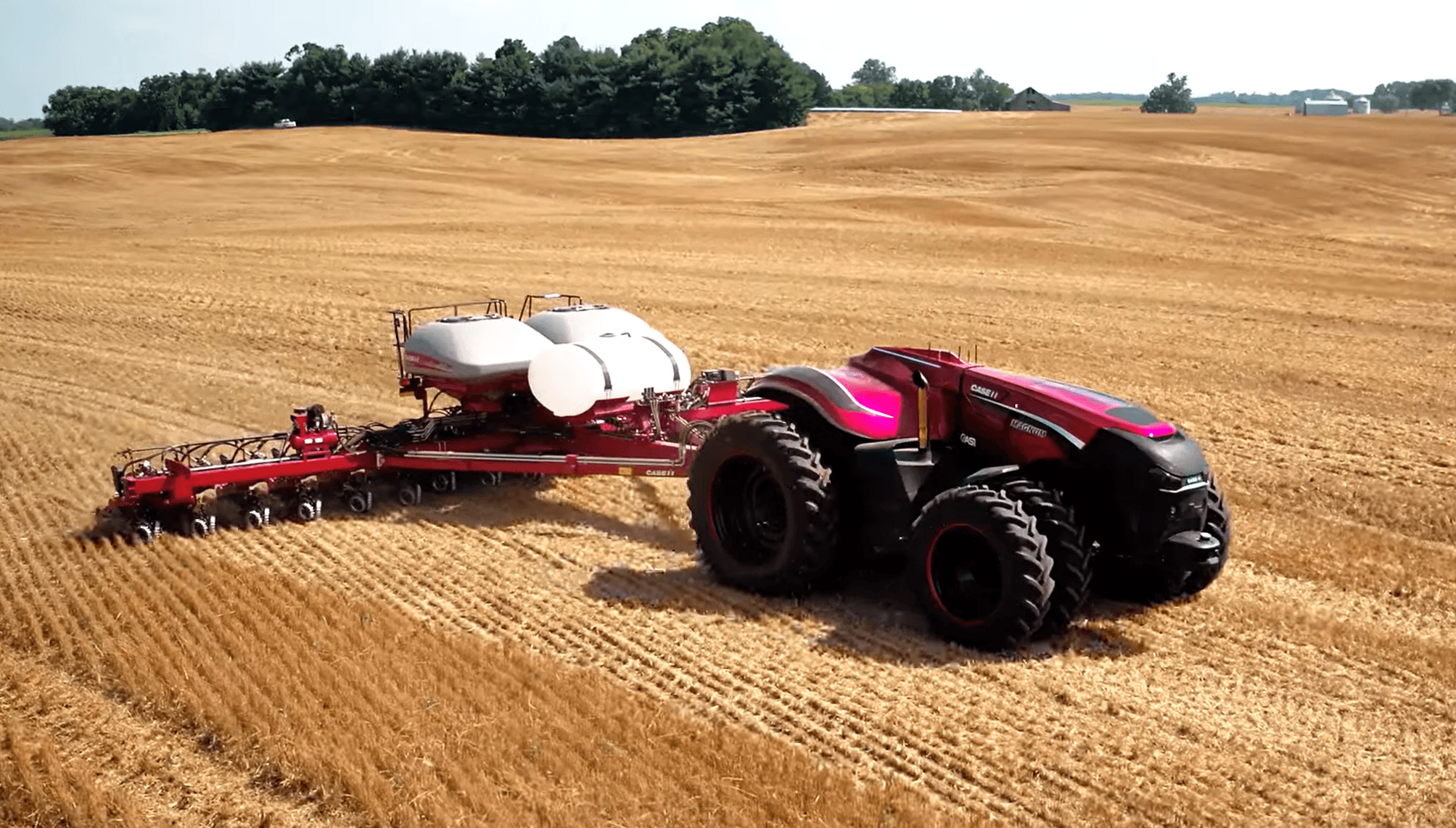
The tractor is the most deployed mobile robot on Earth. No other machine category comes close. Three million tractors sold annually. Billions of acres under mechanical control. And yet, until recently, every single one required a human in the cab.
That is changing. Fast.
John Deere shipped its first commercial autonomous 8R tractor in 2022. It began limited commercial sales in 2023. By 2024, fully autonomous tillage was a production-ready, purchasable product. The market crossed from prototype to commercial reality in 36 months.
The economics are stark. A skilled tractor operator in the US Corn Belt earns $45,000–$65,000 annually. Peak season demand compresses field windows to days. Labor shortages force farms to leave acres untilled or unharvested at catastrophic cost. Autonomous systems do not sleep, quit, or demand benefits.
Three forces now converge simultaneously: labor cost pressure, aging farmer demographics, and a technology stack finally mature enough to deploy at scale.
Scope of This Analysis
This analysis covers the commercial Western markets: North America, EU, Japan, and Israel. China operates a structurally separate state-directed system. Its subsidy regime, procurement channels, and deployment scale are analyzed independently in the China vs. Rest of World series.
MARKET OPPORTUNITY: THE $13B PLATFORM PRIZE
Market estimates for autonomous tractors vary widely. Analysts disagree on scope, definitions, and timelines. The honest answer is a consensus range — not a single figure.
| Analyst / Source | 2024 Market Value | 2030–2032 Projection | CAGR |
|---|---|---|---|
| Grand View Research | $1.86B | $4.22B (2030) | 14.6% |
| Credence Research | $2.7B | $13.3B (2032) | 22.1% |
| Coherent Market Insights | $2.17B | $9.91B (2031) | 24.2% |
| Emergen Research | $2.5B | $18.0B (2033) | 24.5% |
| Consensus Range | $1.9B–$2.7B | $10–14B (2030–32) | ~22% |
Sources: Grand View Research, Credence Research, Coherent Market Insights, Emergen Research (2024–2025). Multiple analyst figures presented to establish consensus range — individual projections are analyst estimates, not independently verified.
The consensus: a $2B market in 2024, growing to $10–14B by 2032, at roughly 22% CAGR. North America holds the largest current share (~38%) with Europe close behind (~29%).
The real opportunity is larger than these hardware numbers suggest. Autonomous tractors unlock software subscriptions, data monetization, and fleet management fees. John Deere targets 10% software revenue by 2030. AGCO aims for $2B in precision-ag revenue through its PTx Trimble joint venture by 2028. The platform economics dwarf the equipment margins.
$2B hardware market today. The platform economics — data, software, subscriptions — are where the real war is being fought.
Semi-autonomous systems dominate today. They held 68% of market share in 2024. Fully autonomous platforms are growing faster — at 23% CAGR — but face higher regulatory and cost barriers. Large farms above 500 hectares drive demand. They accounted for 46% of 2024 revenues.
THE TECHNOLOGY STACK: WHAT ACTUALLY ENABLES AUTONOMY
Autonomous tractor capability has five components. Each adds cost. Each adds value. The combination determines competitive differentiation.
| Component | Function | Key Technology | Maturity Level |
|---|---|---|---|
| GNSS / RTK-GPS | Centimeter-level field positioning | Multi-constellation receivers, RTK correction | Commercially mature |
| Sensor Suite | Obstacle detection, edge detection | Stereo cameras, LiDAR, radar | Commercially deployed |
| AI / Computer Vision | Pixel classification, decision making | Deep neural networks, edge compute | Rapidly advancing |
| Fleet Management Software | Remote monitoring, task assignment | Cloud platforms, mobile apps | OEM competitive moat |
| Implement Integration | Autonomous control of attachments | ISOBUS protocols, actuator control | Early commercial stage |
Source: Author synthesis from John Deere, Kubota, AGCO public technical documentation.
John Deere's 8R uses six pairs of stereo cameras providing 360-degree visibility. Images process through NVIDIA GPUs every 100 milliseconds. The AI classifies every pixel as terrain or obstacle. Decision latency is sub-second.
The geofencing layer matters as much as the sensors. An autonomous tractor that escapes its designated field is a liability, not an asset. All commercial systems require hard geofence boundaries with automatic stopping on violation.
KEY PLAYERS: FOUR TIERS OF COMPETITION
1. John Deere — The Incumbent Setting the Standard
HQ: Moline, Illinois, USA | Market Cap: ~$120B | North American tractor market share: ~60%
John Deere acquired Bear Flag Robotics in 2021 for $305M. That purchase gave it the autonomous navigation stack. It acquired Blue River Technology in 2017 for $305M for AI and computer vision. The pattern is deliberate: buy innovation, integrate it into scale.
The 8R autonomous tractor launched commercially in 2022. It delivers fully autonomous tillage — no operator required for full field cycles. Farmers monitor via the Operations Center app on a smartphone. The system stops automatically when obstacles appear within its safety bubble.
The retrofit strategy is critical. Deere did not force farmers to buy new machines. The autonomy kit retrofits onto 2020+ model 8R and 8RX tractors. A significant installed base becomes immediately addressable.
Target by 2030: a complete autonomous fleet for the full corn and soy crop cycle, from tillage to harvest. Every major field operation driverless. No company has publicly committed to a more aggressive timeline.
⚠ Data Note: John Deere performance metrics (obstacle detection accuracy, field autonomy hours) are based on company disclosures. No independent third-party field validation is publicly available.
2. AGCO / Fendt — The European Precision Play
HQ: Duluth, Georgia, USA | Fendt Brand HQ: Marktoberdorf, Germany | Precision Ag JV: PTx Trimble
AGCO controls Fendt, the premium European tractor brand. Its autonomous strategy runs on two tracks. The first is Fendt's FendtONE integrated platform — connecting autonomy, telematics, and digital farm management. The second is Fendt Mars swarm robotics, launched commercially in 2024–2025.
Mars is architecturally distinct from Deere's approach. It deploys fleets of small 70kg autonomous robots working in coordinated swarms. A single operator coordinates up to six units simultaneously. The premise: many small precise robots outperform one large imprecise machine for specific high-value crops.
The PTx Trimble joint venture, announced in 2022, combines AGCO's equipment base with Trimble's precision positioning and guidance technology. AGCO has stated a target of $2B precision-ag revenue by 2028. This is company-disclosed guidance, not independently verified.
Europe's farm structure favors Fendt. The average EU farm is 17 hectares. That is 25 times smaller than a US commodity farm. Swarm robotics scales down; large autonomous tractors do not.
⚠ Data Note: AGCO $2B precision-ag revenue target and Fendt Mars commercial deployment claims are based on company presentations and press releases. Deployed unit counts and ROI data are not independently verified.
3. CNH Industrial (Case IH / New Holland) — The Grain Cart Specialist
HQ: London, UK / Amsterdam, NL | Brands: Case IH, New Holland | Investor in Monarch Tractor
CNH Industrial took a different path. It invested in Monarch Tractor rather than building pure-play autonomous capabilities in-house. It also developed its own autonomous grain cart system commercially in 2024–2025.
The grain cart application is CNH's strongest autonomous claim. Its Case IH autonomous tractors pull 1,000+ bushel grain carts. The AI predicts combine harvester position and optimizes intercept routes. RTK-GPS delivers ±2cm positioning accuracy. The system minimizes combine downtime — the most expensive machine on the farm.
CNH's licensing agreement with Monarch gives it compact electric autonomous capability for its Case IH and New Holland brands. Functional prototypes have been tested. No binding commercial rollout agreement has been publicly announced. Treat expansion timelines from CNH as aspirational pending binding disclosure.
⚠ Data Note: CNH autonomous grain cart performance figures and Monarch licensing status are based on company and press disclosures. CNH/Monarch commercial launch timeline is unconfirmed.
4. Kubota — Japan's Long Game
HQ: Osaka, Japan | Agri Robo Series: 700+ units deployed in Japan by 2024
Kubota has been building toward autonomous tractors longer than most Western observers realize. Its AgriRobo Series began shipping in Japan in 2017. By 2024, approximately 700 units were deployed across Japanese farms. That is quiet commercial deployment at scale — not prototype demonstration.
Japan's agricultural crisis drives urgency. The country's commercial farming population fell from 10.46 million in 2000 to an estimated 3.23 million by 2025. Farmers aged 65+ represent 47% of the workforce. Labor scarcity is structural, not cyclical. For Kubota's home market, autonomous agriculture is survival infrastructure, not convenience technology.
Kubota's Agri Robo Combine uses GPS for autonomous drive with centimeter-level precision. Its newer Type:V and Type:S versatile platform robots — displayed at Expo 2025 Osaka — represent the next generation. The Type:S robot hydraulically adjusts its wheelbase to maintain balance on hilly orchard terrain. That technical specificity targets Japan's fragmented, topographically complex farm landscape.
Kubota announced commercialization of an autonomous specialty tractor developed with Agtonomy at CES 2026 — its first autonomous commercial product targeting North American specialty crops. Kubota formed a strategic AI partnership with NVIDIA in 2020.
700 AgriRobo units deployed in Japan by 2024. Kubota has been commercially deploying autonomous farm machines while Western headlines focused on John Deere's CES moment.
5. Monarch Tractor MK-V — The Specialty Crop Disruptor
Founded: 2018 | HQ: Livermore, California | Funding: $133M Series C (July 2024) | Europe HQ: Antwerp, Belgium (est. Dec 2024)
Monarch built the first fully electric, driver-optional autonomous tractor commercially available in the Western market. Its MK-V targets vineyards, orchards, and high-value specialty crops — segments where large OEMs struggle with machine size and diesel incompatibility with organic certification.
The MK-V's value proposition is a bundle: electric zero-emission operation, 240GB daily data collection, shadow and gesture autonomous modes, and driver-optional flexibility. By end of 2024, MK-V units had logged nearly 67,000 cumulative operating hours.
Monarch's licensing relationship with CNH Industrial means its autonomy software runs on Case IH and New Holland compact platforms — extending Monarch's reach without manufacturing more of its own tractors. This is a platform-not-product strategy shift.
However: Monarch faced significant headwinds in 2025. Dealer reliability complaints, service delays, and a lawsuit from a US dealer over delivery commitments emerged publicly. By early 2026, Monarch had announced a strategic pivot toward autonomy software licensing, partially stepping back from first-party hardware sales. This is material. Investors and buyers should scrutinize Monarch's commercial stability carefully.
⚠ Data Note: Monarch operating hours and performance claims are company-disclosed. The dealer lawsuit and strategic pivot information is drawn from trade press reporting (Future Farming, January 2026). Commercial trajectory remains fluid.
REGIONAL DEEP DIVE: WHERE THE MARKET IS ACTUALLY MOVING
North America: High Adoption, High Labor Costs, Fastest Growth
North America held approximately 34–38% of global autonomous tractor revenue in 2024. Projected CAGR to 2030 exceeds 23%. The US Corn Belt — Iowa, Illinois, Nebraska — drives commercial deployment. Farm sizes above 1,000 acres justify autonomous investment economics.
The payback math works at scale. A US farmworker costs $45,000–$65,000 annually. An autonomous kit from John Deere — retrofitted onto an existing 8R — reduces one operator requirement per shift. At commodity farm sizes, payback periods of 3–5 years are commercially viable.
Only 27% of US farms had adopted precision agriculture connectivity by 2024. That gap represents massive future addressable market. Federal broadband infrastructure investment accelerates the digital foundation autonomous systems require.
European Union: Regulatory Complexity, Farm Fragmentation, Swarm Opportunity
Europe follows North America in autonomous tractor adoption but faces structural challenges North America does not. Average EU farm size is 17 hectares — too small for large autonomous tractors to generate acceptable ROI on purchase price alone.
EU regulation is evolving, not blocking. Regulation EU 2025/14, published January 2025, establishes the first harmonized EU type-approval framework for non-road mobile machinery including autonomous agricultural vehicles. Most provisions apply from January 2028. This is a regulatory runway, not a barrier. Equipment deployed before 2028 remains under national rules.
The EU Farm to Fork strategy targets 50% pesticide reduction by 2030. Autonomous precision application directly serves that mandate. Ecorobotix's ARA received German Julius Kühn Institute certification for 95% spray drift reduction — showing that regulatory compliance can be a commercial accelerator, not just a cost.
Swarm robotics fits European farm structure. Fendt's Mars system — 70kg robots in coordinated fleets — addresses scale and field size mismatches that large-format autonomous tractors cannot solve. AGCO's European strategy is structurally better aligned with EU farm reality than Deere's large-format approach.
Japan: Deployed Commercial Reality, Not Future Projection
Japan is the most underappreciated autonomous tractor market outside China. Kubota has 700+ AgriRobo units commercially deployed. Yanmar competes with its own autonomous platforms. Government smart-farming policy subsidizes both adoption and infrastructure.
Japan's demographic crisis removes optionality. With 47% of farmers above 65 and the commercial farming population projected to fall by 70% since 2000, autonomous systems are not productivity enhancements. They are existential requirements for continued food production.
Kubota's autonomous fuel cell tractor concept — zero-emission, fully autonomous, unveiled at Expo 2025 Osaka — signals Japan's trajectory. Hydrogen fuel cells address the range and power density limitations of battery electric in high-horsepower applications. Japan is running a parallel technology track Western OEMs have not yet committed to.
Israel: Precision Agriculture as a Necessity, Not a Choice
Israel farms under water scarcity, labor shortage, and security constraints that Western markets do not face at the same intensity. These pressures produced an agricultural technology ecosystem disproportionate to its population size.
Israeli precision agriculture companies focus upstream of the tractor. Taranis and CropX provide soil and field intelligence layers. Prospera (acquired by Valmont Industries) brought AI vision to crop monitoring. These data layers are the inputs autonomous tractor control systems require. Israel's strength is the intelligence stack, not the iron.
Ben Gurion University's agricultural robotics programs have produced founders for multiple precision ag companies. The Israel Innovation Authority funds agtech development directly. This institutional stack produces high-quality IP that OEM manufacturers acquire — making Israel a supplier to the global autonomous platform race rather than a direct competitor.
EMERGING TECHNOLOGIES: THE NEXT CAPABILITY LEAP
| Technology | Application | Development Stage | Primary Proponent |
|---|---|---|---|
| Hydrogen Fuel Cell Propulsion | High-HP autonomous tractors, zero emission | Concept / early prototype | Kubota (Expo 2025) |
| Swarm Coordination AI | Multi-robot orchestration, 6+ units per operator | Early commercial | AGCO Fendt Mars |
| V2V (Vehicle-to-Vehicle) Communication | Autonomous grain cart / combine coordination | Commercial (limited) | CNH Industrial |
| Implements AI Control | Autonomous depth, pressure, application rate | Development stage | Multiple OEMs |
| Open-Field Neural Navigation | GPS-free operation in complex environments | Research | Academic / startups |
| Modular Platform Robotics | One chassis, many implements, adjustable geometry | Prototype | Kubota Type:V / Type:S |
Source: Author synthesis from company announcements, CES 2025–2026 disclosures, Expo 2025 Osaka demonstrations.
Electric powertrains grow fastest in compact segments. Battery electric models are expanding at 29% CAGR while diesel still commands 76% of revenue share in 2024. The economics converge for tractors below 100HP — Monarch's MK-V territory. Above 100HP, battery energy density remains a limitation for field operations exceeding 8–10 hours.
Hydrogen fuel cells address the high-HP, long-cycle problem. Kubota's 2025 concept demonstrates the engineering intent. Commercial deployment of hydrogen farm tractors remains 5–8 years away at minimum. The technology is real; the cost economics are not yet viable.
CRITICAL CHALLENGES: WHY THE TIMELINE COULD SLIP
Regulatory Fragmentation
EU Regulation 2025/14 harmonizes non-road mobile machinery approval across member states — but only from January 2028. Until then, manufacturers navigate 27 different national regulatory environments simultaneously. Germany's Act on Autonomous Driving provides a domestic framework, but it does not automatically create EU-wide approval.
John Deere explicitly excluded Europe from its initial 8R autonomous launch. Safety regulations did not permit fully autonomous operation at commercial launch. That barrier is eroding — but eroding slowly. European autonomous tractor deployments lag North American counterparts by 3–5 years on commercial availability.
Connectivity Infrastructure Gaps
Autonomous tractors require reliable connectivity for remote monitoring, over-the-air updates, and fleet management. Rural broadband coverage in large portions of EU, Japan's mountainous regions, and US farming areas remains inadequate for real-time supervision requirements.
John Deere's Operations Center requires connectivity to alert farmers of obstacles and mechanical issues. When connectivity drops, the tractor must default to stop — creating operational gaps at exactly the times when field windows are tightest. Connectivity is not an optional feature; it is a prerequisite.
Cost Barriers and ROI Thresholds
The economics work for large farms. They do not yet work for small ones. At 450+ hectares, autonomous equipment investment can be justified against 3–5 year payback periods. At EU average farm size of 17 hectares, the same calculation fails by an order of magnitude.
Retrofit economics improve access. Monarch's MK-V targets a $50,000–$88,000 price point — considerably below a new Deere 8R with autonomous package. CNH retrofit kits sit at $20,000–$50,000 range. As costs fall and financing options expand, the addressable market expands substantially.
Liability and Safety in Unstructured Environments
Fully autonomous tractors operating without human supervision create unresolved liability questions. Who is responsible when an autonomous machine injures someone or damages property — the farmer, the OEM, or the software provider? EU Regulation 2025/14 requires manufacturers to design machines for varying autonomy levels and maintain one-year decision logs. Legal clarity still lags technological capability.
Edge cases defeat autonomous systems. A child running into a field. An uncharted irrigation ditch. Wildlife. Construction debris. Every commercial system defaults to stop on novel obstacle detection. Reliability requires not just obstacle avoidance — it requires judgment under uncertainty. That judgment remains genuinely difficult to encode at the current state of the art.
INVESTMENT AND M&A LANDSCAPE
The autonomous tractor sector has seen strategic acquisitions dominate over pure venture funding. The OEMs buy the technology; they do not wait for it to emerge.
| Acquirer / Investor | Target | Year | Value | Strategic Rationale |
|---|---|---|---|---|
| John Deere | Blue River Technology | 2017 | $305M | See & Spray AI, precision application |
| John Deere | Bear Flag Robotics | 2021 | $250M | Autonomous navigation platform |
| AGCO | Trimble Ag Division (JV) | 2022 | $2B est. | Precision guidance at scale |
| CNH Industrial | Monarch Tractor (investment) | 2021 | Undisclosed | Electric autonomous platform access |
| Monarch Tractor | Series C Round | Jul 2024 | $133M | Europe expansion, autonomy software pivot |
| Kubota | Agtonomy partnership | 2025–2026 | Undisclosed | Specialty crop autonomous commercialization |
Sources: Company announcements, press releases, Crunchbase. M&A values reflect reported or estimated figures from public sources.
The M&A message is unambiguous: incumbents cannot build autonomy fast enough organically. Every major OEM has made at least one significant acquisition or partnership to access the technology stack. The innovation originates in startups and universities. The distribution and commercialization power sits with the OEMs.
John Deere spent $555M acquiring autonomous and AI capabilities in 4 years. The tractor is becoming a software platform. The hardware is the distribution channel.
COMPETITIVE POSITIONING MATRIX
| Company | Autonomy Level | Target Segment | Key Differentiator | Commercial Status | EU Availability |
|---|---|---|---|---|---|
| John Deere 8R | Fully autonomous (tillage) | Large grain farms 450+ ha | Installed base, 60% NA market share | Commercial (limited, NA) | Not yet approved |
| AGCO / Fendt | Semi + swarm robots | EU precision crops | Fendt Mars swarm, FendtONE platform | Commercial (EU + US) | Yes (Fendt brands) |
| CNH Case IH | Semi-autonomous + grain cart | Grain operations | Grain cart V2V coordination | Commercial (limited) | Partial |
| Kubota AgriRobo | Semi-autonomous, supervised | Japan rice / specialty | 700+ deployed, rice paddy optimized | Commercial (Japan) | Limited |
| Monarch MK-V | Driver-optional / autonomous | Vineyards, orchards | Electric, compact, licensing platform | Commercial (pivoting) | Belgium HQ est. 2024 |
Source: Author synthesis from company disclosures, trade press, regulatory filings. Autonomy levels and commercial status reflect public information as of February 2026 and may change.
OUTLOOK: WHAT 2030 ACTUALLY LOOKS LIKE
John Deere has committed to a complete autonomous fleet for row crops by 2030. That is a public commitment from a company with 60% North American market share and $555M+ spent on acquiring the technology to deliver it.
The most likely 2030 scenario: Full autonomy for repetitive large-scale tasks — tillage, planting, grain cart logistics — is commercially available and economically viable on farms above 300 hectares. Semi-autonomy with remote supervision is the dominant mode for farms between 50–300 hectares. Small European farms operate swarm robots or hire autonomous service contractors.
The platform war matters more than the hardware race. John Deere's Operations Center, AGCO's FendtONE, and CNH's connectivity stack are where long-term competitive advantage accrues. A farm locked into one platform's data architecture does not switch easily. The tractor hardware is a distribution channel for the platform lock-in.
The EU regulatory window (2025–2028) is the critical commercial window. Companies that establish commercial deployments and safety records before 2028 harmonization arrive will have certified products ready for EU-wide scale. Those who wait face a more competitive, more regulatory launch environment.
Japan's model is instructive. Kubota deployed 700 units commercially before Western OEMs had finished their first CES presentations. The market that actually needs autonomous tractors most urgently — due to demographic crisis — has been quietly building the commercial reality for seven years.
The winner of the autonomous tractor platform war controls the operating system of global food production. That is not hyperbole. That is the competitive analysis.
DATA INTEGRITY NOTE
Market size estimates in this article are drawn from multiple analyst sources (Grand View Research, Coherent Market Insights, Credence Research, Emergen Research, Mordor Intelligence). Analyst projections are not independently verified and should be treated as estimates, not facts. Company performance claims (obstacle detection accuracy, operating hours, cost reduction) are based on company disclosures unless otherwise noted. No independently verified third-party field study has been published confirming all stated figures. Where data relies solely on company disclosure, this is flagged with a Data Note. Readers making investment decisions should verify figures against primary sources.
Agricultural Robotics Research Series:
Part 1: Labour Crisis — How Robots Will Fill the Global Agricultural Workforce Gap
Part 2: Agricultural Robotics | Market Leaders, Regional Analysis & Top Countries
Part 3: Agricultural Robotics | $34B Weeding Robot Market
Part 4: Agricultural Robotics | Harvesting Robots: $6.9B Market
Part 5: Agricultural Robotics | Precision Planting & Seeding
Part 6: Agricultural Robotics: Crop Monitoring and Aerial Scouting
Part 7: Dairy & Livestock Automation
Part 8: Autonomous Tractors & Field Machines
Part 9: Post-Harvest Automation — Sorting, Grading & Cold Chain
Part 10: Future Trends 2025–2030








Leave a comment