


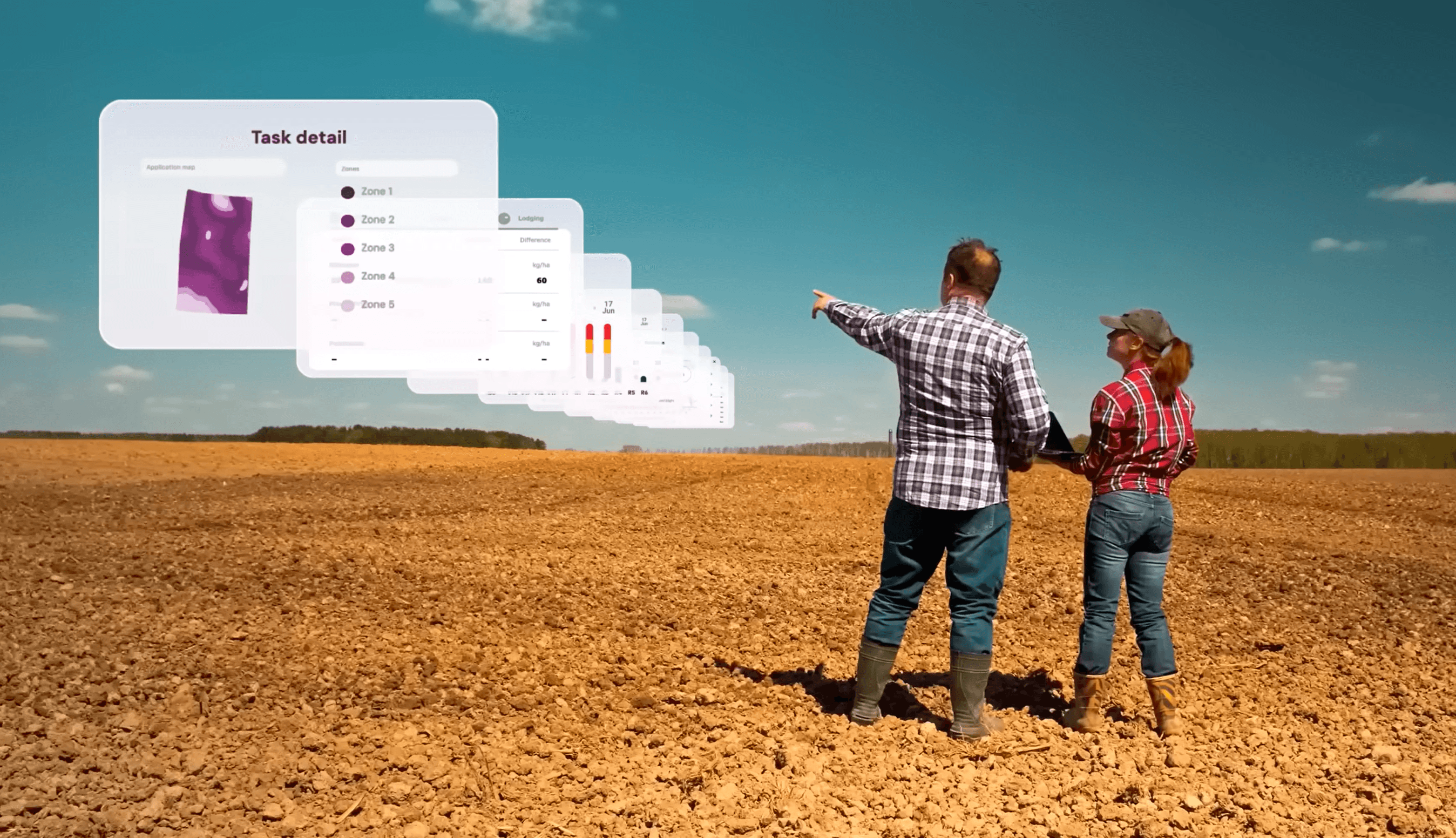
How robots replaced the walking scout — and why the real opportunity is still ahead.
The Market Opportunity (Excluding China)
Crop monitoring is the fastest-adopted segment in agricultural robotics. Drones and sensors hit farms earlier than harvesters or weeders. They are cheaper, easier to operate, and deliver visible ROI within a single season.
The global agricultural robots market reached approximately $18 billion in 2025, per Mordor Intelligence. UAVs and drones held roughly 36% of that revenue. Excluding China — which operates a separate, largely state-guided ecosystem — the addressable market across North America, Europe, Japan, and Israel sits at an estimated $8–10 billion for monitoring specifically.
Note: Market sizing figures are drawn from Mordor Intelligence (January 2026 update), MarketsandMarkets (2025), and Fortune Business Insights (2025). Estimates vary significantly across sources. Treat all figures as directional, not definitive.
North America led regional revenue in 2025 with approximately 33–38% global share, depending on the analyst. Europe held around 28%. Japan's agricultural robot market was valued at roughly $310 million in 2023 and is projected at $880 million by 2030 at a 16% CAGR (BlueWeave Consulting). These are third-party estimates, not independently verified.
Drone adoption is the clearest signal. UAVs now hold the highest product-type share in every key region. Their appeal is simple: low entry cost, immediate data value, and no need to redesign the farm. A drone does not replace a tractor. It works alongside everything already there.
Regional Market Snapshot (Ex-China, 2025 Estimates)
| Region | Market Position | Key Driver | Primary Barrier |
|---|---|---|---|
| North America | Global leader, ~33–38% share | Labor costs, scale farming | Data interoperability |
| European Union | Strong regulatory push, ~28% share | Farm-to-Fork, CAP funding | Drone spray ban, fragmented farms |
| Japan | Fast growth, CAGR ~16% (2024–2030) | Aging farmers, MAFF policy support | Small farm scale, cost |
| Israel | Innovation hub, disproportionate influence | Water scarcity, defence-grade tech transfer | Domestic market too small to scale alone |
Note: Market share figures sourced from Mordor Intelligence and Fortune Business Insights (2025). Not independently audited. Regional figures reflect revenue contribution estimates, not verified census data.
North America: Scale, Data, and the Consulting Layer
The US corn and soy belt drove early drone adoption. Large, flat fields with GPS infrastructure made aerial scouting the obvious choice. By 2025, adoption among large farms (2,000+ acres) had reached 75–85%, per industry estimates. Medium farms lagged at 50–65%. Small farms remain well under 35%.
The real story in North America is not hardware. It is the data layer sitting above the drone. Taranis, founded in Israel but headquartered in Indiana, monitors over 20 million acres for more than 19,000 customers across the US, Canada, and six other countries (company disclosure). The platform combines high-resolution drone imagery with AI to identify crop threats at leaf level.
Note: Taranis customer and acreage data are company-disclosed figures, not verified by a third party. They should be read as marketing claims pending independent confirmation.
Taranis works with 16 of the world's top 20 agricultural retailers (company claim). It has partnerships with BASF, Bayer's Climate Corporation, and Syngenta. Its core argument: agronomists cannot walk every field. Drones can. AI converts images into action plans. The business model shifts value from hardware to analytics subscriptions.
PrecisionHawk and AgEagle serve the enterprise and insurance segments. These platforms compete on processing speed — how fast can raw imagery become a prescription map? The answer in 2025 is under 24 hours on most platforms. That speed is now table stakes.
The structural challenge in North America is data fragmentation. Farmers use John Deere Operations Center, Climate FieldView, and a dozen smaller platforms. Monitoring data does not flow cleanly between them. That interoperability gap slows scaled adoption.
European Union: Regulation Shapes the Game
The EU is the most regulation-driven agricultural technology market in the world. That is both an accelerant and a brake for monitoring robotics.
The Farm-to-Fork Strategy and the Common Agricultural Policy (CAP) mandate reduced pesticide use and greater sustainability data. Those requirements push farmers toward precision monitoring. CAP allocated billions through 2027 for digital farming investments. France's digital farming tax credits collected EUR 756 million in 2024, up from EUR 277 million five years earlier (France Ministry of Agriculture — reported via Mordor Intelligence; not independently verified).
Germany leads the European precision agriculture market at approximately 37.8% of regional revenue in 2025. Over 65% of German farms above 100 hectares use at least three precision agriculture technologies simultaneously (Thünen Institute, via Mordor Intelligence). BASF Digital Farming's xarvio FIELD MANAGER platform provides field-zone management and disease-risk forecasting across European cereal farms, integrating ESA satellite imagery alongside drone data.
France placed second at roughly 17.2% of European share. The Ecophyto plan and France Relance recovery program channelled EUR 300 million into digital farming. Naio Technologies — a French company known for weeding robots — sits adjacent to the monitoring space, and its data integration approach reflects the French preference for full-system solutions rather than point tools.
The critical regulatory complication: aerial spraying of pesticides is broadly prohibited across the EU. Drones can monitor freely. They cannot spray in most member states. This creates a split market — monitoring drones advance rapidly, but the integrated scout-and-treat model common in Israel is not yet replicable in Europe. Regulatory reform is underway, but progress is slow.
Europe's agricultural drone market was valued at USD 5.8 billion in 2024 and is projected to reach USD 7.5 billion in 2025 (MarketDataForecast). The EU accounted for over 35% of global agricultural drone adoption in Western markets. Drones are the fastest-growing technology in European precision farming, projected at an 11.1% CAGR through 2031 (Mordor Intelligence).
Note: All EU market sizing and policy figures are sourced from third-party market research firms citing European Commission, Eurostat, and national agriculture ministries. Figures should be treated as estimates pending official verification.
Key EU Monitoring Platforms at a Glance
| Company | Country | Focus | Differentiator |
|---|---|---|---|
| xarvio (BASF Digital Farming) | Germany | Field-specific disease & nitrogen advice | ESA satellite integration, CAP compliance tools |
| Gamaya | Switzerland | Hyperspectral analytics | Sugarcane and cereals, high accuracy stress mapping |
| Airinov (Parrot subsidiary) | France | Multispectral NDVI monitoring | Compact drones for European farm scale |
| senseFly (AgEagle acquisition) | Switzerland | Fixed-wing mapping drones | Large-area coverage, professional survey grade |
Japan: Urgency Without Scale
Japan is running out of farmers faster than any other developed economy. In 2024, the average Japanese farmer was over 67 years old. NARO (Japan's National Agriculture and Food Research Organization) projects the farming population will fall below one million by 2030. That demographic collapse is the single biggest driver of monitoring robotics adoption.
Japan's Ministry of Agriculture, Forestry and Fisheries (MAFF) actively deregulated agricultural drones from 2019 and backed 124 demonstration projects through NARO. The government allocated approximately 100 billion yen (roughly EUR 700 million) for agricultural robotics in 2024 (Willagri, citing Japanese government data; not independently verified). Smart farming adoption is a national strategic priority, not just a market trend.
Over 10,000 drones were operating in Japanese agriculture in 2024, a 30% rise from 2022 (Willagri). UAVs held the highest product-type share in the Japan agricultural robot market. Drones here do double duty — crop monitoring and precision spraying — because Japan has not adopted the EU’s blanket aerial spray prohibition.
The structural challenge is farm size. Most Japanese farms are under two hectares. The economics of buying a professional drone for such a small plot rarely compute. The government response has been twofold: direct subsidies and a push toward drone-as-a-service models, where agricultural cooperatives or certified operators fly drones on behalf of multiple small farmers. That shared-service model is gaining traction in rice and vegetable growing regions.
Kubota and Yanmar — Japan’s dominant agricultural machinery firms — both have monitoring and robot products. NARO partnered with NTT East and NTT AgriTechnology in 2024 on a remote farming support project that fuses crop imagery, sensor data, and AI-generated cultivation plans. This NTT-NARO model could become the template for Japan’s small-farm digitisation.
Israel: Disproportionate Influence
Israel is not a large agricultural market. Its value to this analysis is disproportionate to its size. The country treats agriculture as a national security issue — water scarcity, land constraints, and a historical commitment to feeding itself with minimal resources shaped an innovation culture that the world is now importing.
Over 450 Israeli agtech companies operate across precision agriculture, with an unusually high concentration in monitoring and sensor technology. Taranis, founded in Israel, built its leaf-level imaging platform on drone technology and AI originally developed in defence-adjacent sectors. Prospera Technologies — acquired by Valmont Industries in 2021 — developed AI-driven crop monitoring using sensors, satellites, and cameras that now runs on millions of hectares globally (company and acquisition filings; scale claims not independently verified).
Phytech monitors crop water stress in real time using plant-embedded sensors. FieldIn runs a pest-monitoring and farm-management platform for specialty fruits and vegetables. AgroScout uses AI-based crop intelligence for disease and pest detection at field scale. These are not proof-of-concept startups. Several have global commercial deployments.
Israel’s monitoring technology typically integrates detection with response. The scout-and-treat model — identify a problem via drone, generate a prescription map, apply targeted treatment — is a complete loop. That full-stack approach differs from most North American and European platforms that specialise in detection but leave response to separate systems.
Note: Israeli company deployment claims (acreage, customer numbers) are largely company-disclosed. Prospera's 'millions of hectares' claim is based on post-acquisition reporting by Valmont Industries, not independently audited.
The export model matters here. Israeli platforms generate value in their home market but scale revenue internationally. Taranis operates across the US, Canada, Australia, Latin America, and Eastern Europe. Israel’s domestic market is too small to sustain venture-backed growth. Global deployment is the business model, not an afterthought.
Emerging Technologies Reshaping the Field
Edge AI: Breaking the Connectivity Barrier
Crop monitoring robots face a structural problem: fields lack reliable broadband. A drone generating multispectral imagery cannot always stream data to the cloud in real time. Edge AI — processing data locally on the device rather than sending it to remote servers — is the technical answer.
Edge AI-enabled drones and sensors analyze crop images, detect pest infestations, and generate recommendations without external connectivity (peer-reviewed literature confirms this capability exists; commercial-scale deployment is earlier stage). This matters enormously for sub-Saharan Africa and parts of Eastern Europe. It matters increasingly for rural US and Japanese farms with inconsistent 4G coverage.
The shift to edge processing also changes data ownership dynamics. When data does not leave the farm, farmers retain more control. That is a selling point in Europe, where GDPR and agricultural data sovereignty debates are live political issues.
Hyperspectral Imaging: From Visible to Molecular
Standard RGB cameras see what humans see. Multispectral cameras add invisible bands that reveal plant health. Hyperspectral cameras go further — capturing 100+ spectral bands and detecting stress, disease, and nutrient deficiencies before any visible symptom appears.
Hyperspectral sensors cost $15,000–$25,000 in 2022. Prices are declining, but they remain a professional-grade tool. Companies like Gamaya in Switzerland have built entire platforms on hyperspectral data for sugarcane and cereal crops. The detection window advantage — potentially 5–14 days before visible symptoms — translates directly to yield protection value.
Satellite-Drone-Ground Fusion
The best monitoring platforms in 2025 do not rely on any single data source. They fuse satellite imagery (ESA Sentinel, Planet Labs), drone multispectral data, and ground IoT sensors into a single analysis layer. BASF 2019's xarvio integrates ESA satellite data. Taranis uses drone imagery alongside satellite and smart irrigation sensor data.
This multi-layer approach solves cloud cover problems (drones fly under clouds, satellites cannot see through them) and provides cross-validation. Anomalies detected from space get confirmed at drone level. Treatment decisions are not based on a single data point.
Autonomous Swarm Monitoring
Individual drones cover large fields. Coordinated swarms cover them faster and with redundancy. Scotland 2019's National Robotarium demonstrated 5G-connected robotic monitoring in 2025 using portable private networks deployed directly on farms — a practical bridge over rural broadband gaps. Swarm commercialisation at scale is a 2027–2030 story.
Monitoring Technology Comparison
| Technology | Detection Capability | Cost Range (2025) | Key Limitation |
|---|---|---|---|
| RGB Drone Camera | Visible stress, growth stage | $2,000–$8,000 (drone) | No early warning before visible symptoms |
| Multispectral Sensor (4–12 bands) | NDVI, chlorophyll, water stress | +$2,000–$8,000 on drone | Needs calibration, weather-sensitive |
| Hyperspectral (100+ bands) | Disease, nutrient deficits pre-symptom | +$15,000–$25,000 | High cost, complex data processing |
| Thermal Imaging | Water stress, irrigation uniformity | +$500–$3,000 | Limited to temperature-driven signals |
| Ground IoT Sensors | Soil moisture, EC, continuous monitoring | $200–$2,000/node | Infrastructure cost, maintenance burden |
| Satellite (multispectral) | Field-wide NDVI, weekly or more | $500–$3,000/year (SaaS) | Cloud cover gaps, lower spatial resolution |
Note: Cost ranges are indicative estimates based on available commercial pricing data as of early 2025. Prices vary significantly by vendor, configuration, and region.
Real Challenges the Market Does Not Advertise
Connectivity Is the Dirty Secret
Agricultural robotics depend on data transfer. Rural broadband in the US, Eastern Europe, and Japan’s mountainous regions is inconsistent. A drone that generates terabytes of imagery and cannot transmit it in time for a treatment decision is just an expensive toy. Edge AI is the solution the industry is building toward. It has not yet solved the problem at commercial scale.
False Positives Erode Trust
AI-based disease and pest detection generates false positives. A farmer who sprays based on a wrong detection wastes money and chemical inputs. A farmer who gets three false alerts in a season stops trusting the system. Model accuracy is improving — but it is not yet at the level that allows fully autonomous decision-making for high-stakes interventions. Human agronomists remain in the loop on most platforms.
Data Ownership and Privacy
Farm field data is commercially valuable. Crop protection companies, commodity traders, and insurers all want it. Farmers generating this data do not always understand what they are consenting to when they subscribe to a platform. The EU’s GDPR framework provides some protection, but agricultural data sovereignty is poorly defined in most jurisdictions. This is not a future problem — it is live in negotiations between major platforms and farmer cooperatives right now.
Fragmentation Kills ROI
The North American and European markets both suffer from platform fragmentation. A farmer using John Deere hardware, a third-party drone, and a separate analytics subscription faces an integration headache that erases much of the efficiency gain. The industry is moving toward open data standards (like ISOXML and AEF interoperability), but slowly. Consolidation is happening — it is not finished.
Small Farms Are Structurally Excluded
Monitoring robotics deliver strong ROI at scale. A 500-hectare farm can amortise a $15,000 drone investment easily. A 5-hectare family farm in southern France or rural Japan cannot. Service models — where cooperatives or agtech companies operate the drone fleet and sell monitoring-as-a-service — are the structural answer. Adoption of those models is growing, but they require trust networks and local operators that do not yet exist in every region.
Market Outlook: What the Numbers Miss
The headline projections are large. The agricultural robots market could reach $56 billion by 2030 at the current CAGR (MarketsandMarkets, 2025). Monitoring and UAVs represent the leading segment by adoption.
The more interesting story is structural. Monitoring robotics are not primarily a hardware business — they are a data business. Companies with durable positions accumulate proprietary field data, train AI models on it, and convert detection into prescription. Taranis has over 50 million sub-millimetre aerial images in its training dataset (company disclosure). That data moat compounds with every season.
The DJI dominance question is real. DJI controls over 70% of the global agricultural drone hardware market (industry estimates, not independently verified). Its Agras T50 and T25 launched in April 2025 with the SmartFarm App platform built in. European and North American governments have raised security concerns about DJI hardware given its Chinese ownership. Several US federal agencies have restrictions on DJI procurement. That creates a hardware substitution opportunity for Western manufacturers — but none has yet matched DJI on price-performance at scale.
Note: DJI market share estimates are widely cited in industry reports but are not based on independently audited sales data. Treat as directional.
Japan and Israel point toward the same conclusion from different angles. Japan is using monitoring technology out of demographic necessity — its farmers are disappearing and machines must replace them. Israel uses it out of resource necessity — water and land constraints demand maximum yield intelligence. North America and the EU have more optionality, which is why their adoption curves are slower. Necessity is the best adoption engine.
The segment is past the proof-of-concept phase. ROI is documented. Payback periods under one year are achievable on large farms. The remaining work is pulling adoption down the farm-size curve — to the 80% of the world farms that are under two hectares and have not yet seen a monitoring drone fly over their fields.
Agricultural Robotics Research Series:
Part 1: Labour Crisis — How Robots Will Fill the Global Agricultural Workforce Gap
Part 2: Agricultural Robotics | Market Leaders, Regional Analysis & Top Countries
Part 3: Agricultural Robotics | $34B Weeding Robot Market
Part 4: Agricultural Robotics | Harvesting Robots: $6.9B Market
Part 5: Agricultural Robotics | Precision Planting & Seeding
Part 6: Agricultural Robotics: Crop Monitoring and Aerial Scouting
Part 7: Dairy & Livestock Automation
Part 8: Autonomous Tractors & Field Machines
Part 9: Post-Harvest Automation — Sorting, Grading & Cold Chain
Part 10: Future Trends 2025–2030










Leave a comment