

Executive Summary
At Automate 2026 in Chicago, Ubicept demonstrated its photon-level processing technology, positioning the system as a transition from traditional energy-integration imaging to direct machine perception. Utilizing Single-Photon Avalanche Diode (SPAD) sensor integration and its proprietary Photon Fusion hardware-software pipeline, the system eliminates motion blur and resolves high dynamic range (HDR) constraints without multi-frame exposure synthesis. This technical shift optimizes front-end raw data capture, directly reducing downstream computational loads for edge-inference AI models in industrial automation and robotics.
Industry Context: The Physical Constraints of Conventional CMOS
Traditional industrial machine vision relies on energy-integration CMOS sensors. These sensors accumulate photons within a set exposure window to generate an image frame. However, high-throughput manufacturing lines, robotic welding, and mobile manipulation introduce edge cases that challenge this architecture:
High-Speed Exposure vs. Shot Noise: Accelerating conveyor systems require short exposure windows to minimize motion blur. This restriction decreases total photon collection, lowering the signal-to-noise ratio (SNR) due to dominant photon shot noise.
Artifacts in Multi-Frame HDR: Capturing high-contrast scenes (e.g., robotic arc welding or specular metallic surfaces) traditionally requires sequential multi-exposure HDR synthesis. In dynamic robotic applications, this time-differential capture introduces motion artifacts and edge ghosting, leading to false negatives or errors in downstream perception algorithms.
Technology Architecture: Quantum-Level Spatiotemporal Capture
Ubicept’s approach replaces continuous frame integration with discrete photon time-stamping via its FLARE architecture, built to interface with large-format SPAD arrays from manufacturers including Sony and Canon.
1. From Spatial Frames to Spatiotemporal Photon Streams
Instead of gathering light into a charge well over an exposure interval, the framework operates at nanosecond-level temporal resolution. The sensor records the exact arrival timestamp and spatial (x, y) coordinates of individual photons. The system processes this continuous, high-dimensional spatiotemporal data stream rather than standard static image frames.
2. True 140 dB Physical HDR
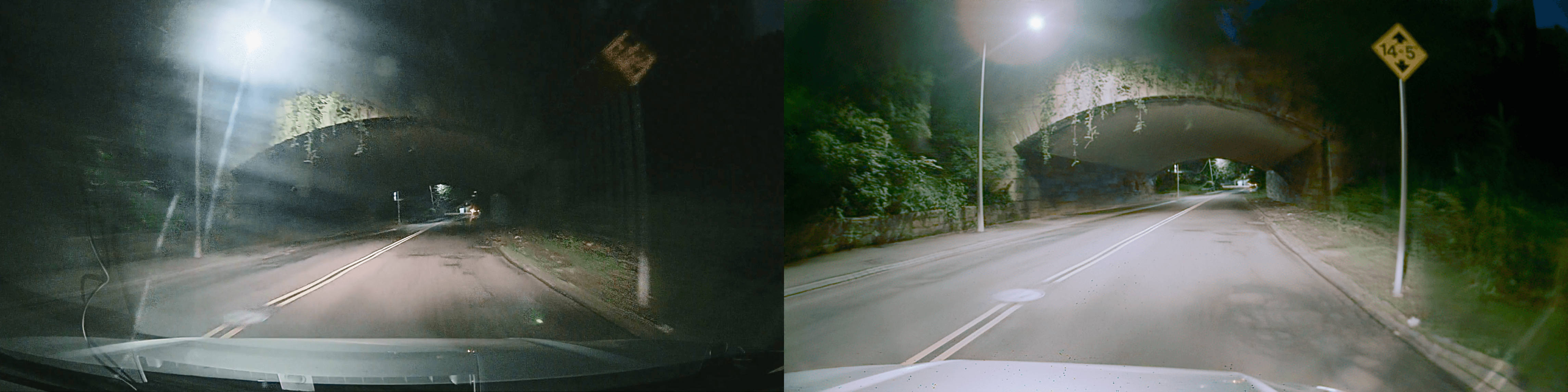
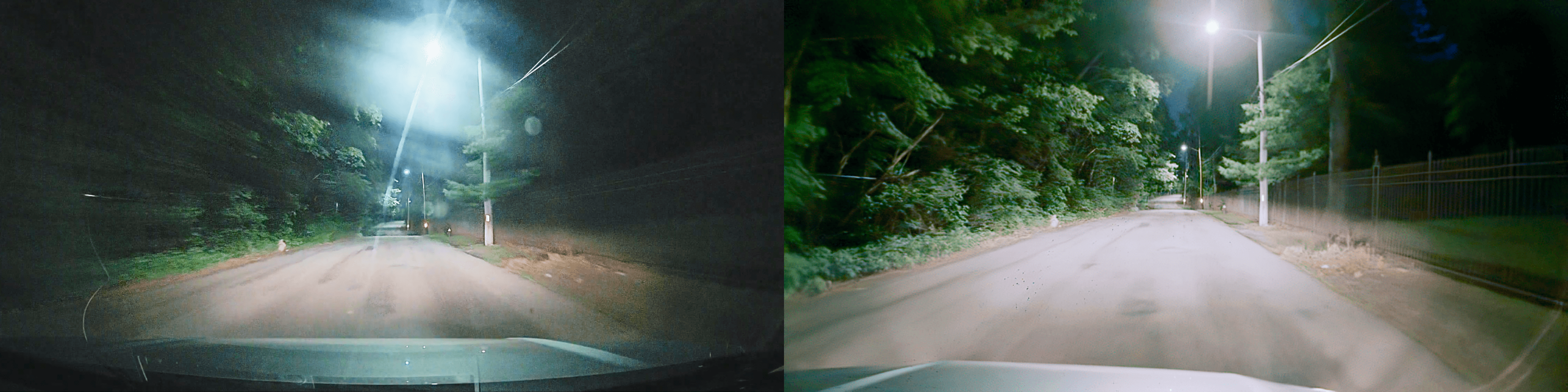
Because SPAD pixels reset almost instantaneously upon photon detection, the sensor concurrently handles high-flux (bright) and low-flux (dark) regions within the same uninterrupted sampling stream. By removing the need for sequential long-and-short bracketed exposures, the pipeline achieves a true 140 dB dynamic range without producing motion artifacts.
3. Algorithmic Cross-Compatibility
The Ubicept Toolkit includes backward compatibility for standard CMOS hardware. When supplied with uncompressed RAW data streams from conventional sensors, the Photon Fusion algorithm applies statistical filters to isolate and mitigate photon shot noise at the sub-pixel level, providing an estimated SNR improvement exceeding 10 dB on existing hardware deployments.
Engineering Analysis: Downstream Optimization for Edge AI
By mitigating sensor-level noise and motion blur at the photon source, the hardware-software stack reallocates computational budgets within the robotics perception pipeline:
[Traditional Pipeline]
Low-Light/Fast Motion → Noisy/Blurred Image → Dense Deep Learning Models → High-Power GPU → Latency
[Photon-Level Pipeline]
Raw Photon Stream → Photon Fusion Filtering → Crisp, Noise-Free Matrix → Lightweight Edge Models → Low Power/Latency
Standard vision systems frequently deploy dense deep learning architectures on high-wattage edge GPUs to reconstruct or “correct” degraded, blurred frames. Shifting image stabilization and noise filtering to the initial photon-capture stage allows lightweight, low-latency edge-inference models to process clean geometric data, lowering overall system latency and power consumption.
Commercial Progress & Venture Backing
Ubicept has transitioned its core IP from academia into commercial deployments via hardware-software evaluation kits and licensing pipelines.
Academic Foundation: The founding team originates from specialized computational imaging institutions. CEO Sebastian Bauer conducted postdoctoral research in non-line-of-sight imaging at the University of Wisconsin-Madison. CTO Tristan Swedish developed novel optical sensing frameworks at the MIT Media Lab. The advisory board includes Professor Ramesh Raskar (MIT Media Lab, pioneer of femto-photography frameworks) and Professor Mohit Gupta (University of Wisconsin-Madison, specialist in single-photon imaging fields).
Capitalization and Funding: The company raised an initial $8 million seed round led by deep-tech venture firm Ubiquity Ventures and the MIT-affiliated E14 Fund, with participation from Phoenix Venture Partners and the Wisconsin Alumni Research Foundation (WARF).
Strategic Corporate Validation: Ubicept secured a $1 million investment from TitletownTech (a joint venture between the Green Bay Packers and Microsoft), which includes $350,000 in Microsoft Azure credits to accelerate development. Total capitalization has reached approximately $12.7 million as the company enters Series A financing targeting industrial automation and automotive factory-installed sensor markets.
Market Perspective: The Single-Photon Competitive Landscape
Ubicept’s push into industrial automation lands amidst a broader industry pivot toward quantum-level sensing. While traditional machine vision giants like Cognex and Keyence continue to optimize standard CMOS pipelines through software, specialized entrants are increasingly eyeing SPAD-based architectures for high-speed edge cases.
The commercial viability of this market will largely depend on the supply chains of semiconductor manufacturers like Sony and Canon, who are scaling up large-format SPAD production. By offering a hardware-agnostic toolkit alongside its proprietary hardware evaluation kits, Ubicept is positioning itself to capture early market share before single-photon hardware achieves commoditized pricing.
Challenges & Deployment Constraints
Despite its performance metrics, widespread industrial integration faces several gatekeeping constraints:
SPAD Sensor Economics: Large-format, high-resolution SPAD sensors remain significantly more expensive than mass-produced industrial CMOS chips, limiting early adoption to high-value or highly specialized inspection lines.
Data Bandwidth Requirements: Processing raw, nanosecond-resolution spatiotemporal data streams generates substantial data throughput, requiring robust local bus architectures and specialized embedded processors to handle the front-end intake before algorithmic reduction.
Integration Overhead: System integrators must rewrite existing machine vision pipelines to ingest non-standard spatiotemporal data streams instead of traditional monochrome or RGB frame buffers.
RobotToday Analysis
Ubicept’s performance at Automate 2026 highlights a fundamental shift away from human-centric imaging toward purpose-built machine perception. Historically, digital imaging systems focused on producing visually balanced frames optimized for human viewing. Industrial robots, automated sorting lines, and autonomous mobile platforms do not require aesthetic compliance; they require clean, deterministic, and physically accurate spatial data.
By processing light as an asynchronous stream of discrete quantum events rather than an accumulated analog average, this architecture bypasses traditional trade-offs between speed, low-light noise, and dynamic range. While high sensor costs currently restrict deployment to premium inspection segments, algorithmic backward compatibility with legacy CMOS systems offers a viable bridge toward broader adoption. The ultimate value of single-photon imaging lies not just in clearer imaging, but in its ability to strip computational overhead from edge-inference models—a critical requirement for power-constrained robotic systems.










Leave a comment