

Industry Briefing
A single destination for timely, editor-curated robotics news from around the world.

Brain-Computer Interface Funding Surpasses 7 Billion Yuan in Six Months, Non-Invasive Solutions Lead Market
In the first half of 2026, funding for brain-computer interface (BCI) technology exceeded 7 billion yuan, with over 60 financing events reported. Non-invasive solutions dominate the market, accounting for 86% of the total, while invasive and semi-invasive solutions make up the remaining 14%. The Chinese government has recognized BCI as a key investment area, integrating it into future industry development plans. The significance of this funding surge lies in the growing interest and investment in BCI technologies, particularly non-invasive methods that offer safety and cost-effectiveness. Major players in the market include Qiangnao Technology and Weisi Medical, which are advancing non-invasive solutions. The Chinese government has also prioritized BCI in its work reports, indicating a strong commitment to fostering innovation and development in this field. Looking ahead, the BCI industry is expected to continue its rapid growth, with the medical sector projected to account for 56.4% of total demand. By 2030, the global market for medical applications of BCI is anticipated to reach $40 billion, with further growth expected to exceed $145 billion by 2040. No further timeline was disclosed at the time of publication.
Brain-Computer Interfaces Healthcare Technology Non-Invasive Solutions AI Research Market Trends
Underwater Robotics Secures Nearly $10 Million in Angel Funding Amid Market Potential Focus
Gongzhi Ocean has announced the completion of nearly 100 million yuan in angel funding, attracting investors such as Zhongxin Zhidi and Lihua Financial. This funding reflects a growing interest in the underwater robotics market, particularly in integrated detection and operational capabilities. The investment landscape for underwater robotics has seen significant activity, with companies like Shihang Intelligent and Deep Sea Zhiren also securing substantial funding in recent months. This trend indicates a proactive search for investment opportunities within the sector, highlighting the industry's potential for growth and innovation. Looking ahead, the focus will shift from merely achieving depth capabilities to enhancing operational efficiency and reducing costs in underwater tasks. Companies must demonstrate their ability to translate technical specifications into practical, scalable solutions in real-world marine environments, as the competition intensifies in this evolving market.
Underwater Robotics Marine Engineering Investment Automation Technology
Mouser Launches Qorvo eBook on RF Solutions for Drones, SATCOM, and IIoT Markets
Mouser Electronics has released a new eBook focusing on RF solutions tailored for modern applications such as drones, satellite communications, and industrial IoT. This resource highlights the evolving landscape of RF systems, emphasizing the need for higher speed, flexibility, and scalability in response to market demands. The eBook addresses the transition from traditional, highly customized architectures to more agile development strategies. This shift is crucial for meeting the rapid timelines associated with next-generation technologies, ensuring that developers can adapt to the fast-paced nature of the industry. As the demand for advanced RF solutions continues to grow, stakeholders should monitor how these developments influence the design and implementation of RF systems. No further timeline was disclosed at the time of publication.

Blue Water Autonomy and Saildrone Sue Navy Over MUSV Marketplace Proposals
Blue Water Autonomy and Saildrone have initiated legal action against the U.S. Navy, asserting that their submissions met the requirements for the new MUSV marketplace. The lawsuits highlight the companies' contention that their proposals were compliant with the Navy's specifications, which is crucial for their competitive positioning in the defense sector. This legal dispute is significant as it underscores the challenges faced by companies in meeting military procurement standards and the implications of such lawsuits on future contracts. The outcome could influence how the Navy evaluates proposals and the overall dynamics of the MUSV marketplace, which is vital for advancing unmanned surface vehicle technologies. As the case unfolds, stakeholders should monitor the Navy's response and any potential changes to the MUSV marketplace criteria. The resolution of this dispute may set precedents for future engagements between defense contractors and military branches, impacting the broader landscape of defense procurement.
Naval Warfare Blue Water Autonomy Drones MUSV Navy Saildrone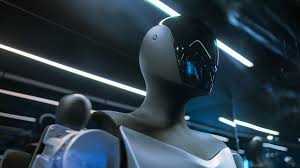
Household Robots Face Challenges: Market Growth and Open Source Solutions Ahead
The shipment of humanoid robots is surging, with IDC projecting around 18,000 units globally by 2025, a 508% increase. However, the penetration of these robots into households remains minimal, as most are still used in entertainment, education, and data collection. Ecovacs Group Chairman Qian Dongqi noted that it may take three to five years for humanoid robots to enter homes, citing a decade-long journey for their vacuum robots to achieve household integration. Despite technological advancements, the industry faces significant challenges, particularly high component costs and the lack of a robust supply chain. The performance of humanoid robots drops dramatically in real home environments, with a success rate of only 12% compared to 89.4% in simulated settings. This disparity highlights the complexities of domestic environments, which present unpredictable variables that robots struggle to navigate. To address these issues, leading companies are shifting towards open-source ecosystems. Ecovacs launched the “Eight Realms” open-source robot platform, allowing community contributions to improve functionality. Similarly, Lexiang Technology is focusing on community-driven product development. While the widespread adoption of household robots may take longer than anticipated, the path forward is becoming clearer as companies seek to engage users in defining practical applications.
Humanoid Robots Open Source Robotics Household Automation AI Robotics Development
MagicLab Showcases Comprehensive Industrial Solutions at IFA 2026 for European Market
From September 4 to 8, 2026, MagicLab will present its full-stack industrial solutions at IFA 2026, focusing on flexible handling and logistics sorting for the European enterprise market. The company aims to demonstrate its global competitiveness as an end-to-end provider of industrial-grade embodied intelligence solutions. Attendees will have the opportunity to observe the collaborative scheduling of MagicBot D1 and HyperBot, as well as experience the zero-sample generalization and anti-interference capabilities of the Magic-VLA K02 model. Three new robotic products will be showcased, including the flagship MagicBot X1, which features significant upgrades in joint modules and materials, enhancing durability and lightweight design. As European manufacturing faces challenges from an aging workforce and labor shortages, MagicLab's focus on flexible handling and logistics sorting addresses the urgent need for automation upgrades. No further timeline was disclosed at the time of publication.
Industrial Robotics AI Solutions Logistics Automation Flexible Handling Robot Collaboration
Fugro Acquires EOMAP, Adding Unique Satellite Analytics to its Water Market Solutions
Fugro has announced its acquisition of EOMAP GmbH & Co. KG, a leading company specializing in the mapping and monitoring of marine and freshwater environments using satellite Earth Observation technology. This strategic move, finalized recently, aims to enhance Fugro's existing mapping solutions and bolster its presence in the water market. By integrating EOMAP's expertise in satellite-based environmental monitoring, Fugro seeks to expand its capabilities and offer more comprehensive services to clients in the water sector.
fugro acquisition eomap satellite analytics water market solutions
Starmind's Orbital Compute vs. Terrestrial Data Centers: Analyzing Resource Advantages
Starmind's orbital compute technology presents a significant advantage over traditional ground-based data centers by eliminating constraints related to land, water, and grid permitting. While terrestrial data centers are currently cheaper and faster to construct, with U.S. data center spending reaching $85.3 billion in 2026, Starmind's approach focuses on addressing the growing resource limitations faced by hyperscale facilities. The significance of Starmind's technology lies in its ability to sidestep the increasing challenges of land and water usage. For instance, a 100 MW data center can consume approximately 530,000 gallons of water daily for cooling, while Starmind's AI1 utilizes deployable liquid radiators that require no water. This structural advantage could resonate with investors as the demand for AI computing continues to escalate, potentially leading to annual water withdrawals of up to 1.7 trillion gallons by 2027. Looking ahead, Starmind's next milestones include the launch of AI1 prototypes scheduled for early 2027. However, the technology's claims regarding cooling efficiency and operational reliability remain unverified until real flight data is available. As the industry evolves, the competition between orbital and terrestrial solutions will become increasingly relevant, particularly in the context of resource management and sustainability.
HD Hyundai Robotics Secures Order for Robotic Welding Solutions, Enters US Shipbuilding Automation Market
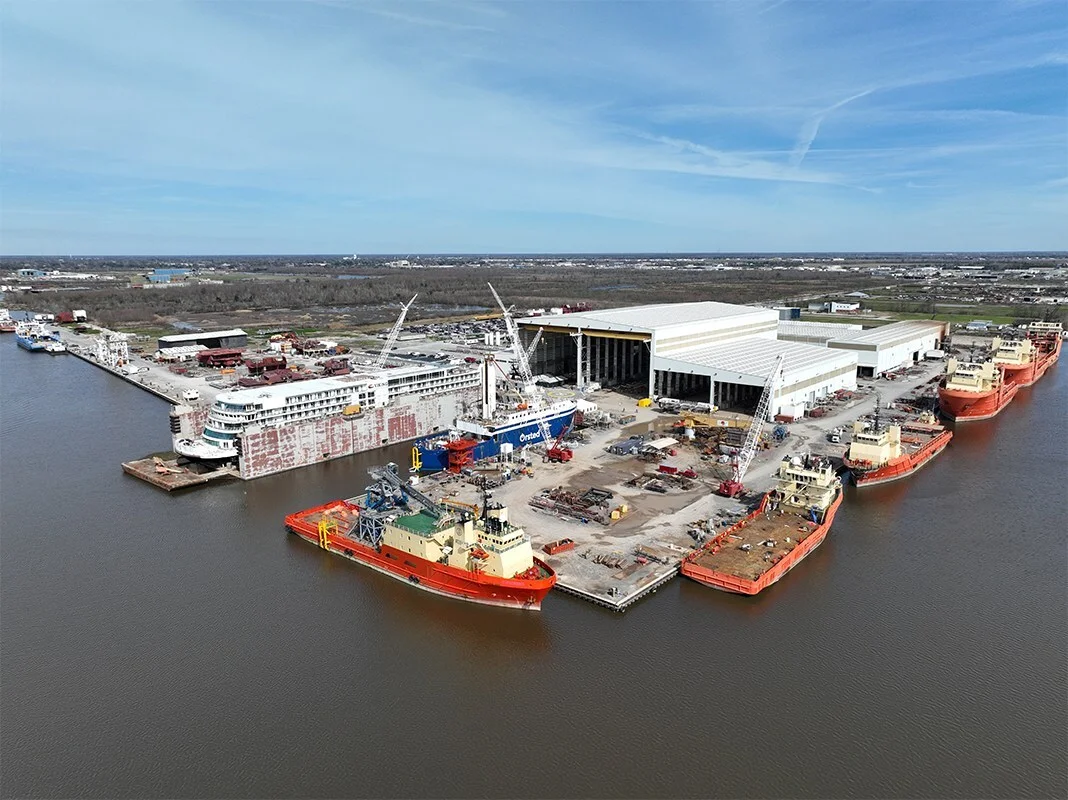
HD Hyundai Robotics, a subsidiary of HD Hyundai specializing in robot manufacturing and solutions, has officially entered the U.S. shipyard automation market. This strategic move is part of the company's commitment to advancing productivity within the shipbuilding industry, as outlined by the MASGA initiative. By establishing a presence in the U.S., HD Hyundai Robotics aims to expand its influence and capabilities in shipyard automation, responding to the growing demand for innovative solutions in this sector. The initiative reflects the company's broader goal of enhancing efficiency and productivity in shipbuilding through advanced robotics technology.
AI Capital Markets Robotics Chouset Group robotic welding robots
Humanoid Founder Artem Sokolov on Pragmatic Path to Commercial Robotics, Prioritizing Market-Ready Solutions
Artem Sokolov, the founder of the UK-based robotics firm Humanoid, has unveiled a strategic plan aimed at introducing commercially viable humanoid robots designed for industrial applications. The initiative emphasizes the importance of market readiness, affordability, and a modular design approach. Initially, the company will focus on developing wheeled robots, with a target price range of $50,000 to $70,000. By capitalizing on a 'second-mover advantage' and incorporating advanced artificial intelligence, Humanoid aims to position itself competitively in the robotics market.
HMND-01 HumanoidRobotics needs a service framework.
RSF defines a common language for robot service capability, lifecycle operations, certification pathways, and service-provider networks.
Join the RobotToday community on LinkedIn
Daily robotics news, in-depth analysis, conference highlights, and discussions with professionals worldwide.







