

Industry Briefing
A single destination for timely, editor-curated robotics news from around the world.

Toborlife AI Introduces Full-Body Teleoperation Software for Unitree G1 Humanoid Robot
Toborlife AI has launched its full-body teleoperation software for the Unitree G1 Edu humanoid robot, marking a significant advancement for US research labs and universities. This software provides a domestic solution for data collection, training, and support, ensuring that training data remains on customer hardware within the United States. The introduction of this teleoperation system is crucial as it addresses the gap in software and support for humanoid robotics in the US, where teams have struggled to integrate various open-source libraries. With the ability to control the G1 Edu in real time using a PICO VR headset, operators can perform tasks with high precision, capturing data that is immediately usable for training and model validation. Looking ahead, Toborlife AI's commitment to providing US-based technical support and training will be essential for labs aiming to leverage humanoid robots effectively. No further timeline was disclosed at the time of publication.
Humanoids News Software artificial intelligence dexterous hands dexterous manipulation
Impact of Task Complexity on Skill Retention in Surgical Robot Teleoperation Training
A recent study has revealed the influence of task complexity on skill retention in the teleoperation of surgical robots. This research provides a framework aimed at enhancing training methodologies for surgeons operating robotic systems. Understanding how different levels of task complexity affect surgeons' ability to retain skills is crucial for developing effective training programs. Improved training methods can lead to better surgical outcomes and increased efficiency in robotic surgeries, which is vital in the evolving landscape of medical technology. Looking ahead, the focus will be on implementing the proposed framework in surgical training programs to assess its effectiveness. No further timeline was disclosed at the time of publication.

Teleoperation Robot State Information Enables Sensorless Force Estimation
A recent study published in the Journal of Field Robotics explores sensorless force estimation techniques utilizing teleoperation robot state information. This innovative approach aims to enhance the efficiency and accuracy of robotic operations in various applications. The significance of this research lies in its potential to reduce reliance on physical sensors, which can be costly and complex to integrate. By leveraging state information from teleoperated robots, the method could streamline robotic systems, making them more accessible for industries that require precise force measurements without extensive sensor setups. Looking ahead, the implications of this study could lead to advancements in teleoperation technologies and their applications in fields such as remote surgery, hazardous material handling, and industrial automation. No further timeline was disclosed at the time of publication.
RESEARCH ARTICLE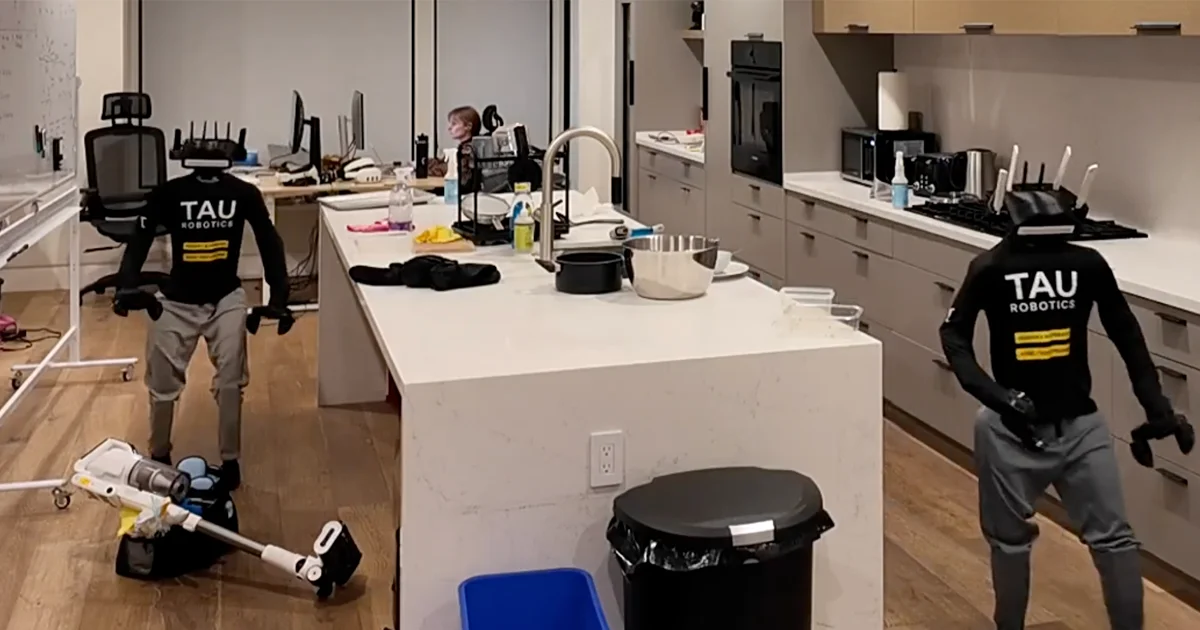
San Mateo County Approves Strict Regulations for Humanoid Robots, Impacting Teleoperation Models
The San Mateo County Board of Supervisors has unanimously approved a resolution to regulate the use of humanoid robots in commercial settings. This resolution, authored by Supervisor Ray Mueller, aims to draft an ordinance that imposes strict oversight on 'untethered, autonomous or semi-autonomous humanoid robots.' The proposed regulations could significantly affect the operational viability of robotics startups in Silicon Valley, particularly those relying on teleoperation. The ordinance mandates that any permitted humanoid robot must be supervised at all times by a trained, on-site human, which poses a substantial challenge to companies like Tau Robotics that currently offer remote-operated humanoid cleaning services. This requirement undermines the cost-saving benefits of automation, as businesses would need to pay for both the robot and a local supervisor, complicating their business models. Additionally, the resolution requires companies to conduct an Economic Impact Assessment to evaluate potential job losses and implement measures to mitigate workforce impacts. The regulations also emphasize hardware safety and public infrastructure integration, necessitating accessible emergency features and a clean safety record for robots. No further timeline was disclosed at the time of publication.
US policy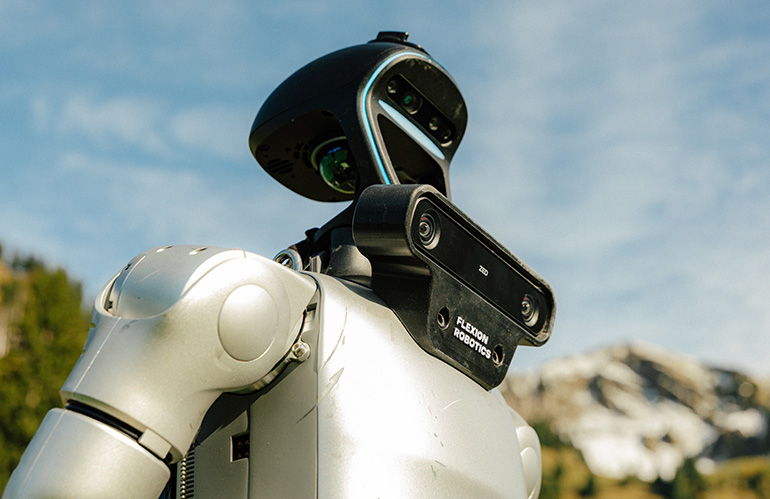
Flexion Develops Reinforcement Learning Platform to Address Teleoperation Issues in Robotics
Flexion is developing a reinforcement learning and sim-to-real platform specifically for humanoid robots. Over the past 18 months, humanoid robotics companies have raised billions, primarily funding human operators to manage robots, which has led to a teleoperation and data challenge within the industry. This reliance on teleoperation as a labor solution raises concerns about the long-term viability of training physical AI systems. The assumption that enough human demonstrations will enable robots to generalize across environments is questionable, especially given that teleoperation datasets are significantly smaller than those used for training language models, creating a growing data gap. Looking ahead, the industry must address the limitations of teleoperation and the dependency on human input for robot training. If humanoid robots require continuous human demonstrations, the original vision of automation may be compromised. No further timeline was disclosed at the time of publication.
Artificial Intelligence Artificial Intelligence / Cognition Controllers Development Tools / SDKs / Libraries Humanoids News
Allocentric Teleoperation Enhances Multirobot Coordination from Variable Perspectives
In the July 2026 issue of Science Robotics, researchers introduced allocentric teleoperation as a novel approach to enhance multirobot coordination. This method allows operators to control multiple robots from various perspectives, improving situational awareness and operational efficiency. The significance of this development lies in its potential to transform how operators interact with robotic systems. By enabling a variable perspective, allocentric teleoperation can facilitate more intuitive control and better decision-making in complex environments, which is crucial for applications in fields such as search and rescue, exploration, and industrial automation. Looking ahead, the implications of allocentric teleoperation could lead to advancements in robotic teamwork and autonomy. Future research may focus on refining this technology and exploring its integration into existing robotic systems. No further timeline was disclosed at the time of publication.
Research Article
Transitive Robotics Expands Remote Teleop to Control Robotic Arms via Internet
Transitive Robotics has extended its Remote Teleop tool to enable remote control of robotic arms over the Internet. The new version 0.20 introduces virtual reality controllers and mouse gesture commands while maintaining existing WebRTC video and stop mechanisms for mobile robots. This advancement allows for remote operation beyond just wheeled bases. This development is significant as it enhances the capabilities of robotic systems, particularly with the integration of small SO-101 arms used within the LeRobot ecosystem. The official technical page indicates that the software can simultaneously control a mobile robot and a manipulator, providing a more versatile solution for remote operations. Looking ahead, the implications of this update include potential applications in remote assistance, demonstration collection for training, manual recovery after failures, and supervision of isolated machines. However, the accuracy and performance of the system under unstable network conditions remain to be evaluated. No further timeline was disclosed at the time of publication.
Robots
Booster Robotics Unveils Full-Body Teleoperation Platform 'Booster T2' Demonstration Video
On August 30, 2026, Booster Robotics released a demonstration video of its full-body teleoperation platform, 'Booster T2', on YouTube. The platform is designed to reflect the operator's movements in real-time, accurately tracing human motions from fine finger movements to walking and squatting. The video showcases the robot synchronizing its movements with the operator, highlighting its ability to perform complex tasks such as opening drawers and picking up items. The significance of the Booster T2 lies in its potential applications in various fields, including warehouse sorting and hazardous environment operations. The technology enables precise replication of delicate human movements, which has been challenging for traditional robotic systems. This capability could transform labor and industrial practices, particularly in environments where human interaction is limited. Looking ahead, the full-body teleoperation demonstrated by Booster T2 is not just a technical showcase but holds promise for future practical applications. The ability to perform intricate tasks remotely could lead to advancements in logistics, manufacturing support, and more. No further timeline was disclosed at the time of publication.

Why Every Robot Teleoperation Team Eventually Outgrows WebRTC
WebRTC is proving to be a vital tool for robotics teams, enabling them to quickly demonstrate their innovations. However, challenges arise once the robots transition from laboratory settings to real-world applications. As organizations utilize WebRTC, they face the inevitable question of when they will outgrow the platform and what engineering efforts will be necessary in the upcoming months to adapt and enhance their capabilities. This evolution is crucial for teams aiming to stay competitive in the rapidly advancing field of robotics.

DexRobot Unveils Full Dexterous Hand Series and New DexTele Teleoperation System at Automate 2026
At this year's exhibition, a dedicated Humanoid Robot Pavilion highlights the increasing emphasis on AI-driven industrial automation. This event serves as a prime platform for DexRobot to showcase its latest advancements in robotic manipulation and high-fidelity data acquisition. The demonstration aims to illustrate how these technologies are not only becoming practical and affordable but also ready for real-world application. The focus on integrating AI into industrial processes underscores the growing trend of automation in various sectors, reflecting the industry's commitment to innovation and efficiency.

Hand Tracking Streamer: A Practical Bridge from Quest Hand Tracking to Robotics Teleoperation and Data Collection
In the field of research, the integration of high-fidelity hand-telemetry systems is frequently achieved through the use of specialized coding and tailored interfaces. These solutions are typically designed to function effectively within the confines of a specific laboratory setup, a particular machine, or a singular demonstration. This approach, while effective in isolated environments, raises concerns about scalability and adaptability across different research contexts. As researchers strive for more versatile and universally applicable systems, the reliance on bespoke solutions may hinder collaboration and innovation in the broader scientific community. The ongoing challenge is to develop standardized frameworks that can accommodate diverse setups while maintaining the high fidelity required for accurate telemetry data.
Robotics needs a service framework.
RSF defines a common language for robot service capability, lifecycle operations, certification pathways, and service-provider networks.
Join the RobotToday community on LinkedIn
Daily robotics news, in-depth analysis, conference highlights, and discussions with professionals worldwide.







