

Industry Briefing
A single destination for timely, editor-curated robotics news from around the world.
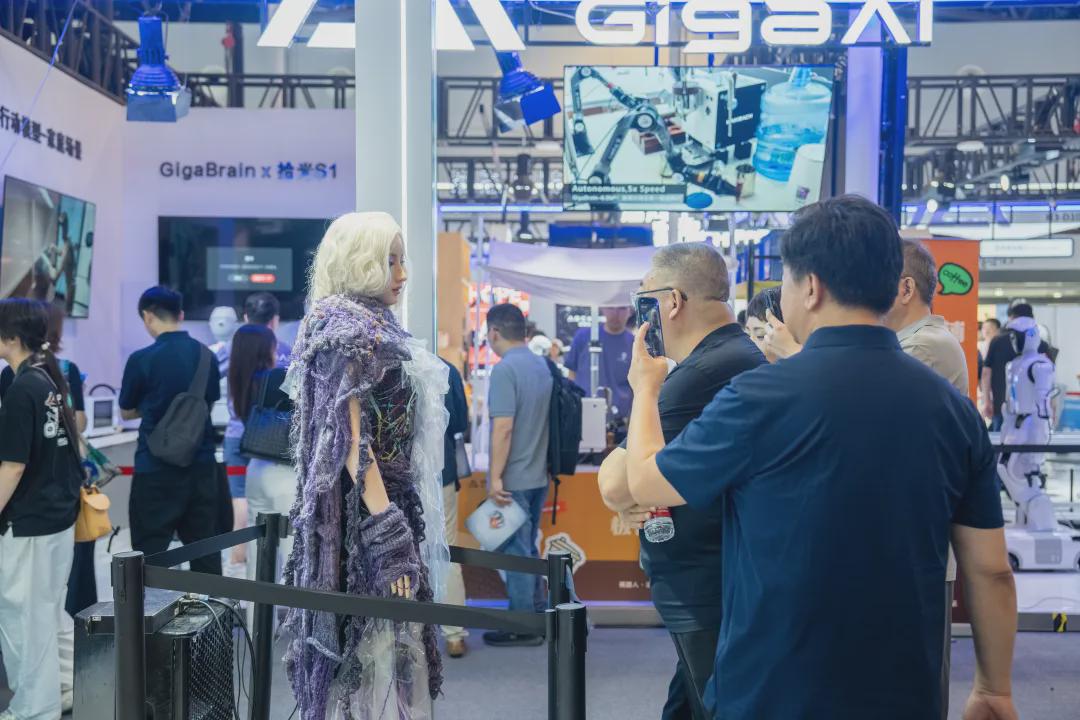
Lingdi Technology Demonstrates Advanced Clothing Simulation at WAIC 2026
At the WAIC 2026, Lingdi Technology showcased a compelling demonstration of robotic arms folding clothes, highlighting the complexities of handling flexible materials. The demonstration illustrated not just the end result of clothing manipulation but emphasized the intricate process of transforming garments into computable digital objects. This involves understanding various fabric properties and how they interact with robotic grippers, which is crucial for real-world applications in households and light industries. The significance of this demonstration lies in addressing the challenges robots face when dealing with flexible, deformable objects. Unlike rigid items, clothing can change shape and state when manipulated, requiring advanced algorithms to adapt to these variations. Lingdi Technology's SynReal World aims to bridge the gap between robotic systems and embodied models by providing a comprehensive data infrastructure for 3D asset generation, simulation training, and automated evaluation, ensuring that models undergo extensive physical interactions in a digital environment before real-world deployment. Looking ahead, the focus on flexible object simulation is critical as robots increasingly enter domestic and industrial settings. The ability to accurately simulate the handling of clothing and other soft materials will be essential for improving efficiency and reducing operational costs. No further timeline was disclosed at the time of publication.
Robotics Fabric Simulation AI Training Automation Soft Robotics
Embodied Intelligence Emerges as a Crucial Application for GPUs, Says Tang Zhimin
As the demand for artificial intelligence computing continues to rise, a significant new application is emerging for GPUs: embodied intelligence. Tang Zhimin, founder of Xiangdi, emphasized that embodied intelligence is not only a potential application area for GPUs but also one of the key physical domains capable of supporting large model computing power. This shift is crucial because embodied intelligence presents unique computational demands that differ fundamentally from traditional applications. While traditional AI applications are often static and can be batch processed in cloud or desktop environments, embodied intelligence requires real-time processing and complex interactions in the physical world. Robots must complete perception, decision-making, and execution in a closed-loop process within milliseconds, aligning perfectly with GPUs' strengths in parallel computing and low-latency inference. Looking ahead, the widespread adoption of embodied intelligence will significantly influence GPU manufacturers' positioning in the smart hardware ecosystem over the next decade. Companies that can effectively integrate chips, algorithms, and real-world applications will gain a competitive edge in this intelligent transformation, making advancements in embodied intelligence a critical foundation for the future of smart societies.
Embodied Intelligence GPU Technology Robotics AI AlgorithmsRobotics needs a service framework.
RSF defines a common language for robot service capability, lifecycle operations, certification pathways, and service-provider networks.
Join the RobotToday community on LinkedIn
Daily robotics news, in-depth analysis, conference highlights, and discussions with professionals worldwide.







