
Top News

Industry Briefing

A single destination for timely, editor-curated robotics news from around the world.

ASELSAN Presents Comprehensive UAV Payload Ecosystem at Farnborough

ASELSAN Presents Comprehensive UAV Payload Ecosystem at Farnborough

ASELSAN showcased a wide range of integrated payloads for uncrewed aerial vehicles (UAVs) at the Farnborough International Airshow. The portfolio includes advanced electro-optics, AESA radars, electronic warfare systems, and precision-guided munitions, all aimed at improving the operational capabilities of next-generation UAVs. This presentation is significant as it highlights ASELSAN's commitment to advancing UAV technology, which is increasingly vital for modern military operations. The integration of these sophisticated payloads is expected to enhance the effectiveness and versatility of uncrewed platforms in various operational scenarios. Looking ahead, industry stakeholders should monitor ASELSAN's developments in UAV technologies and the potential adoption of these systems by military forces worldwide. No further timeline was disclosed at the time of publication.

Air Warfare Sponsored Post AESA radar Air Force Aselsan Farnborough Drones
New Soft Mechanical Force Sensor Enables Instant Touch Detection in Robotics

New Soft Mechanical Force Sensor Enables Instant Touch Detection in Robotics

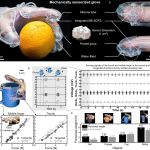
Researchers from the National University of Singapore have developed a soft mechanical force sensor, named ME-SOFS, which allows robots to detect touch and respond instantly without electronics. This innovation transforms applied force into fluid flow, activating soft robotic actuators and creating a fully mechanical sensing-to-action process. The ME-SOFS sensor, made entirely from flexible materials, eliminates the need for traditional electronic sensors, reducing complexity and potential failure points. Its design is particularly beneficial for soft robots operating in extreme environments, such as underwater or inside the human body, where electronic systems may fail. Future applications of the ME-SOFS sensor include integration into soft robotic systems, such as a glove that measures grasping forces and a haptic pad for touch feedback. This technology could significantly enhance prosthetics and human-machine interfaces. No further timeline was disclosed at the time of publication.
AI and Robotics
Flexible Soft Sensor Enables Robotic Action Without Traditional Electronics

Flexible Soft Sensor Enables Robotic Action Without Traditional Electronics

Researchers have developed a new soft sensor that allows soft robots to convert touch into action without relying on traditional electronic components. This innovation addresses a critical limitation in soft robotics, which often depend on bulky electronic sensors and actuators. The sensor is made from flexible materials, enhancing the robot's adaptability for various applications, including minimally invasive surgery and deep-sea exploration. The significance of this development lies in its potential to simplify the design and functionality of soft robots. By eliminating the need for electronic sensors and circuits, the new soft sensor reduces weight and complexity, making robots more efficient and reliable in challenging environments. This advancement could lead to broader applications in sectors where traditional electronics may fail, such as in wet or high-pressure conditions. Looking ahead, the next steps involve further testing and refinement of the soft sensor technology. Researchers aim to explore its integration into existing soft robotic systems and assess its performance in real-world scenarios. No further timeline was disclosed at the time of publication.

Robotics
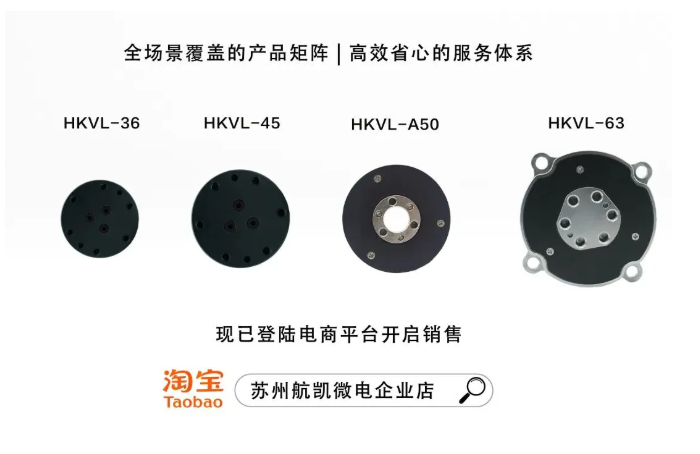
300% FS Safe Overload and 0.01N Resolution: Launch of HKVL Series Six-Dimensional Force Sensors by Hangkai Microelectronics

300% FS Safe Overload and 0.01N Resolution: Launch of HKVL Series Six-Dimensional Force Sensors by Hangkai Microelectronics

Hangkai Microelectronics has introduced its latest innovation, the HKVL series six-dimensional force sensors, aimed at enhancing robotic force control. The sensors have undergone rigorous testing, showcasing remarkable performance in extreme overload scenarios and micro-force detection. This advancement promises to significantly improve reliability and accuracy in various industrial automation and robotics applications. The launch of these sensors marks a pivotal step in the company's commitment to advancing technology in the field, addressing the growing demand for precision in automated systems.

Force Sensors Robotics Industrial Automation Precision Control
Optical Tactile Sensing Approaches Human Recognition: Low-Cost, Reliable Solutions from Guangma Future

Optical Tactile Sensing Approaches Human Recognition: Low-Cost, Reliable Solutions from Guangma Future

Guangma Future has introduced the TOUCH-X tactile sensor, a groundbreaking innovation that utilizes advanced optical technology to deliver high-frequency sampling and exceptional performance while eliminating electromagnetic interference. Launched recently, this sensor is designed to significantly improve the capabilities of robots in precision tasks and enhance their interactions with humans. The development comes in response to the increasing demand for advanced tactile sensors in various applications, reflecting the company's commitment to advancing robotics technology.

Tactile Sensors Robotics Optoelectronics Industrial Automation
Exail Integrates Elwave’s Electromagnetic Sensing Technology Into R7 ROVs

Exail Integrates Elwave’s Electromagnetic Sensing Technology Into R7 ROVs

Exail, a prominent player in maritime robotics, has partnered with Elwave to enhance its R7 Remotely Operated Vehicles (ROVs) with advanced electromagnetic sensing technology. This collaboration involves the integration of Elwave’s Tetrapulse sensors, which utilize the cutting-edge CEDAR (Controlled Electric Detection And Ranging) technology. The deployment of these sensors will occur across multiple R7 ROVs, although the identity of the client benefiting from this enhancement remains undisclosed. This strategic move aims to bolster the capabilities of Exail’s ROVs, ensuring they remain at the forefront of maritime exploration and operations.

exail elwave electromagnetic sensing technology r7 rov
electronica Shanghai 2023 Highlights Embodied Intelligence with Dual Core Focus

electronica Shanghai 2023 Highlights Embodied Intelligence with Dual Core Focus

The electronica Shanghai 2023 exhibition is set to occur from July 1 to July 3 at the Shanghai New International Expo Centre. This year, the event will host over 1,900 exhibitors and feature advanced technology forums, all centered around the theme of embodied intelligence. The exhibition aims to highlight innovations in core components and sensors that are vital for the development of robotics. By bringing together industry professionals, the event seeks to foster connections and facilitate discussions on the future of electronics.

Embodied Intelligence Robotics Sensors Semiconductors Electronics Expo
Why is Cobot Polishing Important for Electronics and Auto Parts Quality?

Why is Cobot Polishing Important for Electronics and Auto Parts Quality?

In the high-end electronics and automotive manufacturing sectors, the introduction of collaborative robots, or cobots, is revolutionizing the surface finishing process. Traditionally reliant on manual labor, which often resulted in inconsistencies and human error, these industries are now leveraging advanced technology to enhance quality and efficiency. The challenge of polishing complex geometries—such as intricate smartphone frames and engine components—has been addressed through the implementation of force-controlled cobots. Unlike conventional robots, these cobots can adjust their pressure in real-time, ensuring uniform contact with varying surface shapes. This capability is crucial for maintaining the integrity of delicate materials and achieving high-quality finishes. The benefits of adopting cobot polishing are significant. They provide consistent pressure across multiple parts, reducing batch variance and ensuring compliance with strict OEM standards. Additionally, the precision of these robots minimizes scrap rates, translating to substantial cost savings in industries where material expenses are critical. Furthermore, by automating the polishing process, human workers can avoid exposure to hazardous dust, allowing them to focus on higher-level tasks. JAKA has developed the S series of collaborative robots, specifically designed for force-sensitive applications. The JAKA S5 model, with its advanced force sensors and agile design, is particularly suited for the electronics and automotive industries. It offers features such as constant force tracking and wireless management through the JAKA App, enhancing the precision and adaptability of the polishing process. By integrating these intelligent robots into their operations, manufacturers are moving towards achieving near-zero defect rates, setting a new standard for quality in surface finishing.

Assembly Robots for Consumer Electronics: Challenges and Solutions

Assembly Robots for Consumer Electronics: Challenges and Solutions

The consumer electronics industry is increasingly adopting specialized assembly robots to address the challenges posed by rapid product life cycles and the need for precision in manufacturing. As smartphones, wearables, and home gadgets evolve, traditional manual assembly methods struggle to keep up with the demand for high-quality production. This shift is driven by the need for accuracy in handling densely packed components, which require sub-millimeter precision and are sensitive to electrostatic discharge. To adapt to frequent design changes and seasonal updates, manufacturers are turning to flexible automation solutions. These advanced robots can be quickly reprogrammed and equipped with modular end-effectors, enabling them to perform various tasks across different product lines. The integration of 2D and 3D vision systems enhances quality control, allowing robots to make real-time adjustments to ensure precise assembly. JAKA, a leader in robotics technology, has developed the JAKA A12L, designed specifically for the electronics sector. This robot offers a long reach and high payload capacity, making it suitable for large-format assembly. With an impressive repeatability of ±0.03mm, JAKA's solutions meet the stringent requirements of consumer electronics manufacturing. The company emphasizes ease of integration and safety, providing an open software ecosystem for seamless communication with vision sensors and factory systems, along with user-friendly wireless control through the JAKA App. This innovation positions manufacturers to turn production challenges into competitive advantages.

How Collaborative Robots Are Improving Quality Control in Electronics Manufacturing

How Collaborative Robots Are Improving Quality Control in Electronics Manufacturing

The electronics industry is undergoing a significant transformation as manufacturers increasingly adopt collaborative robots to enhance quality control and inspection processes. With rapid product lifecycles and the demand for zero-defect production, traditional automation methods often fall short in the high-mix, low-volume production environment typical of modern tech manufacturing. Collaborative robots, or cobots, are now being integrated into precision testing and visual inspection lines, offering the speed and accuracy needed while maintaining the flexibility required for delicate electronic assembly. These robots can perform Automated Optical Inspection (AOI) with sub-millimeter precision, significantly reducing the risk of human error associated with fatigue and perceptual blindness during long shifts. Companies like JAKA are leading this innovation by developing robots equipped with advanced 2D and 3D vision systems. Their JAKA AL series features an integrated vision system that allows the cobot to autonomously identify components and check for assembly errors without the need for external cameras. This capability enables real-time adjustments to the production line, helping to identify quality drifts before they result in defective batches. JAKA’s engineering emphasizes safety and high performance, with models like the JAKA Zu series designed for high-speed testing while ensuring safe human interaction through torque-feedback collision detection. By investing in JAKA collaborative robots, manufacturers can ensure that every device produced meets stringent global standards, thereby maintaining a competitive edge in the electronics market.

Integrating Force/Torque Sensors into the Flange of an Articulated Robot Arm

Integrating Force/Torque Sensors into the Flange of an Articulated Robot Arm

In the evolving field of automation, the integration of force/torque (F/T) sensors into robotic systems has become essential for enhancing precision and safety in industrial applications. Traditional robots, which operate on pre-programmed coordinates, are now being outpaced by articulated robots equipped with these advanced sensors. By embedding the sensors directly into the mounting flange—where the robot arm connects to its tool—manufacturers can achieve unprecedented levels of responsiveness to physical resistance in real-time. These 6-axis F/T sensors measure both linear forces and rotational torques, allowing for accurate data collection at the point of contact. This capability is particularly crucial in tasks such as delicate component insertion and high-precision screwdriving, where even minor deviations in force can lead to damage. Additionally, the integration of these sensors enhances the robot's operational intelligence, enabling features like active gravity compensation and improved collision detection, which contribute to a safer collaborative environment for human operators. JAKA has taken significant strides in this area with its S series robots, which feature built-in high-accuracy force sensors that eliminate the need for bulky external attachments. This design not only preserves the robot's agility but also enhances its sensitivity, facilitating smoother operation during complex tasks in sectors like electronics and industrial welding. With an accuracy of 1% FS and a distinguishability of 0.1N, JAKA's technology allows for real-time force monitoring and simplifies the debugging process, ultimately leading to more efficient and reliable production lines.

Researchers build a robotic swarm with no electronics, no batteries and no brains

Researchers build a robotic swarm with no electronics, no batteries and no brains

Researchers at Georgia Tech have developed innovative swarms of tiny robotic particles that operate without any electronic components, such as sensors or processors. Led by Bolei Deng, an assistant professor in the Daniel Guggenheim School of Aerospace Engineering, and Ph.D. student Xinyi Yang, the team has drawn inspiration from the simplicity of LEGO bricks, which fit together seamlessly without the need for complex technology. This groundbreaking work showcases how these robotic particles can latch, release, and reorganize autonomously, opening new possibilities for applications in various fields. The research highlights a novel approach to robotics that emphasizes mechanical interaction over electronic intelligence, potentially leading to more resilient and adaptable systems.

Robotics
Q&A: Robots can't feel, but novel sensors could change that

Q&A: Robots can't feel, but novel sensors could change that

A research team led by Huanyu "Larry" Cheng, an associate professor of engineering science and mechanics at Penn State, is developing an advanced electronic "skin" that incorporates pressure sensors. These tiny devices, comparable in size to a paperclip, are capable of measuring force applied over a surface area. The initiative aims to enhance the functionality of robots and prosthetic limbs, providing them with a heightened sense of touch and responsiveness. This innovative project is part of ongoing efforts to improve human-robot interaction and the usability of prosthetic devices, ultimately seeking to bridge the gap between technology and human sensory experience.

Robotics
Top 6 Applications of Industrial Cobots in the Electronics Manufacturing Industry

Top 6 Applications of Industrial Cobots in the Electronics Manufacturing Industry

In the rapidly evolving electronics manufacturing sector, JAKA is pioneering the use of industrial collaborative robots to enhance production processes. The company has implemented these robots to manage delicate components on assembly lines, significantly reducing human error and product damage. Utilizing the JAKA Pro16, operators can handle payloads between 3kg and 18kg with precision, allowing for smooth assembly operations and enabling staff to concentrate on more complex tasks. In addition to assembly, JAKA employs the Pro16 for precision welding and soldering, facilitating manual arc control and wire feeding. This robot's load-and-go functionality streamlines the deployment of welding processes, while its compatibility with various welding machines enhances versatility across production setups. Quality assurance is another critical area where JAKA's industrial cobots excel. By integrating vision systems for automated optical inspection and functional testing, the company minimizes defects in production, ensuring consistent quality through precise calibration over repeated cycles. Furthermore, JAKA's robots automate material transport and packaging, ensuring the timely handling of components and finished products. Their flexible programming and compact design allow for seamless integration into high-density production lines, improving material flow and reducing bottlenecks. Overall, JAKA's industrial collaborative robots are transforming electronics manufacturing by increasing precision, reducing errors, and boosting productivity. The company is committed to exploring new applications to further enhance operational excellence and maintain a competitive edge in the industry.

Leading Electronic Skin Company Receives Strategic Investment from Mousse, Valued Over 1 Billion Yuan

Leading Electronic Skin Company Receives Strategic Investment from Mousse, Valued Over 1 Billion Yuan

Mousse has made a significant investment of over 10 million yuan in Huawike Intelligent Technology, raising the latter's valuation to over 1 billion yuan. This strategic move comes as Huawike, a frontrunner in the development of flexible tactile sensors for humanoid robots, aligns its technology with Mousse's smart sleep products. The integration of Huawike's advanced sensors will enhance Mousse's ability to collect precise data, which is crucial for refining algorithms and improving user experiences in smart home applications. This partnership reflects Mousse's commitment to innovation in the smart technology sector, aiming to elevate the functionality and appeal of its offerings.

Flexible Sensors Smart Sleep Technology Humanoid Robots AI Home Automation
Heavy‐UUV Docking System for a Fixed Seabed Station Based on Differential Optical‐Guidance Beacons

Heavy‐UUV Docking System for a Fixed Seabed Station Based on Differential Optical‐Guidance Beacons

The Journal of Field Robotics has recently published an early view article highlighting advancements in robotic technology. Researchers from various institutions have collaborated to develop a new autonomous navigation system that enhances the efficiency and safety of field operations. This innovative system was tested in agricultural settings in California during the summer of 2023, where it demonstrated significant improvements in crop monitoring and resource management. The motivation behind this research stems from the growing need for precision agriculture, which aims to optimize farming practices and reduce environmental impact. By integrating advanced sensors and machine learning algorithms, the team was able to create a robotic platform capable of navigating complex terrains while collecting valuable data on soil health and crop conditions. The successful implementation of this technology could revolutionize the agricultural sector, providing farmers with tools to make informed decisions and increase productivity. The findings are expected to contribute to ongoing discussions about sustainable farming practices and the role of robotics in addressing global food security challenges.

RESEARCH ARTICLE
New US turret fires 54 barrels in 360 degrees at drone swarms using acoustic sensors

New US turret fires 54 barrels in 360 degrees at drone swarms using acoustic sensors

A US startup is at the forefront of innovation in drone warfare, focusing on the development of advanced swarm attack strategies and jam-resistant aircraft. This initiative comes as military tactics evolve to incorporate faster and more efficient unmanned aerial vehicles. The startup aims to enhance operational capabilities for defense forces by leveraging cutting-edge technology to counteract electronic warfare and improve the effectiveness of drone missions. With the increasing reliance on drone technology in modern conflicts, the company is positioning itself to meet the growing demand for sophisticated aerial combat solutions. The advancements are expected to play a crucial role in future military engagements, ensuring that armed forces can maintain a strategic advantage in the face of evolving threats.

Steel, Sensors and Silicon: How Caterpillar Is Bringing Edge AI to the Jobsite

Steel, Sensors and Silicon: How Caterpillar Is Bringing Edge AI to the Jobsite

At the Consumer Electronics Show (CES), Caterpillar announced its plans to integrate NVIDIA technologies, including the advanced NVIDIA Jetson Thor and innovative speech models, to revolutionize heavy industries. This strategic move, unveiled during the event, aims to enhance operational efficiency and safety in sectors such as construction and mining. By leveraging cutting-edge AI and machine learning capabilities, Caterpillar seeks to streamline processes and improve decision-making in challenging environments. The collaboration with NVIDIA reflects Caterpillar's commitment to embracing digital transformation and staying at the forefront of technological advancements in the industry.

Cyborg Cockroaches Equipped for Underwater Rescue Operations

Cyborg Cockroaches Equipped for Underwater Rescue Operations

Researchers from Nanyang Technological University in Singapore and Waseda University in Japan have developed a unique application for cyborg Madagascar hissing cockroaches. By outfitting these insects with miniature diving suits, they can now navigate underwater for up to three hours, providing innovative solutions for disaster rescue operations. This advancement is significant as it combines living organisms with electronic devices, allowing the cockroaches to utilize their own muscle and nervous systems for movement. Unlike purely mechanical robots, these cyborg cockroaches have a lower energy consumption, making them more efficient for tasks in challenging environments, such as underwater scenarios. The research team is currently enhancing these cyborg cockroaches with miniature sensors, cameras, and advanced navigation systems. In the future, they may be deployed in disaster situations like floods or earthquakes to access hard-to-reach areas, helping rescue teams locate trapped individuals. No further timeline was disclosed at the time of publication.

Cyborg Insects Disaster Rescue Technology Underwater Robotics Microelectronics
Silicon Sensing Produced its 30 Millionth Inertial Sensor

Silicon Sensing Produced its 30 Millionth Inertial Sensor

Silicon Sensing Systems Ltd has reached a significant milestone by producing its 30 millionth inertial sensor. Established in 1999, the company has become a key player in the global market, supplying advanced inertial sensors and systems across various sectors, including robotics, industrial production, marine, aerospace, defense, transport, and space. The company's innovative approach centers on high-performance gyroscopes, accelerometers, inertial measurement units (IMUs), and combi-sensors, all leveraging its proprietary micro electro-mechanical systems (MEMS) technology. These products are designed to outperform traditional systems, such as fiber optic gyros (FOG) and dynamically tuned gyros (DTG), by offering superior performance in a more compact and robust form. This achievement underscores Silicon Sensing's commitment to advancing sensor technology and meeting the evolving demands of diverse industries worldwide.

silicon sensing systems production milestone inertial sensor micro electro-mechanical systems (mems) gyros inertial nvigation
Kongsberg Discovery to Accelerate Innovation by Acquisition

Kongsberg Discovery to Accelerate Innovation by Acquisition

Kongsberg Discovery has announced an expansion of its product portfolio to enhance its capabilities in detecting and interpreting complex underwater environments through the introduction of advanced electromagnetic sensors. This strategic move aims to bolster the company's position in the underwater exploration market. By integrating these new sensors, Kongsberg Discovery seeks to provide more accurate and efficient solutions for various applications, including marine research, resource exploration, and environmental monitoring. The initiative reflects the company's commitment to innovation and meeting the evolving needs of its clients in the underwater technology sector.

kongsberg discovery acquisition argeo sensors
Robotic Hands Prices Plummet from 100,000 to 10,000 Yuan, Humanoid Robots Enter Homes

Robotic Hands Prices Plummet from 100,000 to 10,000 Yuan, Humanoid Robots Enter Homes

In a robotics lab in Shenzhen, engineer Huang Junlin is training a six-degree-of-freedom robotic hand for home use. Unlike industrial applications, home scenarios demand higher standards for weight, cost, and usability, prompting a significant reduction in humanoid robot costs. The robotic hand, a crucial and complex component, previously priced at 100,000 Yuan, now costs around 10,000 Yuan due to advancements in supply chain maturity and technology breakthroughs. The reduction in price is pivotal as it opens the door for consumer-grade humanoid robots, with the global market projected to exceed 20 billion Yuan by 2026. In 2025, the market is expected to reach 17 billion Yuan, with a shipment volume of approximately 18,000 units, marking a year-on-year growth of over 500%. China's share is anticipated to surpass 50%, with shipments expected to rise to 62,500 units by 2026, indicating a robust demand for humanoid robots. The surge in consumer humanoid robots is catalyzing the formation of a new supply chain ecosystem, including advancements in bionic skin, tactile sensors, and flexible materials. A new materials company in Jiaxing has developed third-generation electronic skin capable of multimodal perception and real-time feedback. As robotic hands become more affordable and tactile sensing technology advances, the integration of humanoid robots into homes may occur sooner than anticipated, marking the beginning of a revolution in robotics.

Humanoid Robots Robotic Hands AI Technology Consumer Robotics
Tesla Supplier New Sword Seeks 2.822 Billion Yuan in IPO for Robotics Expansion

Tesla Supplier New Sword Seeks 2.822 Billion Yuan in IPO for Robotics Expansion

Hangzhou New Sword Electromechanical Transmission Co., Ltd. has submitted its IPO application to the Shenzhen Stock Exchange, aiming to raise 2.822 billion yuan by issuing up to 27.99 million shares. Established in 1999, the Zhejiang-based company is recognized as one of the three major players in Tesla's humanoid robot supply chain, primarily supplying planetary roller screws for the Tesla Optimus robot. The significance of this IPO lies in New Sword's projected revenue growth, which is expected to rise from 263 million yuan in 2023 to 383 million yuan by 2025. The company anticipates a dramatic increase in revenue from the embodied intelligent robotics sector, with projections of 31.11 million yuan by 2025, marking a 346% year-on-year growth. The funds raised will primarily support the industrialization project for producing 1 million humanoid robots and automotive planetary roller screws, with a total planned investment of 2.6 billion yuan. Looking ahead, New Sword's business model is shifting as it evolves from a single screw supplier to a comprehensive assembly supplier, including sensors and motors, for Tesla. The company aims to capitalize on the anticipated demand for Tesla's Optimus robots, with CEO Elon Musk indicating a target of 1 million units annually by the end of 2026. However, the timeline for mass production has faced multiple adjustments since the project's announcement in 2021, leaving uncertainty in the market.

Humanoid Robots IPO Supply Chain Electromechanical Components
Chinese University Develops OriCube Sensor to Enhance Robot Tactile Sensitivity

Chinese University Develops OriCube Sensor to Enhance Robot Tactile Sensitivity

Researchers from the University of Science and Technology of China have developed the OriCube, a compact six-dimensional force/moment sensor that mimics human fingertip sensitivity. Measuring just 14×14×12 mm and weighing 4 grams, it achieves a remarkable resolution of 3 millinewtons within a 23-newton range, allowing it to detect even the lightest touch, such as a feather. This innovation is significant as it addresses the limitations of current robotic tactile solutions, which often rely on electronic skin or array sensors that face challenges like complex wiring and data processing. By embedding the OriCube directly into the fingertips of robotic hands, the sensor captures minute force changes and calculates precise contact points and force vectors, offering a new approach to tactile perception in robotics. The OriCube has demonstrated low power consumption of 45 milliwatts, minimal crosstalk, and high measurement accuracy. Its ability to sense both delicate touches and withstand impacts positions it as a robust solution for enhancing robotic dexterity in uncertain environments. No further timeline was disclosed at the time of publication.

Robotics Tactile Sensors Force Sensing Artificial Intelligence
Soft Graphene Muscle Enables Robots to Maintain Stability for Over 13 Hours

Soft Graphene Muscle Enables Robots to Maintain Stability for Over 13 Hours

Researchers from Sun Yat-sen University and Tsinghua University have developed a soft robot capable of maintaining stability against disturbances for over 13 hours. This innovation utilizes an ultrathin soft muscle, known as Soft Graphene Muscle (SGM), which integrates self-sensing, electrothermal actuation, and disturbance control without the need for external sensors. The significance of this development lies in its potential to enhance the operational capabilities of soft robots in real-world environments. Traditional soft robots often struggle with stability due to their flexible structures, which can amplify disturbances. The SGM's ability to adaptively balance objects heavier than itself marks a significant advancement in soft robotics, moving closer to practical applications. Future developments to watch include the potential for further integration of sensing and control within soft materials, as well as the implications for deploying soft robots in complex environments. The research was published in eScience, highlighting the collaborative efforts of experts in biomedical engineering and integrated circuits from both universities.

Soft Robotics Adaptive Control Robotics Engineering AI Material Science
HeShan Technology Raises Hundreds of Millions in Series B Funding Amid Fourfold Order Growth

HeShan Technology Raises Hundreds of Millions in Series B Funding Amid Fourfold Order Growth

HeShan Technology, based in Beijing, has successfully completed a Series B funding round, raising hundreds of millions of yuan. The investment comes from a mix of industrial capital and specialized investment firms, including TaiPing Innovation and Junsheng Electronics. This funding marks the third financial boost for the company in six months, with plans for a Series C round already underway. HeShan reported that its total orders in the first half of the year reached four times that of the previous year, with monthly deliveries of tactile sensors stabilizing at tens of thousands. The significance of this funding round lies in the clear investment trends within the robotics sector. Investors like Junsheng Electronics and AUX are focusing on practical technologies that can integrate with existing production lines, moving away from speculative concepts. HeShan has established a comprehensive stack covering chips, sensors, and data simulation, addressing the growing demand for tactile perception in smart healthcare devices, especially as the aging population increases in China. Looking ahead, HeShan Technology's next milestone will be the advancement of its Series C funding efforts. The company is poised to leverage its tactile technology to enhance safety in elderly care scenarios, collaborating with industry partners. No further timeline was disclosed at the time of publication, but the strong order volume and delivery capabilities position HeShan as a leader in the tactile robotics market, addressing the industry's need for mature, scalable solutions.

Tactile Sensors Robotics Industrial Automation AI Technology
Small-AI Models Gain Traction Around the World

Small-AI Models Gain Traction Around the World

One morning in 2019, Adebayo Alonge was in a Cape Town hotel room, preparing to demonstrate his startup’s AI answer to a serious problem in African health care: counterfeit medication, which kills thousands of people across the continent every year.The RxScanner is a handheld spectrometer that scans a pill with infrared light, then sends the item’s molecular profile to an AI model equipped with a pharmaceutical database. In seconds, the AI identifies the medication from its molecular profile—or reports that it’s phony.Pharmacies were using the system in more than a dozen countries, including Ghana, Kenya, Myanmar, and Alonge’s native Nigeria. But that morning in South Africa, it didn’t work. “I was shocked,” Alonge says.The spectrometer connected to the AI model—but the data center was 14,000 kilometers away and bandwidth was limited. “Our server was in the United States, and just to get the result of a single scan was taking me over 5 minutes.”So Alonge immediately asked his engineers to shrink the AI model down to a smaller, low-power, unconnected version that could run entirely on his Android phone. They produced it 2 hours later, and that saved the demo.More importantly, the work birthed a new version of his device, which can authenticate a pill in places without broadband, computers, or even reliable electricity. It also turned Alonge into an advocate for this kind of “small AI.”Small AI for Global Health Care AccessSmall AI is a far cry from wealthy nations’ colossal large language models (LLMs), hyperscale data centers, multibillion-dollar investments, and debates about AI consciousness. But for millions of people around the world, the only AI that matters, and often the only kind available, is small. (According to a World Bank Report issued in November, only 0.7 percent of internet users in the world’s poorest countries have used ChatGPT, compared to a quarter of all internet users in the most developed nations.)“Most people are discussing AI from the LLM/generative side. But that needs a lot of computing power, electricity, massive data, and skilled people to manage it,” Ajay Banga, president of the World Bank, said last January at the World Economic Forum, in Davos. “Outside the developed world, other than maybe India and China, very few countries have that combination.”By contrast, small AI can deliver useful, even life-saving services to people in areas that have none of those things, Banga said. In India, where the government’s AI plans call for more development of small AI, many such systems are working for farmers.For example, a drone-based system developed by Bala Murugan and colleagues at the Vellore Institute of Technology, in India, takes photos of cashew plants and quickly identifies those with splotches that indicate disease. All the processing takes place on the drone itself, so there’s no need for a computer on-site, nor for a connection to a central server.Using small language models trained for a specific problem, and sometimes running on cheap, low-power devices, other small-AI implementations have been developed to identify ant infestations in a Uruguayan vineyard, detect the presence of malaria-carrying mosquitoes in a number of nations, and run electrocardiograms from an Arduino device in parts of Brazil that lack access to more complex equipment.“This is the most important area in AI nowadays,” says Marcelo José Rovai, a professor at the Institute of Engineering and Information Systems at the Federal University of Itajubá, in Brazil, who was involved in all three projects. “It’s growing very fast.”Low-Power, Small-AI Models on Devices Small AI models can run on a variety of low-power devices, including [from left to right] an Arduino Nano 33 BLE Sense, a Seeed Wio Terminal, and an Arduino Portenta.Moez AltayebFor Alonge, Rovai, and other advocates, small AI is not just “a promising trend,” as that November World Bank report calls it. It may be, in the long term, the form of AI that will touch the most lives and remain sustainable after some of the giant models become too costly for most users.“I think the future of AI is not like one giant model, at a center. I think it’s millions of small, precise models deployed at the edge, each one solving like a specific problem, a specific context,” Alonge says. This is partly because much of humanity—including people in parts of rich countries as well as the developing world—lives without access to cutting-edge frontier models. But, he says, it’s also because those models are not sustainable.“If someone is not subsidizing it, most people will not be able to afford those models. So those of us who are said to be small-AI developers are the ones who will have to build for the majority of the world,” Alonge says.There is no strict definition of “small AI,” but people often use the term for language models with at most a few billion parameters. (Compare that to cutting-edge models, which can include more than a trillion.) That’s small enough to run directly on a phone or a Raspberry Pi. That’s what allows these applications to run on devices without a connection to a data center and use only a few watts of power, often supplied by a battery or a solar panel.Despite their small footprint, these models aren’t fundamentally different technology from that of gigantic AI models, Rovai says. Many instances of small language models were created the same way the phone-based version of Alonge’s pharmaceuticals scanner was—by “pruning” large models, or removing the parameters that weren’t involved in the task. The result is a system that’s less capable generally but still very good at the specific job it was pruned for, Rovai says. A lighter version of RxAll’s RxScanner spectrometer sends its results to an AI model run locally on a phone to check that a drug’s molecular signature is genuine.RxAllOther small models are created by “distillation.” They are trained to mimic a large model, until their performance approaches that of their “teacher,” Rovai says. In other cases, a larger model’s precision is reduced, for example, so that a model run on 32-bit architecture can run on 8-bit designs. In situations where the machine learning application is being used to classify data or predict patterns (like an ant infestation), it’s trained from the beginning on a small device, not derived from a larger model at all. Running all these small, specialized systems is becoming easier, Rovai says, for two reasons.The first reason is that hardware is getting better and more capable while using less power, he says. This means more and more phones can run small AI—especially those equipped with neural processing units, which are specialized chips that handle AI tasks like facial recognition and changing the brightness, shadows, or contrast in a photo.In 2025, slightly more than a third of all smartphones shipped worldwide were capable of running generative AI, and that figure will reach 45 percent by the end of this year, according to the technology research firm Counterpoint. By the end of next year, slightly more than half of all smartphones will be able to run a small AI model.The second reason Rovai cites is the shrinking footprint of language models. Both Google DeepMind’s Gemma 4 (released in April) and Alibaba’s Qwen 3.5 are “fantastic” for small AI, Rovai says. Both models are “open weight,” meaning users can adjust the connections between parameters to suit their needs. This makes it easy, for example, “to take a lot of data from, say, the milk industry and retrain the model specifically on that,” Rovai says.Rovai illustrated these reasons on a Zoom call, using one of his most recent experiments. Holding up a device, he says, “This is the new Arduino UNO Q—a US $50 device with a Qualcomm chipset. I’m running a language model here, which collects data from sensors and analyzes that data to detect tiny pools of water where mosquitoes might be breeding. It takes 3 watts to run it.”Support for Small-AI DevelopmentConvinced that millions of people are already benefiting from these kinds of applications, the World Bank now actively promotes small AI with grants, mentorship programs, financing, technical advice, and models of government policies that are friendly for small-AI development. For example, in Rwanda, the World Bank is backing a government program to help low-income households get devices that can run AI.All that said, no one claims that large language models are going away entirely. To create a generative AI that can run on a phone or other small device requires the architectural insights, data processing, and results of a larger model, Rovai says. “We need the big models to create these smaller models.” And for all that small AI can benefit people without access to big AI, the technology can’t solve the larger problems of development and digital inequality, Alonge says. Implementing small AI won’t allow nations to escape the challenge of creating an ecosystem to support AI: reliable power, a supply chain that works, and an educational system that develops the talents needed to create AI tools.Though his drug-scanning system can run for days on a phone with no connection, “you still want to be able to enable periodic syncing for updates with new signatures for the medications and analytics,” Alonge says. “And even when you are using batteries, reliable power is important. That phone battery is not going to last forever.”In many parts of the world, the future of small AI isn’t assured, he says. “It works, and many places will eventually need to use it. The question is whether or not the political actors are wise enough to invest in infrastructure to support it long term.”

Small-language-models Artificial-intelligence Llms
US engineers make ‘artificial eyes’ to improve vision in robots, self-driving cars

US engineers make ‘artificial eyes’ to improve vision in robots, self-driving cars

Researchers at Penn State University have developed an innovative device inspired by the human eye, aimed at enhancing the vision capabilities of self-driving cars. This groundbreaking technology was unveiled recently as part of ongoing efforts to improve the safety and reliability of autonomous vehicles. The device mimics the eye's ability to adapt to varying light conditions, which is crucial for navigating complex environments. The motivation behind this advancement stems from the challenges faced by self-driving cars in low-light situations, where traditional sensors often struggle to provide accurate data. By integrating this eye-inspired technology, the researchers hope to significantly reduce the risk of accidents and improve the overall performance of autonomous systems. This development is part of a broader initiative to advance automotive technology and ensure that self-driving cars can operate effectively in diverse conditions. The research team utilized a combination of advanced materials and optical engineering to create a device that can dynamically adjust its sensitivity, much like the human eye does when transitioning from bright to dim environments. As the automotive industry continues to push towards fully autonomous vehicles, innovations like this are essential for addressing safety concerns and building public trust in self-driving technology. The research findings are expected to contribute to future advancements in vehicle design and functionality, paving the way for safer roads.

XELA Robotics to Unveil First Ever Robotic Fingertips with Sensitive Nails at Automate

XELA Robotics to Unveil First Ever Robotic Fingertips with Sensitive Nails at Automate

A leading technology company is set to showcase its latest advancements in tactile sensor technology at an upcoming industry exhibition. The event, scheduled for next month in San Francisco, aims to highlight the innovative applications of these sensors in various fields, including robotics and consumer electronics. This demonstration is part of the company's ongoing effort to enhance user interaction and experience through improved sensory feedback mechanisms. By presenting a diverse array of tactile sensor capabilities, the company seeks to attract potential partners and clients interested in integrating these technologies into their products. The exhibition will provide an opportunity for attendees to engage with the technology firsthand and explore its potential impact on future developments in the industry.

Selecting a Collaborative Robot Cobot for Small Parts Assembly

Selecting a Collaborative Robot Cobot for Small Parts Assembly

In the evolving landscape of electronics and medical device manufacturing, the introduction of collaborative robots, or cobots, is transforming small parts assembly. Traditionally reliant on manual labor or rigid machinery, this sector now benefits from the advanced capabilities of cobots, which combine the precision of a six-axis robot arm with sophisticated safety sensors. This innovation allows manufacturers to automate intricate tasks while maintaining human oversight. The assembly of small components, such as connectors and micro-screws, requires sub-millimeter accuracy, which traditional robots often lack. Cobots, however, utilize force-torque feedback to ensure components are correctly positioned, preventing damage to sensitive electronics. Their compact design enables them to operate alongside human workers on crowded workbenches without the need for bulky safety barriers, facilitating a hybrid workflow where robots handle repetitive tasks while humans focus on quality control. Manufacturers frequently changing product designs find cobots particularly advantageous due to their ease of programming. The JAKA Zu5, a leading model in this field, offers a payload capacity of 5 kg and a working radius of 954 mm, making it ideal for standard assembly tasks. With a remarkable repeatability of ±0.02 mm, the Zu5 ensures precision in placing even the smallest components. Additionally, its lightweight design allows for easy relocation across different production stations. JAKA emphasizes user-friendly automation, replacing complex coding with a wireless app that enables control of the robot from any mobile device. By integrating the JAKA Zu5 into assembly lines, manufacturers can achieve a balance of machine accuracy and human flexibility, enhancing productivity in high-mix production environments.

How a Melexis Collaboration is Working to Develop the Touch-Enabled Robots of the Future

How a Melexis Collaboration is Working to Develop the Touch-Enabled Robots of the Future

Experts from various fields, including electronic hardware, software, embedded systems, mechanical robotics, and mechatronics, are collaborating to address the complex challenge of integrating feedback mechanisms, such as tactile sensors, with smart and adaptive control systems. This interdisciplinary effort aims to enhance the functionality and responsiveness of robotic systems. The initiative is gaining momentum as advancements in technology continue to evolve, particularly in the context of robotics and automation. By fostering collaboration among specialists, the project seeks to develop innovative solutions that improve the interaction between machines and their environments. This convergence of expertise is crucial for advancing the capabilities of intelligent systems, ultimately leading to more effective and efficient robotic applications across various industries.

Is a Polishing Robot Worth the Investment? ROI on Consistency and Labor Savings

Is a Polishing Robot Worth the Investment? ROI on Consistency and Labor Savings

In the competitive landscape of modern manufacturing, JAKA is revolutionizing quality control with its innovative polishing robot, the JAKA S system. This advanced automation solution enhances process uniformity and significantly reduces human error, providing manufacturers with consistent surface finishes across multiple production batches. By employing high-precision adaptive assembly, the robot minimizes workpiece loss, improves output quality, and decreases rework and labor costs. The JAKA S robot is particularly beneficial for small-batch, multi-variety production environments, allowing companies to quickly switch between different product types without major modifications to existing production lines. This flexibility is crucial in industries such as electronics, automotive components, and precision metalwork, where production demands frequently shift. The robot's lightweight design and flexible grasping mechanisms optimize line configurations and reduce downtime, leading to increased throughput and efficiency. Additionally, the JAKA S system employs advanced sensors and adaptive control technology to ensure consistent performance, eliminating variations typically caused by human operators. This automation not only enhances labor efficiency but also allows human staff to focus on more complex tasks that require critical thinking and specialized skills. The robot operates safely alongside workers, improving workplace safety and reducing fatigue. Overall, JAKA's polishing robot offers manufacturers a strategic advantage, delivering measurable returns on investment through cost savings, enhanced consistency, and improved operational efficiency. As companies seek practical automation solutions, the JAKA S system stands out as a key step toward achieving reliable and adaptable manufacturing processes.

The Rise of Cobots in Manufacturing: Trends Shaping the Global Automation Market

The Rise of Cobots in Manufacturing: Trends Shaping the Global Automation Market

The manufacturing industry is experiencing a transformative shift as automation technologies advance, with JAKA leading the way in the integration of collaborative robots, or cobots. These machines are designed to work alongside human operators, enhancing productivity while prioritizing safety. The adoption of cobots is expanding beyond niche applications to various sectors, including assembly, electronics, automotive, and precision engineering. JAKA's Zu series exemplifies how intelligent automation can optimize complex tasks like screwdriving, ensuring speed, accuracy, and reliability in production processes. A notable trend in modern manufacturing is the increasing use of 6-axis robot arm systems, which provide enhanced flexibility and adaptability. JAKA's robotic solutions can perform multiple functions such as assembly, material handling, and inspection, with the ability to adjust torque independently for different product requirements. This innovation has enabled clients to reduce manual labor and maintain consistent quality across production lines, particularly in high-mix, low-volume environments. The focus on efficiency and safety is driving the adoption of cobots, with JAKA integrating advanced control algorithms and sensors to create collaborative workspaces. The JAKA Zu series facilitates safe and reliable automated screwdriving, reducing repetitive strain injuries and improving production predictability. As the demand for intelligent automation grows, JAKA remains committed to providing flexible and precise solutions that meet the evolving needs of modern factories, positioning cobots as a vital component in the future of manufacturing.

What It Takes to Make Humanoid Robots Move Like Humans: The Engineering Behind Joints, Hands, and Precision Control

What It Takes to Make Humanoid Robots Move Like Humans: The Engineering Behind Joints, Hands, and Precision Control

Recent advancements in humanoid robotics have highlighted a significant shift in design and manufacturing practices. Engineers and researchers are increasingly moving away from traditional discrete component assembly methods, opting instead for integrated joint modules. These innovative units combine motors, gearboxes, sensors, and drive electronics into compact systems, streamlining the production process and enhancing the functionality of humanoid robots. This transition is driven by the need for more efficient and versatile robotic systems capable of performing complex tasks in various environments. As this trend continues to evolve, it is expected to accelerate the development of more sophisticated humanoid robots, paving the way for broader applications in industries such as healthcare, manufacturing, and service sectors. The integration of these components not only simplifies assembly but also improves the overall performance and reliability of robotic systems, making them more adaptable to real-world challenges.

Robotic Arms for High-Precision Screw Driving and Fastening Applications

Robotic Arms for High-Precision Screw Driving and Fastening Applications

JAKA, a leader in collaborative robotics, is addressing the increasing demand for precision in modern manufacturing. The company’s robotic arms, equipped with advanced control algorithms and high-resolution sensors, achieve micron-level accuracy essential for industries such as electronics, automotive, and semiconductors. By integrating these systems, manufacturers can minimize human error, enhance production efficiency, and maintain stringent quality standards, particularly in high-stakes environments where minor deviations can lead to significant issues. The JAKA Zu7 Inspection platform exemplifies the flexibility and efficiency of automation, allowing seamless integration with vision systems and measuring instruments for non-destructive testing. This adaptability enables manufacturers to quickly adjust production lines for new product variants without extensive reconfiguration, thereby saving time and resources. Additionally, the robotic solutions alleviate workers from repetitive inspection tasks, enhancing workplace safety and operational efficiency. Safety is a core focus for JAKA, with features such as intelligent collision detection and user-friendly programming interfaces ensuring that operators can safely work alongside the robots. The systems are designed for ease of use, allowing even those without programming experience to manage complex tasks confidently. Through its innovative robotic solutions, JAKA aims to empower manufacturers to meet the demands of high-precision applications while reducing labor costs and improving overall production quality. The company's commitment to developing intelligent and flexible robotic systems positions it as a key player in the future of manufacturing automation.

Robot Talk Episode 147 – Miniature living robots, with Maria Guix

Robot Talk Episode 147 – Miniature living robots, with Maria Guix

In a recent discussion, Claire spoke with Maria Guix, a chemist and nanotechnology researcher at the University of Barcelona, about the innovative field of biohybrid robots. This conversation highlighted Guix's work in the ChemInFlow lab, where she focuses on merging electronics with biological components to develop miniaturized living robots. These biohybrid robots possess emergent properties that could enhance their functionality and adaptability. Guix is also integrating flexible sensors into microfluidic platforms, a process aimed at advancing the understanding of these robotic systems. The research is significant as it explores the intersection of biology and technology, potentially leading to breakthroughs in robotics and bioengineering.

Scientists build artificial neurons that work like real ones

Scientists build artificial neurons that work like real ones

Engineers at UMass Amherst have developed an innovative artificial neuron that utilizes bacterial protein nanowires, mimicking the function of natural neurons while operating at extremely low voltage. This breakthrough, announced recently, enables efficient communication with biological cells and significantly enhances energy efficiency. The advancement holds promise for the creation of bio-inspired computing systems and wearable electronics that eliminate the need for traditional, power-intensive amplifiers. Future applications of this technology could include sensors powered by sweat or devices capable of harvesting electricity from ambient sources, potentially revolutionizing the field of electronics and energy use.

BAE Systems wins Army’s Soft Kill APS award, with first phase valued at $20 million

BAE Systems wins Army’s Soft Kill APS award, with first phase valued at $20 million

BAE Systems has developed an advanced defense technology known as the Rapid Optical Observation and Kill (ROOK) program, designed to neutralize threats posed by missile systems and drones. This innovative system operates by jamming or confusing these aerial threats, effectively rendering them inoperable. The ROOK program represents a significant advancement in military capabilities, enhancing the protection of critical assets against increasingly sophisticated aerial attacks. As global security challenges evolve, this technology is expected to play a crucial role in safeguarding military operations and infrastructure.

Land Warfare Active Protection System / APS Army BAE Systems Counter UAS cUAS Drones
RobotToday Initiative

Robotics needs a service framework.

RSF defines a common language for robot service capability, lifecycle operations, certification pathways, and service-provider networks.







