

Industry Briefing
A single destination for timely, editor-curated robotics news from around the world.
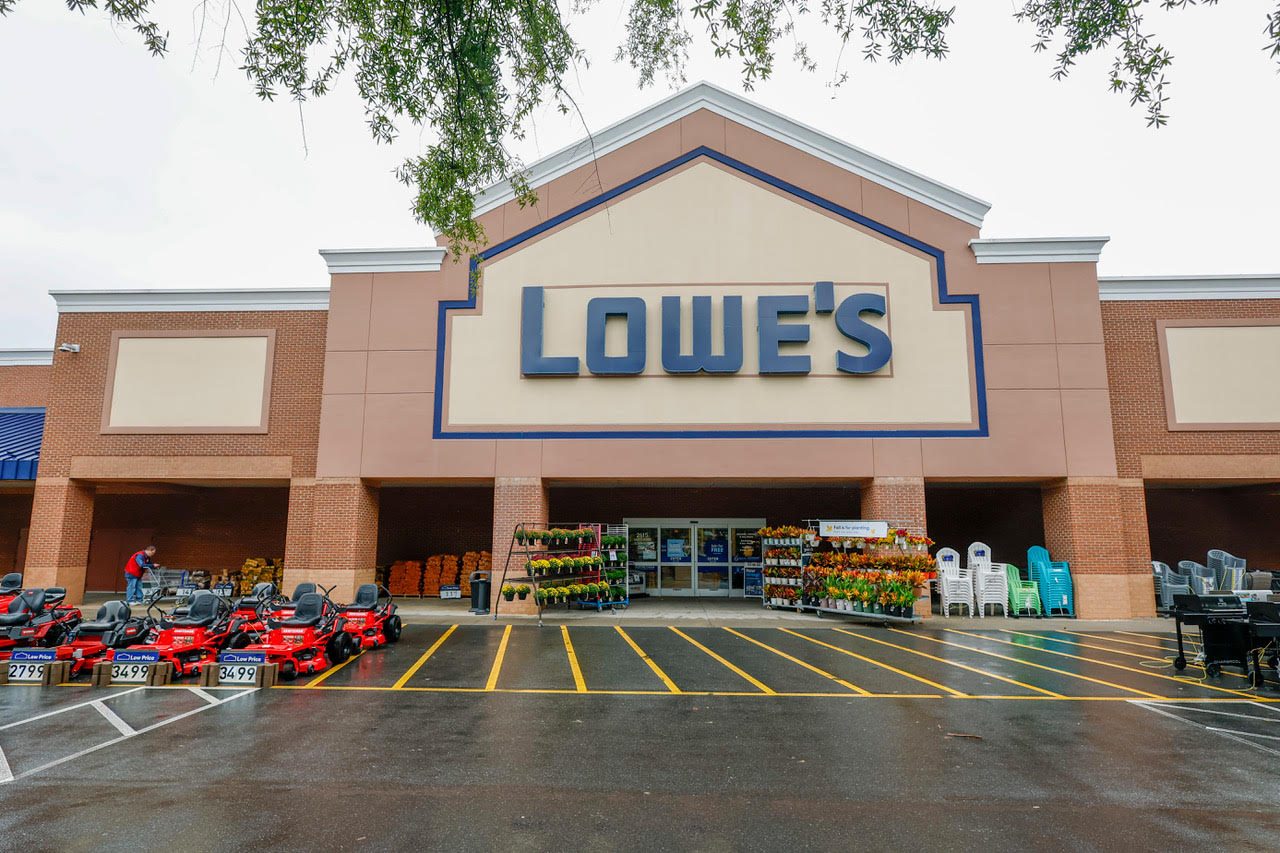
Lowe’s Introduces Drone Delivery Service for Home Improvement Supplies
Lowe’s has launched its inaugural drone delivery service, enabling customers to receive small home improvement supplies directly at their homes. This pilot program is being conducted from the Matthews, North Carolina store, with deliveries facilitated by Wing drones and available through the DoorDash app. Customers can expect deliveries in as little as 20 minutes, making Lowe’s the first home improvement retailer to implement such a service. This initiative addresses a common challenge faced by homeowners and professionals alike: the need for immediate access to essential items during projects. By allowing customers to order hand tools, paint products, and household supplies without leaving their worksite, Lowe’s aims to streamline the home improvement process. The service is designed to eliminate delays caused by missing items, thereby enhancing customer satisfaction and project efficiency. Looking ahead, Lowe’s will assess the effectiveness of this drone delivery model in fulfilling urgent supply needs. If successful, it could pave the way for broader applications of drone technology in home improvement and other retail sectors. No further timeline was disclosed at the time of publication.
Applications Delivery Drone News Drone News Feeds News Charlotte drone delivery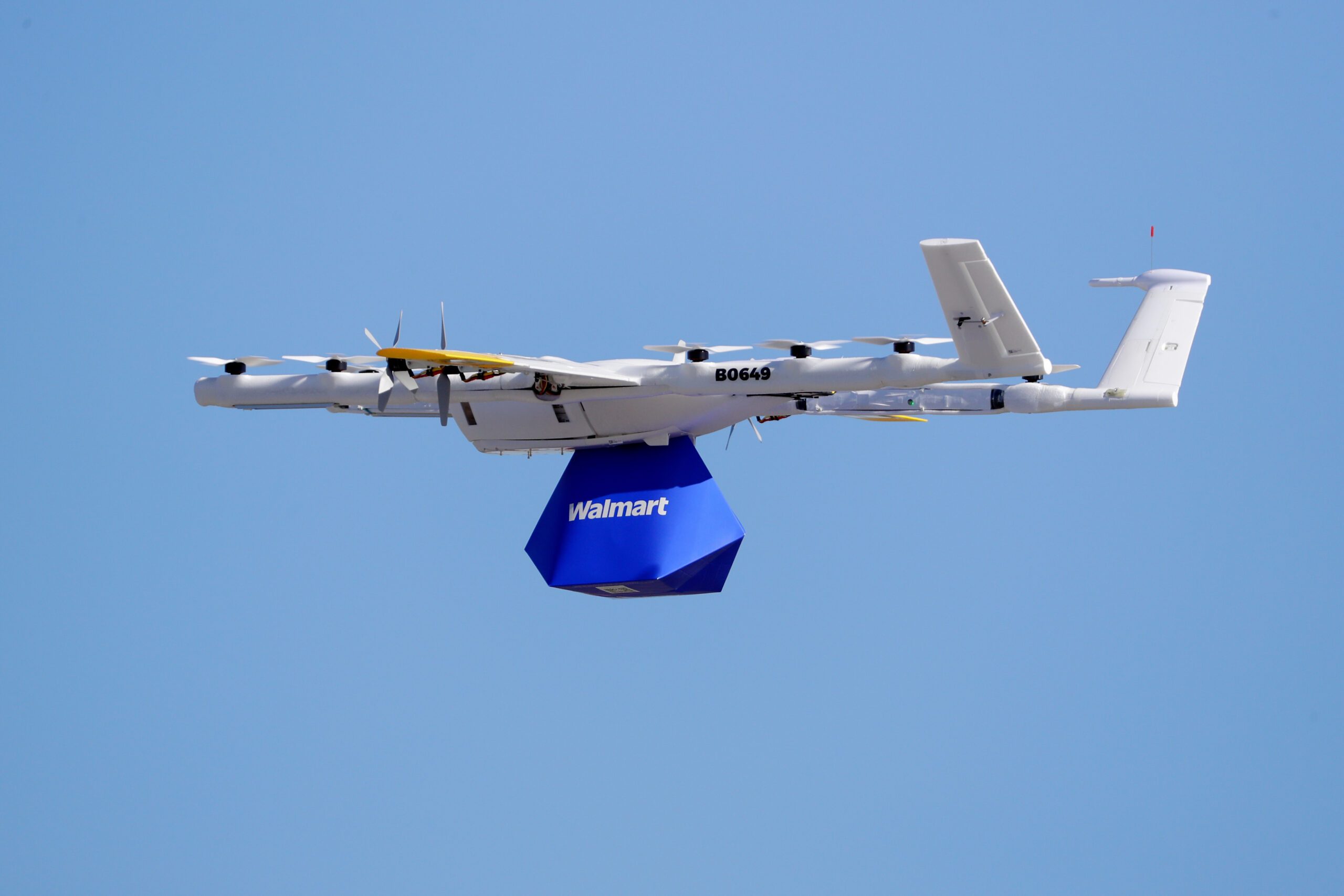
Northglenn, Colorado, Considers Regulations for Commercial Drone Delivery Hubs
The City of Northglenn, Colorado, is evaluating new regulations for commercial drone delivery hubs as the industry grows in the U.S. The proposed ordinance will focus on ground facilities for launching and supporting delivery drones, acknowledging that the Federal Aviation Administration governs airspace and flight operations. This initiative is significant as it highlights the limitations cities face in regulating drone delivery services. Northglenn officials recognize that even if they deny a permit for a local delivery hub, drones could still serve residents from neighboring areas. The city aims to establish standards for a new land-use category called 'Commercial Drone Delivery Hub' to manage ground operations effectively. As Walmart and Wing expand their drone delivery networks, Northglenn's proactive approach may set a precedent for other municipalities. The city is reportedly the first in the Denver region to propose a specific ordinance for drone delivery, indicating a growing interest in managing this emerging technology. No further timeline was disclosed at the time of publication.
Applications Delivery Drone News Drone News Feeds Feature 1 News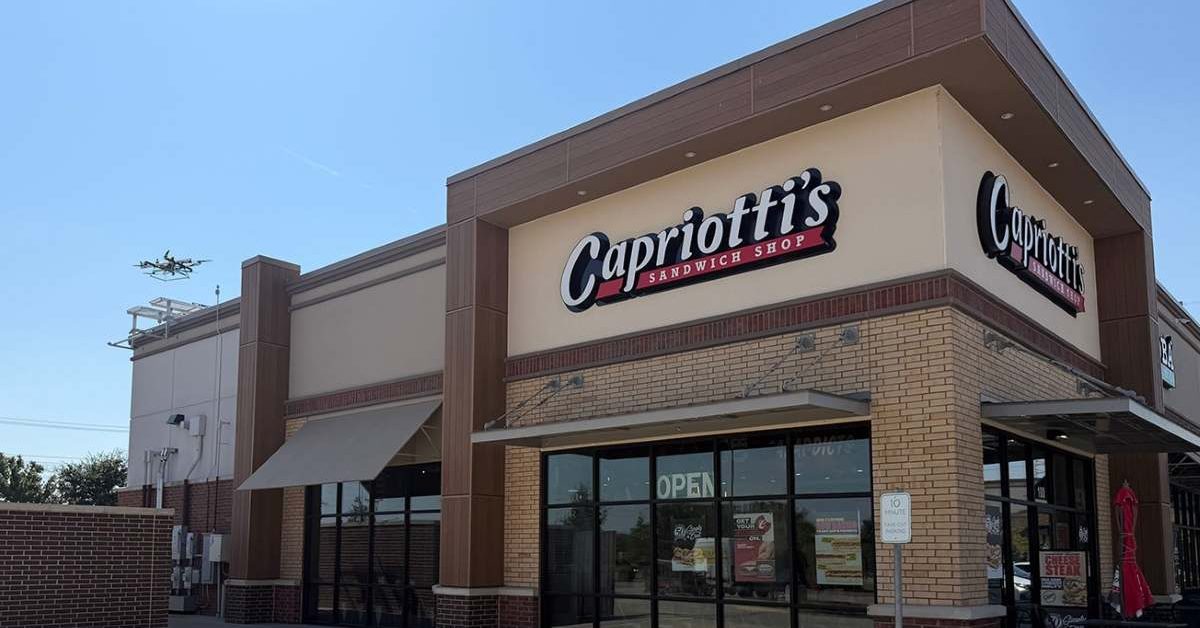
Flytrex Introduces Rooftop Dock System to Enhance Drone Delivery Efficiency
Flytrex has launched a new Rooftop Dock system that positions drones at restaurants before orders are placed, aiming to streamline food delivery. This innovative approach utilizes predictive AI to anticipate order patterns, allowing drones to be stationed at optimal locations, thus reducing delivery costs by 60% and cutting delivery times in half. This development is significant as it addresses a key challenge in drone delivery logistics—minimizing the time taken to transfer food from the kitchen to the drone. By eliminating the need for centralized dispatching, Flytrex enhances operational efficiency, making drone delivery more scalable and economically viable. Looking ahead, Flytrex plans to implement this technology across over 100 additional sites in the Dallas-Fort Worth area. The success of this initiative could reshape the drone delivery landscape, potentially leading to faster service for customers and improved economic outcomes for the company.
News
Lowe's Launches Drone Delivery Service for Home Improvement Products in Charlotte
Lowe's has introduced a new drone delivery service, becoming the first home improvement retailer to do so. This service allows customers in Charlotte, N.C. to receive select home improvement items in as little as 20 minutes, enhancing their shopping experience. The significance of this launch lies in its potential to transform the retail landscape, particularly in the home improvement sector. By partnering with Wing and DoorDash, Lowe's expands its fulfillment options, which now include same-day delivery, curbside pickup, and in-store pickup, catering to the needs of both DIY and professional customers. Looking ahead, it will be important to monitor the performance of this pilot program in Matthews, N.C. as Lowe's evaluates customer response and operational efficiency. The success of this initiative could influence future expansions of drone delivery services in other markets.
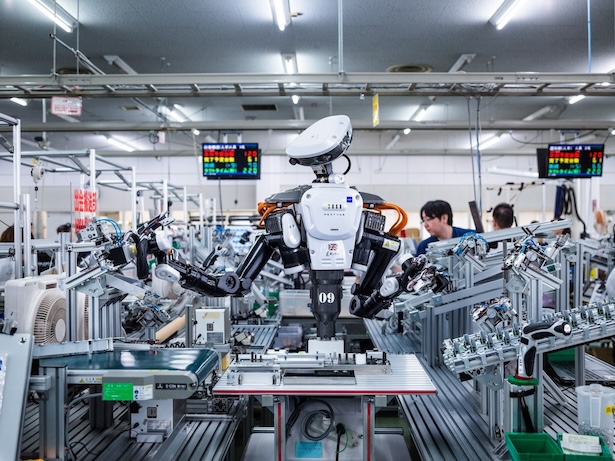
Robot.com and Sodexo Extend Partnership with Seven-Year Deal for Autonomous Delivery Robots
Robot.com has entered into a seven-year commercial agreement with Sodexo to enhance the deployment of autonomous delivery robots across North American college campuses. This partnership, which began in 2021, aims to expand the use of these robots and includes new initiatives such as robot advertising. The significance of this agreement lies in Sodexo's commitment to leveraging digital and AI-enabled solutions to improve consumer experiences and operational efficiency. By integrating autonomous delivery systems, Sodexo is responding to the evolving needs of campus environments while providing flexible service models for operators. Looking ahead, this contract marks Robot.com's largest single enterprise deployment, indicating a substantial growth opportunity in the autonomous delivery sector. No further timeline was disclosed at the time of publication.
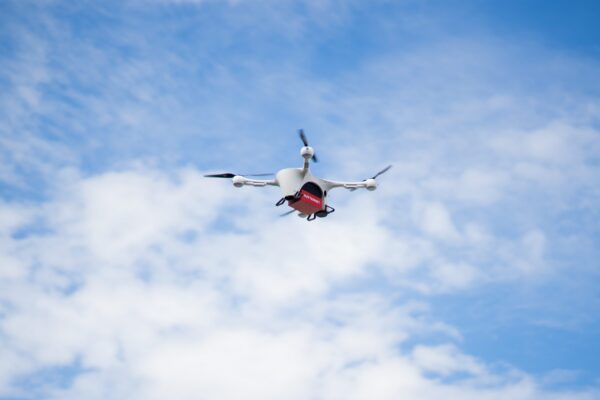
Matternet Begins Trading on OTCQB as First Publicly Traded Drone Delivery Company
Matternet, a Mountain View-based company, commenced trading its common stock on the OTCQB Venture Market on September 21, 2026, under the ticker symbol MTTN. This milestone marks Matternet as the first publicly traded pure-play drone delivery operator, holding standard FAA type certification. The significance of this listing lies in its potential to enhance visibility and access to capital markets for Matternet as it prepares to launch its next-generation delivery platform. CEO Andreas Raptopoulos emphasized that 2026 represents a pivotal moment for drone delivery in the U.S., predicting that it will become a crucial part of everyday logistics infrastructure. Looking ahead, Matternet aims to expand its commercial operations across various sectors, including food, retail, healthcare, and industrial logistics. The company has also formed strategic partnerships and expanded its network of FAA Part 135 operating partners to support this growth. No further timeline was disclosed at the time of publication.
Delivery Drone News Drone News Feeds Logistics News aerospace news 2026
UK Charity Advocates for Sidewalk Delivery Robot Ban Due to Safety Issues
The debate over sidewalk delivery robots in the UK is intensifying, with the charity Living Streets calling for a ban until pedestrian safety legislation is enacted. These six-wheeled devices, operating in cities like Leeds and Manchester at speeds of up to 4 mph, pose risks, particularly for disabled individuals. Critics argue that the expansion of these robots occurs in a regulatory vacuum, as current UK road traffic laws lack specific frameworks for personal delivery devices. A YouGov survey revealed that 60% of respondents support a complete ban on delivery robots on public sidewalks. Tanya Braun, Living Streets' Director of External Affairs, emphasized that sidewalks should be for people, not for sale, and that delivery robots create accessibility issues. Dr. Amit Patel, who lost his sight in 2013, shared that encounters with these robots have affected his guide dog, highlighting the barriers they pose for those striving for independence. The core of the controversy revolves around the prioritization of public space usage. While delivery robots symbolize efficiency, sidewalks represent safety and accessibility. The current situation in the UK indicates that technology has outpaced regulations, and the 60% support for a ban suggests a public limit on tolerance for technological expansion.
Delivery Robots Pedestrian Safety Urban Mobility Assistive Technology
Goldman Sachs Lowers Tesla's Delivery Forecast Amid Weaker Sales Trends
Goldman Sachs has revised its delivery forecast for Tesla, Inc. (NASDAQ:TSLA), cutting Q3 expectations to 435,000 vehicles from 490,000 and Q4 to 475,000 from 515,000. This adjustment reflects declining sales trends in key markets, including China, the US, and Europe, raising concerns about the sustainability of Tesla's demand. The lowered forecasts indicate that Tesla's core vehicle business is under pressure, prompting investors to seek more significant contributions from the company's growth initiatives, particularly its Full Self-Driving (FSD) system and the Cybercab robotaxi. The Q4 delivery figures will be crucial in determining whether the current demand weakness is a temporary issue or indicative of deeper challenges. As Tesla's core business faces challenges, the success of its autonomy initiatives becomes increasingly vital for future growth. The rollout of the Cybercab in Austin, Texas, is under regulatory scrutiny, which could impact its scalability. If the adoption of FSD and Cybercab progresses slowly, Tesla may encounter prolonged difficulties in transitioning to new growth drivers.

AVI-SPL and Matternet Collaborate on Drone Delivery Solutions for Technicians
AVI-SPL has partnered with Matternet to utilize drone technology for delivering replacement parts to technicians in urban areas. Announced on September 15, 2026, this collaboration aims to enhance service efficiency by reducing delivery times from hours to minutes, addressing challenges posed by congested transportation networks. The partnership is significant as it combines AVI-SPL's digital workplace solutions with Matternet's FAA-certified drone platform, targeting rapid logistics in metropolitan markets. This innovative approach is expected to improve customer experiences and operational responsiveness, as highlighted by AVI-SPL's COO, John Murphy, who emphasized the transformative potential of autonomous drone delivery. Looking ahead, the partnership will focus on three primary use cases: expedited parts delivery for technicians, premium service tiers for urgent requests, and broader supply chain logistics. No further timeline was disclosed at the time of publication.
Delivery Drone News Drone News Feeds News aerospace news 2026 Ameriflight
Gix Internet Makes $500K Investment in Ottonomy for Autonomous Delivery Robots
Gix Internet has announced a strategic investment of $500,000 in Ottonomy, a U.S. company specializing in autonomous delivery robots. This investment, made through a SAFE agreement, is expected to close during the week of September 16, 2026. Gix aims to integrate Ottonomy's Level 4 autonomous navigation technology with its Deliverz.ai software, enhancing the management of robots and autonomous systems. This investment is significant as it follows a nonbinding agreement from August that could lead to Gix acquiring a majority stake in Ottonomy. The collaboration is poised to leverage Ottonomy's experience in deploying its Ottobot delivery robots across various sectors, including healthcare and last-mile delivery, thereby expanding Gix's capabilities in the autonomous robotics market. Looking ahead, Gix's potential majority ownership of Ottonomy could reshape the landscape of autonomous delivery solutions. However, the proposed majority investment remains contingent on due diligence and regulatory approvals. No further timeline was disclosed at the time of publication.
AI AI Funding & Investment Robotics autonomous delivery investment Israel
Meituan Launches China's First Dedicated Drone-Delivery Route with McDonald's in Shanghai
Meituan has established a low-altitude delivery network in Shanghai's West Bund, marking the launch of China's first dedicated drone-delivery route for a restaurant brand in collaboration with McDonald's. This innovative network connects multiple venues in the West Bund area and currently features nearly 20 restaurant chains, with plans to expand to over 40 by the end of the year. The significance of this development lies in its potential to revolutionize food delivery in urban areas, enhancing efficiency and speed. Meituan claims that the fastest deliveries can be completed in just 10 minutes, utilizing its advanced fourth-generation M-Drone 4L Winch, M-Port 3 drone ports, and M-DaaS 3 scheduling system, which collectively streamline the delivery process. Looking ahead, the expansion of this drone-delivery network could reshape the logistics landscape for the food service industry in China. As Meituan continues to grow its partnerships and enhance its technology, industry stakeholders should monitor the impact of this initiative on delivery times and customer satisfaction. No further timeline was disclosed at the time of publication.
News Feed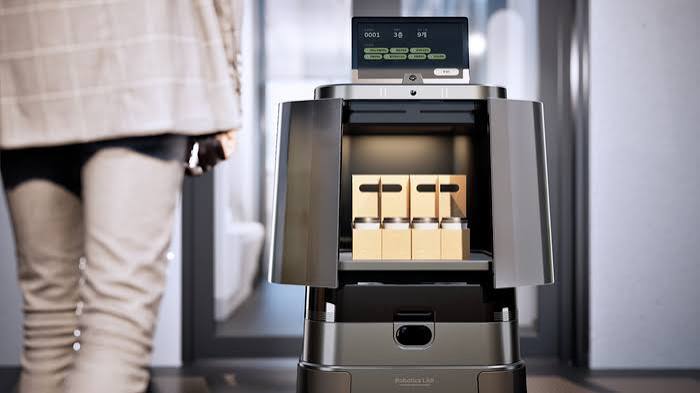
A Woman Assists a Serve Robotics Delivery Robot Stuck in Los Angeles
Recently in Los Angeles, a woman working at the city hall helped a Serve Robotics delivery robot that was stuck in a bush. She adjusted its wheels and pushed it back onto the sidewalk, allowing it to continue its journey. This incident sparked discussions about the moral implications of assisting robots that may replace human jobs. The situation highlights a critical issue: despite being marketed as autonomous, these delivery robots often require human intervention. Serve Robotics claims a 99.8% delivery success rate, but this translates to dozens of robots encountering issues daily across Los Angeles. When problems arise, pedestrians frequently step in before the company's support team can respond. This scenario reveals the uncomfortable truth about autonomous delivery: while robots can navigate most of their routes, they struggle with unexpected challenges. As seen in other cities, such as Chicago and Miami, the burden of resolving these issues often falls on the public, raising questions about the true nature of automation and its reliance on human support.
Delivery Robots Autonomous Technology Urban Infrastructure Human-Robot Interaction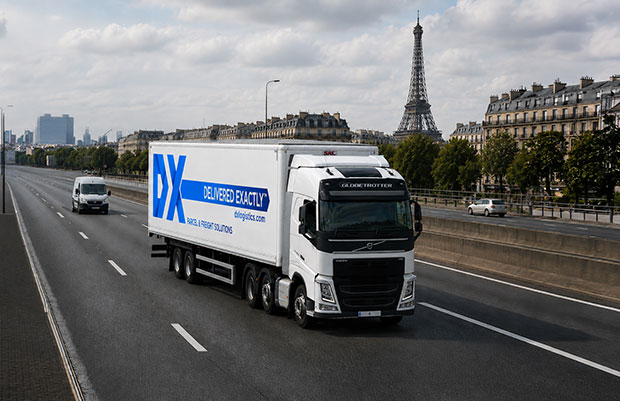
DX Enhances International Delivery Service with New Portal and Expanded Options
DX, a prominent logistics solutions provider, has announced the expansion of its international delivery service, DX International, which now includes a new portal. This enhanced service facilitates the delivery of parcels and freight to 220 countries through both road and air shipping networks. The significance of this expansion lies in the variety of delivery options now available to customers, catering to both individual and commercial consignments. The new portal allows users to obtain instant quotes, book shipments, arrange collections, and create paperless customs documentation, ensuring a streamlined logistics experience. Looking ahead, DX's commitment to enhancing its international service is part of a broader strategy to improve customer offerings. No further timeline was disclosed at the time of publication.
Industry News
Robot.com Expands Partnership with Sodexo for Sidewalk Delivery Robots Deployment
Robot.com has announced a seven-year commercial agreement with Sodexo Group to enhance the deployment of its sidewalk delivery robot, R-Kiwi, which has completed 2.4 million tasks. This partnership builds on their collaboration that began in 2021 and focuses on select Sodexo-operated college campuses in North America. The significance of this agreement lies in addressing labor shortages faced by Sodexo, which employs around 400,000 individuals globally. Felipe Chavez Cortes, CEO of Robot.com, emphasized that the long-standing relationship between the two companies facilitated this substantial contract, marking Robot.com’s largest single enterprise deployment. Looking ahead, Robot.com aims to leverage its Remi implementation platform to improve the economic viability of its robots. This platform combines classical robotics with advanced software and advertising technology, allowing for increased revenue streams beyond just delivery services. No further timeline was disclosed at the time of publication.
Autonomous Mobile Robots (AMRs) Food / Beverage Humanoids Logistics Markets / Industries Mobility / Navigation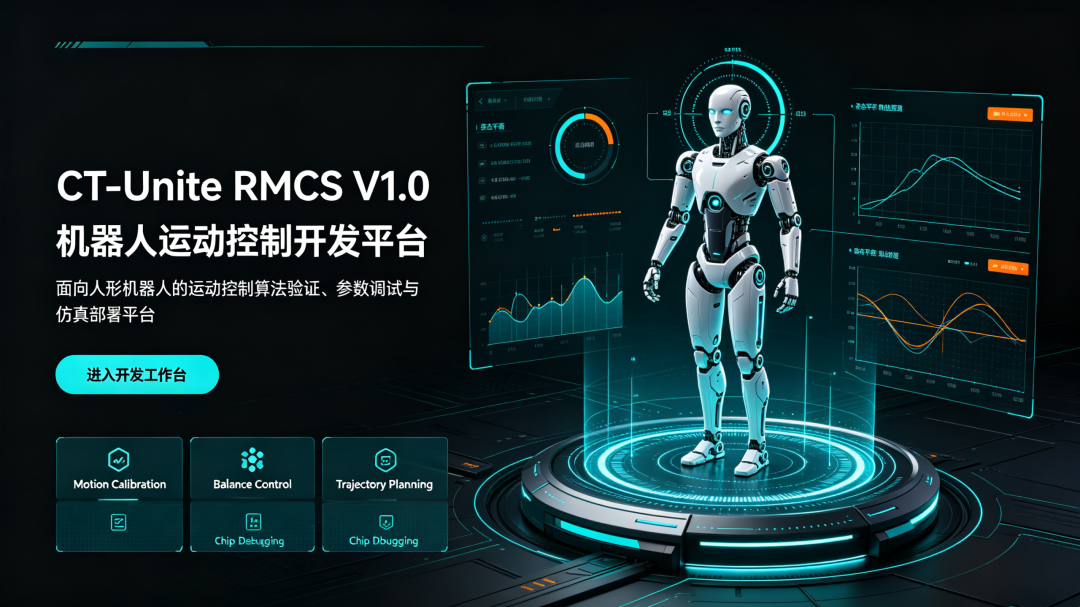
RMCS V1.0 Launches to Address Robot Mass Delivery Challenges in the Industry
The launch of RMCS V1.0 by ZK Wireless Semiconductor marks a significant step in overcoming the engineering gap in robot mass production. This integrated platform, centered around the CT-2001A intelligent chip, aims to facilitate the transition from prototype validation to scalable delivery, addressing critical pain points in the robotics industry. The importance of RMCS V1.0 lies in its ability to streamline the development process, which has traditionally been hampered by long development cycles, high talent requirements, and complex maintenance. By providing a standardized platform for motion control, RMCS V1.0 allows companies to focus on application development rather than foundational algorithm creation, thus lowering the barriers to entry for mass production. Looking ahead, the industry will be watching how RMCS V1.0 impacts the robotics landscape, particularly in terms of reducing costs and improving efficiency in robot deployment. No further timeline was disclosed at the time of publication.
Robot Motion Control Intelligent Chips Robotics Development Automation Solutions
A2Z Drone Delivery Introduces Longtail Dual for Enhanced BVLOS Urban Operations
A2Z Drone Delivery launched the Longtail Dual on August 31, 2026, in Torrance, California. This innovative dual-battery drone ensures full flight control even if one battery fails, maintaining a one-to-one flight-to-charge ratio on A2Z AirDocks. The design is aimed at meeting FAA Part 107 waivers and EASA Specific Operations Risk Assessment requirements. The Longtail Dual is significant as it enhances safety for drone missions in complex urban environments, according to CEO Aaron Zhang. With approximately 85% of drone delivery missions involving payloads under 6 pounds, the Longtail Dual effectively balances safety and operational capability without exceeding the 55-pound commercial UAV weight limit. Looking ahead, the Longtail Dual is designed for various applications, including delivery and surveillance missions, with a maximum payload capacity of 11 pounds. Its advanced features, such as dual-redundant cellular connections and onboard battery heating, position it as a robust solution for beyond-visual-line-of-sight operations. No further timeline was disclosed at the time of publication.
BVLOS Delivery Drone News Drone News Feeds News 48MP drone camera
A2Z Drone Delivery Launches Longtail Dual with Enhanced Safety Features
A2Z Drone Delivery has introduced the Longtail Dual, a commercial drone featuring a dual-battery system designed for long-range operations. This upgrade aims to enhance safety during beyond visual line of sight (BVLOS) missions while minimizing downtime for commercial fleets. The drone's design allows it to remain operational even if one battery fails, addressing regulatory concerns for flights over populated areas. The Longtail Dual's battery system not only provides redundancy but also continuously monitors battery health, ensuring reliability during operations. With a payload capacity that suits the majority of delivery missions, the drone is optimized for compliance with FAA and European regulations, making it a viable option for businesses looking to scale their drone delivery services. As A2Z Drone Delivery focuses on improving fleet productivity, the Longtail Dual's integration with AirDock autonomous docking stations allows for quick recharging, achieving a one-to-one flight-to-charge ratio. This innovation is expected to significantly enhance operational efficiency for commercial operators engaged in inspection, delivery, or emergency-response missions. No further timeline was disclosed at the time of publication.
News
The Importance of Strategy and Delivery in Digital Transformation for Manufacturing
Manufacturing general managers widely agree that a clear strategy is crucial before embarking on digital transformation initiatives. Many already possess a strategy, which may include a phased roadmap or specific targets like reducing unplanned downtime by 5%. However, successful transformation requires more than just a well-crafted plan; it necessitates effective delivery that engages all stakeholders across various functions. The interplay between strategy and delivery is vital for overcoming operational challenges. A good strategy involves understanding current business operations and capturing insights from stakeholders in production, maintenance, IT, and finance. This collaborative approach helps identify existing problems early, ensuring that all teams share a common understanding of key metrics, such as unplanned downtime, which can vary across departments. To maintain momentum during the delivery phase, dedicated teams should work alongside internal staff, allowing them to focus on operations rather than administrative tasks. Continuous alignment between functions is essential, especially when facing delays or shifting priorities. Ongoing facilitation and technical judgment are necessary to adapt objectives and ensure a successful transformation process.
Factory / Digital Transformation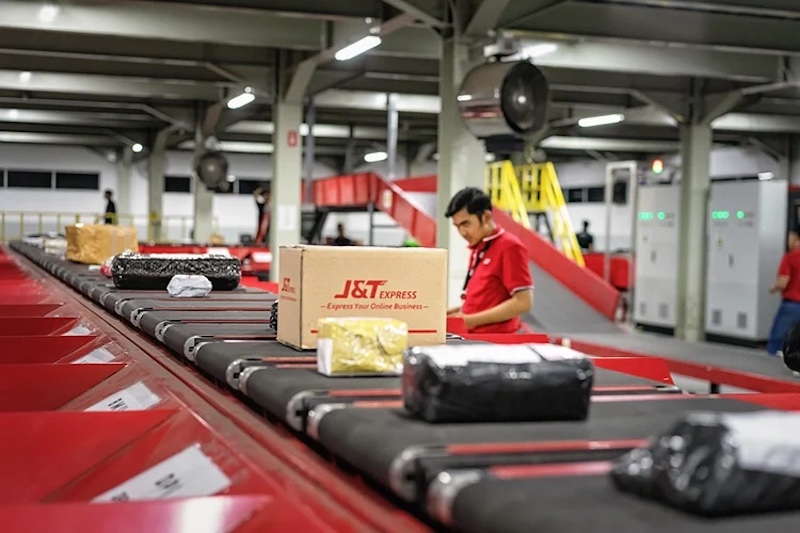
J&T Global Express Expands Automated Sorting Systems and Unmanned Delivery Fleet Growth
J&T Global Express has enhanced its automated sortation capabilities by adding 22 new sorting machines, bringing the total to 435 across its express network. This expansion coincides with a significant increase in unmanned delivery vehicles, which rose by 87% to over 1,900 units by June 30, 2026. This growth is crucial as J&T handled 17.50 billion parcels in the first half of 2026, marking a 25.1% year-on-year increase. The new sorting systems were strategically placed across Southeast Asia, China, and other markets, with a focus on improving efficiency and reducing costs for both J&T and its network partners, which numbered approximately 1,300 in Southeast Asia. Looking ahead, J&T plans to continue investing in outlet automation as capacity expands. The company is also encouraging its network partners to adopt unmanned delivery vehicles, supported by favorable policies and cooperation plans, particularly in key cities across China. No further timeline was disclosed at the time of publication.
Logistics News Warehouse robots ai artificial intelligence automated sorting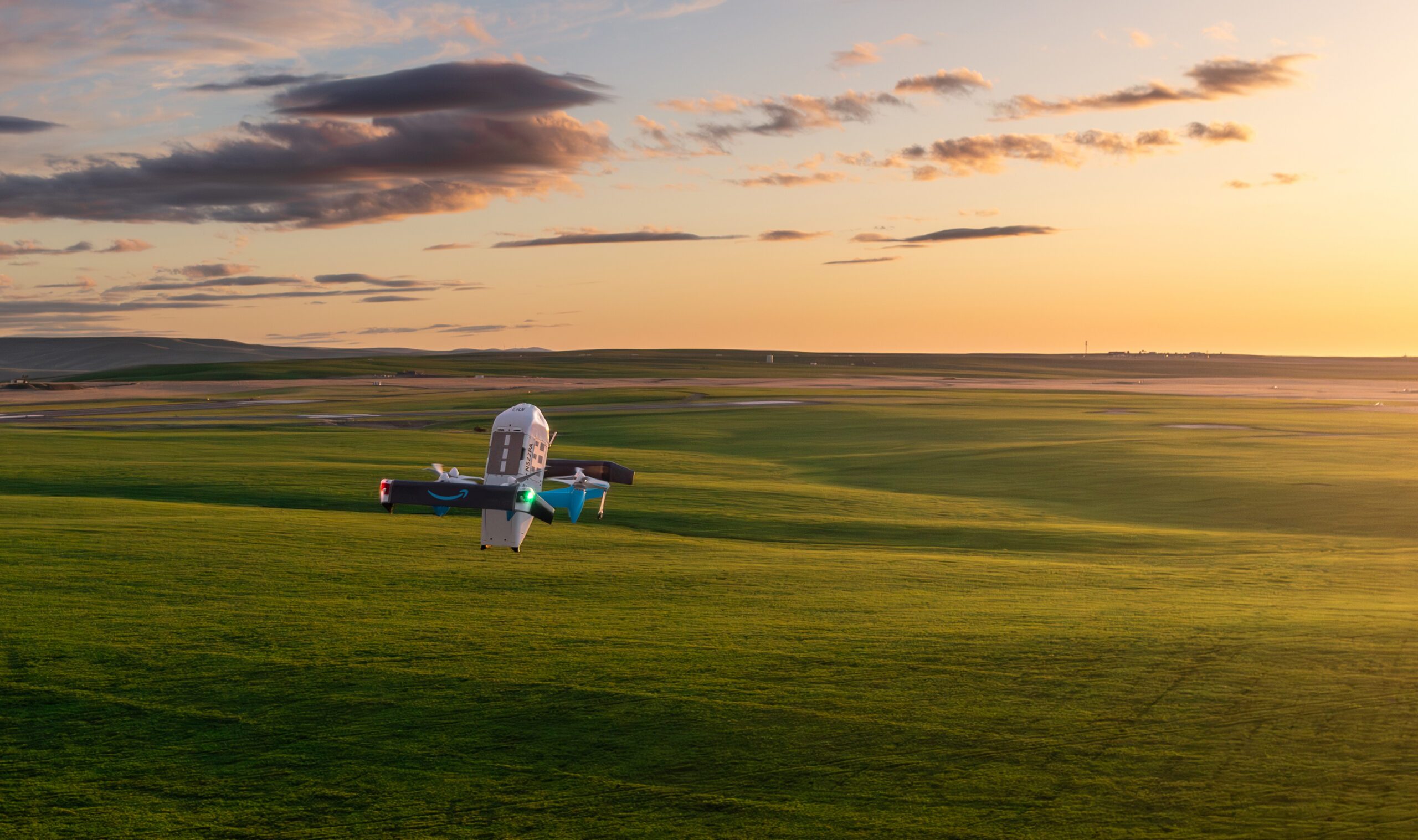
Amazon Prime Air to Expand Drone Delivery Service to Nearly 500 U.S. Locations by 2026
Amazon is set to significantly expand its Prime Air drone delivery service, aiming to reach nearly 500 cities and towns across the United States by the end of 2026. This expansion will increase the service's operational footprint approximately sixfold, enhancing its current operations from 11 sites in 10 metro areas. The importance of this expansion lies in Amazon's commitment to providing faster delivery options. With drone deliveries capable of arriving in as little as 30 minutes, the company aims to enhance customer satisfaction and convenience. David Carbon, vice president of Amazon Prime Air, highlighted that the service has already delivered hundreds of thousands of packages this year, with plans to serve a broader customer base by 2026. Looking ahead, Amazon plans to launch drone delivery services in additional metro areas, including Chicago, Syracuse, Cleveland, Atlanta, and Boise, later this year. The expansion reflects Amazon's ongoing investment in its drone delivery capabilities, which began commercial operations in 2020 under FAA regulations, allowing for beyond visual line of sight operations, crucial for scaling its delivery network.
Applications Delivery Drone News Drone News Feeds News amazon drone delivery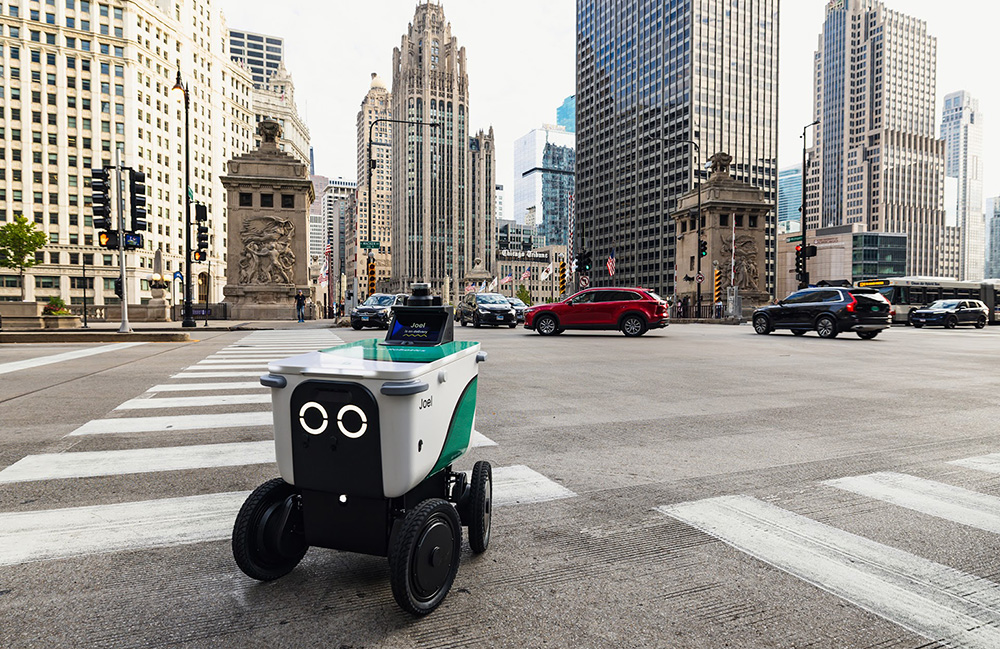
Serve Robotics Partners with Grubhub for Autonomous Delivery in Major Cities
Serve Robotics Inc. has announced a partnership with Grubhub to provide autonomous delivery services in Chicago, Los Angeles, and Alexandria, Virginia. This collaboration will enable Serve to offer robotic deliveries from over 100 Grubhub merchants in Chicago and nearly 200 in Los Angeles, with plans for more restaurants to join the program. This partnership is significant as it marks Serve's expansion into new markets, including Washington, D.C., and San Jose, California, where they have partnered with DoorDash. The introduction of microdepots in Miami will further enhance their operational efficiency, allowing for quicker deployment in high-demand neighborhoods with minimal infrastructure. Looking ahead, Serve Robotics is also launching Beacon, a countertop product designed to streamline the connection between restaurants and delivery robots. Additionally, they have introduced a new advertising product called “Characters,” which allows brands to create interactive experiences with their robots. No further timeline was disclosed at the time of publication.
Autonomous Mobile Robots (AMRs) Food / Beverage Markets / Industries News Robots / Platforms autonomous delivery
Amazon Aims for Sixfold Expansion of Drone Delivery Service by 2026
Amazon has announced plans to increase its drone delivery service sixfold by the end of 2026. This ambitious expansion aims to make ultrafast drone delivery accessible to tens of millions of customers nationwide. The significance of this initiative lies in its potential to revolutionize the logistics and delivery landscape, enhancing customer experience through quicker service. By expanding its drone capabilities, Amazon is positioning itself to meet growing consumer demand for rapid delivery options. Looking ahead, industry observers will be keen to monitor Amazon's progress in implementing this expansion and the technological advancements that will support it. No further timeline was disclosed at the time of publication.
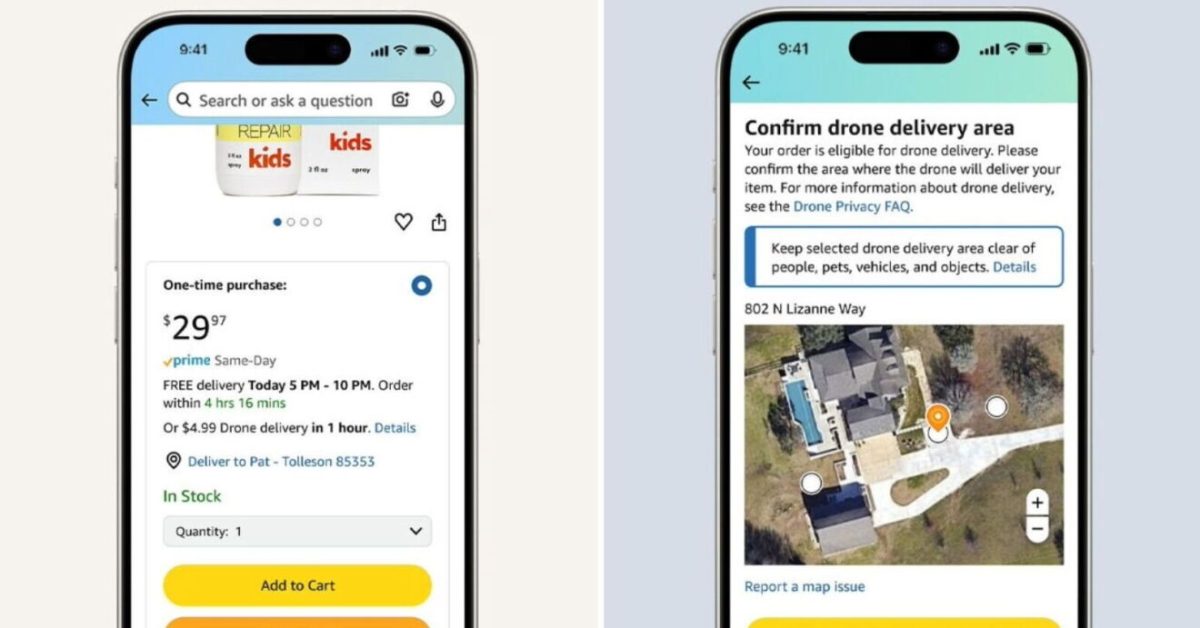
Amazon Plans Major Expansion of Prime Air Drone Delivery to 500 US Communities by 2026
Amazon has announced plans to expand its Prime Air drone delivery service to nearly 500 cities and towns across the United States by the end of 2026. This expansion is set to increase its current service area sixfold, providing ultrafast delivery options to tens of millions of customers. The significance of this expansion lies in its potential to enhance the shopping experience for Amazon customers, offering delivery of millions of eligible products in as fast as 30 minutes. Currently, Prime Air operates in seven states and has already delivered hundreds of thousands of packages by drone this year, indicating strong demand for this service. Looking ahead, Amazon aims to introduce Prime Air in metro areas including Chicago, Syracuse, Cleveland, Atlanta, and Boise. The service features advanced safety technology and operates under FAA regulations, ensuring safe and efficient deliveries. No further timeline was disclosed at the time of publication.
News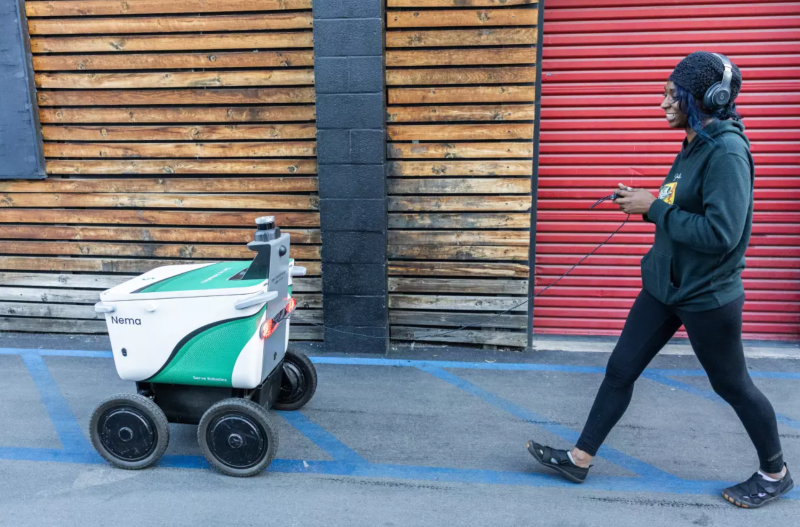
Serve Robotics Collaborates with Grubhub Following Uber's Exit to Boost Delivery Robot Expansion
Serve Robotics has announced a partnership with Grubhub on August 17, following Uber's exit from the investment and partnership. This collaboration signifies a strategic shift for Serve, moving from reliance on a single major partner to becoming a public delivery robot layer across multiple platforms. The partnership comes after Uber sold its entire stake in Serve, leading to a significant reduction in Serve's revenue projections for 2026 from $26 million to between $9 million and $10 million. The collaboration with Grubhub is a crucial step in diversifying Serve's business. According to the agreement, Serve's robots will launch delivery services in Chicago, Los Angeles, and Alexandria, Virginia, through Grubhub's parent company, Wonder Group. The initial rollout will include over 100 restaurants in Chicago and nearly 200 in Los Angeles, marking Serve's integration with the top three delivery platforms in the U.S. Additionally, Serve is expanding its partnership with DoorDash, now covering eight markets, including Washington, D.C., and San Jose. To reduce expansion costs, Serve has introduced a 'micro-warehouse' model in Miami for robot scheduling and maintenance. The company is also diversifying its revenue streams by expanding into healthcare robotics with the deployment of Moxi 2.0 hospital robots, showcasing its commitment to defining value through the robots themselves rather than being tied to any specific app.
Delivery Robots Food Delivery Logistics Technology Healthcare Robotics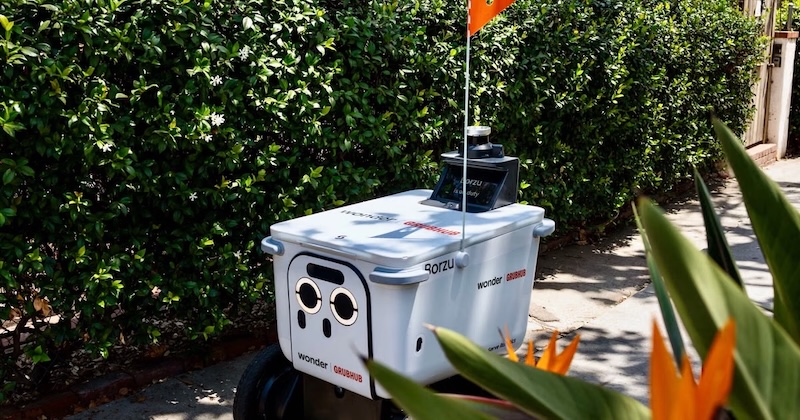
Serve Robotics Partners with Grubhub to Expand Autonomous Delivery Network
Serve Robotics is enhancing its autonomous delivery network by partnering with Grubhub, adding a third major platform to its service alongside Uber Eats and DoorDash. This collaboration will initially launch in Chicago, Los Angeles, and Alexandria, Virginia, with over 100 Grubhub merchants in Chicago and nearly 200 in Los Angeles participating. The significance of this partnership lies in its potential to increase the number of restaurants and orders available to Serve's autonomous sidewalk delivery fleet. According to Ali Kashani, co-founder and CEO of Serve Robotics, this expansion demonstrates the company's growth trajectory and the increasing intelligence of its fleet with each new delivery. Looking ahead, Serve Robotics is also expanding its geographical reach with new launches in Washington, DC, and San Jose, California, in collaboration with DoorDash. These expansions mark Serve's seventh and eighth major US markets, indicating a robust growth strategy in the autonomous delivery sector. No further timeline was disclosed at the time of publication.
Logistics News autonomous delivery delivery robots diligent robotics doordash
Serve Robotics CEO Discusses Delivery Robots' Impact on Last-Mile Logistics
Serve Robotics CEO Ali Kashani recently spoke on Bloomberg Open Interest about the company's strategic shift towards partnerships with DoorDash and Grubhub. He highlighted how delivery robots can significantly reduce last-mile delivery costs, making them a valuable asset in the logistics sector. This shift is crucial as it demonstrates the growing importance of automation in the delivery industry. Kashani emphasized that the AI-powered technology behind these robots has the potential to extend beyond food delivery, with applications in hospitals and everyday logistics. Looking ahead, the conversation around delivery robots is expected to evolve, with potential expansions into various sectors. No further timeline was disclosed at the time of publication.

Serve Expands Robot Delivery Network with Grubhub and New Innovations
Serve has announced its expansion into San Jose and Washington, DC, enhancing its delivery network by partnering with Grubhub. This move is part of a broader strategy that includes the introduction of an innovative micro-depot in Miami and a new hardware product aimed at merchants, which collectively aim to drive fleet utilization. The significance of this expansion lies in Serve's commitment to improving delivery efficiency and service offerings. By integrating Grubhub into its network, Serve enhances its operational capabilities, allowing for faster and more reliable delivery services. The introduction of Moxi 2.0, a hospital robot with 15 times faster processing power, further exemplifies Serve's focus on technological advancement and operational excellence. Looking ahead, industry observers should monitor how these developments impact Serve's market position and fleet utilization rates. The new advertising service and hardware product for merchants may also play a crucial role in shaping the competitive landscape. No further timeline was disclosed at the time of publication.

Uber and Zipline Collaborate for Nationwide Drone Delivery Expansion by 2029
Uber and Zipline have announced a strategic partnership aimed at achieving one million drone deliveries daily by the end of 2029. The initiative will see the launch of drone delivery services on Uber Eats, starting in existing Zipline markets and expanding into numerous cities across the United States later this year. This partnership is significant as it represents a major step forward in the integration of drone technology into everyday delivery services. By combining Uber's extensive logistics network with Zipline's expertise in drone delivery, the collaboration aims to enhance accessibility and efficiency in food delivery, potentially transforming consumer habits. Looking ahead, the first deliveries are expected to commence later this year, with a focus on scaling operations to meet the ambitious target of one million daily deliveries by 2029. No further timeline was disclosed at the time of publication.

Robot.com Introduces R-dog Quadruped Robot for Last-Mile Delivery and Advertising
Robot.com has launched R-dog, a quadruped robot designed for last-mile delivery and interactive advertising. This innovative robot addresses the challenges faced by wheeled robots in navigating obstacles such as stairs and curbs, effectively completing the final 100 meters of delivery. R-dog operates on the REMI fleet management platform, allowing it to manage multiple payloads, including food and e-commerce parcels, without hardware changes. The significance of R-dog lies in its dual functionality. Not only does it facilitate efficient deliveries in complex environments like urban streets and campuses, but it also serves as a dynamic advertising platform through R-ads. Brands can engage consumers by remotely managing campaigns on R-dog's dual video screens, creating an interactive experience that enhances brand visibility and consumer interaction. Looking ahead, Robot.com aims to leverage R-dog's capabilities to transform last-mile logistics and advertising. The integration of R-dog with the existing REMI platform streamlines operations, enabling rapid deployment of this new robot form factor. No further timeline was disclosed at the time of publication.
Logistics Robotics autonomous delivery Autonomous robots delivery robots Field Foundation Models
Advancements in Nanotechnology Enhance Nose-to-Brain Drug Delivery Systems
Recent advancements in nanotechnology and synthetic biology are poised to enhance nose-to-brain drug delivery systems. These innovations aim to improve drug targeting and ensure sustained delivery, which is crucial for the effective treatment of neurological disorders. The significance of these developments lies in their potential to revolutionize how neurological conditions are treated, offering more efficient and targeted therapies. Improved delivery systems could lead to better patient outcomes and reduced side effects, making treatments more effective. Looking ahead, the focus will be on the practical applications of these technologies in clinical settings. Continued research and development will be essential to fully realize the benefits of these advancements in drug delivery systems for neurological disorders. No further timeline was disclosed at the time of publication.

Automation's Impact on Fulfillment and Last-Mile Delivery for Direct-to-Consumer Brands
Direct-to-consumer brands in the US and Canada face significant challenges in managing shipping costs, particularly in the final mile, which accounts for about half of all shipping expenses according to ABI Research. This has led to a growing reliance on automation within outsourced logistics, with technologies such as AI-coordinated fulfillment and autonomous mobile robots enhancing delivery efficiency and reliability. The importance of choosing the right third-party logistics (3PL) provider cannot be overstated, as most brands opt to outsource their warehousing needs rather than automate in-house. Providers like GoBolt, which handle fulfillment and last-mile delivery for shippers with over 3,000 orders monthly, are crucial in this landscape. The integration of software that coordinates storage and labor in real-time is transforming operations, as seen with AutoStore's recent product updates that optimize robot movement without necessitating additional hardware. Looking ahead, the trend towards automation in logistics is expected to continue, with AutoStore recently achieving its 300th installation in Aurora, Colorado. The company's advancements, including the CubeVerse platform, highlight the potential for increased efficiency through software rather than hardware expansion. No further timeline was disclosed at the time of publication.
Automation Logistics 3pl amrs artificial intelligence autonomous mobile robots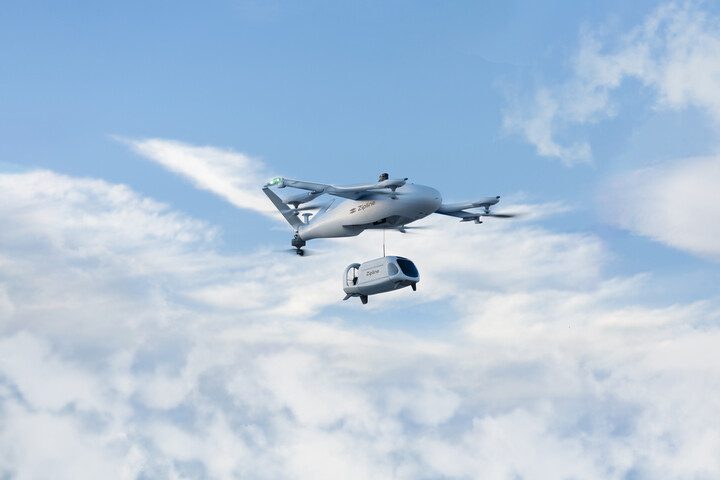
Cleveland Clinic Initiates First Long-Term Drone Prescription Delivery Program in the U.S.
Cleveland Clinic has launched a pioneering drone delivery program for prescription medications, marking the first long-term initiative of its kind in the U.S. health system. This program, in collaboration with Zipline, currently serves eligible patients in the east side suburbs of Cleveland, enhancing healthcare logistics through routine patient care. The significance of this program lies in its integration into standard healthcare practices, as it aims to expedite prescription delivery and broaden pharmacy services beyond traditional facilities. Patients within a five-mile radius of the Beachwood Administrative Campus can opt for drone delivery at no extra cost, with plans to expand the service to include lab samples and other medical supplies. Looking ahead, Cleveland Clinic intends to enhance this service further, demonstrating its commitment to innovative healthcare solutions. No further timeline was disclosed at the time of publication.
Applications Delivery Drone News Drone News Feeds Healthcare News
Cleveland Clinic Launches Long-Term Drone Delivery Program for Prescription Medications
Cleveland Clinic has initiated the first long-term medical drone delivery program by a US health system, partnering with Zipline to deliver prescription medications. Initially, the service will cater to patients within a five-mile radius of the Beachwood Administrative Campus, allowing eligible patients to receive certain prescriptions via drone at no extra cost. This innovative program enhances patient convenience, enabling rapid delivery of medications within minutes, as opposed to traditional pharmacy visits. Patients can track their deliveries through the MyChart portal, while the drones operate quietly, hovering 300 feet above ground to lower packages without landing. Cleveland Clinic plans to expand the service to include lab samples, medically tailored meals, and additional medications over time. As the first of its kind in the US, this initiative signifies a shift towards mainstream adoption of drone technology in healthcare delivery.
News
DoorDash's Dot Delivery Robot Encounters Last Mile Challenge, Human Help Costs $5
DoorDash's Dot delivery robot has successfully navigated several kilometers to deliver food, but it struggles with the last few meters from the restaurant to the curb. To address this, DoorDash has opted to pay human delivery workers $5 to assist in this final leg. In early July, a DoorDash driver in Mesa, Arizona, completed a task where she transported food to the robot, raising questions about efficiency. This situation highlights the ongoing challenges in automating food delivery, particularly the handoff from restaurant staff to robots. DoorDash's CEO Tony Xu acknowledged that ensuring a smooth transition of orders to robots has been a significant hurdle. The pilot program aims to enhance efficiency during peak times while providing additional income for delivery workers, emphasizing their continued importance in the delivery process. Looking ahead, DoorDash's reliance on human workers for the last mile raises questions about the future of automation in delivery services. As robots face limitations in completing tasks independently, the $5 fee represents a crucial link between human and machine, underscoring the complexities of achieving full automation in food delivery.
Delivery Robots Last Mile Logistics Automation Food Delivery AI
DoorDash Achieves FAA Certification for Drone Delivery, Launches DoorDash Air Program
DoorDash has received FAA Part 135 air carrier certification, enabling the launch of DoorDash Air, its in-house drone delivery program. This milestone marks DoorDash as the eighth drone operator in the U.S. authorized for commercial drone delivery services, indicating a significant shift in logistics. The certification allows DoorDash to operate its own drone fleet, moving beyond partnerships with companies like Wing and Flytrex. With millions of Americans expecting rapid deliveries, DoorDash aims to enhance efficiency, particularly for mid-range orders that often take longer to fulfill. Drones are expected to significantly reduce delivery times for lightweight, time-sensitive items. DoorDash emphasizes that drones will complement human delivery drivers rather than replace them, focusing on lightweight deliveries while maintaining human involvement for complex orders. The company’s Autonomous Delivery Platform will optimize delivery methods in real time, ensuring customers receive the fastest option available. No further timeline was disclosed at the time of publication.
News
DoorDash Secures FAA Certification for In-House Drone Delivery Program Launch
DoorDash has announced that it has received Part 135 air carrier certification from the Federal Aviation Administration, enabling the launch of DoorDash Air, its proprietary drone delivery program. This certification allows the company to operate as an air carrier, expanding its delivery capabilities beyond traditional methods. The significance of this certification lies in DoorDash's commitment to enhancing its delivery automation efforts. With the launch of DoorDash Air, the company aims to create a comprehensive delivery network that integrates various modes of transportation, including drones, to meet the growing demands of local commerce. Harrison Shih, head of DoorDash Air, emphasized the importance of building a seamless infrastructure for drone delivery. Looking ahead, DoorDash plans to leverage its Autonomous Delivery Platform, which optimizes delivery routes across different modes, including drones and robots. The company is also focused on developing interoperable ground infrastructure to facilitate merchant handoffs. No further timeline was disclosed at the time of publication.
Drones Food / Beverage Markets / Industries News Regulatory & Compliance Robots / Platforms
Flytrex and Nash Collaborate on Autonomous-First Multi-Modal Delivery Platform
Flytrex, an autonomous drone food delivery service, has partnered with Nash, an autonomic logistics platform, to create an autonomous-first, multi-modal delivery platform. This integration is now operational across all of Flytrex's Dallas-Fort Worth locations, combining Flytrex's autonomous fleet with Nash's orchestration layer to ensure that customer orders are fulfilled in the fastest and most reliable manner. This partnership is significant as it represents an evolving approach to scaling autonomous delivery. While drones enhance speed, cost, and reliability for most last-mile deliveries, not every order can be fulfilled by drones alone. Factors such as weather and order specifics influence the optimal delivery method. Flytrex and Nash's collaboration allows for a seamless decision-making process that determines the best delivery mode for each order, ensuring efficiency and customer satisfaction. Looking ahead, the integration of Flytrex's autonomous fleet with Nash's decision-making capabilities could set a new standard in the delivery industry. As the demand for efficient delivery solutions grows, the ability to intelligently route orders based on real-time conditions will be crucial. No further timeline was disclosed at the time of publication.
Drones Logistics News autonomous delivery autonomous logistics delivery orchestration
Wing and Walmart Launch Drone Delivery Service in Greater Orlando, Florida
Wing, a delivery drone company, and Walmart have initiated a drone delivery service in Greater Orlando, marking Wing's debut in Florida. This service allows customers to order a variety of everyday items from Walmart stores, with deliveries arriving in as little as 30 minutes. Initially available from two Walmart Supercenters in Apopka and Clermont, the service covers over 50,000 homes and businesses, with plans for expansion to additional locations. The introduction of this drone delivery service is significant as it addresses the growing demand for faster local delivery options, particularly in a busy tourist area like Greater Orlando. Residents can benefit from quicker access to essential items, while tourists can conveniently order forgotten necessities without leaving their accommodations. Heather Rivera from Wing emphasized the aim to integrate drone delivery into daily routines, enhancing convenience for families and visitors alike. Looking ahead, Wing and Walmart plan to expand their drone delivery service to nearly 20 metropolitan areas across the United States, including major cities like Los Angeles and Miami. The drones currently operate at altitudes of 150 to 200 feet and can carry packages weighing up to 2.5 pounds, with future plans to increase this capacity to 5 pounds. No further timeline was disclosed at the time of publication.
Drones News autonomous delivery drones drone delivery drone logistics Florida drone delivery
DoorDash Launches In-House Drone Delivery Program with FAA Certification
DoorDash has received an FAA Part 135 air carrier certificate and launched DoorDash Air, its proprietary drone delivery initiative. This certification positions DoorDash as the eighth drone operator in the U.S. to achieve Part 135 approval, enabling the company to conduct commercial drone deliveries. The significance of this development lies in DoorDash's strategic choice to build and manage its own drone delivery system rather than solely relying on partnerships. Over the past four years, DoorDash has collaborated with various drone delivery partners, facilitating tens of thousands of deliveries. By creating its own aircraft and operational infrastructure, DoorDash aligns itself with industry leaders like Amazon, viewing drones as integral components of broader commerce networks. Looking ahead, DoorDash aims to enhance local delivery capabilities through its American-designed and built drones, focusing on comprehensive systems that support the delivery process. No further timeline was disclosed at the time of publication.
Applications Delivery Drone News Drone News Feeds Drones in the News Feature 1
DoorDash Gains Approval for Commercial Operation of Its Delivery Drones
DoorDash Inc. has received the necessary approvals to operate its own delivery drones commercially. This move is part of the company's strategy to delegate more orders to robotic systems, aiming to reduce delivery times for customers. The approval for DoorDash's delivery drones is significant as it reflects the growing trend of integrating automation into last-mile delivery services. By utilizing drones, DoorDash seeks to enhance efficiency and speed in fulfilling customer orders, addressing the increasing demand for rapid delivery solutions. Looking ahead, it will be important to monitor how DoorDash implements its drone delivery system and the impact it has on operational efficiency and customer satisfaction. No further timeline was disclosed at the time of publication.

NoTip Initiates Public Beta for Robotic Food Delivery Service in Mason, Ohio
NoTip has commenced public beta testing of its robotic food delivery platform in Mason, Ohio, allowing residents to access an innovative autonomous delivery service. This service integrates electric vehicles with delivery robots, utilizing a patent-pending dual-stage delivery system to enhance food delivery in suburban areas where traditional sidewalk robots face challenges. The significance of this initiative lies in NoTip's aim to make food delivery more affordable and reliable, independent of restaurants and gig workers. Customers can download the NoTip app to place orders, track deliveries in real-time, and enjoy a flat $6 delivery fee without tipping or price mark-ups. John Vo emphasized the importance of this beta testing phase in refining the delivery experience through customer feedback. Looking ahead, NoTip plans to leverage insights gained during the beta program to inform future enhancements and expansion strategies for its robotic delivery platform. The response from customers during this trial will be crucial in shaping the service's commercial viability and operational scope.
Logistics News autonomous delivery platform autonomous food delivery delivery robotics delivery robots
DoorDash Launches DoorDash Air for Drone Delivery Service Expansion
DoorDash has announced the launch of DoorDash Air, a new drone delivery program, following its receipt of Part 135 air carrier certification from the FAA. This certification allows DoorDash to deliver small packages via drone, positioning the company alongside other industry players like Alphabet’s Wing and Amazon. The significance of this development lies in DoorDash's commitment to enhancing local commerce through drone technology. The company plans to design and assemble its drones in-house at DoorDash Labs, aiming to address the challenges of midrange deliveries that often take longer due to courier availability. By utilizing drones, DoorDash seeks to streamline operations and improve delivery efficiency. Looking ahead, DoorDash has not disclosed specific markets for the initial launch of its drone delivery service but promises to provide further details in the coming months. The company emphasizes the importance of building the necessary ground-level infrastructure to support drone operations, which will be crucial for successful implementation.
Drones Food News Science Tech Transportation
Chinese Internet Companies Expand into Robotics with Delivery Drones and Robotaxis
Chinese internet companies are increasingly investing in robotics, deploying technologies such as robotaxis, delivery drones, and warehouse robots. This strategic move into the physical world is aimed at enhancing their logistics and service capabilities. The expansion into robotics is significant as it allows these companies to diversify their operations beyond digital services, tapping into the growing demand for automation in transportation and logistics. By integrating embodied AI agents and physical-world AI infrastructure, they aim to improve efficiency and customer service. As these companies continue to innovate, it will be important to monitor their advancements in robotics and AI technologies. The competitive landscape may shift as they establish their presence in the physical realm, potentially leading to new partnerships and market dynamics. No further timeline was disclosed at the time of publication.
Industry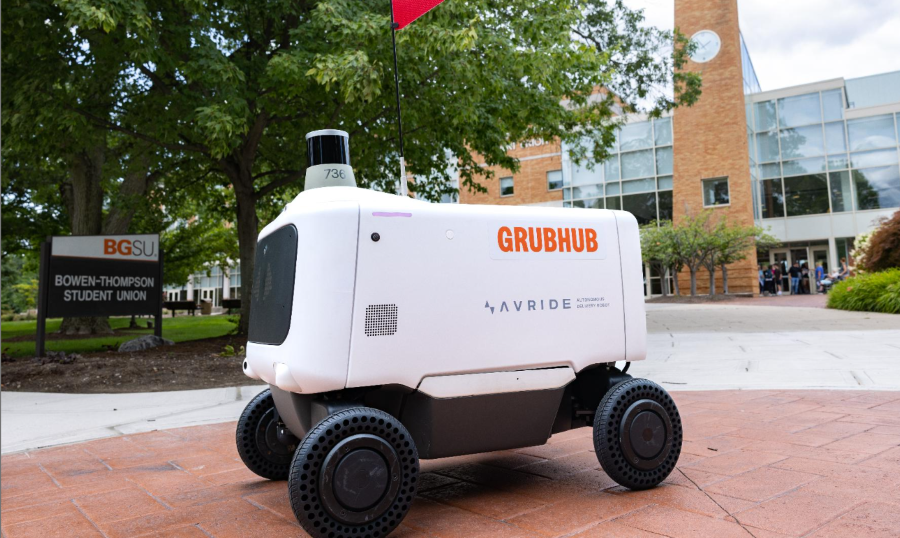
Bowling Green State University Introduces New Delivery Robot Capable of Carrying Six Large Pizzas
Bowling Green State University (BGSU) has announced the launch of a new generation of campus delivery robots this fall, which can carry six large pizzas and five 1.5-liter drinks. This upgrade effectively doubles the carrying capacity compared to previous models, allowing for more efficient delivery of multiple meals and larger orders. The introduction of these robots is significant as it enhances the dining experience for students, enabling them to order through the Grubhub platform and track their deliveries in real-time. The payment system is fully integrated, supporting various payment methods, which facilitates use by commuters, residents, and visitors alike. The new robots are set to officially launch on August 17, 2023, on the BGSU campus. There is potential for expanding the delivery range to surrounding areas in the future. With this upgrade, BGSU continues to lead in autonomous delivery services, having been the first university in Ohio to implement such technology.
Campus Delivery Robots Food Delivery Technology Robotics University Services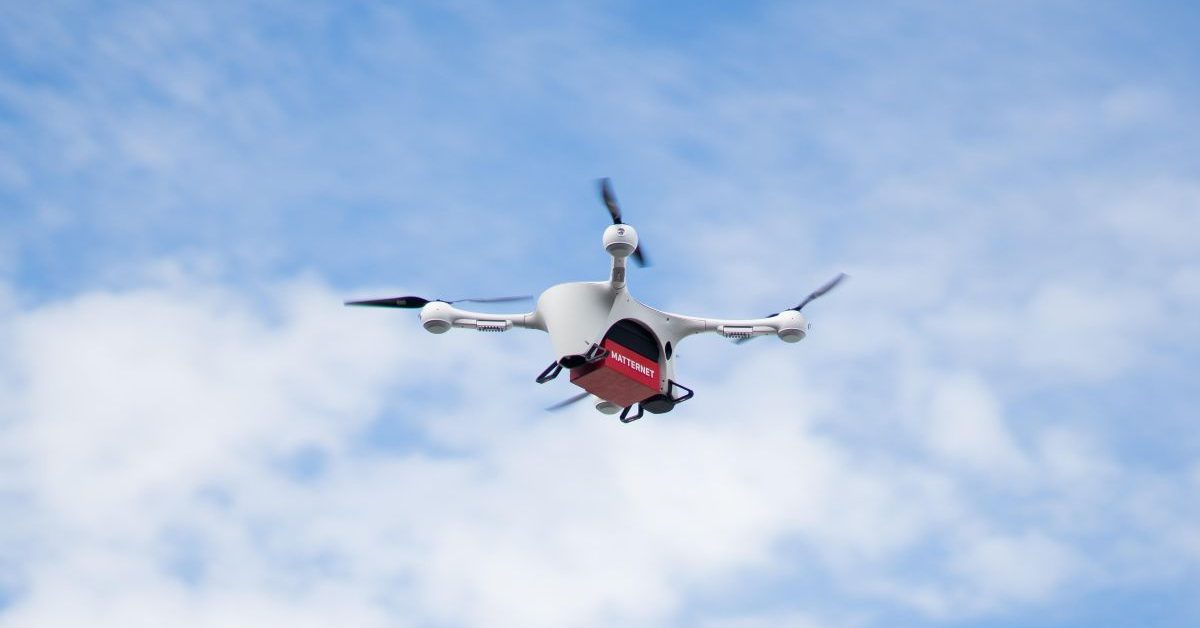
Matternet Partners with Beeline to Enhance US Drone Delivery Network Expansion
Matternet has announced a partnership with Beeline UAS to enhance its drone delivery operations across the United States. This collaboration adds another FAA Part 135 operator to Matternet's network, which already includes UPS Flight Forward and Ameriflight. The focus will be on expanding beyond visual line of sight (BVLOS) operations in California's San Francisco Bay Area and Los Angeles metropolitan area, known for their high delivery costs and traffic congestion. The partnership is significant as it aims to address the growing demand for drone delivery services in sectors like food, retail, and healthcare. Matternet's CEO, Andreas Raptopoulos, emphasizes the importance of a network of certified operators to scale operations efficiently. Beeline's expertise in regulatory compliance and flight operations will enable Matternet to expand its services without the need to develop its own extensive operational workforce. Looking ahead, this partnership represents Matternet's strategy to diversify its delivery network through multiple certified operators, enhancing flexibility and compliance. As Matternet has already conducted over 60,000 commercial drone flights, the collaboration with Beeline is expected to further solidify its position in the drone delivery market. No further timeline was disclosed at the time of publication.
News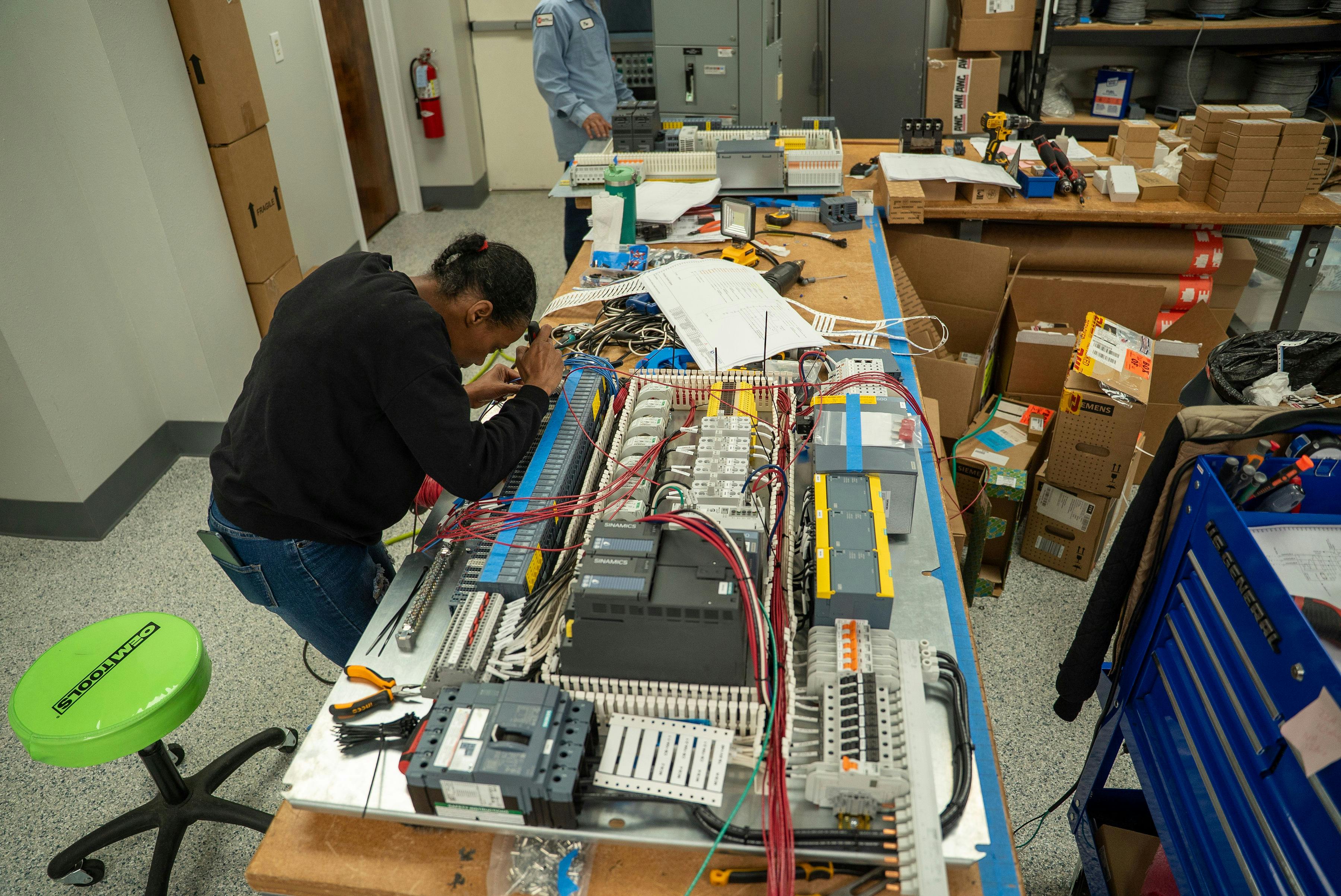
Solid State Automation and Controls Cuts Motor Control Center Delivery Time by 50 Weeks
Solid State Automation and Controls (SSAC) faced a significant challenge when a customer required a Motor Control Center (MCC) for a new facility, with a traditional lead time of 14 months. The facility needed to be operational in just eight months, prompting SSAC to innovate a solution. They designed the custom Motor Control Complex, MC-PLEX, in collaboration with Rittal, successfully delivering it in 22 weeks, thus saving 50 weeks compared to the standard timeline. This achievement is crucial as it highlights SSAC's ability to adapt and meet urgent customer needs in the building materials and logistics industry. By leveraging a modular enclosure and busbar platform, SSAC not only fulfilled the immediate requirement but also laid the groundwork for a more efficient and flexible product line. The company’s commitment to customer trust through expertise and accountability was pivotal in overcoming the traditional limitations of MCC delivery. Looking ahead, SSAC's innovative approach to the MCC design and delivery process may set a new standard in the industry. Their collaboration with Rittal and the use of advanced design tools like Eplan could lead to further enhancements in efficiency and flexibility for future projects. No further timeline was disclosed at the time of publication.
Factory / Digital Transformation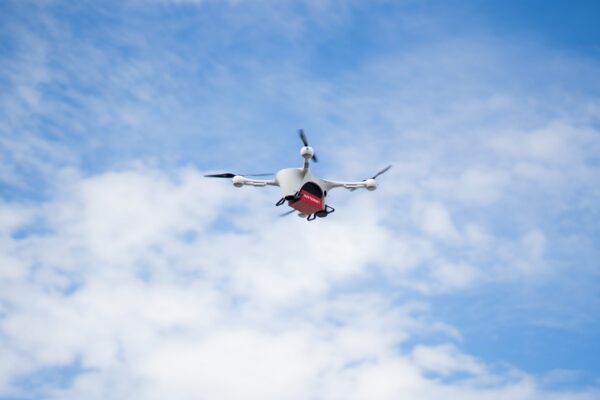
Matternet Partners with Beeline UAS to Enhance Drone Delivery Operations in California
Matternet, based in Mountain View, has announced a partnership with Beeline UAS to expand its drone delivery network under FAA Part 135 regulations. This collaboration, effective from July 15, 2026, aims to enhance beyond visual line of sight (BVLOS) operations in the San Francisco Bay Area and Los Angeles. Beeline will utilize Matternet's technology to support delivery services for sectors including food, retail, and healthcare. This partnership is significant as it allows Matternet to leverage Beeline's operational capabilities to address the challenges of traffic congestion and high labor costs in urban areas. The integration of Beeline into Matternet's network, which already includes Ameriflight and UPS Flight Forward, is expected to increase operational capacity and facilitate efficient market expansion. Matternet's focus on autonomous aerial delivery positions it as a leader in the evolving drone delivery landscape. Looking ahead, Matternet's multi-operator model is designed to ensure rapid commercial growth while adhering to safety and regulatory standards. No further timeline was disclosed at the time of publication, but the partnership is poised to enhance drone delivery services across more communities in the United States.
Delivery Drone News Drone News Feeds News Ameriflight Andreas Raptopoulos
Coco Robotics Expands Autonomous Delivery Operations in Washington, D.C.
Coco Robotics has announced the expansion of its autonomous delivery services in Washington, D.C., with customer deliveries set to commence this summer. This move marks a significant step in scaling its fleet across major U.S. cities, enhancing service for local restaurants and retailers. The expansion into Washington, D.C. is crucial as it allows Coco Robotics to tap into a vibrant urban market, providing efficient and reliable delivery solutions. This initiative aims to assist neighborhood businesses in reaching more customers while simultaneously addressing issues like traffic congestion and emissions. Looking ahead, the launch of deliveries in Washington, D.C. will be closely monitored as it could set a precedent for further expansions in other urban areas. No further timeline was disclosed at the time of publication.

Zipline Expands U.S. Operations with Cleveland Clinic Home Delivery and Austin Launch
On July 13, 2026, Zipline announced a significant expansion of its U.S. operations, including the launch of a home delivery service in partnership with Cleveland Clinic and an upcoming service in Austin. The company reported a remarkable 13-fold increase in businesses utilizing its delivery app in the first half of 2026, alongside the completion of over 2.5 million commercial deliveries. This expansion is crucial as it enhances Zipline's healthcare delivery capabilities, allowing eligible Cleveland Clinic patients to receive prescription deliveries at home at no extra cost. The service will eventually include lab samples and medical supplies, building on the home delivery platform introduced in 2023. Furthermore, the Austin launch will enable rapid food and retail deliveries, further diversifying Zipline's marketplace. Looking ahead, Zipline's growth trajectory appears promising, with new partnerships and services on the horizon. The company continues to attract top talent from industry leaders like Tesla and Waymo, which may bolster its operational capabilities. No further timeline was disclosed at the time of publication.
Delivery Drone News Drone News Feeds News 135 million autonomous miles 2.5 million deliveries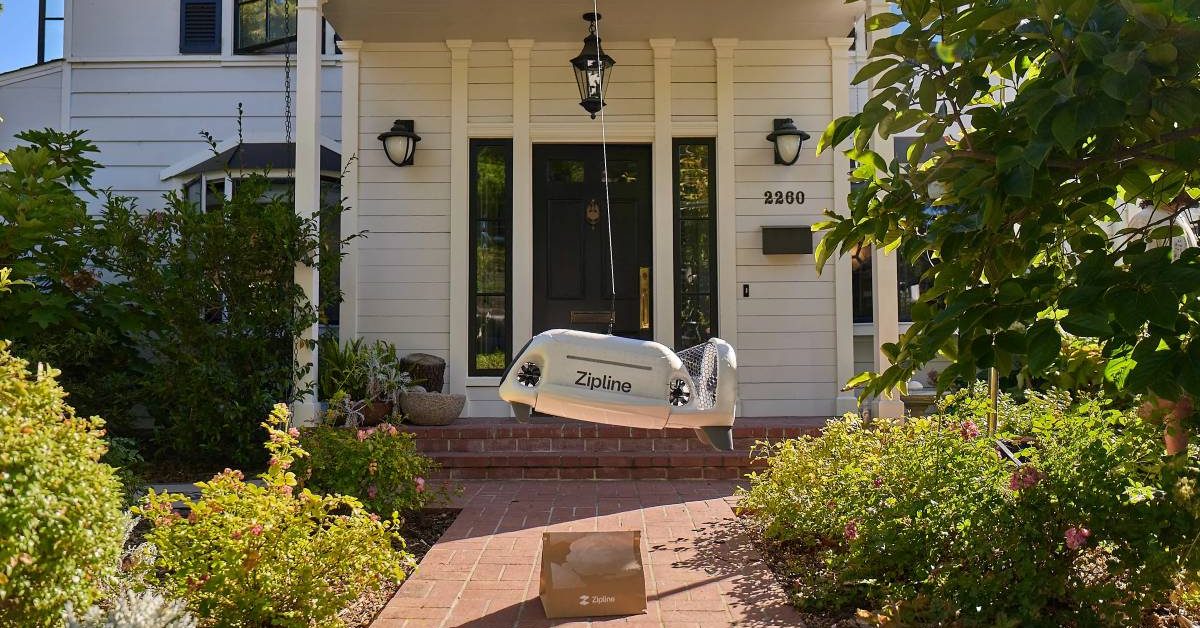
Zipline Expands Drone Delivery Services with New Leadership in Austin and Cleveland
Zipline is intensifying its drone delivery efforts in the U.S. by launching services in Austin and Cleveland, supported by new executives from Tesla, Waymo, and Uber. This strategic move comes as demand for Zipline's delivery platform surges, with a 13-fold increase in businesses utilizing the app in the first half of 2026. The significance of this expansion lies in Zipline's milestone of over 2.5 million commercial deliveries globally, with 70% of flights occurring in the U.S. The upcoming launch of a home prescription delivery service in partnership with Cleveland Clinic marks a pivotal moment for healthcare logistics, with plans to broaden the service to include lab samples and medical supplies. Looking ahead, Zipline's entry into Austin will allow customers to order food and retail products with rapid delivery times. The company is experiencing swift growth, with notable partnerships from national chains like Chipotle and Little Caesars. No further timeline was disclosed at the time of publication.
NewsRobotics needs a service framework.
RSF defines a common language for robot service capability, lifecycle operations, certification pathways, and service-provider networks.
Join the RobotToday community on LinkedIn
Daily robotics news, in-depth analysis, conference highlights, and discussions with professionals worldwide.







