

Industry Briefing
A single destination for timely, editor-curated robotics news from around the world.

Raytheon and Composite Energy Technologies Showcase HADALUS Unmanned Undersea Vehicle Capabilities
Raytheon, a business unit of RTX, and Composite Energy Technologies (CET) have successfully demonstrated the HADALUS unmanned undersea vehicle (UUV) during a U.S. Navy exercise. This event showcased the UUV's undersea launch capabilities, marking a significant advancement in integrated unmanned undersea operations. The demonstration is crucial as it highlights the potential for a single UUV to perform multiple functions, including detection, reacquisition, and engagement, within a single mission. Jen Gauthier from Raytheon emphasized that this development is part of a broader strategy to deliver autonomous undersea capabilities that are less detectable than surface platforms. HADALUS, measuring 34 feet with over 2,000 nautical miles of endurance, is designed to be cost-effective, with production costs significantly lower than comparable vehicles. The rapid development from concept to prototype in under 18 months illustrates the agility of the undersea industrial base, according to CET's CEO Chase Hogoboom. No further timeline was disclosed at the time of publication.
rtx raytheon composite energy technology demo uuv
Ruoyu Technology's Strategic Positioning in High-Risk Energy Scenarios for Special Robots
The year 2026 is widely recognized as a pivotal moment for the commercialization of humanoid robots and embodied intelligence, with various factors maturing. However, the transition from technology validation to large-scale deployment is ongoing. High-risk energy scenarios are becoming critical testing grounds for the industry, reflecting its future direction. The special robot market is on an upward trajectory, with projections indicating a growth from 290 billion yuan in 2025 to 352 billion yuan in 2026 in China. Despite this expansion, not all players will benefit equally. Two distinct narratives have emerged: traditional hardware-focused manufacturers and algorithm-driven startups, each with different approaches to market engagement. As the industry approaches 2026, which is seen as a key year for commercialization, there is a clear market gap for qualified, intelligent, and operational solutions in high-risk scenarios. The need for robots that can autonomously adapt and operate safely in hazardous environments is critical, as highlighted by the participation of Ruoyu Technology in the recent energy innovation conference, emphasizing their commitment to enhancing safety in dangerous work conditions.
Special Robots Embodied Intelligence Energy Sector Safety Compliance Automation Technology
NVIDIA Partners with SB Energy to Establish AI Compute Campus in Ohio
NVIDIA has secured land, power, and shell capacity at the PORTS-Pike Technology Campus in Pike County, Ohio, through a partnership with SB Energy to host NVIDIA compute. OpenAI will be the primary customer, with SB Energy constructing and operating the data center under a 20-year lease. This initiative aims to meet the surging demand for AI infrastructure, laying the groundwork for advancements in scientific discovery and economic development. The collaboration is significant as it addresses the critical need for AI infrastructure, which is becoming essential across various industries. NVIDIA's investment in the PORTS-Pike campus will support the deployment of AI factories utilizing the DSX AI factory platform, designed to provide 4.25 IT-GW of capacity. This project is expected to create thousands of jobs and revitalize the local economy in Southern Ohio, showcasing the potential of AI to transform communities. Looking ahead, the initial capacity is set to come online in phases starting in 2028, with NVIDIA having the option to expand beyond the initial deployment. The partnership also includes a substantial investment in regional grid infrastructure and community development, indicating a strong commitment to the local area and its workforce. No further timeline was disclosed at the time of publication.

Exploring PyroDelta Energy's Heavy Lift Drone and Capillary Casting Technology
In a recent episode of the Drone Radio Show, Michael Abdelmaseh, Head Engineer at PyroDelta Energy, discussed the company's innovative Capillary Casting process. This patented technology aims to harness waste heat, a largely untapped energy source in aviation, to produce solid-state thermoelectric generators that can convert waste heat into clean electricity. The significance of PyroDelta's advancements lies in their potential applications across various sectors, including AI data centers, combustion engines, agriculture, and unmanned aerial vehicles. The company has dedicated nearly a decade to solving challenges that have long perplexed the thermoelectric industry, positioning itself as a leader in this niche. Looking ahead, the conversation highlighted the competitive landscape of DARPA's demanding drone competitions and the future possibilities for Capillary Casting technology beyond drones. No further timeline was disclosed at the time of publication.
Drone News Drone News Feeds Heavy Lift News Podcast alternative energy for drones
Starmind's Satellite Technology Achieves 880 Billion Liters in Annual Water Savings
Starmind has announced that its satellite technology can save approximately 880 billion liters of cooling water annually at full scale. This figure is equivalent to the annual household water use of around 6.5 million Americans. The technology operates by utilizing a closed-loop liquid cooling system that eliminates the need for water during its operational life, contrasting sharply with traditional ground data centers that consume vast amounts of water for cooling. The significance of this achievement lies in the growing water consumption crisis faced by data centers, particularly as AI expansion drives demand. In 2025, U.S. data centers consumed nearly one trillion liters of water, highlighting the urgent need for sustainable solutions. Starmind's approach not only addresses direct water usage but also avoids indirect water consumption associated with electricity generation, marking a substantial shift in how computing can be conducted in a resource-efficient manner. Looking ahead, Starmind's deployment strategy includes a projected buildout of 100 GW of orbital compute per year, which could displace an additional 735 billion liters of ground water demand annually. The first tranche of 10,000 satellites is already operational, offsetting approximately 8.8 billion liters of water per year. No further timeline was disclosed at the time of publication.

XL Batteries and ENEOS Holdings Collaborate on Organic Flow Battery Technology for Energy Storage
XL Batteries and ENEOS Holdings have entered into a memorandum of understanding to develop organic flow battery technology aimed at large-scale, long-duration energy storage. This collaboration will initiate with a joint feasibility study, potentially leading to commercial deployments of the innovative battery system. The significance of this partnership lies in addressing the increasing demand for energy storage solutions as electrification and industrial electricity needs rise. Long-duration storage is essential for balancing supply and demand, especially when renewable energy sources like solar and wind are not generating power. Looking ahead, the feasibility study will assess the commercial viability of XL Batteries' technology, which utilizes abundant and non-toxic organic electrolytes. No further timeline was disclosed at the time of publication.
Energy
UK and Japan Announce ‘Frontier Technology Partnership’ Including AI, Quantum, Space & Energy
The United Kingdom and Japan have initiated a new partnership focused on frontier technologies, with the goal of enhancing collaboration in areas such as artificial intelligence, semiconductors, and quantum computing. This agreement, announced by UK Prime Minister Keir Starmer and Japanese Prime Minister Sanae Takaichi, reflects both nations' efforts to bolster economic resilience and decrease reliance on foreign technology ecosystems. The partnership underscores a shared commitment to innovation and strategic technological advancement, aiming to foster a robust cooperative framework that can address emerging challenges in the global tech landscape.
AI AI Funding & Investment Robotics Cybersecurity Defense Japan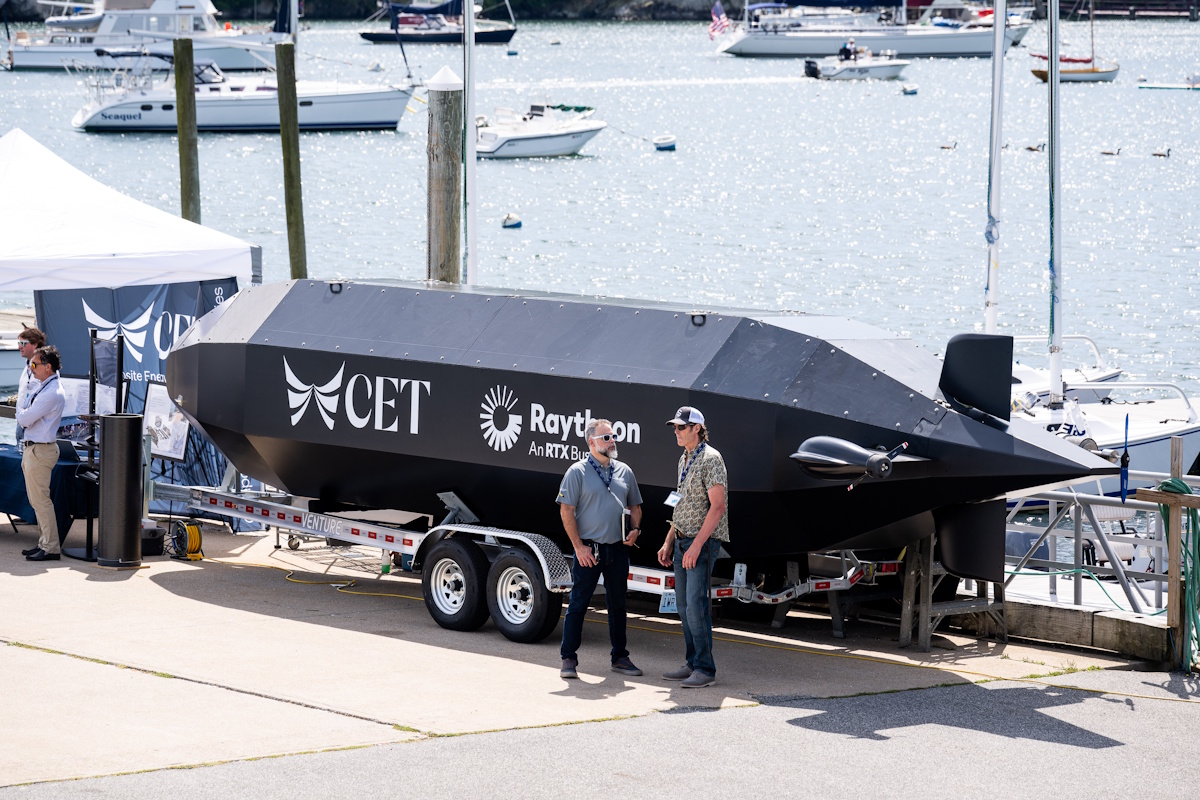
Composite Energy Technologies Announces HADALUS-XL Expanding Flat Pack AUV Family
Composite Energy Technologies (CET) has introduced HADALUS-XL, the latest model in its line of Flat Pack Autonomous Underwater Vehicles (AUVs). This unveiling took place recently as CET aims to enhance logistics capabilities in contested environments. The HADALUS AUVs are specifically designed for efficient transport in standard shipping containers, allowing for quick assembly at deployment sites. This innovation is expected to streamline operations and improve logistical support for underwater missions.
composite energy technologies hadalus-xl auvRobotics needs a service framework.
RSF defines a common language for robot service capability, lifecycle operations, certification pathways, and service-provider networks.
Join the RobotToday community on LinkedIn
Daily robotics news, in-depth analysis, conference highlights, and discussions with professionals worldwide.







