

Industry Briefing
A single destination for timely, editor-curated robotics news from around the world.

Tate Achieves 12-Fold Welding Productivity Increase with 58 Hirebotics Cobots
Hirebotics has announced that Tate, a data center infrastructure company, has successfully deployed 58 Cobot Welder systems across its manufacturing facilities in Arkansas, Virginia, and Kentucky. This deployment has resulted in a remarkable 12-fold increase in per-welder throughput for critical structural assemblies while allowing Tate to expand its team of certified welders. The significance of this achievement lies in Tate's ability to meet the intense demand and tight project timelines associated with its 120-year legacy in providing structural ceilings and airflow management products for large data centers. By transitioning to a cloud-connected automation network powered by Hirebotics' Beacon Pro control platform, Tate has scaled production without compromising precision, ensuring zero tolerance for manufacturing errors. Looking ahead, the integration of Hirebotics' technology allows Tate to manage its multi-plant network of Cobot Welders from a single smart device, enhancing operational efficiency. No further timeline was disclosed at the time of publication.
Computing Infrastructure News automation beacon pro cloud robotics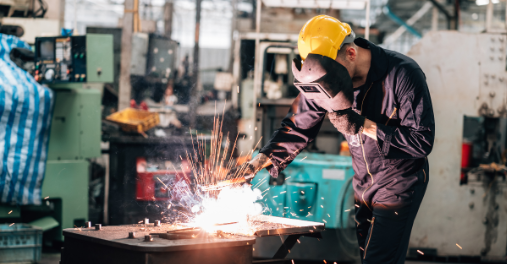
DOBOT Enhances Cobot Welding Flexibility with 6D Touch Positioning and TAST Technology
DOBOT has introduced advanced technologies to improve flexibility in cobot welding, addressing common challenges such as workpiece position variations. In industries like metal fabrication and machinery manufacturing, precise positioning is crucial, as even minor shifts can lead to rework and downtime. The integration of 6D Touch Positioning and TAST allows robots to adapt to real-world production conditions, enhancing efficiency and reducing setup time. The significance of these advancements lies in their ability to maintain productivity in high-mix, low-volume production environments. Traditional robotic welding systems often struggle with positional deviations, requiring time-consuming adjustments. DOBOT's solution minimizes operator intervention by automatically identifying workpiece positions and compensating for variations, thus streamlining the welding process. Looking ahead, the effectiveness of DOBOT's technologies will be crucial for manufacturers seeking to optimize their welding operations. The recent demonstration with Kemppi showcased the practical application of these innovations, highlighting the potential for improved welding quality and reduced programming time. No further timeline was disclosed at the time of publication.
cobot welding robotic welding welding robot welding automation 6D Touch Positioning Through Arc Seam Tracking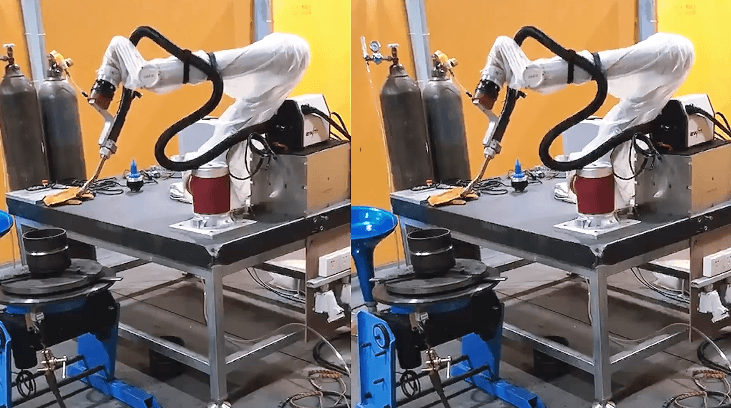
The Future of Welding Cobot Technology: AI Path Planning and Simulation
The welding industry is experiencing a significant digital transformation in response to a global shortage of skilled welders and an increasing demand for high-precision manufacturing. This shift is marked by the introduction of collaborative robots, or welding cobots, which are evolving from traditional automated tools into intelligent partners capable of executing complex welding tasks. These advancements allow small-to-medium enterprises to achieve high-quality welding standards with reduced setup times. Key innovations include AI-driven path planning and vision integration, which address the challenges posed by variability in workpieces. By employing technologies such as "Through-the-Arc" sensing and laser vision systems, these cobots can analyze seams in real-time and adjust their movements to compensate for any misalignments. Additionally, "Lead-through" programming enables human welders to guide the robotic arm, which the AI then refines into a precise trajectory. The use of simulation and digital twin technology further enhances the welding process. Engineers can create virtual models of welding cells to optimize operations without interrupting production. This capability allows for the prediction of thermal effects and minimizes heat distortion, significantly reducing the time required to deploy welding cobots from days to hours. At the forefront of this innovation is JAKA, which is integrating these intelligent features into its collaborative platforms. Their welding cobots, equipped with advanced sensors and motion control, are designed for various welding applications. JAKA also offers a user-friendly software package that simplifies complex path planning, enabling operators to monitor and adjust weld parameters remotely, thereby enhancing craftsmanship while ensuring precision.
The Impact of Welding Cobots on Reducing Material Waste
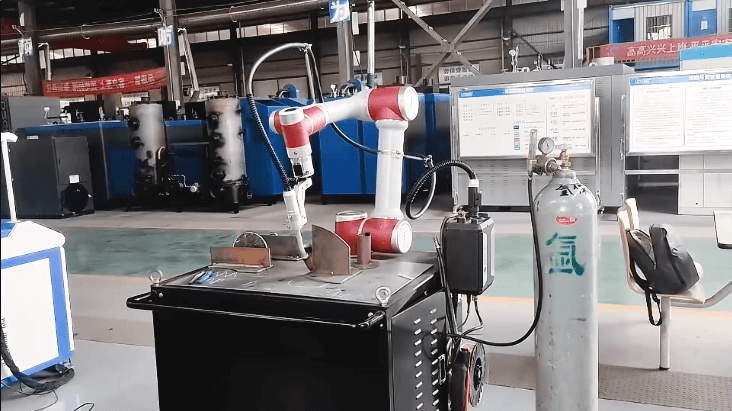
Manufacturers are increasingly turning to JAKA's industrial robot arms to enhance the efficiency of their welding operations by significantly reducing material waste. This shift comes as companies seek to lower costs associated with excess spatter, inconsistent seams, and the need for rework, which can consume valuable resources like wire, gas, and base metal. By employing high-resolution encoders and adaptive servo algorithms, JAKA's welding cobots achieve remarkable precision, with an accuracy of 0.2mm. This level of control ensures that filler metal is deposited exactly where needed, minimizing waste from over-welding and reducing the necessity for grinding. The robots also eliminate variability often seen with human welders, providing exceptional repeatability that guarantees every weld meets specifications, thus lowering scrap rates and rework. Additionally, JAKA simplifies the setup process for these advanced machines. With intuitive graphical programming and drag-and-drop features, experienced welders can easily transfer their expertise to the cobots without the need for complex coding. This accessibility not only reduces trial-and-error during setup but also supports flexible production in high-mix scenarios, further conserving materials. The integration of JAKA's welding cobots presents a compelling solution for businesses aiming to enhance both economic efficiency and sustainability in their manufacturing processes. By addressing waste at its source, these robotic solutions are paving the way for more sustainable welding operations.
ASK-100-CB – A Practical Entry into Cobot Welding
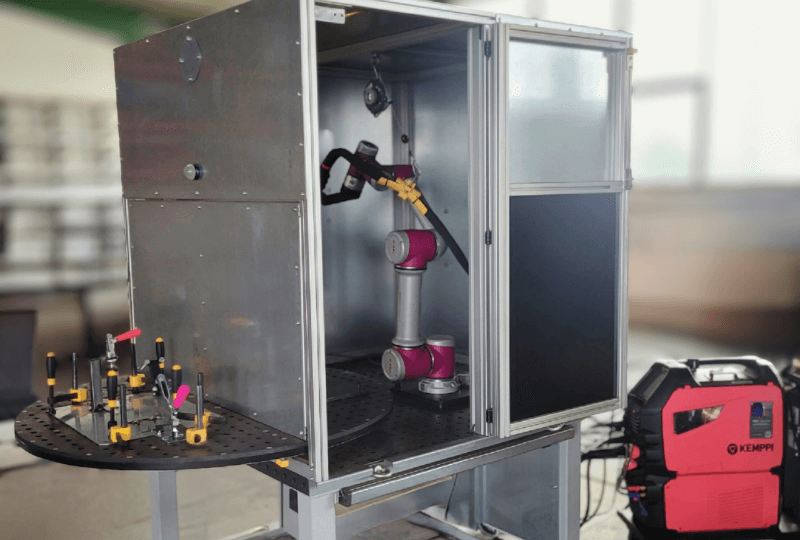
Akon Robotics has unveiled the ASK-100-CB, a cobot-assisted welding cell designed to tackle the challenges faced by small and medium-sized manufacturers, such as fluctuating batch sizes and a shortage of skilled welders. Launched recently, this innovative solution combines a JAKA collaborative robot with a Kemppi welding system, providing a compact and mobile unit that simplifies the automation of welding processes. The ASK-100-CB is engineered for flexible, high-mix welding applications, allowing manufacturers to adapt quickly to changing components without extensive reprogramming. Operators can easily program the system through a user-friendly drag-and-drop interface and access controls via PC, tablet, or smartphone, enhancing usability on the shop floor. Key features include a 180° rotary table for simultaneous loading and unloading, which maximizes efficiency and minimizes idle time, crucial for achieving rapid returns on investment in low-volume production. Safety is prioritized with a protective enclosure and compliance with CE risk assessments, while connections for fume extraction promote a clean working environment. Customers who have implemented the ASK-100-CB report significant improvements, including reduced scrap rates, enhanced productivity, and better ergonomic conditions for operators. The fully integrated solution ensures that all components work seamlessly together, allowing manufacturers to focus on production outcomes rather than system integration challenges. This development illustrates how collaborative robotics can make welding automation both practical and economically viable for modern manufacturing.
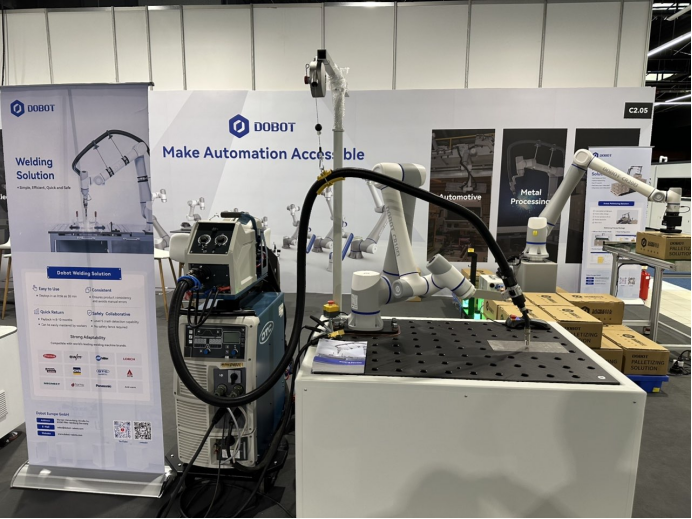
Robotic Welding Automation: How Cobot Welders Transform Manufacturing
Robotic welding, a cutting-edge technology in manufacturing, has gained significant attention for its efficiency and precision. This innovation, particularly through the use of collaborative robots (cobots), has revolutionized traditional welding processes. As industries seek to enhance productivity and reduce labor costs, cobot welders have emerged as a solution, allowing for safer and more effective operations alongside human workers. The rise of robotic welding has been particularly notable in recent years, with advancements in automation technology driving its adoption across various sectors. Manufacturers are increasingly integrating these systems into their production lines to streamline processes and improve output quality. The ability of cobots to work in tandem with human operators not only boosts efficiency but also minimizes the risk of workplace injuries, addressing safety concerns prevalent in welding environments. As companies continue to embrace this technology, the impact of robotic welding on the manufacturing landscape is becoming increasingly evident. By automating complex tasks, businesses can focus on higher-level operations and innovation, ultimately leading to greater competitiveness in the market. The ongoing evolution of robotic welding signifies a transformative shift in how products are manufactured, highlighting the importance of adapting to technological advancements in the industry.
robot arm collaborative robot cobot dobot dobot roboticsRobotics needs a service framework.
RSF defines a common language for robot service capability, lifecycle operations, certification pathways, and service-provider networks.
Join the RobotToday community on LinkedIn
Daily robotics news, in-depth analysis, conference highlights, and discussions with professionals worldwide.







