

Industry Briefing
A single destination for timely, editor-curated robotics news from around the world.

Sven Koenig Honored with 2026 ACM/SIGAI Autonomous Agents Research Award
Sven Koenig has been awarded the 2026 ACM/SIGAI Autonomous Agents Research Award for his significant contributions to the field of autonomous agents. His research focuses on AI planning and search, influencing how intelligent agents operate in complex environments. Koenig's work has had a profound impact on AI, multi-agent systems, and robotics, enabling scalable autonomy in real-world applications. This recognition highlights the importance of Koenig's research in bridging theoretical concepts and practical applications, which is crucial for advancing the capabilities of intelligent systems. As a Chancellor’s Professor and Bren Chair at UC Irvine, his accolades include being a Fellow of AAAI, AAAS, and ACM, along with multiple best paper awards. His contributions are vital for the ongoing development of autonomous technologies. Looking ahead, the robotics and AI communities will continue to benefit from Koenig's innovative research. No further timeline was disclosed at the time of publication. His work sets a benchmark for future advancements in autonomous agents and their applications across various sectors.

MIT Researchers Develop Robotic Lab for Autonomous Laser Experimentation
MIT researchers have created a robotic laboratory capable of autonomously assembling and conducting laser experiments. This innovative setup utilizes advanced robotics to enhance the efficiency and precision of scientific research, marking a significant advancement in automation technology. The development is crucial as it demonstrates the potential of robotics to transform traditional laboratory environments, enabling faster experimentation and data collection. This aligns with the growing trend of integrating automation in research settings to improve productivity and reduce human error. Looking ahead, it will be important to monitor how this robotic lab influences research methodologies and the broader implications for automation in scientific fields. No further timeline was disclosed at the time of publication.
AI and Robotics
Study on Cooperative Navigation Methods for Autonomous Underwater Vehicles in Terrain Mapping
A recent study published in the Journal of Field Robotics explores cooperative navigation methods for autonomous underwater vehicles (AUVs) in terrain mapping. The research focuses on enhancing the accuracy and efficiency of AUVs when mapping underwater environments through collaborative navigation techniques. This research is significant as it addresses the challenges faced by AUVs in accurately mapping complex underwater terrains. By improving navigation methods, the study aims to facilitate better data collection for various applications, including environmental monitoring, underwater exploration, and resource management. Looking ahead, the implications of this research could lead to advancements in AUV technology and its applications in marine research. No further timeline was disclosed at the time of publication.
RESEARCH ARTICLE
Autonomous Fruit Implements Demonstrated at Dutch Fruit Research Centre
Recent advancements in autonomous fruit implements were showcased at the Fruit Research Centre in Randwijk, Netherlands. This event highlighted the significant progress made in agricultural robotics, particularly in fruit growing, which is becoming increasingly vital for future-proofing agricultural businesses. The demonstration underscored the importance of robotization in enhancing productivity and sustainability in agriculture. As these technologies mature, they offer practical solutions to various challenges faced by fruit growers, making them more efficient and competitive in the market. Looking ahead, stakeholders in the agricultural sector should monitor the ongoing developments in autonomous farming technologies. The Experience Day served as a platform for addressing questions and concerns, indicating a growing interest in integrating these innovations into everyday farming practices. No further timeline was disclosed at the time of publication.
Uncategorized
Researchers Introduce Milo, the First Fully Autonomous Robotic Guide Dog for the Visually Impaired
Researchers have unveiled Milo, the world’s first fully autonomous robotic guide dog, aimed at assisting blind and visually impaired individuals in navigating various environments. This AI-powered mobile robot serves as a cost-effective alternative to traditional guide dogs, which can be expensive and in limited supply. Milo can be produced for under $2,000, significantly increasing accessibility for those awaiting trained guide dogs. The significance of Milo lies in its ability to navigate unfamiliar locations without the need for pre-mapped environments, utilizing onboard artificial intelligence to identify paths and avoid obstacles. This capability is crucial for users who require reliable navigation assistance in diverse settings. The robot's navigation system, trained through reinforcement learning, allows it to adapt to different lighting and environmental conditions, enhancing its usability. Looking ahead, the open-source release of Milo, including its hardware designs and AI models, invites further research and development in the field. This initiative could lead to advancements in assistive technologies for the visually impaired, making navigation safer and more efficient. No further timeline was disclosed at the time of publication.
Health News accessibility artificial intelligence assistive robotics assistive technology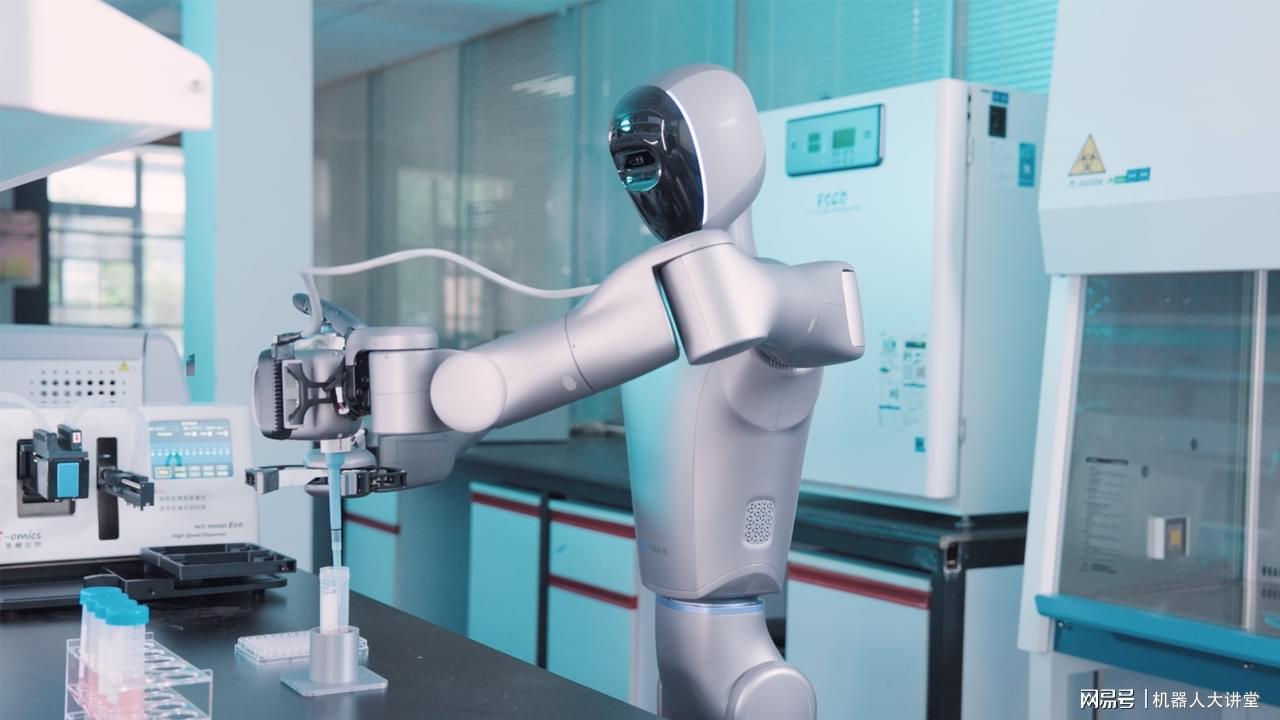
Yuanluo Technology Unveils First Autonomous Laboratory Utilizing Object-Centric Physics Model
Yuanluo Technology has successfully launched the world's first autonomous laboratory on a national research platform, marking a significant advancement in embodied intelligence. The laboratory's robotic system can autonomously perform over 40 operations, including nucleic acid extraction and cytotoxicity testing, with a precision of less than one millimeter. This achievement demonstrates the robot's capability to execute complex, multi-step tasks continuously for over three hours, addressing challenges in throughput and consistency in biochemical research. This development is crucial as it signifies a shift from demonstration to practical application of embodied intelligence in the biochemical and material science sectors. The Object-centric Physics Native Model (OPN), developed by Yuanluo, enables the robot to understand and adapt to the dynamic conditions of a real laboratory environment. By integrating visual, tactile, and force feedback, the robot can make real-time adjustments, ensuring stable execution of intricate experimental workflows across multiple devices. Looking ahead, the successful implementation of this autonomous laboratory sets the stage for further advancements in research and development processes across various industries, including public health and advanced manufacturing. The next milestones will involve expanding the capabilities of the OPN model and integrating it into more complex industrial systems. No further timeline was disclosed at the time of publication.
Autonomous Laboratories Embodied Intelligence Biochemical Research Robotics AI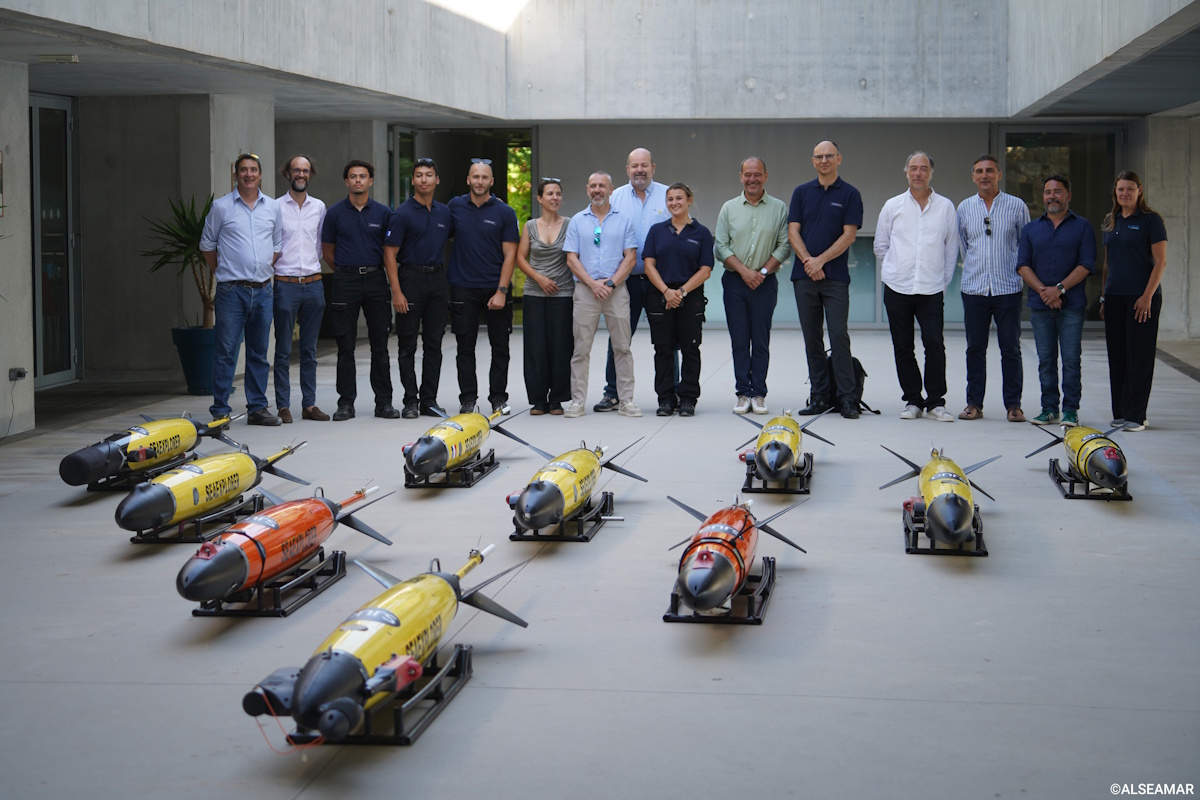
CNRS Deploys Ten SEAEXPLORER Autonomous Gliders for Mediterranean Ecosystem Research
In mid-June 2026, the CNRS deployed ten SEAEXPLORER autonomous underwater gliders in the Ligurian Sea as part of Mission 6 under France's 2030 funding plan. This initiative aims to create a comprehensive environmental data atlas for the northwestern Mediterranean, focusing on the impacts of human activities on marine ecosystems. The gliders will operate for one month, diving to depths of 1,000 meters and equipped with sensors to monitor underwater noise and ocean currents. The deployment is significant as it represents a strategic effort by the French government to enhance industrial competitiveness and develop next-generation technologies for deep-sea exploration. By utilizing coordinated fleets of autonomous gliders and advanced sensing technologies, researchers aim to better understand the dynamics of marine ecosystems and the effects of climate change, maritime traffic, and ocean acidification. This innovative approach will facilitate the study of plankton distribution and biodiversity through methods such as environmental DNA monitoring. Looking ahead, the next phases of Mission 6 will involve additional deployments in the Gulf of Lion in 2028 to test new sensors, followed by operations in French Polynesia between 2028 and 2029. These efforts will further expand the capabilities of autonomous underwater vehicles in marine research, with no further timeline disclosed at the time of publication.
autonomous gliders cnrs exploration mediterranean marine ecosystems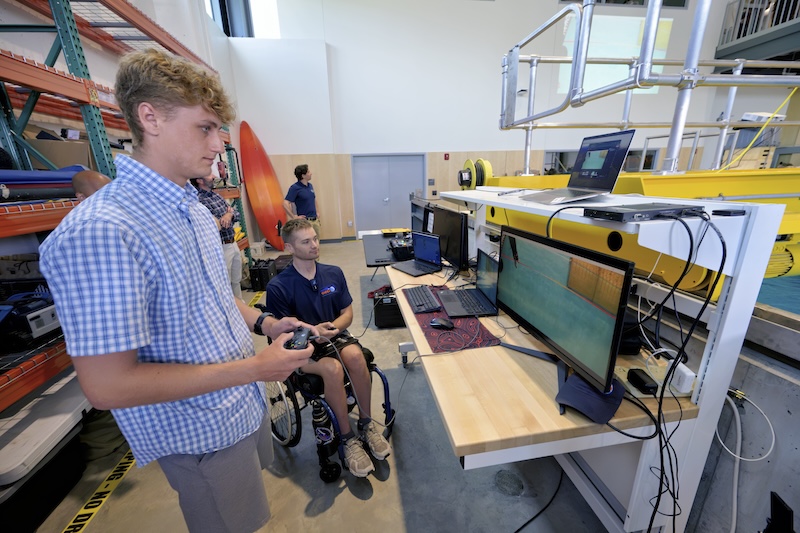
University of Rhode Island opens advanced Ocean Robotics Laboratory for autonomous marine research
Event marked milestone for Narragansett Bay Campus The University of Rhode Island celebrated a major milestone in the $300 million, multi-phase revitalization of the Narragansett Bay Campus with an underwater ribbon cutting ceremony for the new Ocean Robotics Laboratory on June 25. Students Elliot Roman and Jake Bonney piloted URI’s remotely operated vehicle Rhody to […]
Features Robotics Science autonomous systems autonomous underwater vehicles blue economy
NVIDIA Research Unlocks Advanced Grasping, Smarter Autonomous Driving and Agent Training at Scale
Researchers are exploring advancements in robotics, focusing on the versatility of robot grippers and the safety of autonomous vehicle systems. The study highlights that the true utility of a robot gripper lies not only in its ability to grasp a single object but also in its capacity to adapt and handle various unfamiliar items consecutively. Similarly, the effectiveness of autonomous vehicles is assessed not just on their reasoning capabilities but on their overall safety in diverse driving conditions. This research, conducted by a team of engineers and computer scientists, aims to enhance the functionality of robotic systems and improve public trust in autonomous technology. The findings, which are expected to influence future designs and applications, were presented at a technology conference in early October 2023. By integrating advanced algorithms and machine learning techniques, the team is developing systems that can learn from experience, thereby increasing their efficiency and reliability in real-world scenarios.

NVIDIA Enables the Next Era Of Physical AI Research With Agent Skills For Autonomous Vehicles, Robotics And Vision AI
At the Computer Vision and Pattern Recognition (CVPR) conference, NVIDIA is showcasing innovative physical AI agent skills aimed at accelerating the development of autonomous vehicles, robotics, and vision AI systems. This unveiling comes as researchers and developers face significant challenges in advancing physical AI, particularly in creating more capable and efficient systems. By introducing these new skills, NVIDIA seeks to enhance the capabilities of AI agents, ultimately facilitating faster progress in the field. The event highlights NVIDIA's commitment to driving advancements in AI technology, which is crucial for the future of autonomous systems.
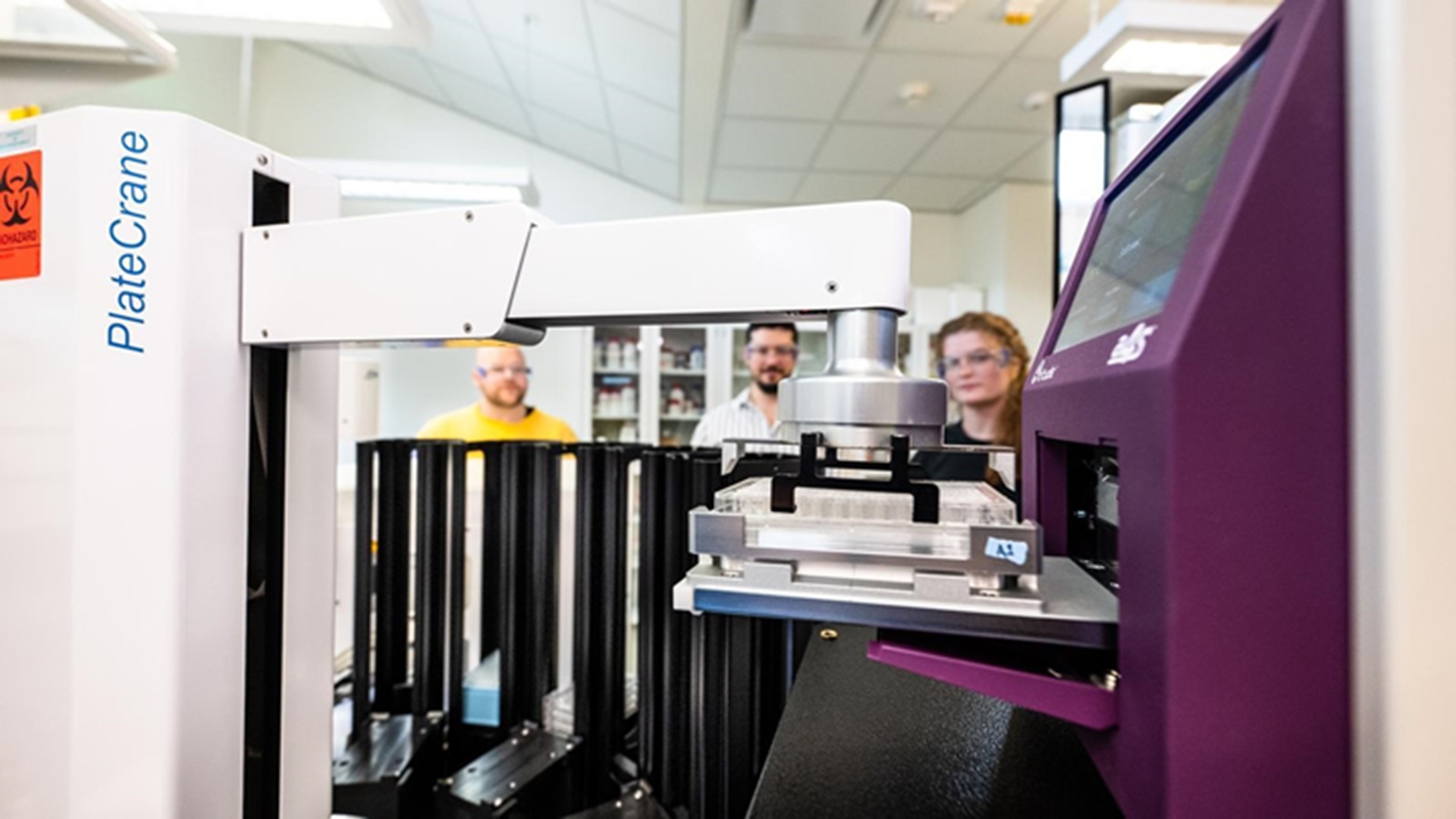
US scientists are building autonomous robots that can learn directly from researchers
Researchers at Argonne National Laboratory are advancing the field of laboratory automation by creating AI-powered robotic assistants capable of learning and performing various laboratory procedures. This innovative project aims to enhance efficiency and accuracy in scientific research, addressing the growing demand for streamlined processes in laboratories. The development is part of a broader effort to integrate artificial intelligence into everyday scientific tasks, allowing researchers to focus on more complex problem-solving. As the project progresses, the team is exploring various machine learning techniques to enable these robots to adapt and improve their skills over time. This initiative is expected to revolutionize how experiments are conducted, ultimately accelerating the pace of scientific discovery.

NVIDIA's Jim Fan Discusses Robotics Strategy and the Future of Autonomous Research
At Sequoia Capital’s AI Ascent 2026, Jim Fan, head of NVIDIA's Embodied Autonomous Research group, outlined a clear technical roadmap for robotics, marking the 'end game' as a near reality. He emphasized the ongoing 'Great Parallel' in robotics, mirroring the rapid evolution of Large Language Models (LLMs) and aligning robotic development with the four-stage GPT framework: pre-training, alignment, reasoning, and autonomous research. Fan highlighted the limitations of current Vision-Language-Action (VLA) models, such as GR00T N1.5, which excel at recognizing objects but struggle with physical interactions. He introduced the World Action Model (WAM), represented by NVIDIA’s DreamZero, which predicts physical states rather than just language outputs. This new approach aims to overcome the challenges of traditional teleoperation, which cannot scale effectively for generalist intelligence. Looking ahead, Fan discussed NVIDIA's shift towards sensorized human data and generative simulation, exemplified by EgoScale's pre-training on 20,854 hours of human video. He predicted that machines would pass the Physical Turing Test within 2–3 years and that by 2040, robots would autonomously design their successors, marking a significant evolution in robotics technology.
Dr Jim Fan NVIDIA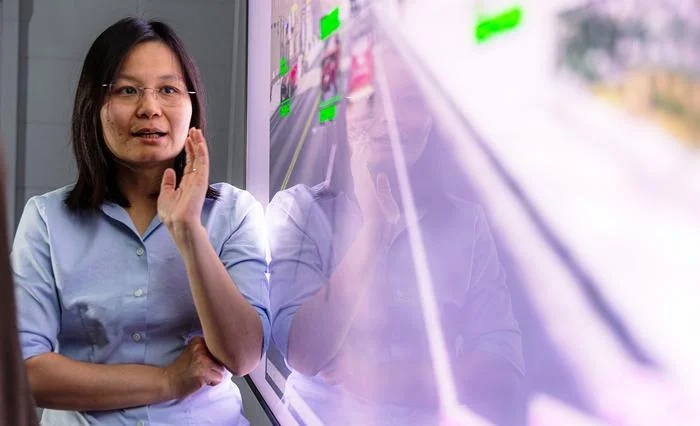
Researchers Say Autonomous Robots Can Make Safer Decisions With ‘Rulebooks’ System
Researchers at Iowa State University, in collaboration with ETH Zürich, have introduced a novel framework designed to enhance the decision-making capabilities of autonomous robots in situations where rules may conflict. The findings, published in the IEEE Transactions on Robotics, outline a system referred to as "rulebooks," which prioritizes rules rather than merging them. This innovative approach aims to improve the safety and transparency of robotic operations in real-world environments, addressing a critical challenge in the field of robotics. The study underscores the importance of establishing clear guidelines for robots to navigate complex scenarios effectively, ultimately contributing to the advancement of autonomous technology.
AI AI Research & Advances Robotics autonomous systems autonomous vehicles ETH Zürich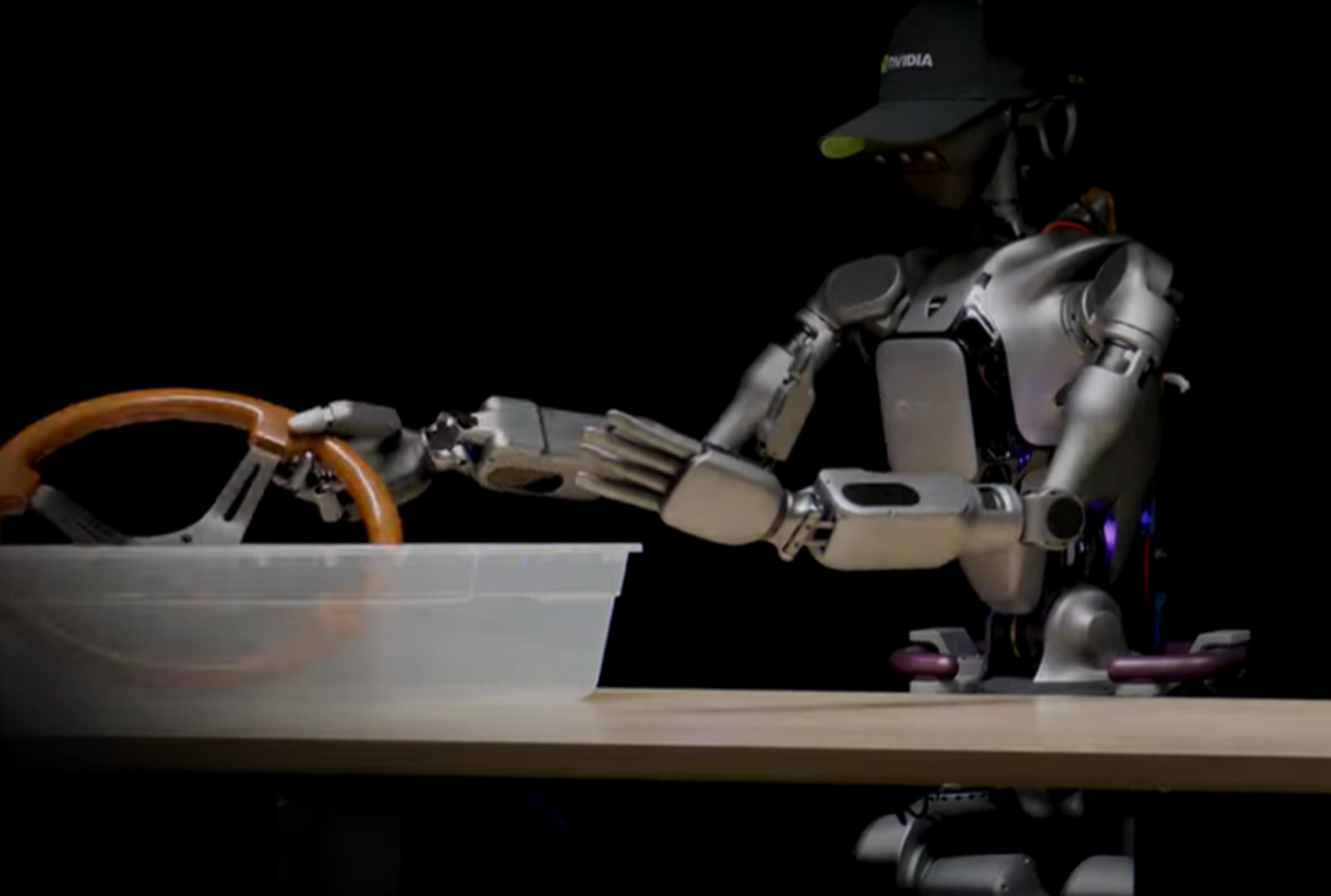
DiDi Autonomous Driving launches Voyager Labs for multimodal end-to-end driving research
DiDi Autonomous Driving has launched DiDi Voyager Labs, a new research initiative aimed at advancing end-to-end autonomous driving through the development of multimodal large models, world models, and reinforcement learning. This initiative, announced recently, will collaborate with a research team led by Professor Li Shengbo from Tsinghua University. The partnership is designed to leverage a joint framework that combines specialized expertise and resources to enhance the capabilities of autonomous driving technologies. This strategic move underscores DiDi's commitment to innovation in the autonomous vehicle sector and its efforts to stay at the forefront of technological advancements in this rapidly evolving field.
News FeedRobotics needs a service framework.
RSF defines a common language for robot service capability, lifecycle operations, certification pathways, and service-provider networks.
Join the RobotToday community on LinkedIn
Daily robotics news, in-depth analysis, conference highlights, and discussions with professionals worldwide.







