Special / Extreme Environments Education & Research Autonomous Vehicle / UGV Collaborative
Study on Cooperative Navigation Methods for Autonomous Underwater Vehicles in Terrain Mapping
Original from JournalofFieldRobotics: Research and Field Test of Autonomous Underwater Vehicles Cooperative‐Navigation Method in Terrain Mapping

Study on Cooperative Navigation Methods for Autonomous Underwater Vehicles in Terrain Mapping

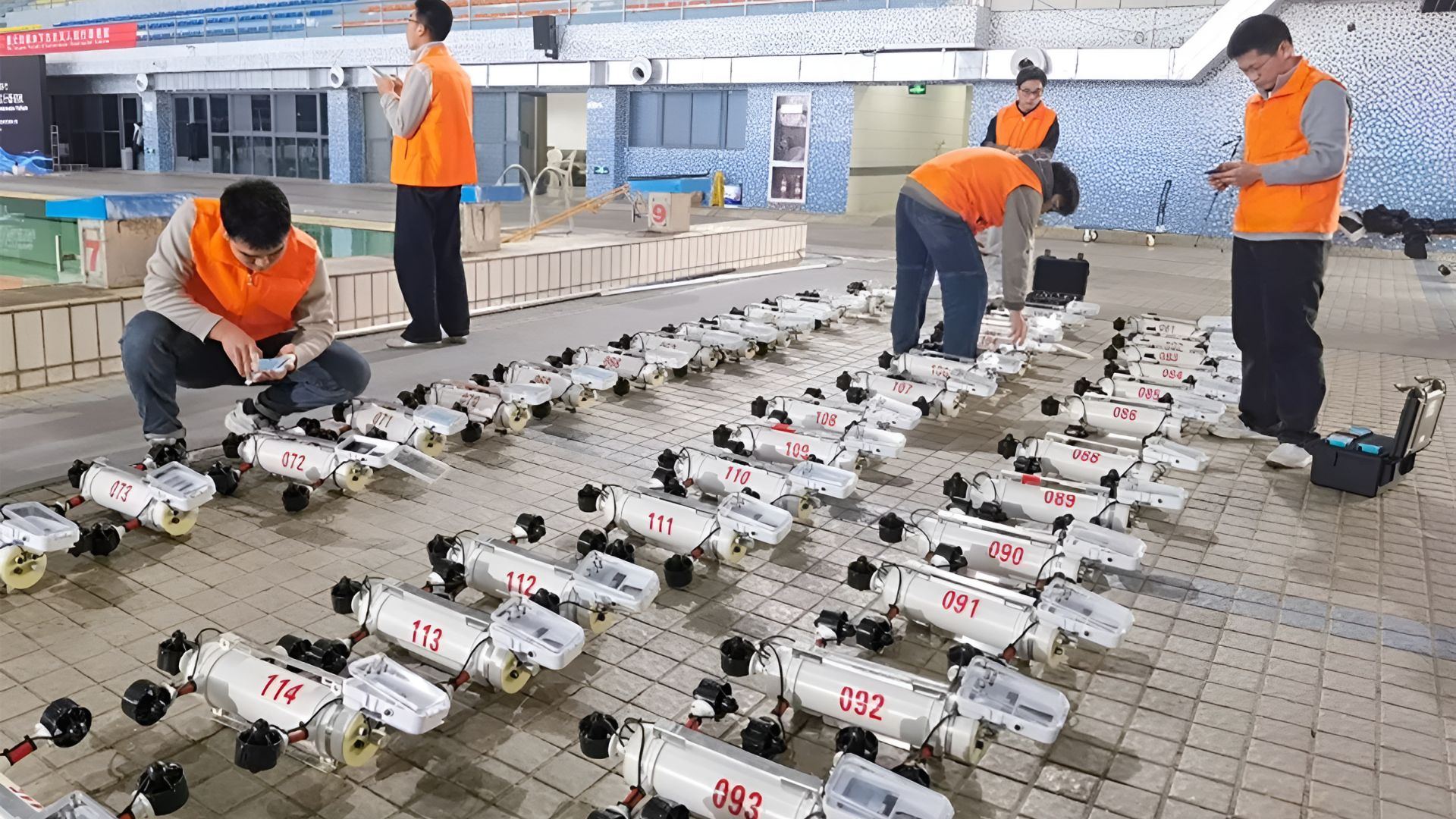
A recent study published in the Journal of Field Robotics explores cooperative navigation methods for autonomous underwater vehicles (AUVs) in terrain mapping. The research focuses on enhancing the accuracy and efficiency of AUVs when mapping underwater environments through collaborative navigation techniques.

This research is significant as it addresses the challenges faced by AUVs in accurately mapping complex underwater terrains. By improving navigation methods, the study aims to facilitate better data collection for various applications, including environmental monitoring, underwater exploration, and resource management.

Looking ahead, the implications of this research could lead to advancements in AUV technology and its applications in marine research. No further timeline was disclosed at the time of publication.

Editor's Note

The development of cooperative navigation methods for AUVs is crucial for enhancing underwater exploration capabilities. As industries increasingly rely on precise mapping for environmental and resource management, advancements in this area could significantly impact marine research and operational efficiency.

RobotToday Initiative

Robotics needs a service framework.

RSF defines a common language for robot service capability, lifecycle operations, certification pathways, and service-provider networks.

Share

Related Articles/News

Teledyne Marine Enhances Undersea Warfare Capabilities During AUKUS Exercise Lanternfish 2026

Teledyne Marine Enhances Undersea Warfare Capabilities During AUKUS Exercise Lanternfish 2026

Teledyne Marine participated in Exercise Lanternfish 2026, a multinational AUKUS Pillar 2 initiative aimed at enhancing seabed warfare capabilities. From June 14 to 26, 2026, Teledyne Marine collaborated with the U.K. Royal Navy and Royal Australian Navy at Naval Base Kitsap-Keyport, utilizing the Teledyne Gavia unmanned undersea vehicle (UUV) to support ...

teledyne marine allied undersea capabilities aukus
US Marine Corps Awards $11 Million Contract for Epirus' HAVOC Microwave Weapon System

US Marine Corps Awards $11 Million Contract for Epirus' HAVOC Microwave Weapon System

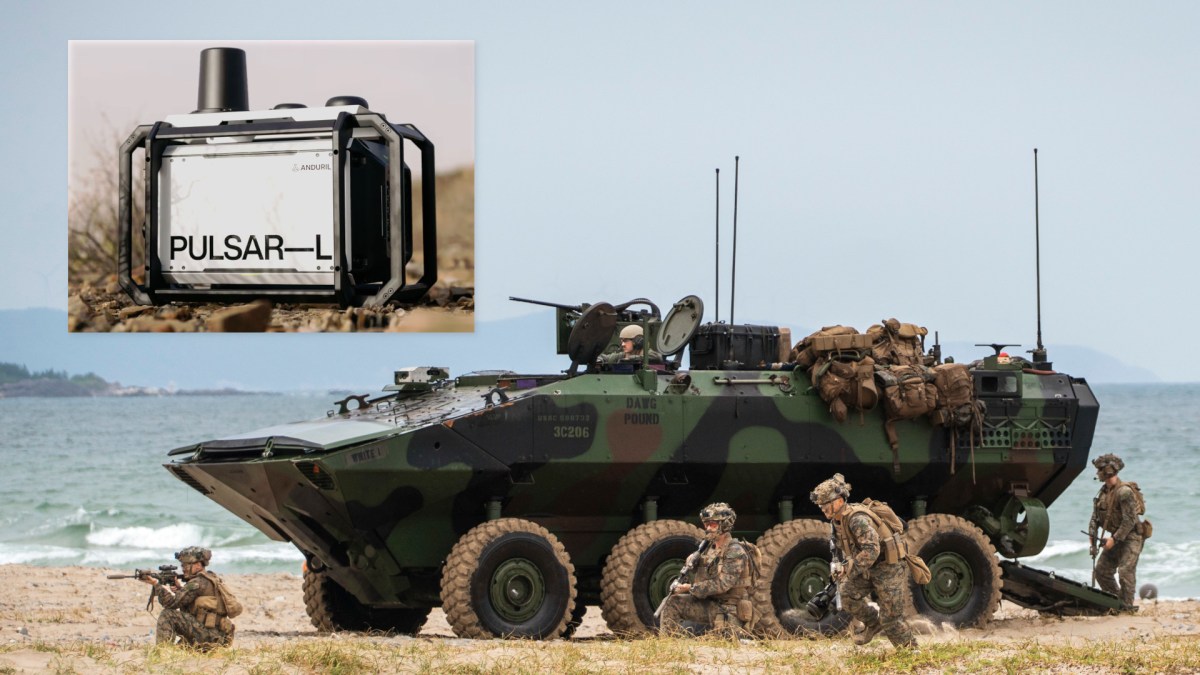
The US Marine Corps has awarded Epirus an $11 million contract for the HAVOC system, a vehicle-mounted high-power microwave weapon designed to disable drone swarms. This system is derived from Epirus' Leonidas weapon and will be integrated into both manned and unmanned Marine Corps vehicles, enhancing their counter-drone capabilities. The HAVOC system rep...

Military
New Miniature Robot with 34.6mm Diameter Enables Cable-Free Exploration of Small Pipes

New Miniature Robot with 34.6mm Diameter Enables Cable-Free Exploration of Small Pipes

A collaborative team from North University of China, Chinese University of Hong Kong, and Shanghai Jiao Tong University has developed a miniature robot named VCMR, measuring 34.6mm in diameter and 41mm in length. This robot can actively change its diameter from 34.6mm to 89.6mm and is capable of cable-free exploration in hard and soft pipes smaller than 8...

Miniature Robots Pipeline Inspection Robotics Technology
Raytheon and CET Showcase HADALUS Underwater Launch Capability After 18 Months of Development

Raytheon and CET Showcase HADALUS Underwater Launch Capability After 18 Months of Development

Raytheon and Composite Energy Technologies (CET) have successfully demonstrated the underwater launch capability of the HADALUS unmanned undersea vehicle (UUV) during a recent U.S. Navy exercise. This marks a significant milestone as it is the first time the Navy has observed this integrated capability in action beneath the ocean surface. The successful d...

Military
HII and MetalCraft Marine's Autonomous ROMULUS USV Passes Critical DoW Test for U.S. Navy

HII and MetalCraft Marine's Autonomous ROMULUS USV Passes Critical DoW Test for U.S. Navy

HII announced that its autonomous Watcher small Unmanned Surface Vessel (sUSV), based on the ROMULUS-25, has successfully passed a critical test recognized by the U.S. Defense Innovation Unit (DIU). This achievement marks the completion of the Production-Ready, Inexpensive, Maritime Expeditionary (PRIME) prototype project, which aims to develop smaller au...

hii metalcraft romulus usv
Epirus Wins $11 Million Contract for HAVOC C-UAS with Marine Corps

Epirus Wins $11 Million Contract for HAVOC C-UAS with Marine Corps

The Marine Corps has awarded an $11 million contract to Epirus for its High-power Microwave Autonomous Vehicle Operational Capability (HAVOC) system, designed to counter unmanned aircraft. This system will be installed on ground vehicles and includes training, service, and sustainment support. This contract underscores the Marine Corps' focus on deploying...

Land Warfare Naval Warfare Army
Russian Navy Implements Netting for Submarine Protection Against Drone Threats

Russian Navy Implements Netting for Submarine Protection Against Drone Threats

Recent satellite imagery reveals that the Russian Navy has begun using nets to shield submarines from drone attacks at its strategic base in Kamchatka. This development highlights Russia's growing concerns about drone threats, extending to critical facilities beyond the Ukraine conflict. Additionally, similar protective measures are being observed at a Bl...

News & Features Air Around The Globe
Moove Secures $250 Million to Develop Infrastructure for Autonomous Vehicle Ecosystems

Moove Secures $250 Million to Develop Infrastructure for Autonomous Vehicle Ecosystems

Moove has successfully raised $250 million in Series C funding, elevating its valuation to $2.1 billion. This capital will facilitate the expansion of its autonomous vehicle business, focusing on autonomous fleet ownership and the development of robotics-first depot infrastructure known as 'Nests.' These Nests will serve as operational hubs for charging, ...

Automotive Financial Investments
China Implements New Safety Regulations for Autonomous Vehicles by 2027

China Implements New Safety Regulations for Autonomous Vehicles by 2027

China has announced new safety regulations for autonomous vehicles, set to take effect on July 1, 2027. These rules will apply to both vehicles requiring a human backup driver and fully autonomous vehicles, such as those produced by Waymo. Key requirements include a mandatory deactivation override and ensuring that autonomous systems can match human drive...

All News
NVIDIA Launches Alpamayo 2 Super for Commercial Use in Robotaxis and Autonomous Vehicles

NVIDIA Launches Alpamayo 2 Super for Commercial Use in Robotaxis and Autonomous Vehicles

NVIDIA has announced the commercial availability of Alpamayo 2 Super, a cutting-edge model designed for robotaxis and autonomous vehicles (AVs). This model addresses complex, rare scenarios that traditional systems struggle to handle, enabling AVs to reason about situations and make safe decisions in real time. The significance of Alpamayo 2 Super lies in...

Reinforcement Learning: An Introduction Richard S. Sutton & Andrew G. Barto — RSF Specialist Shelf · Book S5 of 6

Reinforcement Learning: An Introduction Richard S. Sutton & Andrew G. Barto — RSF Specialist Shelf · Book S5 of 6

“It's the AI” will not satisfy an OEM support call. Sutton & Barto turn that into something a service engineer can investigate. Free PDF, Part I 4/5.

Reading List
Handbook of Marine Craft Hydrodynamics and Motion Control Thor I. Fossen — RSF Specialist Shelf · Book S1 of 6

Handbook of Marine Craft Hydrodynamics and Motion Control Thor I. Fossen — RSF Specialist Shelf · Book S1 of 6

Added mass, wave loading, DVL navigation: the marine GNC reference for USV, ROV and AUV service engineers. The hardest book on the RSF list, 5/5.

Reading List

Related Suppliers

Platypus, LLC

Platypus LLC develops cooperative autonomy systems for multi-robot unmanned surface and ground vehicles. The company's technology enables fleets of autonomous robots to operate intelligently as coordinated teams for environmental monitoring, data collection, and autonomous field operations.

Enabot

Enabot develops compact mobile robots for home monitoring and telepresence. Its EBO series integrates HD camera modules, autonomous indoor navigation, two-way audio, and app-based remote control to support surveillance, communication, and companion interaction in residential environments.

Perception & Vision

Eelume

Eelume's All-Terrain AUVs leverage advanced marine cybernetics and integrated sensor technologies for autonomous underwater exploration. These AUVs facilitate high-resolution 3D bathymetric mapping and photogrammetry, utilizing Synthetic Aperture Sonar and sophisticated imaging systems. Their design enables operation in diverse underwater terrains, enhancing data collection capabilities for environmental research and complex surveys, including challenging environments like under-ice regions.

RoboSea (CN)

RoboSea is a Chinese developer of underwater and marine autonomous robotic systems. The company website was inaccessible due to a domain redirect at time of collection. RoboSea is known for producing AUVs and underwater inspection platforms for ocean exploration and infrastructure inspection.

Stone Aerospace

US aerospace company developing autonomous underwater vehicles and cryobots for planetary exploration. THOR vehicle combines ice-penetrating cryobot and ocean profiler for subglacial lake exploration; supports NASA Ocean Worlds mission development.

UMV Autonomous Vehicle / UGV Research Institute

Helsing

Helsing develops AI-powered defense drones and autonomous underwater vehicles (AUVs) for enhanced maritime surveillance and strike operations. These systems utilize advanced machine learning algorithms for real-time data processing and threat identification. The integration of sensor fusion technology allows for improved situational awareness, while robust communication protocols ensure secure data transmission in contested environments.

DroneUA

The product encompasses advanced drone and robotics technology tailored for precision agriculture, geospatial analysis, and infrastructure monitoring. Key functionalities include NDVI mapping, crop health assessment, and terrain classification. The system integrates real-time data acquisition and analytics, facilitating informed decision-making. Applications span agriculture, mining, telecommunications, and energy sectors, enhancing operational efficiency and resource management through innovative aerial solutions.

Deep Trekker Inc.

Deep Trekker Inc. specializes in the design and manufacturing of remotely operated vehicles (ROVs) with a focus on submersible applications. Their product line includes underwater drones equipped with advanced imaging systems, real-time data transmission, and robust navigation capabilities. These ROVs are utilized in various sectors, including marine research, underwater inspection, and environmental monitoring, ensuring operational efficiency in challenging aquatic environments.

Kraken Robotics

Kraken Robotics specializes in advanced subsea technology, offering products such as Kraken SAS and KATFISH Towed SAS for high-resolution imaging. Their SeaPower Batteries provide energy solutions for underwater vehicles. Services include LiDAR, sub-bottom imaging, and acoustic coring, enhancing data acquisition and analysis. The company focuses on delivering innovative solutions for defense, energy, and marine research sectors.

Aquaai

Aquaai Corporation develops fish-shaped underwater robotic sensor platforms for subsurface environmental monitoring, infrastructure inspection, and security threat detection. Systems provide early warning capabilities for underwater infrastructure, security, and environmental anomaly detection.

Ulysses (Ulysses Ecosystem Engineering Inc.)

Ulysses develops autonomous maritime vehicles utilizing advanced robotics and AI for environmental monitoring and infrastructure protection. The Kraken system integrates autonomous launch, recovery, and recharge capabilities, enabling remote mission execution without human oversight. Its modular architecture supports diverse payload configurations, enhancing operational versatility. This technology addresses climate challenges and geopolitical tensions affecting oceanic ecosystems and global trade.

inJoin the RobotToday community on LinkedIn

Daily robotics news, in-depth analysis, conference highlights, and discussions with professionals worldwide.