Industry Briefing
A single destination for timely, editor-curated robotics news from around the world.
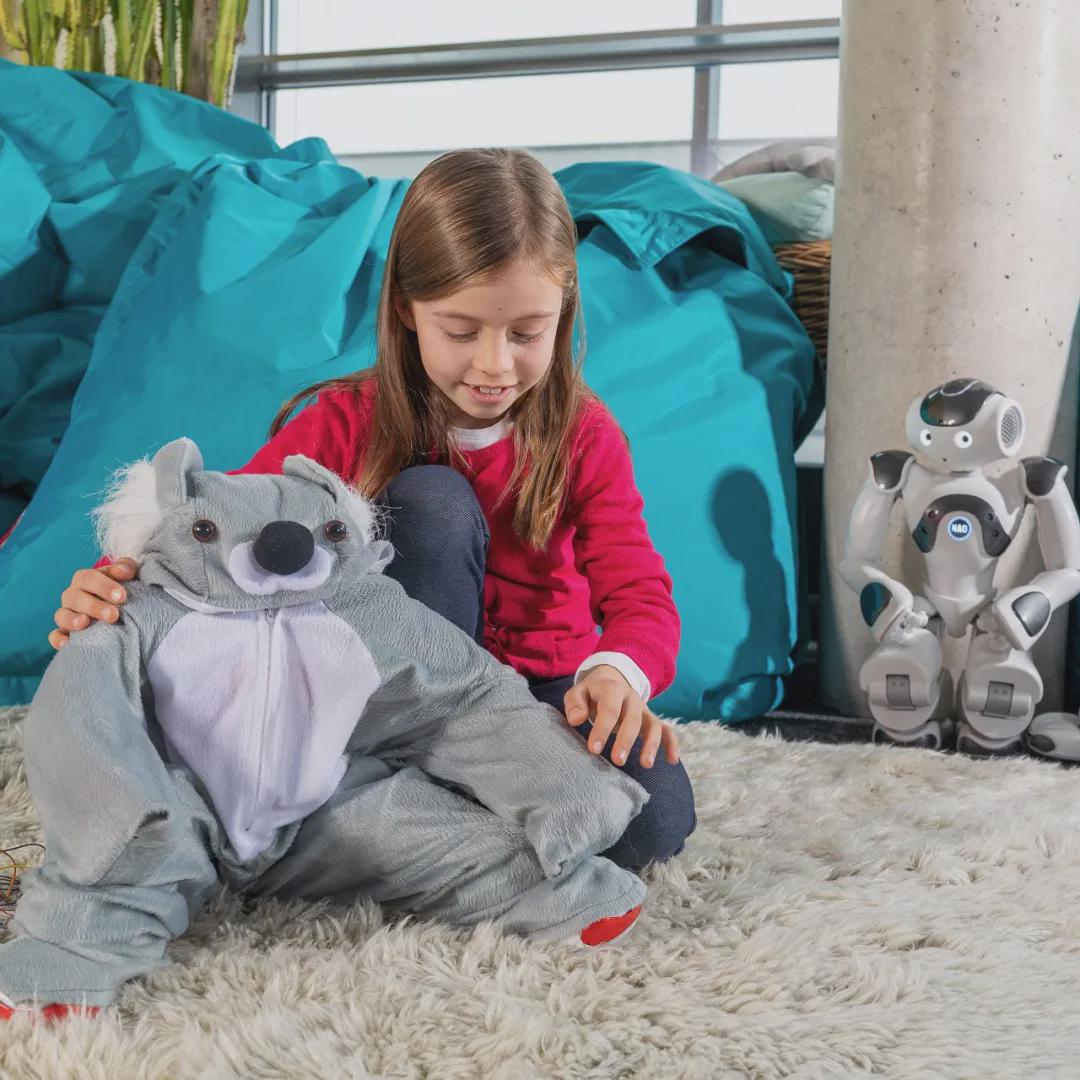
Affordable Touch Sensors Enhance Interaction in Social Robots with HERA Prototype
The HERA prototype, developed by the Max Planck Institute for Intelligent Systems in collaboration with the University of Tennessee and Fraunhofer IPA, integrates 16 custom flexible touch sensors into a modified koala pajama outfit for the NAO robot. This setup allows the robot to recognize five touch gestures and two pressure levels, enhancing its interactive capabilities. This advancement is significant as it addresses the limitations of existing social robots, which typically have few touch points and lack comprehensive tactile feedback. The HERA prototype's design prioritizes affordability and ease of manufacturing, making it a viable option for therapeutic applications, particularly for autism treatment, where durability and cost-effectiveness are crucial. Looking ahead, the research team has published their findings in the IEEE Transactions on Affective Computing, indicating a commitment to further development in this area. No further timeline was disclosed at the time of publication.
Touch Sensors Social Robotics Human-Robot Interaction AI Emotional Computing
TU Delft Develops Drone Using Touch Sensors for Perching on Branches
Researchers at TU Delft have created an innovative drone that utilizes tactile sensors to perch on branches, moving beyond traditional camera reliance. This technology allows the drone to detect and adjust its position as it approaches a branch, enabling it to grip securely and conserve battery power by shutting down its motors once perched. The significance of this development lies in its potential to enhance drone operations in complex environments like forests, where conventional vision-based systems often struggle. By employing touch sensing, the drone can locate and grip branches effectively, which could lead to longer operational periods in cluttered settings. Looking ahead, the drone's control architecture, which includes a series of dynamic states for flight and perching, will be crucial for its adaptability. No further timeline was disclosed at the time of publication.
AI and Robotics
New Soft Mechanical Force Sensor Enables Instant Touch Detection in Robotics
Researchers from the National University of Singapore have developed a soft mechanical force sensor, named ME-SOFS, which allows robots to detect touch and respond instantly without electronics. This innovation transforms applied force into fluid flow, activating soft robotic actuators and creating a fully mechanical sensing-to-action process. The ME-SOFS sensor, made entirely from flexible materials, eliminates the need for traditional electronic sensors, reducing complexity and potential failure points. Its design is particularly beneficial for soft robots operating in extreme environments, such as underwater or inside the human body, where electronic systems may fail. Future applications of the ME-SOFS sensor include integration into soft robotic systems, such as a glove that measures grasping forces and a haptic pad for touch feedback. This technology could significantly enhance prosthetics and human-machine interfaces. No further timeline was disclosed at the time of publication.
AI and Robotics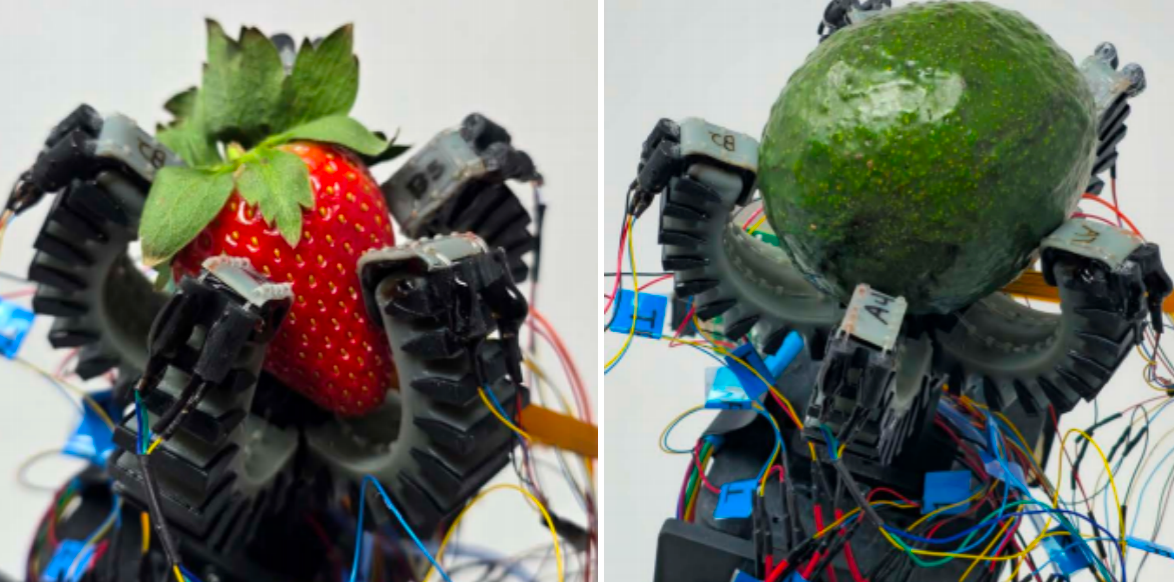
Cornell University Team Develops a Touch-Sensitive Strawberry-Picking Robot with 13 Sensors, Featured in Nature Communications
A team of researchers at Cornell University has developed a groundbreaking strawberry-picking robot designed to enhance agricultural efficiency. This innovative machine features a soft hand that integrates vision, touch, and bending perception, enabling it to accurately identify ripe strawberries. The robot's advanced technology allows it to pick the fruit delicately, minimizing the risk of damage. This development represents a significant advancement in the field of agricultural automation, addressing the growing need for efficient harvesting solutions in the face of labor shortages and increasing demand for fresh produce.
Agricultural Robotics Soft Robotics Automation Technology Sensor Technology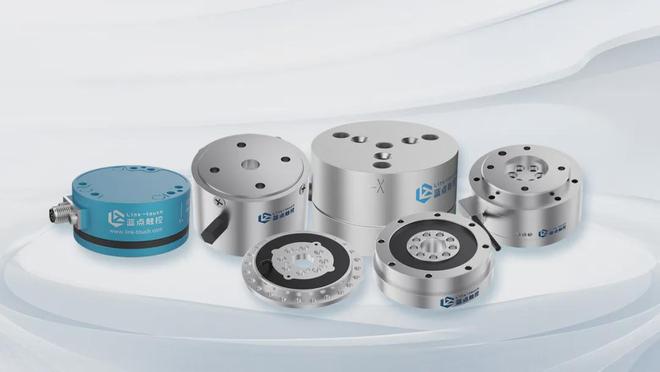
From Customers to Investors: Why CATL, Zhiyuan, and Galaxy General Invest Heavily in Blue Dot Touch Control's Six-Dimensional Force Sensors?
Blue Dot Touch Control has secured over 100 million RMB in a successful C+ round of financing, with significant backing from prominent investors including CATL and Zhiyuan Robotics. This substantial funding will be directed towards advancing product development and expanding market reach, thereby strengthening the company's foothold in the competitive six-dimensional force sensor market for humanoid robots. The investment reflects growing confidence in Blue Dot's innovative technology and its potential to lead in this emerging sector.
Force Sensors Humanoid Robots Investment Technology DevelopmentRobotics needs a service framework.
RSF defines a common language for robot service capability, lifecycle operations, certification pathways, and service-provider networks.
Join the RobotToday community on LinkedIn
Daily robotics news, in-depth analysis, conference highlights, and discussions with professionals worldwide.