

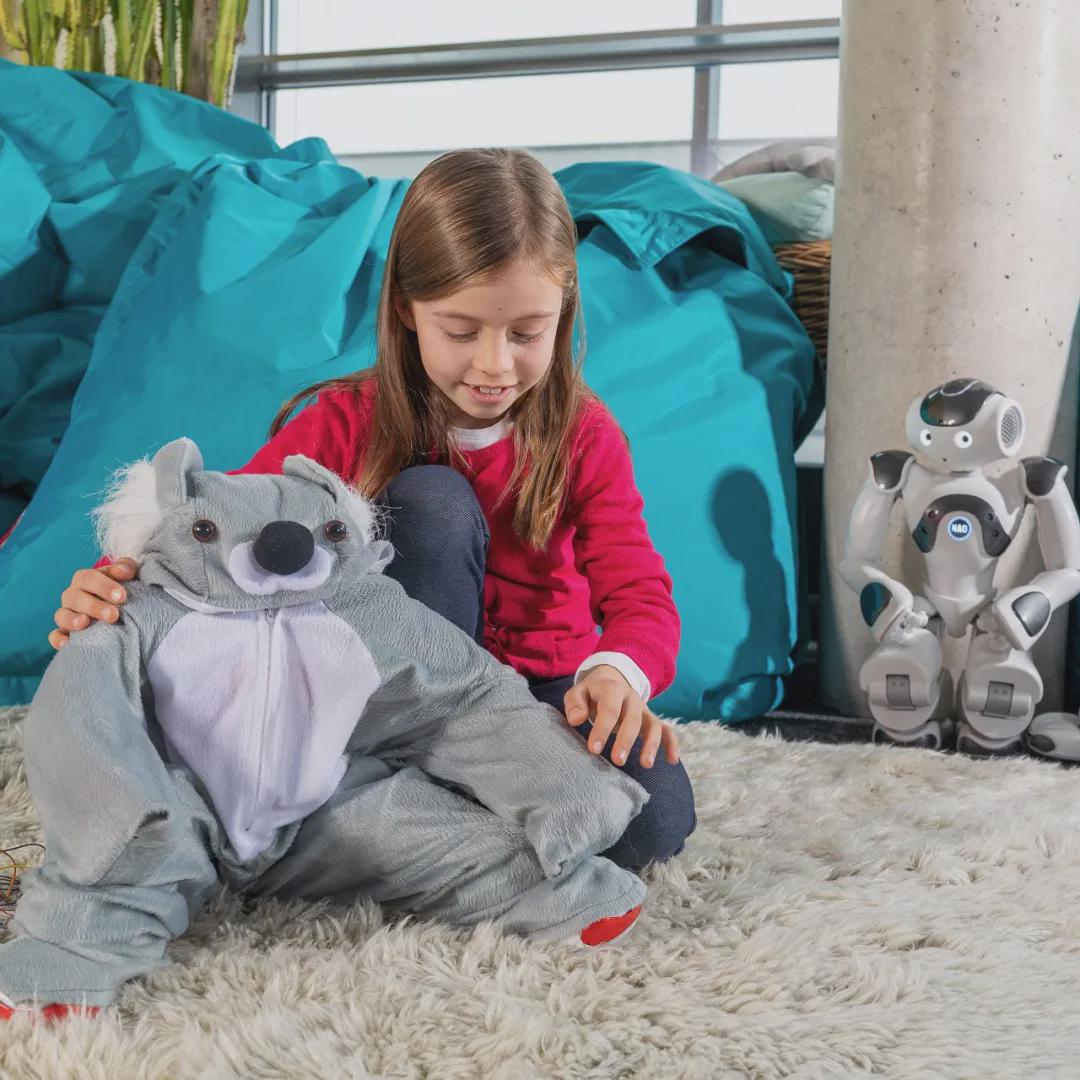
The HERA prototype, developed by the Max Planck Institute for Intelligent Systems in collaboration with the University of Tennessee and Fraunhofer IPA, integrates 16 custom flexible touch sensors into a modified koala pajama outfit for the NAO robot. This setup allows the robot to recognize five touch gestures and two pressure levels, enhancing its interactive capabilities.
This advancement is significant as it addresses the limitations of existing social robots, which typically have few touch points and lack comprehensive tactile feedback. The HERA prototype's design prioritizes affordability and ease of manufacturing, making it a viable option for therapeutic applications, particularly for autism treatment, where durability and cost-effectiveness are crucial.
Looking ahead, the research team has published their findings in the IEEE Transactions on Affective Computing, indicating a commitment to further development in this area. No further timeline was disclosed at the time of publication.
Editor's Note
The integration of affordable touch sensors in social robots like HERA represents a pivotal shift in the robotics landscape, particularly for therapeutic applications. As demand for more interactive and responsive robots grows, the focus on cost-effective solutions will likely influence future designs and manufacturing processes in the industry.


























Leave a comment