Industry Briefing
A single destination for timely, editor-curated robotics news from around the world.
Huaweike Unveils Advanced Tactile Sensors at WRC 2026 to Enhance Robotics
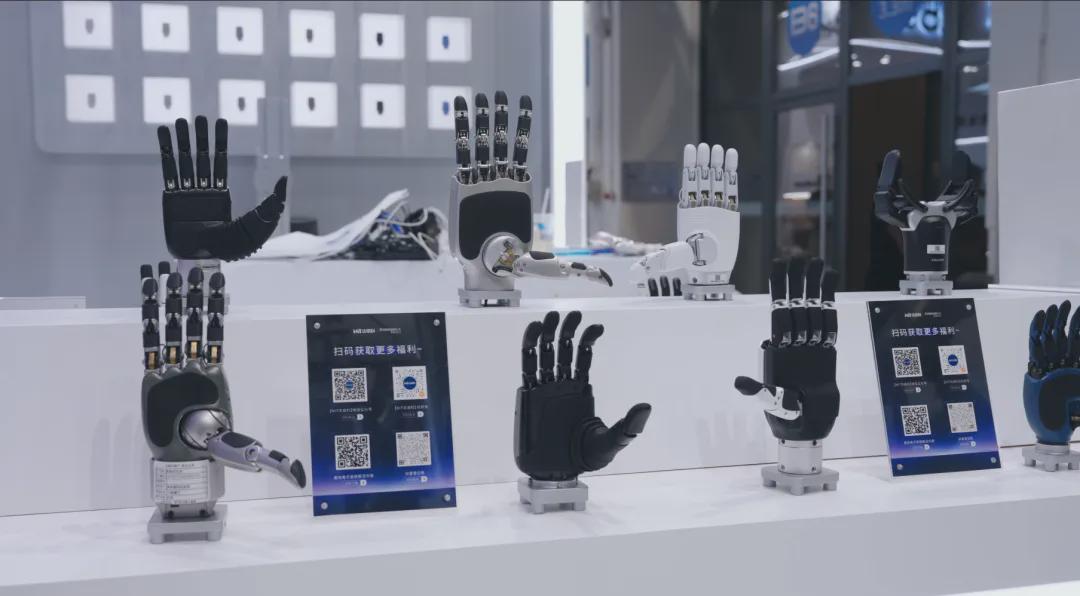
On August 19, 2026, the World Robot Conference opened in Beijing, where Wuhan Huaweike Intelligent Technology Co., Ltd. launched its Wanxiang series of tactile sensors. The event highlighted the industry's growing maturity in algorithms and visual perception, while the lack of tactile data remains a significant barrier to practical applications in robotics. The advancements in embodied intelligence over the past two years have been notable, with humanoid robots achieving over 20 degrees of freedom and costs reduced to under 100,000 yuan. However, challenges persist in fine manipulation tasks, particularly in the 'grasping' action, where robots often fail due to insufficient tactile feedback. Traditional sensors typically have an accuracy of 5% FS, which is inadequate for delicate operations. The Wanxiang series boasts an impressive accuracy of 1% FS and a minimum trigger force of 0.01N, setting a new standard for tactile data quality. This enhancement allows for the detection of minute weight changes, significantly improving the granularity of data collected. Huaweike's data collection gloves and simulation tools aim to address the efficiency of large-scale tactile data acquisition, reducing costs by 90% and increasing efficiency tenfold, which is crucial for training advanced robotic models.
Tactile Sensors Data Collection Robotics AI Industrial Automation
Zhejiang Company Signs Agreement for 300,000 Robot Tactile Sensors Over Six Months
Zhejiang-based company Fulaixin Materials has entered into a strategic partnership with Zhongke Silicon Technology to procure 200,000 high-performance flexible tactile sensors. This order corresponds to the production of 40,000 industry-grade robotic hands, marking a significant step in the development of robotic tactile sensing technology. The collaboration is not merely a buyer-supplier relationship; it involves joint research and development, structural adaptation, and algorithm coordination. This partnership signifies a shift in the robotics industry, as tactile sensors are now being integrated into the production process rather than remaining as experimental prototypes. With an additional order of 100,000 units secured earlier this year, Fulaixin's total confirmed orders for robotic electronic skin have reached 300,000 units by 2026. This milestone highlights the growing importance of tactile feedback in robotics, particularly in applications requiring precise manipulation and interaction with objects.
Tactile Sensors Robotics Industrial Automation Sensor Technology
Tesla Optimus Relies on Cameras and Tactile Sensors, Not LiDAR, in 2026
Tesla's humanoid robot, Optimus, utilizes a vision system comprising eight Autopilot-grade cameras, rejecting LiDAR technology entirely. This approach aligns with Tesla's established philosophy of prioritizing AI over sensor diversity, aiming for a cost-effective solution for a $20,000 robot. The absence of LiDAR is justified by Tesla's focus on architecture reuse and the belief that the challenge lies in AI capabilities rather than sensor limitations. The decision to forgo LiDAR is significant as it reflects Tesla's commitment to a camera-only strategy, which has been consistent since the removal of radar from its vehicles in 2021. Tesla's Autopilot director, Ashok Elluswamy, emphasized the advantages of this approach in a recent demonstration, reinforcing the company's stance on the effectiveness of their vision system. Looking ahead, the industry remains divided on the use of LiDAR, with competitors like Rivian advocating for its inclusion due to perceived limitations of camera systems in low visibility conditions. However, for applications in controlled environments, such as homes or factories, the tactile sensing capabilities of Optimus may prove more beneficial than long-range sensing, highlighting the evolving landscape of robotic perception technologies.
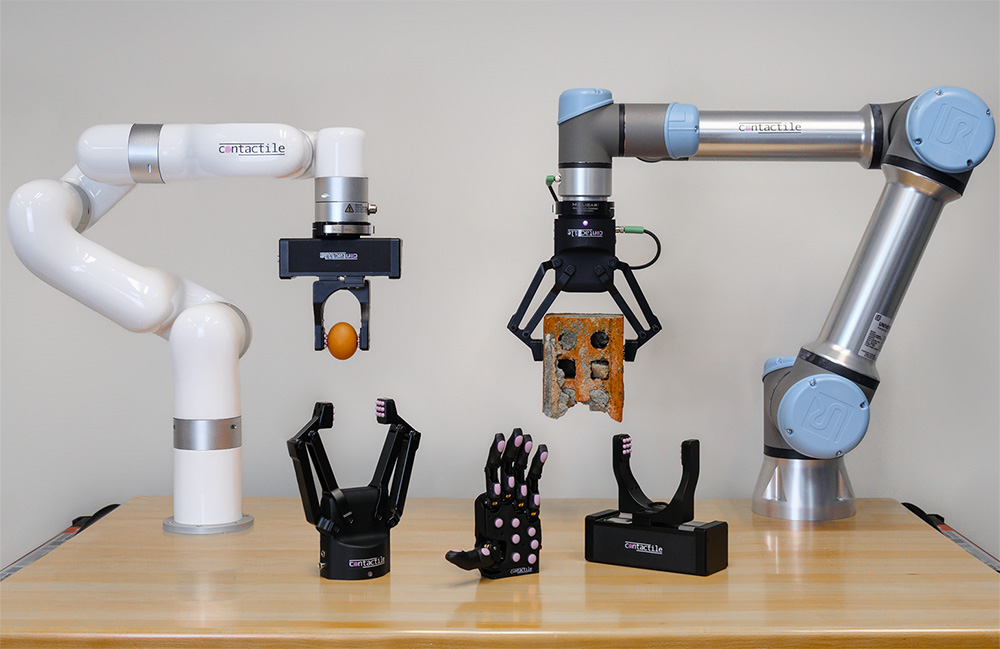
Contactile Introduces Friction-Based Tactile Sensors for Enhanced Robot World Models
Contactile has developed tactile sensors for robotic hands and grippers that enhance world models in robotics. These sensors address the limitations of current conditioning methods, which primarily rely on visual inputs and joint encoders, by incorporating friction as a critical input. This advancement is essential for improving robots' ability to generalize across various surfaces and objects. The significance of this development lies in its potential to transform robot learning. By making friction a first-class input, robots can better predict the outcomes of their actions and adapt to novel tasks without extensive memorization. This shift could lead to more capable robotic systems that can operate effectively in contact-rich environments, where traditional conditioning methods fall short. Looking ahead, the integration of Contactile's tactile sensors into robotic systems could revolutionize how robots interact with their environments. As the field of robot learning continues to evolve, the emphasis on accurate conditioning will be crucial for deploying effective world models. No further timeline was disclosed at the time of publication.
Artificial Intelligence Artificial Intelligence / Cognition Assembly Design / Development End Effectors / Grippers Grippers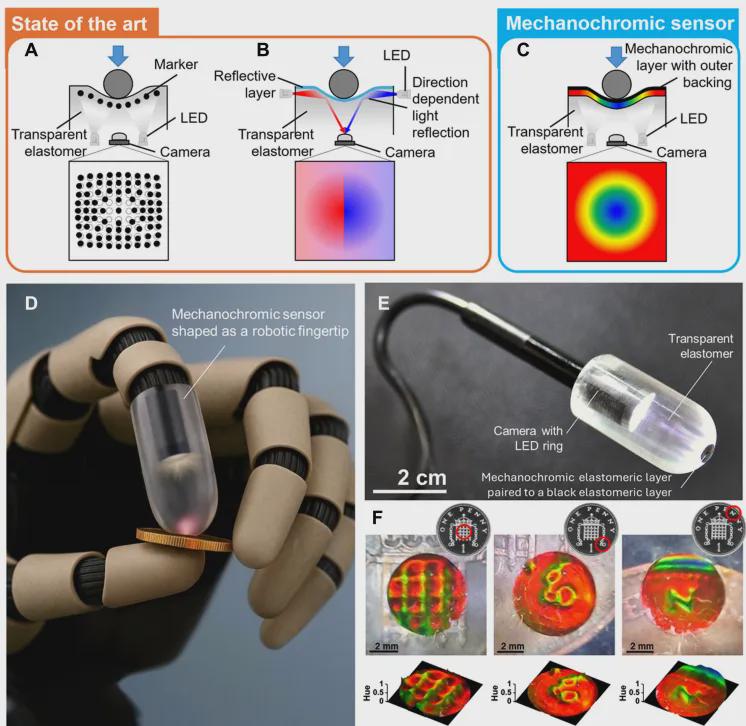
New Tactile Sensors Achieve High Resolution Without Deep Learning
Researchers from Queen Mary University of London and the University of Florence have unveiled a groundbreaking mechanochromic film measuring just 16 microns in thickness, designed to enhance tactile sensing capabilities in robots. This innovative sensor operates without the need for deep learning, directly translating mechanical strain into color changes. As a result, it generates real-time pressure maps with an impressive spatial resolution of around 100 microns. This advancement significantly boosts the dexterity of robotic systems, enabling them to interact more effectively with their environments. The development marks a notable step forward in robotics, potentially transforming how machines perceive and respond to tactile stimuli.
Tactile Sensors Robotics Mechanochromic Materials Pressure Mapping
Interview with Digid’s Nils Könne and Christian Kreil: Nanoscale sensors could help solve robotics’ tactile sensing challenge
The swift advancement of artificial intelligence and robotics is drawing significant attention to software and powerful processors, particularly large language models. However, experts emphasize that for robots to function effectively in real-world settings, they require a fundamental capability: advanced environmental sensing and understanding. This necessity is driving increased interest and investment in cutting-edge sensing technologies, as researchers and developers seek to enhance robots' interaction with their surroundings. The push for these innovations is becoming more pronounced as industries recognize the potential of robots to perform complex tasks in various environments, highlighting the importance of integrating sophisticated sensory systems into robotic designs.
Features Science Sensors Technology AI infrastructure automation news
Octopus-inspired robotic arm uses distributed tactile sensors for adaptive grip
Engineers have successfully created a robotic arm inspired by the sensory capabilities of the octopus. This innovative development aims to enhance robotic dexterity and adaptability in various applications, including medical procedures and complex manufacturing tasks. The project, which has been in the works for several years, showcases the potential of biomimicry in advancing technology. Researchers conducted extensive studies on the octopus's unique nervous system and flexible limbs to replicate its remarkable ability to manipulate objects with precision. The robotic arm is designed to mimic these characteristics, allowing for greater flexibility and sensitivity compared to traditional robotic systems. This breakthrough, unveiled at a technology conference earlier this month, represents a significant step forward in robotics, potentially transforming how machines interact with their environment and perform intricate tasks.

Robotic arm inspired by octopus uses tactile sensors in suction cups for autonomous underwater grasping
A research team led by Barbara Mazzolai at the Istituto Italiano di Tecnologia (IIT) has unveiled an innovative octopus-inspired soft robotic arm. This development, which emerged from the Bioinspired Soft Robotics unit, showcases advanced technology that allows the robotic arm to autonomously grasp objects in challenging environments, including underwater. The arm's artificial suction cups are equipped with sensors that can detect contact and assess the intensity and direction of applied forces. This breakthrough, announced recently, highlights the potential of oceanic biology to inspire future robotics solutions, emphasizing the importance of nature as a model for technological advancements.
Robotics
Beyond Sensors: Qianjue's Vision for Tactile Intelligence in Robotics
Qianjue Robotics is making significant strides in the field of tactile intelligence, highlighting the critical role of touch in enhancing robotic interactions. During the International Conference on Robotics and Automation (ICRA) 2026, the company unveiled its comprehensive tactile intelligence technology. A standout feature of their presentation was the VTLA model, which empowers robots to autonomously execute intricate tasks, such as forming flexible paper boxes. This technology demonstrated impressive capabilities, particularly in dynamic environments, showcasing the potential for more effective and nuanced physical interactions in robotics.
Tactile Intelligence Robotics Automation VTLA Model Physical Interaction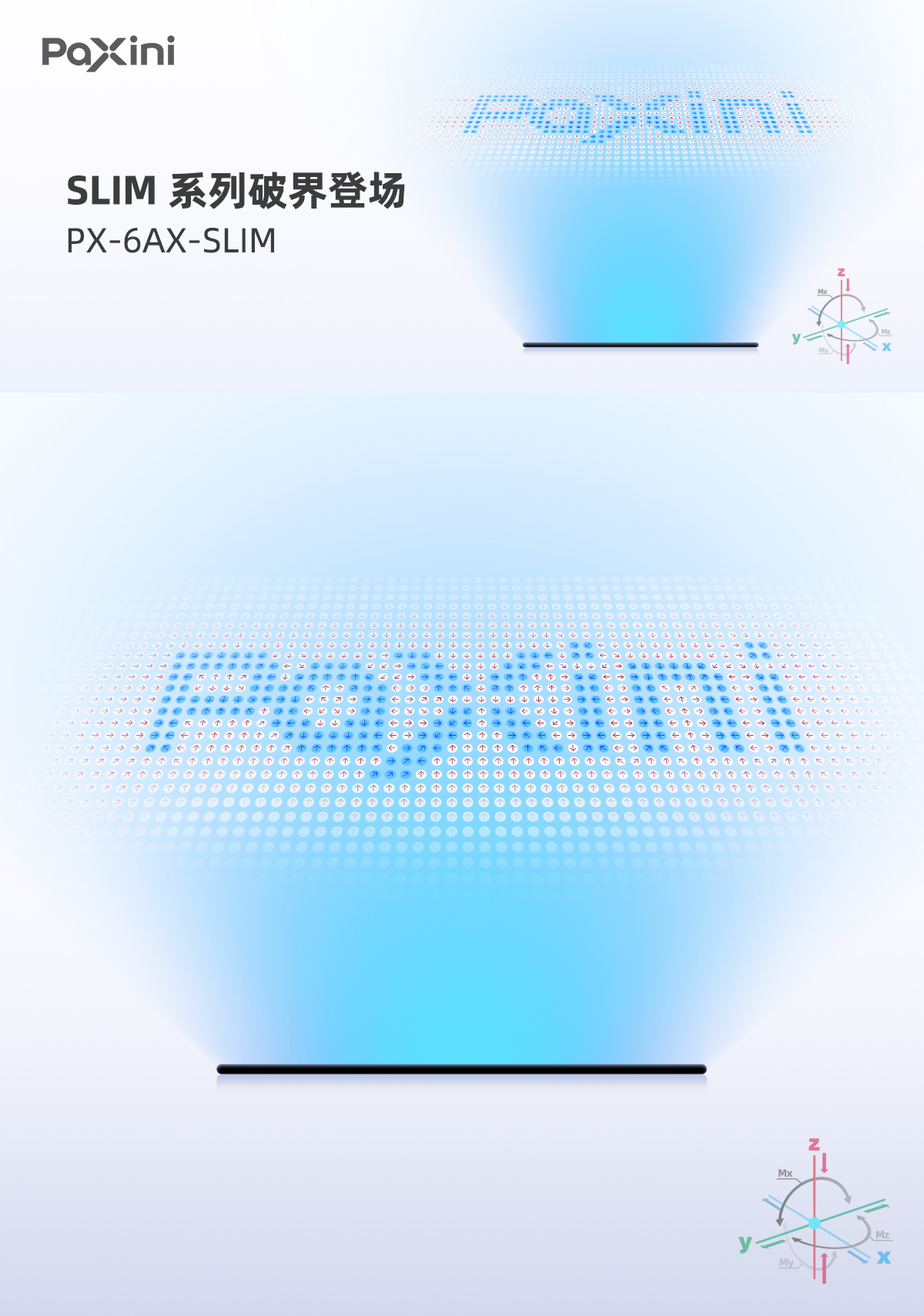
Paxini Unveils Three Tactile Sensors in One Month, Reinforcing Its Position as a Global Leader in Embodied Perception
In April, Paxini unveiled its upgraded SLIM series tactile sensor, featuring cutting-edge technology with a remarkable thickness of only 1mm and a density of 400 effective sensing points per square centimeter. This launch, which includes two additional sensors, underscores Paxini's dedication to rapid innovation and its mission to redefine standards in the field of embodied intelligence. The release demonstrates the company's commitment to advancing sensor technology, positioning itself as a leader in the industry.
Tactile Sensors Embodied Intelligence Robotics Technology Sensor Technology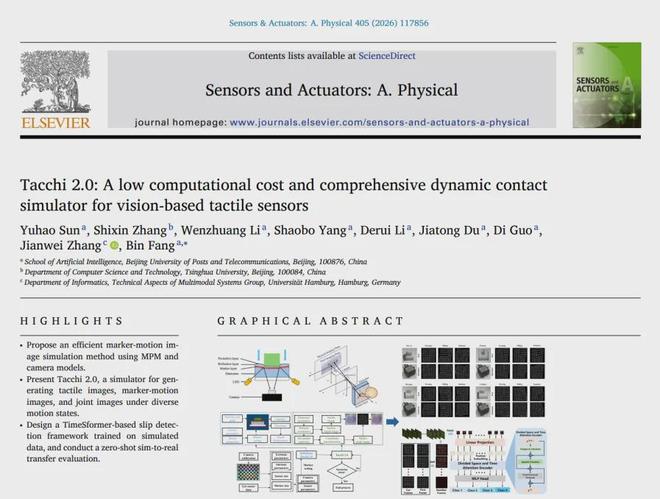
Tacchi 2.0: A Low Computational Cost Dynamic Contact Simulator for Vision-Based Tactile Sensors
A groundbreaking advancement in robotics has emerged with the introduction of Tacchi 2.0, a dynamic contact simulator designed to significantly improve the generation of high-quality tactile data. This innovative tool utilizes a combination of the Material Point Method and pinhole camera models to create highly realistic simulations of object interactions. The result is a remarkable level of accuracy that benefits both simulated environments and real-world applications. Tacchi 2.0 is poised to enhance the capabilities of robots, enabling them to better understand and interact with their surroundings. This development marks a significant step forward in the field of robotics, promising to improve the efficiency and effectiveness of robotic systems in various industries.
Tactile Sensors Robotics Simulation Machine Learning AI Dynamic Contact ModelingRobotics needs a service framework.
RSF defines a common language for robot service capability, lifecycle operations, certification pathways, and service-provider networks.
Join the RobotToday community on LinkedIn
Daily robotics news, in-depth analysis, conference highlights, and discussions with professionals worldwide.