Industry Briefing
A single destination for timely, editor-curated robotics news from around the world.
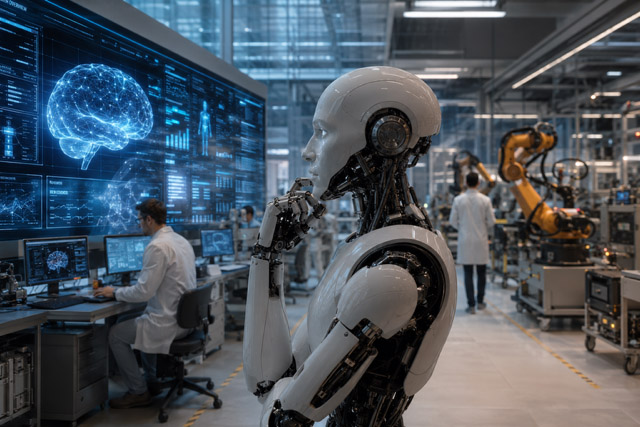
Understanding Technological Singularity and Its Impact on Robotics and AI
For decades, technological singularity was more a concept of science fiction than engineering reality. Today, it is a topic of discussion among AI laboratories, industrial giants, investment funds, and robotics companies worldwide. The rapid advancement of generative AI, autonomous robots, foundation models, and AI agents raises a fundamental question: what will happen when machines can enhance their own intelligence faster than humans? The origins of the technological singularity date back to 1965 when British mathematician I.J. Good proposed that an 'ultra-intelligent machine' could trigger an intelligence explosion. In the 1990s, mathematician Vernor Vinge expanded on this idea, suggesting that once a certain level of AI is reached, technological evolution would become unpredictable for humans. Ray Kurzweil later popularized the concept, predicting that artificial general intelligence (AGI) could emerge in the coming decades, leading to continuous self-improvement of systems. Currently, the landscape is shifting rapidly, with large language models, vision-language-action models, and autonomous agents enabling robots to understand natural language instructions, interpret their environment, and learn new tasks without specific programming. Companies like NVIDIA, Google DeepMind, and Tesla are investing billions in developing this new generation of intelligent robots.
À la une IA Industrie Robotique agents autonomes agents IA
One Surgery and Beijing's AI Ambition: From Lab to Technological Singularity
Beijing is intensifying its efforts to establish itself as the global capital of artificial intelligence, aiming to foster a robust AI ecosystem that includes advancements in robotic surgery and embodied intelligence. The city has set an ambitious target for its AI industry, striving to reach a valuation of one trillion yuan. This initiative is part of a broader strategy to enhance technological innovation and economic growth, positioning Beijing at the forefront of the AI revolution. The push towards this goal reflects the increasing importance of AI in various sectors and the city's commitment to leading in cutting-edge research and development.
Technology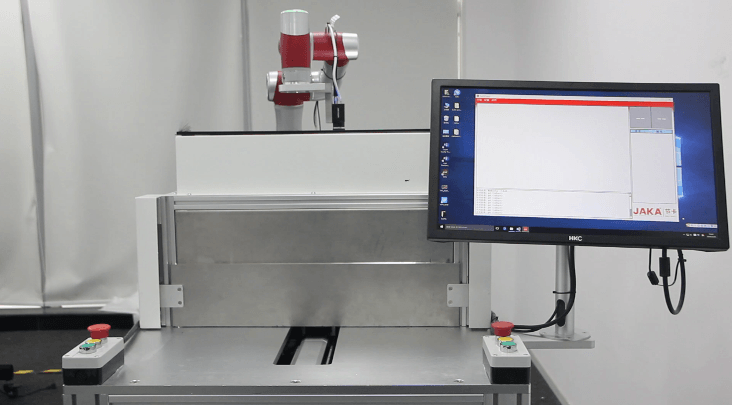
N Degrees of Freedom: Understanding the Versatility of the Articulated Robot Arm
JAKA Robotics is revolutionizing industrial automation with its advanced articulated robots, particularly the JAKA S5 model, which offers exceptional versatility and dexterity. These collaborative robots feature multiple degrees of freedom, allowing them to perform intricate tasks with high precision, making them essential in industries such as assembly, welding, and packaging. The JAKA S5 is equipped with a built-in force sensor that enables multi-dimensional force perception, crucial for delicate operations like flexible grasping and gluing. Its articulated design allows access to confined spaces, enhancing its utility for tasks that traditional robots struggle with, such as welding in tight corners. These robots are designed for seamless integration into existing workflows, requiring no installation or configuration, which minimizes downtime and accelerates startup times. Additionally, features like singularity protection enhance reliability and safety, reducing the risk of operational errors. As industries evolve, the demand for adaptable automation solutions grows. JAKA's articulated robots empower companies to streamline processes, improve safety, and maintain high production quality while reducing labor costs. By embracing this innovative technology, businesses can enhance their operational efficiency and redefine their manufacturing capabilities, positioning themselves at the forefront of industrial automation.

Import AI 454: Automating alignment research; safety study of a Chinese model; HiFloat4
Financial analysts are increasingly questioning when the markets will begin to factor in the potential impact of technological singularity, a point at which artificial intelligence surpasses human intelligence. As advancements in AI continue to accelerate, experts are examining the implications for various sectors and the economy as a whole. This discussion has gained traction in recent months, particularly following significant breakthroughs in AI capabilities reported in late 2023. Analysts are gathering insights from a range of industries, including technology, finance, and healthcare, to assess how these developments might reshape market dynamics. The urgency of this inquiry stems from the transformative potential of AI, which could lead to unprecedented changes in productivity, labor markets, and economic structures. Investors and stakeholders are keen to understand how soon these changes might manifest and what strategies they should adopt to mitigate risks or capitalize on emerging opportunities. As the conversation evolves, experts are employing various forecasting models and market simulations to predict the timing and extent of the singularity's influence on financial markets. The outcome of these analyses could significantly impact investment strategies and economic policies moving forward.
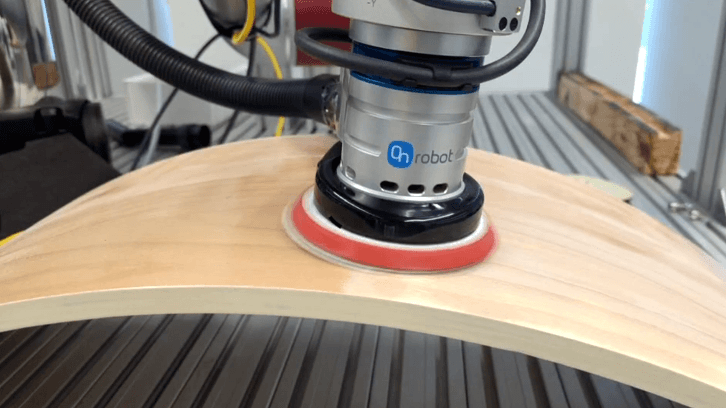
Key Features and Benefits of Polishing Robots (Precision, Safety, Throughput)
Manufacturers are increasingly prioritizing consistency, safety, and stable throughput in surface finishing processes, leading to a growing interest in polishing robots. JAKA, a company specializing in collaborative automation, has developed the JAKA S5, a polishing robot designed to address quality variations in repetitive tasks. This system integrates advanced sensing and control technologies, allowing it to operate efficiently across various industrial scenarios without disrupting existing workflows. The JAKA S5 emphasizes precision through stable motion control and accurate force feedback, essential for maintaining surface tolerance and finish consistency. Its built-in force sensor enables multi-dimensional force perception, allowing the robot to adapt to real-time changes during operation, thereby ensuring repeatable results over extended production cycles. Safety is a critical aspect of the JAKA S5's design, as it operates alongside human workers in shared environments. The robot incorporates protective mechanisms to prevent unexpected movements and excessive force, ensuring safe interaction. With features like singularity protection and stable force control, the system minimizes operational risks during complex polishing tasks. Additionally, the JAKA S5 enhances throughput by supporting flexible deployment, which allows for quick adaptation to different surface geometries and batch sizes. This flexibility reduces setup time during process changes, enabling faster production scaling without compromising surface quality. In summary, JAKA's polishing robots, particularly the S5 model, offer a practical solution for industrial automation upgrades, combining precision, safety, and adaptability to meet the evolving demands of manufacturing environments.

Import AI 453: Breaking AI agents; MirrorCode; and ten views on gradual disempowerment
Recent discussions among historians and anthropologists have raised intriguing questions about the significance of fire in early human societies. Scholars are exploring whether fire served as a transformative force, akin to a singularity, for our ancestors. This inquiry delves into the pivotal role that fire played in the development of human civilization, particularly during prehistoric times. The investigation highlights that the mastery of fire, which occurred approximately 1.5 million years ago, fundamentally altered the daily lives of early humans. It provided warmth, protection from predators, and a means to cook food, which in turn enhanced nutrition and social interactions. These advancements are believed to have contributed to the evolution of human cognitive abilities and social structures. The discussions are taking place in academic circles and conferences worldwide, where experts are examining archaeological evidence and anthropological studies. By understanding the impact of fire, researchers aim to uncover how this crucial discovery shaped human history and facilitated the transition from nomadic lifestyles to settled communities. The ongoing research underscores the importance of fire not just as a tool, but as a catalyst for change that propelled human advancement. As scholars continue to analyze the implications of fire on early human development, they emphasize its role in fostering cooperation, communication, and cultural evolution among our ancestors. This exploration not only sheds light on the past but also offers insights into the fundamental elements that define human progress.

Import AI 445: Timing superintelligence; AIs solve frontier math proofs; a new ML research benchmark
As discussions surrounding the future of artificial intelligence intensify, experts are speculating that 2026 could be a critical year for decision-making regarding the singularity. This pivotal moment is anticipated to occur as advancements in AI technology continue to accelerate, raising questions about its implications for society. The year is expected to see significant developments in AI research and policy, with stakeholders from various sectors—including technology companies, government agencies, and academic institutions—coming together to address the ethical and practical challenges posed by rapid AI evolution. The urgency of these discussions is driven by the potential for AI to fundamentally alter industries, economies, and daily life. As the global community prepares for this transformative period, the outcomes of these deliberations could shape the trajectory of AI and its integration into society for decades to come.

Import AI 437: Co-improving AI; RL dreams; AI labels might be annoying
As discussions around technological advancements intensify, experts are increasingly debating the potential arrival of the singularity, a hypothetical point where artificial intelligence surpasses human intelligence. This discourse has gained momentum in recent months, particularly among leading figures in the tech industry and academia, who are exploring the implications of such a transformative event. The conversations have been particularly vibrant since October 2023, when new AI developments prompted a reevaluation of timelines and expectations regarding the singularity. Prominent voices in the field, including researchers and tech entrepreneurs, are gathering at various conferences and forums to share insights and predictions about the future of AI and its potential to revolutionize society. The urgency of these discussions stems from the rapid pace of AI advancements, which some believe could lead to significant changes in labor markets, ethical considerations, and societal structures. Advocates argue that understanding the singularity is crucial for preparing for its potential impacts, while skeptics caution against overestimating the timeline and capabilities of AI. As the dialogue continues, experts are utilizing a range of methodologies, including predictive modeling and interdisciplinary collaboration, to assess the likelihood and timing of the singularity. The outcome of these discussions could shape policies and strategies aimed at harnessing AI's benefits while mitigating its risks, making it a pivotal moment in the intersection of technology and society.

AI Is Starting to Build Better AI
Recent advancements in artificial intelligence (AI) have reignited discussions about recursive self-improvement (RSI), a concept first proposed by mathematician I. J. Good in 1966. As AI systems like large language models (LLMs) and machine-learning algorithms evolve, researchers are exploring how these technologies can autonomously enhance their own capabilities. Notable developments include OpenAI's GPT-5.3-Codex, which reportedly assisted in its own creation, and Google DeepMind's AlphaEvolve, designed to optimize complex problems in scientific discovery. While some researchers view these advancements as steps toward fully autonomous AI, they acknowledge that current systems still depend on human oversight for goal-setting and evaluation. Experts like Jeff Clune from the University of British Columbia believe that the field is on the brink of achieving RSI, which could revolutionize science and technology. However, challenges remain, including the complexity of AI systems and the necessity of human involvement in the development process. Concerns about the potential risks of RSI have also emerged, with some experts advocating for a pause in AI development to prevent unintended consequences. The debate continues over whether AI could lead to an intelligence explosion, with many researchers emphasizing the importance of maintaining human oversight to ensure safe progress. As AI technologies evolve, the future landscape may see a collaborative relationship between humans and machines, reshaping roles in research and innovation.
Ai-safety Singularity Llms Evolutionary-algorithmRobotics needs a service framework.
RSF defines a common language for robot service capability, lifecycle operations, certification pathways, and service-provider networks.