Industry Briefing
A single destination for timely, editor-curated robotics news from around the world.

The Rise of Tactile Perception in Robotics: Insights from Pasini's Growth
Recently, a prominent investor reflected on a past misjudgment regarding Pasini, a company valued at under 100 million yuan six years ago. At that time, the investor believed the market for robotic tactile perception was too small and the scenarios too limited, leading to a decision against investing. Today, Pasini's valuation has surpassed 10 billion yuan, highlighting a significant shift in the industry. This evolution underscores the importance of tactile perception in robotics, which has transitioned from a perceived niche to a critical component of operational efficiency. The investor's initial assessment failed to recognize the potential of tactile feedback in enhancing assembly yield, production line cadence, and overall operational costs. As tactile perception becomes integral to robotic systems, it is now a key factor in return on investment calculations for clients. Looking ahead, Pasini's advancements in tactile technology position it as a leader in the physical AI landscape. The company has secured significant funding, including a Series B round in March 2026, raising its valuation to over 10 billion yuan, followed by an additional 1 billion yuan in strategic financing. This trajectory suggests a growing recognition of the value of tactile perception in robotics and its role in the future of intelligent manufacturing.
Tactile Sensors Robotics AI Investment Industry Growth
ModuTech Secures Pre-A Funding to Advance Touch Perception in Robotics Market
ModuTech, a Shenzhen-based company, has completed a Pre-A funding round worth several million yuan, led by Falcon Investment and Yihua Capital. This funding will support the expansion of their research and development team, production lines, and global business outreach. ModuTech aims to address the challenges of touch perception in robotics, which is crucial for tasks requiring fine manipulation. The touch perception market for humanoid robots is projected to exceed $320 million by 2026, with a growth rate of over 160%. This segment is recognized as the fastest-growing within humanoid robot components. ModuTech differentiates itself by integrating sensor technology with data collection and tactile modeling, creating a comprehensive system that enhances robotic capabilities in precision tasks. As the industry faces challenges with fragmented tactile data, ModuTech's approach includes a multi-modal data system that aligns tactile, visual, and robotic state data. This innovation transforms physical interactions into high-quality, task-level data, enabling sensors to evolve from mere hardware to valuable data sources that inform decision-making in robotics.
Touch Perception Humanoid Robots Industrial Robotics Sensor Technology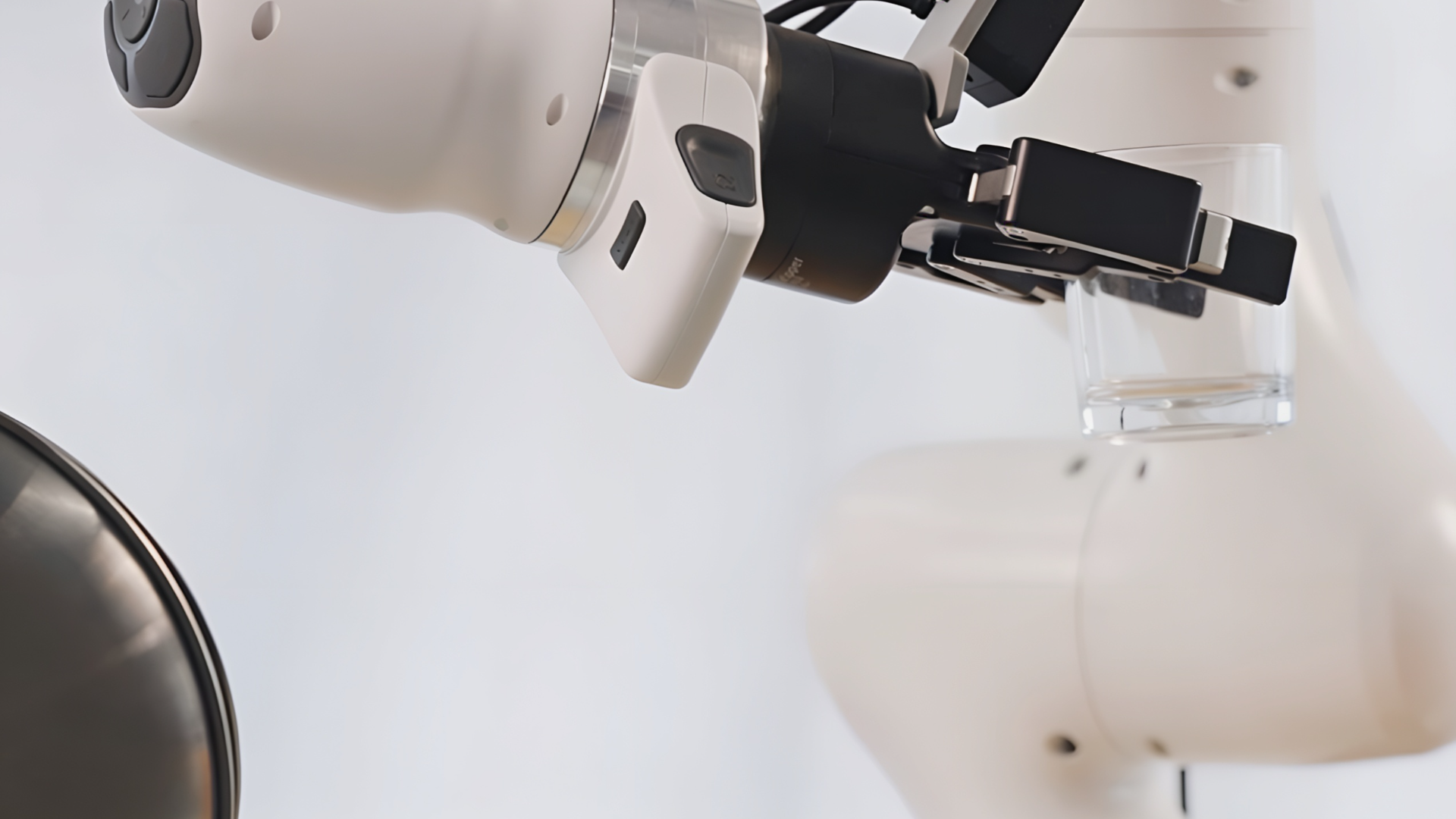
Robbyant Unveils LingBot-Depth 2.0 with Enhanced Spatial Perception for Robotics
Chinese AI company Robbyant has launched LingBot-Depth 2.0, a next-generation spatial perception model designed to enhance robotic navigation in complex environments. This model builds on the previous LingBot-Depth, utilizing the Masked Depth Modeling technique and trained on 150 million samples, achieving top results in 12 out of 16 depth completion benchmarks. Notably, it reduces depth error by over 50%, improving accuracy in challenging indoor settings. The significance of LingBot-Depth 2.0 lies in its ability to accurately perceive transparent and reflective surfaces, areas where traditional depth cameras often struggle. The model's advancements are attributed to LingBot-Vision, a visual foundation model that employs a unique “boundary structure” pre-training objective, enabling sub-pixel-level boundary localization. Despite being trained on a smaller dataset of 160 million images, it demonstrates robust performance across various robotic vision applications, enhancing object boundary detection and tracking. Looking ahead, Robbyant's collaboration with Orbbec aims to integrate LingBot-Depth 2.0 into new hardware solutions for robotics data collection. The RGB-D EGO device, part of Orbbec’s Robot-Free Data Collection Hardware Platform, will feature a customized version of the model. Future updates are expected to further enhance depth completion and spatial structure understanding, providing a solid foundation for training embodied AI systems in real-world scenarios. No further timeline was disclosed at the time of publication.
AI and Robotics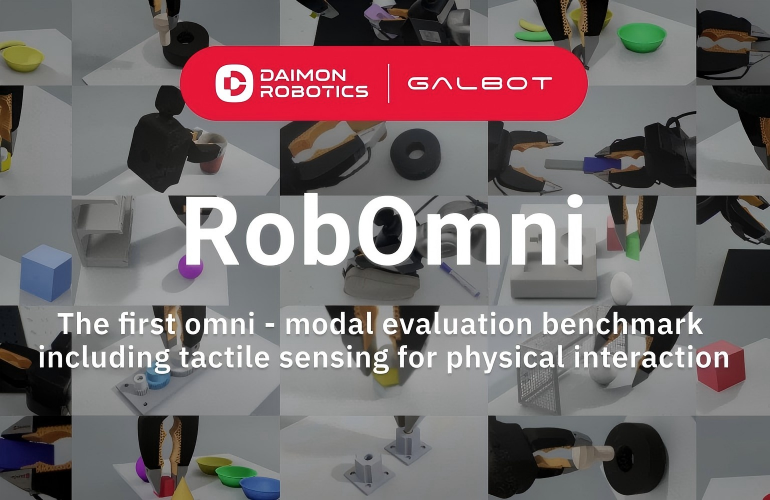
Daimon Robotics and Galbot jointly launches RobOmni for benchmarking tactile perception and dexterous manipulation
Daimon Robotics and Galbot have announced the launch of RobOmni, a new platform designed to benchmark tactile perception and dexterous manipulation in the field of embodied AI. This development marks a significant shift from traditional vision-centric approaches to a more comprehensive understanding of physical interactions. The collaboration aims to enhance the capabilities of robots in performing complex tasks that require fine motor skills and sensitivity to touch. The launch event took place recently, highlighting the growing importance of tactile feedback in robotics and its applications across various industries. By integrating advanced tactile sensing technologies, RobOmni is set to provide researchers and developers with the tools needed to push the boundaries of robotic dexterity and perception.
Sponsored Content
Generations in Dialogue: Embodied AI, robotics, perception, and action with Professor Roberto Martín-Martín
The podcast "Generations in Dialogue: Bridging Perspectives in AI," produced by the Association for the Advancement of Artificial Intelligence (AAAI), presents engaging conversations among AI experts, practitioners, and enthusiasts of varying ages and backgrounds. Launched recently, the series aims to explore how different generational experiences influence perspectives on artificial intelligence. Each episode addresses the challenges, opportunities, and ethical dilemmas associated with the rapid evolution of this transformative technology. By fostering intergenerational dialogue, the podcast seeks to enhance understanding and collaboration in the field of AI, encouraging listeners to consider diverse viewpoints and the implications of AI advancements on society.
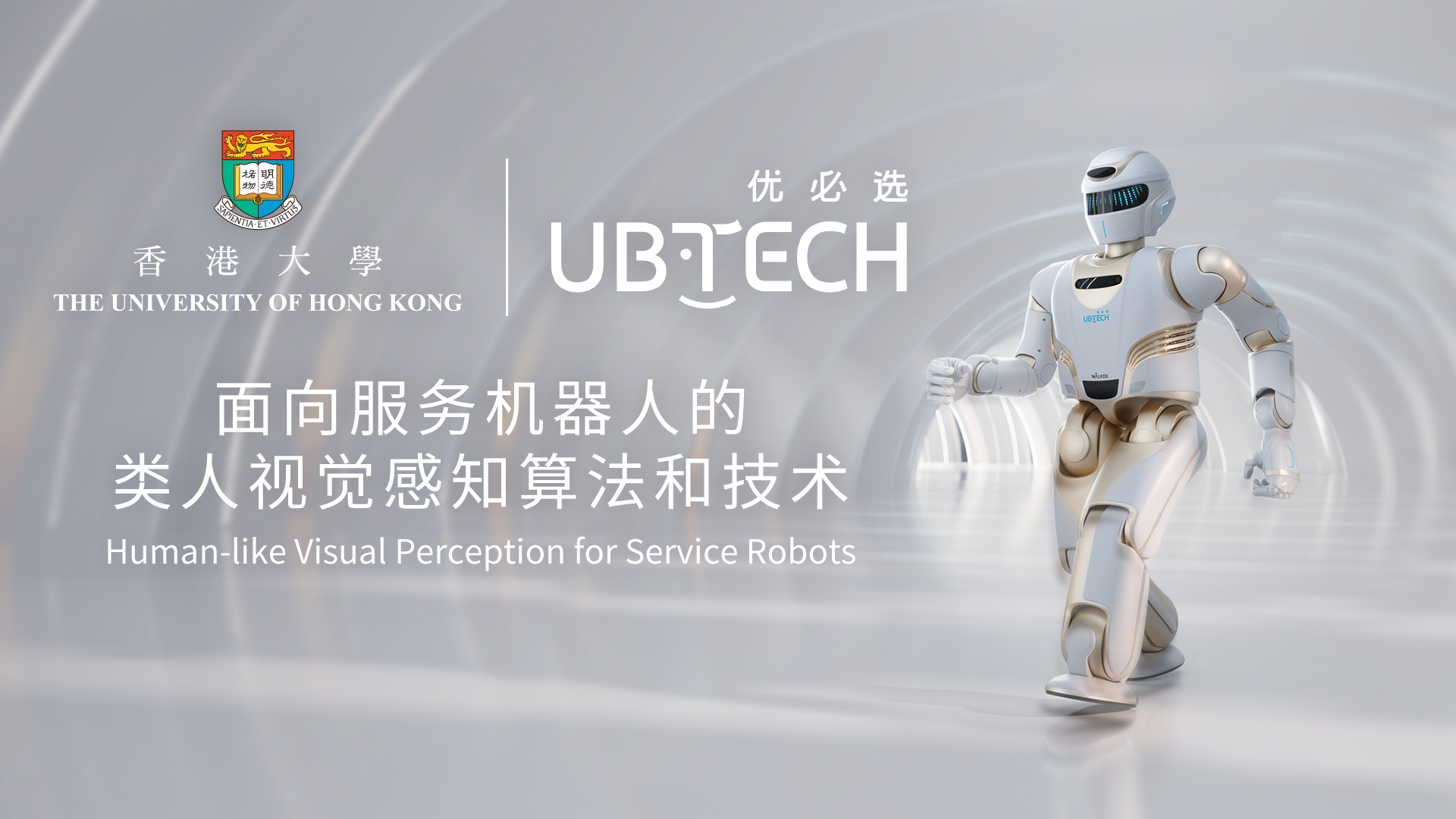
UBTECH Robotics Collaborates with the University of Hong Kong for Joint Research on Human-like Visual Perception
UBTECH Robotics has announced a partnership with the University of Hong Kong to advance research on human-like visual perception algorithms for service robots. This collaboration, which focuses on processing 3D point cloud data, aims to enhance the visual recognition capabilities of humanoid robots, thereby improving their precision in diverse environments. The initiative is part of UBTECH's broader strategy to apply advanced visual perception technologies in practical settings. In addition to the research efforts, UBTECH plans to establish subsidiaries in Hong Kong, intending to tap into local talent and drive innovation within the robotics sector.
Robotics needs a service framework.
RSF defines a common language for robot service capability, lifecycle operations, certification pathways, and service-provider networks.
Join the RobotToday community on LinkedIn
Daily robotics news, in-depth analysis, conference highlights, and discussions with professionals worldwide.