A single destination for timely, editor-curated robotics news from around the world.

Researchers at the University of Illinois Urbana Champaign have revealed new insights into brain decision-making processes, suggesting that these processes begin earlier than previously thought. This research, led by Professor Yurii Vlasov, indicates that early sensory brain regions play a crucial role in decision-making, contradicting the long-held belief that decisions are made only after information passes through a strict hierarchy of brain regions. The implications of this study are significant for both neuroscience and artificial intelligence. By understanding that decision-making involves interconnected feedback loops rather than a linear progression, researchers can design AI systems that mimic this biological architecture. This could lead to the development of AI that is not only more capable but also more energy-efficient, addressing current limitations in AI technology. Moving forward, the research team aims to further explore how biological intelligence, refined through evolution, can inform AI development. No further timeline was disclosed at the time of publication.
ScienceDaily.com Jul 13, 2026
A recent study published in the Journal of Field Robotics highlights advancements in autonomous robotic systems designed for agricultural applications. Researchers from various institutions collaborated to develop innovative algorithms that enhance the efficiency and precision of robotic farming equipment. The findings, released in early October 2023, emphasize the growing importance of automation in agriculture, particularly in response to labor shortages and the need for sustainable farming practices. The research was conducted in multiple agricultural settings, showcasing how these robotic systems can adapt to different crop types and environmental conditions. By integrating machine learning and sensor technology, the robots are capable of performing tasks such as planting, weeding, and harvesting with minimal human intervention. This development aims to address the challenges faced by farmers, including the rising costs of labor and the increasing demand for food production. The study underscores the potential for these autonomous systems to revolutionize the agricultural sector, making it more efficient and environmentally friendly. As the agricultural industry continues to evolve, the implementation of such technologies could lead to significant improvements in productivity and sustainability.
JournalofFieldRobotics By Thomas Hickling, Maxwell Hogan, Abdulla Tammam, Nabil Aouf May 25, 2026 RESEARCH ARTICLE
Researchers at Iowa State University, in collaboration with ETH Zürich, have introduced a novel framework designed to enhance the decision-making capabilities of autonomous robots in situations where rules may conflict. The findings, published in the IEEE Transactions on Robotics, outline a system referred to as "rulebooks," which prioritizes rules rather than merging them. This innovative approach aims to improve the safety and transparency of robotic operations in real-world environments, addressing a critical challenge in the field of robotics. The study underscores the importance of establishing clear guidelines for robots to navigate complex scenarios effectively, ultimately contributing to the advancement of autonomous technology.
AIInsider By Greg Bock May 06, 2026 AI AI Research & Advances Robotics autonomous systems autonomous vehicles ETH Zürich
L3Harris Technologies and Shield AI have successfully completed the inaugural live flight trial of their Distributed Spectrum Collaboration and Operations (DiSCO) system. This achievement marks a significant step in the development of autonomous electronic warfare capabilities. The successful flight trial is crucial as it demonstrates the potential of the DiSCO system to enhance operational effectiveness in electronic warfare. By leveraging advanced technologies, this collaboration aims to improve situational awareness and decision-making in complex environments. Looking ahead, industry stakeholders will be keen to observe further developments and potential applications of the DiSCO system in military operations. No further timeline was disclosed at the time of publication.

Army-Technology By Jangoulun Singsit Jul 17, 2026 News
The Beijing Humanoid Robot Innovation Center and Renmin University of China's Gaoling Artificial Intelligence Institute have launched the Robo-ValueRL open-source framework. This initiative aims to enhance humanoid robots' decision-making capabilities in precision tasks, such as semiconductor assembly, by addressing challenges in data quality, control precision, and adaptability in dynamic environments. Robo-ValueRL introduces a value estimation mechanism based on historical observations, enabling robots to autonomously assess their actions. This closed-loop learning process—observation, value estimation, correction, and iteration—allows for improved accuracy and reduced instability in operations. The framework is fully open-source, providing access to core algorithms, evaluation tools, and standardized protocols for universities, research institutions, and manufacturers. The open-source nature of Robo-ValueRL significantly lowers the barriers for small and medium-sized manufacturers to implement reinforcement learning in specialized fields like semiconductor production and medical device manufacturing. This development marks a shift in humanoid robotics from laboratory experiments to practical industrial applications, paving the way for robots to evolve their decision-making capabilities independently.
leaderobot.com By Leaderobot Jul 14, 2026 Humanoid Robots Reinforcement Learning Precision Manufacturing Open Source Technology
Vertical Aerospace has partnered with Near Earth Autonomy to enhance its Valo aircraft with advanced autonomous flight capabilities. This collaboration aims to integrate Near Earth's autonomy software with Honeywell Aerospace's Anthem digital cockpit, facilitating the development of self-flying technology for defense and commercial aviation. The partnership is significant as it allows Vertical to leverage Near Earth's extensive experience in autonomous aviation, which includes systems developed for military applications. By utilizing a shared technology stack, the companies aim to reduce technical risks associated with expanding autonomous features in the Valo aircraft, which is designed for both defense and commercial markets. Looking ahead, Vertical plans to pursue defense programs while also preparing for automated commercial operations. The Valo aircraft, featuring hybrid-electric propulsion, is capable of flying up to 1,000 miles and carrying payloads of up to 2,400 pounds, making it a versatile option for various operational roles. No further timeline was disclosed at the time of publication.
InterestingEngineering.com By Aamir Khollam Jul 16, 2026 Transportation
Synthium is advancing humanoid AI by operating human-in-the-loop simulations that generate essential motion, voice, and reasoning data. This innovative approach allows for more realistic and effective decision-making processes in embodied AI systems. The significance of Synthium's work lies in its potential to enhance the capabilities of humanoid robots, making them more adept at interacting with humans and performing complex tasks. By integrating human feedback into the simulation process, Synthium aims to create AI models that better understand and respond to human behavior. Looking ahead, the development of these simulations could lead to breakthroughs in how humanoid robots are deployed in various sectors. No further timeline was disclosed at the time of publication.
Techinasia By Adinda Pryanka Jul 20, 2026 Artificial Intelligence Robotics Startups Nicolas Duval Startup spotlight Synthium
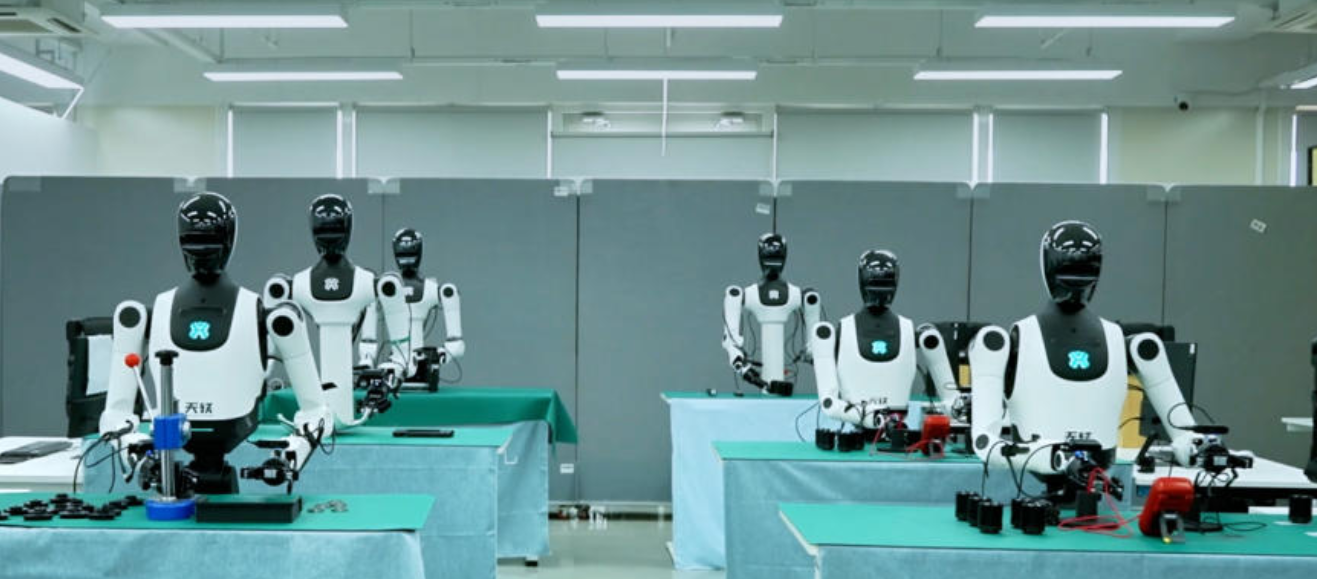
A company is advancing its efforts to enhance autonomous asset optimization for manufacturers by leveraging data foundations and predictive technologies. This initiative aims to streamline operations and improve efficiency within the manufacturing sector. By integrating advanced data analytics and predictive modeling, the company seeks to empower manufacturers to make informed decisions that can lead to significant cost savings and operational improvements. The focus on these technologies comes at a time when the industry is increasingly looking for innovative solutions to adapt to evolving market demands and challenges. Through this strategic approach, the company is positioning itself as a leader in the drive towards smarter manufacturing practices.
AutomationWorld.com By [email protected] (Sarah Mattalian) Jun 18, 2026 Factory / Plant Maintenance
Elistair has partnered with Exail to integrate its Khronos DroneBox with Exail's DriX unmanned surface vessel, enabling tethered drone maritime surveillance. This collaboration allows operators to maintain a persistent aerial view from shore, enhancing capabilities for naval, coast guard, and port security operations. The integration of the Khronos DroneBox with the DriX vessel marks a significant advancement in maritime surveillance technology. The tethered drone can operate for up to 24 hours at a height of 60 meters, providing real-time, encrypted video feeds even in challenging environments. This capability extends surveillance beyond traditional surface radar limits, making it ideal for various applications including coastal surveillance and search and rescue missions. Looking ahead, the partnership between Elistair and Exail is expected to evolve as they explore further applications of the Khronos system in maritime contexts. No further timeline was disclosed at the time of publication.
Dronelife.com By staff 12 hours ago Drone News Drone News Feeds News safety and security seadrones Security
Carnegie Mellon University's Professor Liu Changliu is leading efforts to teach humanoid robots to understand game dynamics and make decisions on the field. Unlike traditional robotic arms that follow fixed programs, these robots can adjust their movements in real-time, a crucial skill for sports. The goal is ambitious: to develop a humanoid robot team capable of defeating the current World Cup champions by 2050. This involves teaching robots to locate the ball, communicate strategies with teammates, and make real-time decisions, which tests their multi-agent collaboration and motion control abilities. While progress has been made in various sports, including boxing and marathons, significant challenges remain. Liu emphasizes the need for further programming to ensure safety and effective shutdown methods for humanoid robots. The vision of robots competing in sports is becoming increasingly plausible, with the 2050 goal of defeating human champions appearing more attainable than ever.
leaderobot.com By Leaderobot 1 hour ago Humanoid Robots Sports Robotics AI Autonomous Decision Making
Investors are increasingly interested in the autonomous vehicle market as cities worldwide approve driverless technology. While Tesla has been a prominent player in this field, Alphabet's Waymo is emerging as a leading contender, recently reporting over 500,000 fully autonomous rides per week—a figure that has doubled in less than a year. As of the first quarter of 2026, Waymo operates in 11 major cities, having expanded to six new locations this year. In contrast, Tesla's Full Self-Driving feature still requires human oversight, with CEO Elon Musk projecting a rollout of full autonomy by late 2026. In addition to its advancements in autonomous driving, Alphabet is also at the forefront of artificial intelligence with its large language model, Gemini. This positions the company as a key player in the rapidly evolving AI landscape, alongside competitors like OpenAI and Anthropic. Despite its focus on emerging technologies, Alphabet's core revenue still heavily relies on advertising and cloud services, which accounted for 70% and 18% of its revenue, respectively, in Q1 2026. Currently, Alphabet's stock trades at a trailing P/E ratio of 30, aligning with its historical averages and presenting a potentially attractive investment opportunity. However, analysts from The Motley Fool's Stock Advisor have identified other stocks as top picks, suggesting that investors should carefully evaluate their options before making any decisions.
YahooFinance Jul 03, 2026
A recent advancement in robotics has highlighted the capabilities of autonomous robots, which can execute tasks with minimal human oversight. This development is complemented by the emergence of Physical AI, a technology that enhances machines' ability to comprehend their surroundings, make informed decisions, and engage with the physical world more efficiently. As industries increasingly seek automation solutions, these innovations are poised to transform various sectors by improving operational efficiency and reducing reliance on human labor. The integration of Physical AI into autonomous systems is expected to facilitate more sophisticated interactions and decision-making processes, paving the way for smarter and more adaptable robotic applications in everyday environments. This evolution in technology underscores the ongoing trend toward automation and intelligent systems, reflecting a growing demand for advanced solutions in an ever-changing landscape.
roboticstomorrow-Robotics May 22, 2026
A recent study published in the Journal of Field Robotics highlights advancements in autonomous robotic navigation. Researchers from a leading robotics institute conducted experiments to improve the efficiency and accuracy of robots in complex environments. The study, released in early October 2023, focuses on the application of new algorithms that enable robots to better interpret and respond to their surroundings. The research was carried out in various settings, including urban landscapes and natural terrains, to test the robots' adaptability and performance under different conditions. The motivation behind this work stems from the growing demand for autonomous systems in industries such as agriculture, logistics, and disaster response, where precise navigation is crucial. By employing advanced machine learning techniques, the team was able to enhance the robots' decision-making capabilities, allowing them to navigate obstacles more effectively. The findings are expected to pave the way for more reliable and efficient robotic systems, ultimately contributing to the broader integration of autonomous technology in everyday applications.
JournalofFieldRobotics By Nan Wang, Xiang Li, Shilong Xu, Youkang Zhang, Jixin Wang, Dongxuan Xie May 12, 2026 RESEARCH ARTICLE
As autonomous robots increasingly assume responsibilities across various sectors, they encounter complex ethical dilemmas similar to those faced by humans, particularly in situations where rules conflict. This evolution is evident in the transition from traditional driving tasks to the operation of flying drones, highlighting the growing reliance on technology in everyday life. The advancements in artificial intelligence and robotics have prompted discussions among experts and policymakers about the implications of these technologies, especially regarding decision-making processes in critical situations. The ongoing development of autonomous systems raises questions about accountability and the ethical frameworks needed to guide their actions. As these technologies become more integrated into society, understanding how they navigate moral conflicts will be essential for ensuring safety and compliance with societal norms.
TechXplore:Robotics May 01, 2026 Robotics
In May 2026, researchers published a significant study in the Journal of Field Robotics, detailing advancements in robotic technology. The study, appearing in Volume 43, Issue 3, pages 1679-1692, highlights innovative methodologies for enhancing robotic navigation and autonomy in complex environments. Conducted by a team of experts in robotics and artificial intelligence, the research aims to address the growing demand for efficient and reliable robotic systems in various industries, including agriculture, manufacturing, and disaster response. The motivation behind this research stems from the increasing reliance on robotics in everyday applications and the need for these systems to operate effectively in unpredictable settings. By employing advanced algorithms and machine learning techniques, the researchers demonstrated how robots can improve their decision-making processes and adapt to changing conditions in real-time. The findings are expected to have a profound impact on the future development of autonomous robots, paving the way for more sophisticated applications that can enhance productivity and safety across multiple sectors. As the field of robotics continues to evolve, this study represents a crucial step toward achieving greater autonomy and efficiency in robotic systems.
JournalofFieldRobotics By Huanyin Zhou, Yiping Li, Kaizhou Liu, Hongli Xu Apr 08, 2026 RESEARCH ARTICLE
TerraClear has launched the TerraScout, an innovative autonomous robot aimed at enhancing precision farming through advanced technology. This robot is capable of capturing ultra-high-resolution imagery of agricultural fields and transforming that data into actionable insights for farmers. The introduction of the TerraScout comes as the agricultural industry increasingly seeks efficient solutions to optimize crop management and yield. By leveraging cutting-edge imaging technology, TerraClear aims to empower farmers with detailed information about their fields, ultimately improving decision-making processes and productivity. The rollout of the TerraScout marks a significant advancement in agricultural technology, reflecting a growing trend towards automation and data-driven farming practices.
FutureFarming By René Groeneveld Mar 25, 2026 Field robots autonomous farm equipment crop scouting precision agriculture weed control yield optimization
Robosys Automation, a leader in vessel control systems and advanced maritime autonomy, introduced its latest innovation, the VOYAGER AI SMARTPILOT™ software autopilot, at the Autonomous Ship Expo held in Amsterdam, Netherlands. This unveiling took place during the expo, which showcases cutting-edge technologies in the maritime industry. The development of the VOYAGER AI SMARTPILOT™ aims to enhance the safety and efficiency of maritime navigation, addressing the growing demand for autonomous solutions in shipping. By leveraging advanced artificial intelligence, the software is designed to improve decision-making processes for vessel operations, ultimately contributing to the future of autonomous shipping.
ROVplanet.com By ROV Planet Jun 23, 2025 robosys automation new software autopilot voyager ai smartpilot™
Researchers at the Robotics Institute have unveiled an innovative approach to enhance autonomous aerial robot exploration and coordination among multiple robots in abandoned buildings. This advancement aims to assist first responders in efficiently gathering critical information and making informed decisions following disasters, such as earthquakes, which occur approximately 100 times a year globally. The method focuses on enabling robots to communicate effectively and prioritize rooms during multiroom exploration, thereby improving the overall response to emergencies. The development underscores the potential of robotics technology in disaster management, particularly in navigating hazardous environments where traditional methods may fall short.
ri.cmu.edu By Mallory Lindahl Jul 19, 2024 Uncategorized
Starmind is a pivotal element in SpaceX's estimated $1.75 trillion IPO valuation, despite currently generating no confirmed revenue. The stock price reflects optimistic projections regarding AI infrastructure growth, which Starmind has yet to substantiate. As of early July 2026, SpaceX's stock has decreased from its 52-week high of $225.64 to around $150, indicating market skepticism about future execution. The significance of Starmind lies in its potential to transform SpaceX's revenue model beyond traditional launch services. Goldman Sachs has shifted its focus from Starlink subscriber growth to the prospects of AI revenue, including orbital computing, as a cornerstone of SpaceX's long-term valuation. This marks a substantial change in how analysts view the company's growth trajectory, necessitating rates exceeding its historical 33% growth. Looking ahead, the credibility of Starmind as a growth narrative will be crucial for maintaining investor confidence. Analysts have noted a considerable divergence in price targets, reflecting uncertainty about the value of the Starmind and xAI initiatives. No further timeline was disclosed at the time of publication regarding specific milestones for these projects.

optimusk.blog By OptimusK Blog Jul 08, 2026
Israeli defense and technology firm Elbit Systems has finalized its acquisition of Blue White Robotics, commonly referred to as Bluewhite, through its subsidiary FUSE. This strategic move, completed recently, positions Elbit to enhance its capabilities in the rapidly growing field of autonomous vehicle technology, particularly for agricultural applications. Founded in 2017 and based in Tel Aviv, Bluewhite has garnered recognition as a leading innovator in this sector, making the acquisition a significant step for Elbit in expanding its technological portfolio and market reach.
FutureFarming By René Groeneveld Jun 02, 2026 Autonomous/semi-autosteering systems autonomous technology autonomous tractors digitalization iot precision agriculture
The Zhiyuan Expedition A3, a full-size humanoid robot, has achieved a significant milestone by successfully demonstrating autonomous table tennis play. This event highlights the robot's advanced capabilities in real-time decision-making and motion control, showcasing its potential for practical applications across various industries. The demonstration underscores Zhiyuan's commitment to advancing embodied intelligence, aiming to expedite the integration of humanoid robots into real-world scenarios.
leaderobot.com By Leaderobot Jun 15, 2026 Humanoid Robots AI Robotics Autonomous Systems
A research team at the Italian Institute of Technology has created an innovative soft robotic arm modeled after the biology of octopuses. This advanced arm incorporates integrated sensors within its suction cups, enabling it to autonomously and adaptively grasp objects underwater. The design focuses on emulating the octopus's unique sensory and decision-making capabilities, rather than simply replicating its physical appearance. This development highlights the potential for soft robotics to enhance underwater exploration and manipulation, leveraging the octopus's sophisticated distributed intelligence system.
leaderobot.com By Leaderobot Jun 01, 2026 Soft Robotics Bionic Systems Underwater Grasping Distributed Intelligence
A recent study published in the Journal of Field Robotics highlights advancements in autonomous robotic systems designed for agricultural applications. Researchers from various institutions collaborated to develop innovative algorithms that enhance the efficiency and accuracy of these robots in tasks such as planting, monitoring, and harvesting crops. The findings, released in early October 2023, emphasize the growing importance of robotics in addressing labor shortages and increasing productivity in the agricultural sector. By employing machine learning techniques, the team demonstrated how these robots can adapt to changing environmental conditions and improve decision-making processes. This research aims to support farmers in optimizing their operations while minimizing resource use, ultimately contributing to sustainable agricultural practices. The study was conducted in diverse agricultural settings, showcasing the versatility of robotic applications in different crop types and farming methods.
JournalofFieldRobotics By Yuanjian Jiang, Pingan Peng, Xiaofeng Huo, Jiaheng Wang, Liguan Wang Apr 20, 2026 RESEARCH ARTICLE
AGIBOT has introduced a groundbreaking fully autonomous humanoid robot designed to participate in continuous table tennis rallies with human players. This innovative demonstration occurred in Beijing and showcased the robot's advanced real-time perception and decision-making abilities. Unlike traditional robots that rely on pre-programmed sequences, this humanoid successfully tracked and returned shots, marking a significant advancement in robotics. The event underscores the progress made in dynamic interaction and coordination within the field, highlighting AGIBOT's commitment to pushing the boundaries of robotic technology.
agibot.com By AgiBot Apr 10, 2026 Robotics Artificial Intelligence Humanoid Robots Autonomous Systems Sports Technology
MIT researchers have unveiled FloatForm, a swarm of 21-centimeter-square autonomous robotic boats capable of self-assembling into floating structures. Each boat is equipped with thrusters, sensors, and a magnetic latching mechanism, allowing them to connect and reconfigure with minimal human intervention. This modular system can adapt to various environments, supporting applications such as emergency response, temporary bridges, and floating markets in waterways across diverse geographies. The significance of FloatForm lies in its decentralized swarm robotics approach, which enables the boats to make local decisions rather than relying on a central controller. This design enhances scalability and efficiency, allowing the robots to navigate and coordinate independently while maintaining robust structural integrity. The innovative magnetic latching system, inspired by origami, allows for reliable connections between boats, facilitating the creation of larger, adaptive structures on water. Future developments will focus on expanding the capabilities of FloatForm for use in canals, rivers, and coastal areas. The researchers aim to deploy larger versions of the robots for various applications, including temporary infrastructure and environmental monitoring. No further timeline was disclosed at the time of publication, but the potential for this technology to transform marine operations is significant, as noted by experts in the field.
InterestingEngineering.com By Jijo Malayil Jul 10, 2026 AI and Robotics
Asylon has secured a Phase Three contract with the U.S. Air Force's Warner Robins Air Logistics Complex to deploy its Multi-modal Autonomous Robotics for Inspection of Aircraft (MARIA) system. This initiative aims to streamline aircraft inspections by integrating air and ground robotic platforms, significantly reducing the time for general visual inspections while enhancing consistency in maintenance tasks. The MARIA system combines Asylon's Guardian unmanned aircraft with the DroneDog Q-UGV, utilizing the Range autonomy software and DroneIQ command-and-control system for efficient inspection management. The significance of this deployment lies in its potential to transform aircraft maintenance operations. By automating inspections, the MARIA system not only improves inspection quality but also mitigates the risks associated with labor-intensive tasks. The integration of imagery, LiDAR data, and telemetry into a single platform allows maintenance personnel to make informed decisions quickly, thereby enhancing aircraft readiness without increasing manpower demands. This project marks a pivotal shift in how the Air Force approaches maintenance, leveraging autonomous technologies to optimize operational efficiency. Looking ahead, the success of the MARIA deployment at Warner Robins could lead to broader adoption of these technologies across military maintenance organizations. No further timeline was disclosed at the time of publication, but the ongoing collaboration between Asylon and the Air Force may pave the way for future advancements in defense sustainment operations, particularly in the realm of autonomous inspections and maintenance support.
InterestingEngineering.com By Aamir Khollam Jul 10, 2026 Military
During the inaugural UN Global Dialogue on AI Governance held in Geneva, Secretary-General António Guterres urged for a unilateral ban on AI-driven autonomous weapons, describing their development as morally repugnant. He stressed the importance of ensuring that decisions regarding human life remain in human hands, a sentiment reminiscent of historical views expressed by Pope Leo XIII. Guterres' call for regulation stands in stark contrast to the U.S. government's current strategy, which aims to accelerate the integration of AI in military applications. This divergence highlights the escalating ethical debate surrounding the use of artificial intelligence in warfare, raising concerns about the implications of allowing machines to make life-and-death decisions.
leaderobot.com By Leaderobot Jul 08, 2026 AI Ethics Autonomous Weapons Military Technology International Relations
Major automotive markets worldwide have united to establish a unified set of regulations aimed at enhancing safety and environmental standards in the industry. This collaborative effort, announced recently, involves key players from regions including North America, Europe, and Asia, who recognize the need for a cohesive framework to address the challenges posed by climate change and technological advancements in vehicle manufacturing. The initiative was unveiled during an international automotive summit held in Tokyo, where industry leaders and policymakers gathered to discuss the future of transportation. The decision to create a standardized set of rules stems from the increasing complexity of regulations across different markets, which has led to confusion and inefficiencies for manufacturers and consumers alike. By harmonizing these regulations, stakeholders aim to streamline compliance processes, reduce costs, and promote innovation in electric and autonomous vehicles. The new framework is expected to facilitate smoother trade and enhance consumer confidence in vehicle safety and environmental impact. The collaborative approach signifies a shift towards greater cooperation among nations, reflecting a shared commitment to sustainable development and the advancement of the automotive sector. As the industry evolves, this initiative is seen as a crucial step in ensuring that all markets can adapt to future challenges while maintaining high standards for safety and environmental protection.
InterestingEngineering.com By Munis Raza Jun 25, 2026 AI and Robotics Transportation
The U.S. Army has awarded two contracts to Palladyne AI, a defense and technology company, to conduct testing of its advanced artificial intelligence systems. This initiative, announced recently, aims to enhance military capabilities through innovative technology solutions. The contracts will facilitate the evaluation of Palladyne AI's systems in various operational scenarios, focusing on improving decision-making processes and operational efficiency. The collaboration underscores the Army's commitment to integrating cutting-edge technology into its operations to maintain strategic advantages. The testing is expected to take place at designated military facilities, with results potentially influencing future defense strategies and procurement decisions.
InterestingEngineering.com By Neetika Walter Jun 18, 2026 Military
A recent study published in the Journal of Field Robotics highlights advancements in autonomous robotic navigation. Researchers from a leading robotics institute conducted experiments to enhance the efficiency of robots in complex environments. The study, released in early October 2023, focuses on the integration of advanced algorithms that allow robots to better interpret their surroundings and make real-time decisions. The research was carried out in various challenging terrains, including urban settings and natural landscapes, to test the robots' adaptability. The motivation behind this work stems from the growing demand for autonomous systems in sectors such as agriculture, search and rescue, and urban planning. By improving navigation capabilities, the researchers aim to facilitate the deployment of robots in scenarios where human intervention is limited or dangerous. Through a series of simulations and field tests, the team demonstrated that the new algorithms significantly reduced the time taken for robots to complete tasks while increasing their accuracy in obstacle avoidance. This breakthrough could lead to more reliable and efficient robotic systems, paving the way for wider applications in everyday life. The findings underscore the potential of robotics to transform various industries by enhancing operational efficiency and safety.
JournalofFieldRobotics By Rajesh Kannan Megalingam, Kusumanchi Surya Shanmukh, Aditya Ashvin, Pochareddy Nishith Reddy, Aryan Kurungadathil, Shree Rajesh Raagul Vadivel Jun 16, 2026 RESEARCH ARTICLE
Multiway Robotics has introduced the OT10 Omnidirectional Autonomous Pallet Truck, a cutting-edge solution aimed at enhancing intralogistics operations. Launched on June 5, 2026, the OT10 has been recognized with the prestigious 2026 French Design Award for its innovative design and engineering. This autonomous pallet truck features 360° omnidirectional movement, advanced 3D SLAM navigation, and compatibility with various pallet types, allowing businesses to optimize storage utilization and improve operational flexibility in warehouse and manufacturing settings. The OT10 is designed to navigate tight spaces, making it ideal for environments with narrow aisles, and can operate efficiently where traditional forklifts may struggle. Its infrastructure-free navigation technology enables quick deployment and adaptability to changing layouts, while its autonomous elevator integration facilitates seamless cross-floor material transport. Safety is a priority, with the OT10 equipped with a nine-layer safety protection system that includes obstacle detection and emergency stop functions, ensuring safe operation alongside personnel and equipment. By combining intelligent automation with user-centric design, the OT10 aims to streamline material handling processes, supporting businesses in their digital transformation and efficiency goals.
RoboticsTomorrow.com Jun 05, 2026
Torc Robotics has announced a groundbreaking partnership with the Quebec Artificial Intelligence Institute, known as Mila, aimed at enhancing physical AI research. This collaboration, revealed on May 27, 2026, marks Torc as the first autonomous trucking company to join Mila's ecosystem in Montreal. The partnership will provide Torc access to top academic talent, including students and researchers, and includes dedicated research space on-site. By embedding itself within Mila's renowned environment, Torc intends to advance its capabilities in areas such as generative world models, multi-agent behavior modeling, and reinforcement learning. This initiative is part of Torc's mission to develop safe and scalable autonomous trucks, with a focus on bridging the gap between research and real-world applications. Mila, recognized globally for its contributions to machine learning, has a strong network of researchers and ties to leading Canadian universities, making it an ideal partner for Torc. The collaboration builds on a relationship that began in 2020 and reflects Torc's commitment to investing in AI talent and research partnerships. Both organizations aim to unlock safer and more efficient autonomous transportation solutions, contributing to the commercialization of autonomous trucking technology.
RoboticsTomorrow.com May 27, 2026
A Turkish defense firm has unveiled a new AI-enabled combat management system, marking a significant step in its initiative to incorporate artificial intelligence into its “digital troops concept.” This development was announced during a recent presentation by company executives, who emphasized the importance of integrating advanced technology into military operations. The introduction of this system aims to enhance operational efficiency and decision-making capabilities on the battlefield, reflecting a broader trend in the defense industry towards modernization and technological advancement.
BreakingDefense By Agnes Helou May 08, 2026 Global AI Drones Europe Havelsan Middle East
A recent study published in the Journal of Field Robotics highlights advancements in autonomous robotic systems designed for agricultural applications. Researchers from a leading university conducted experiments to evaluate the effectiveness of these robots in optimizing crop management and enhancing productivity. The study took place over the summer of 2023 on various farms across the Midwest, where the robots were deployed to monitor crop health, assess soil conditions, and automate harvesting processes. The motivation behind this research stems from the increasing demand for sustainable farming practices and the need to address labor shortages in the agricultural sector. By integrating advanced robotics and artificial intelligence, the team aimed to demonstrate how these technologies can improve efficiency and reduce the environmental impact of farming. Through a series of field tests, the researchers collected data on the robots' performance, analyzing their ability to navigate complex terrains and make real-time decisions based on environmental inputs. The findings indicate that these autonomous systems not only enhance productivity but also contribute to more precise resource management, ultimately supporting the goal of sustainable agriculture. This study represents a significant step forward in the application of robotics in farming, showcasing the potential for technology to transform traditional agricultural practices and meet the challenges posed by a growing global population.
JournalofFieldRobotics By Kai Cheng, Yuanyuan Shen, Huanhai Zhang, Baifeng Li, Chao Cheng, Hamid Reza Karimi, Hang Su, Samer Alfayad Apr 21, 2026 RESEARCH ARTICLE
In May 2026, researchers published a significant study in the Journal of Field Robotics, focusing on advancements in robotic technology. The study, appearing in Volume 43, Issue 3, pages 1844-1860, highlights innovative methodologies for enhancing the efficiency and autonomy of field robots. Conducted by a team of experts in robotics and artificial intelligence, the research aims to address the growing demand for automation in various industries, including agriculture and disaster response. The findings reveal new algorithms that improve navigation and decision-making processes for robots operating in complex environments. This research is particularly relevant as industries increasingly seek to integrate robotic solutions to optimize operations and reduce human risk in hazardous situations. By employing advanced machine learning techniques, the team demonstrated how robots can adapt to dynamic conditions, thereby increasing their effectiveness in real-world applications. The study's implications extend beyond theoretical advancements, as it provides practical frameworks for deploying robots in challenging scenarios. As the field of robotics continues to evolve, this research contributes to the ongoing dialogue about the future of automation and its potential to revolutionize traditional practices across multiple sectors.
JournalofFieldRobotics By Mingrong Ren, Xiurui Zhang, Bin Liu, Dongbing Gu Apr 08, 2026 RESEARCH ARTICLE
Eternal.ag, a technology company specializing in agricultural automation, has unveiled its inaugural commercial product: a fully autonomous harvesting robot designed specifically for truss cocktail tomatoes. This innovative solution aims to revolutionize the harvesting process by eliminating the need for human operators, a significant advancement compared to existing robotic systems that typically require one operator for every five to six machines. Co-founder and CEO Renji John highlighted the efficiency of the new robot, stating that it can operate effectively with just one unit per hectare, making it suitable for larger farming operations. The launch of this robot marks a pivotal step in addressing labor shortages in agriculture and enhancing productivity in tomato harvesting.
FutureFarming By Peter Visser Mar 20, 2026 Field robots field robots harvesting robots
Kongsberg Discovery has announced the commencement of production for its HUGIN autonomous underwater vehicle in the United States. This strategic move, made in response to the increasing demand for advanced subsea technology in the U.S. market, underscores the company's commitment to enhancing its presence in the region. By establishing local production, Kongsberg aims to better serve its clients and capitalize on the growing opportunities within the subsea sector. The decision reflects a broader trend of companies investing in domestic manufacturing to meet specific market needs and improve operational efficiency.
ROVplanet.com By ROV Planet Jul 14, 2025 kongsberg discovery hugin auv
Palm Garden AI has developed Coherence Guard, a relational decision layer aimed at improving the behavior of service robots in human environments. This platform-agnostic technology evaluates actions before execution, ensuring they are relationally coherent by considering factors such as timing, proximity, and emotional tone. The significance of Coherence Guard lies in its potential to enhance the interaction between humanoid robots and humans in various sectors, including hospitality, care, and education. CEO Joachim Scheuerer emphasized that the technology does not replace existing systems but adds a crucial layer for evaluating social appropriateness, which is essential as robots become more integrated into everyday life. Looking ahead, the demand for such relational decision-making capabilities is expected to grow as service robots become more prevalent in human-centric environments. No further timeline was disclosed at the time of publication.
RoboticsBusinessReview.com By Eugene Demaitre Jul 18, 2026 Artificial Intelligence Artificial Intelligence / Cognition Development Tools / SDKs / Libraries Healthcare Robotics Human Robot Interaction / Haptics Humanoids
Mistral AI has launched Robostral Navigate, the first AI model specifically designed for robotic navigation. This marks a significant shift for the French company, which has previously focused on large language models, as it ventures into Physical AI. The goal is to enable robots to understand natural language instructions, interpret their surroundings using a standard RGB camera, and plan routes without relying on complex sensor infrastructures. The introduction of Robostral Navigate is important as it simplifies the navigation process, traditionally reliant on multiple technologies like LiDAR and depth cameras, which are costly and complex to integrate. By utilizing only RGB images and natural language commands, Mistral AI's approach could significantly reduce costs for robot manufacturers. An RGB camera is much cheaper than industrial LiDAR sensors, making this technology more accessible. Robostral Navigate operates on a model with 8 billion parameters, balancing computational power and operational efficiency. This size allows for faster execution on embedded platforms with limited resources, crucial for timely navigation decisions. Mistral AI trained the model on nearly 400,000 trajectories across over 6,000 simulated environments, showcasing its potential for real-world applications. No further timeline was disclosed at the time of publication.
RobotMagazine By Christophe Carl Louis Jul 13, 2026 À la une IA Industrie Robotique AMR benchmark R2R-CE
A recent study published in the Journal of Field Robotics highlights advancements in autonomous navigation systems for drones, showcasing their potential applications in various industries. Conducted by a team of researchers from leading universities, the study was released in early October 2023. The research took place in multiple test environments, including urban areas and rural landscapes, to evaluate the drones' performance in diverse conditions. The motivation behind this study stems from the increasing demand for efficient and reliable drone technology in sectors such as agriculture, logistics, and disaster response. By enhancing the drones' ability to navigate complex terrains and avoid obstacles, the researchers aim to improve operational safety and effectiveness. The team employed a combination of machine learning algorithms and real-time data processing to develop a robust navigation framework. This innovative approach allows drones to make autonomous decisions based on their surroundings, significantly reducing the need for human intervention. The findings suggest that these advancements could lead to more widespread adoption of drones, ultimately transforming how various industries operate. As the technology continues to evolve, the researchers emphasize the importance of ongoing testing and refinement to ensure that these autonomous systems can be safely integrated into everyday use. The study not only contributes to the academic field but also sets the stage for practical applications that could enhance efficiency and safety across multiple sectors.
JournalofFieldRobotics By Javier Rodriguez‐Sanchez, Kyle Johnsen, Changying Li Jul 08, 2026 RESEARCH ARTICLE
A recent study published in the Journal of Field Robotics highlights advancements in autonomous robotic systems designed for agricultural applications. Researchers from a leading university conducted experiments to evaluate the efficiency of these robots in crop monitoring and management. The study, released in early October 2023, took place in various agricultural settings across the Midwest. The motivation behind this research stems from the increasing need for sustainable farming practices amid rising global food demands. By integrating advanced robotics and artificial intelligence, the team aimed to enhance productivity while minimizing environmental impact. The robots utilized cutting-edge sensors and machine learning algorithms to collect and analyze data on crop health, soil conditions, and pest activity. Through a series of field trials, the researchers demonstrated that these autonomous systems could significantly reduce labor costs and improve yield predictions. The findings suggest that the implementation of such technology could revolutionize traditional farming methods, making them more efficient and environmentally friendly. This study not only underscores the potential of robotics in agriculture but also paves the way for further innovations that could address the challenges faced by the agricultural sector in the coming years.
JournalofFieldRobotics By Hang Li, Shuo Xu, Yanqing Jiang, Rui Gao, Shuchang Li, Jingxuan Gao, Ye Li Jul 08, 2026 RESEARCH ARTICLE
ABB Robotics completes its AI-powered Visual SLAM AMR portfolio with new autonomous forklift Visit http://go.abb/robotics for further information -The new Flexley Stack F712 extends ABB Robotics’ AI-powered Visual SLAM technology to autonomous forklifts, enabling pallet transport and high-density storage. -Customers can now deploy mixed fleets of Visual SLAM-powered tugs, movers and forklifts on a common navigation, fleet management and software platform. -Powered by ABB Robotics' AMR Studio, the portfolio enables up to 20% faster commissioning while ensuring seamless interoperability and safe, reliable operation. 07/07/26, 07:10 AM | Industrial Robotics, Mobile Robots | ABB Inc. ABB Robotics is expanding its Autonomous Mobile Robotics (AMR) portfolio with the launch of the Flexley® Stack F712, creating a complete interoperable ecosystem across all major Visual SLAM AMR types. Combining autonomous forklifts, tugs and movers on one platform, ABB Robotics enables customers to automate a broader range of material-handling and intralogistics processes. Offering market-leading accuracy, the F712 is designed for demanding material handling, end-of-line storage and warehouse operations across industries including automotive manufacturing, helping increase efficiency, flexibility and scalability. More Headlines A3's Automate 2026 Breaks Records as Demand for Robotics, AI and Automation Grows NVIDIA and Hugging Face Bring New Models and Frameworks to LeRobot for the Open Robotics Community Palladyne AI Executes $4.2 Million U.S. Air Force Contract to Advance Swarming Capabilities for Integrated Cross-Domain Operations UMA Unveils Its Vision for the Next Generation of Humanoid Robots Robbyant Unveils LingBot-Depth 2.0 and LingBot-Vision to Redefine Robotic Spatial Perception Articles Unleash AI Innovation: The Power of NVIDIA RTX PRO 6000 Blackwell Workstation Edition Fueled by PNY-Supplied GPUs Automate 2026 Q&A with DESTACO Automate 2026 Q&A with Roboteon Advances in Robots to See & Interpret within Warehouse Environments Building Resilient Fulfillment Networks with Robotics and Real-Time Logistics Data "Across intralogistics operations, businesses are being asked to process greater volumes in less time, while working with increasingly limited resources," said Marc Segura, President, ABB Robotics. "They are under pressure to move goods faster and with greater flexibility, while labour availability is becoming a critical constraint. As part of our journey to more autonomous and versatile robotics (AVRTM), we have combined advanced vision, mobility and intelligence in the Flexley Stack F712 forklift AMR, completing our scalable, AI-powered AMR portfolio." F712 is versatile, capable of handling multiple load types and sizes - including open and closed pallets, containers or racks- up to 2,000 kg and reaching heights of 8.5 meters. The Flexley Stack AMR F712 joins the Flexley Tug and Flexley Mover in ABB Robotics' growing Visual SLAM AMR portfolio. Applications include intralogistics tasks such as warehouse storage and retrieval, as well as line supply, end-of-line handling, body- and press-shop and drive-in and light buffer in the automotive and industries sector. Unlike conventional AMR forklifts on the market, F712 uses Visual SLAM to map and navigate its environment, eliminating the need for pre-installed infrastructure like markers or reflectors. The AI-enabled Visual SLAM supports the autonomous decisions required to operate in complex, dynamic warehouse operations with a market-leading positional accuracy of ±10 mm. Together with AMR Studio®, this shortens commissioning times by up to 20 percent and creates a versatile and reliable system that can adapt instantly when a warehouse or production floor layout changes. Certified to the latest ISO and ANSI safety standards, Flexley Stack F712 can safely operate at class-leading speeds of up to 1.7 m/s while loaded. F712 is fully integrated with AMR Studio and is VDA5050 compatible, enabling seamless integration with ABB Robotics' Visual SLAM AMRs and existing systems within a unified project. This makes it easy to manage complex projects and integrate different types of mobile robots. The no-code, drag-and-drop software suite supports rapid setup, fleet coordination, traffic management and real-time visualization, allowing ABB Robotics' tugs, movers and forklifts to operate together in the same layout for scalable turnkey automation projects. ABB Robotics as one of the world's leading robotics companies, is the only company with a comprehensive and integrated AI-powered portfolio covering robots, cobots and Autonomous Mobile Robots (AMRs), designed and orchestrated by our value-creating software. We help companies of all sizes and sectors - from automotive to electronics and logistics - to outperform by becoming more resilient, flexible and efficient. ABB Robotics is at the forefront of developing and commercializing a new generation of Autonomous Versatile Robotics
RoboticsTomorrow.com Jul 07, 2026
Researchers have introduced a groundbreaking biomimetic approach for minimally invasive tumor removal, as detailed in a recent publication in the journal Science. This innovative method utilizes soft actuators designed to autonomously navigate and eliminate tumors with precision. The study, conducted by a team of scientists, aims to enhance surgical techniques and reduce recovery times for patients undergoing cancer treatment. By mimicking natural movements found in certain organisms, the soft actuators can adapt to various tissue types, ensuring minimal damage to surrounding healthy cells. This advancement represents a significant step forward in the field of medical robotics and could revolutionize how tumors are treated in clinical settings. The research highlights the potential for these soft actuators to transform surgical practices, making them safer and more efficient for patients in need of tumor removal.
leaderobot.com By Leaderobot Jun 26, 2026 Robotics Automation AI
A Chinese research team has announced the development of a groundbreaking artificial intelligence algorithm that promises to enhance data processing efficiency significantly. This innovative technology, unveiled in a study published on October 15, 2023, aims to address the growing demand for faster and more accurate data analysis in various sectors, including healthcare, finance, and logistics. The researchers, based at a leading university in Beijing, designed the algorithm to improve machine learning capabilities by optimizing data handling and reducing processing time. The motivation behind this advancement stems from the increasing complexity of data sets that organizations face today, necessitating more sophisticated tools to extract meaningful insights. The team conducted extensive testing to validate the algorithm's performance against existing models, demonstrating superior accuracy and speed. This development is expected to have far-reaching implications, potentially transforming how industries leverage AI for decision-making and operational efficiency. As organizations continue to seek innovative solutions to manage vast amounts of data, this new algorithm could play a pivotal role in shaping the future of artificial intelligence applications.
InterestingEngineering.com By Christopher McFadden May 30, 2026
Robot.com has unveiled R-ads, an innovative advertising platform that transforms autonomous robots into a measurable out-of-home media network. Launched on May 21, 2026, the platform aims to enhance physical advertising by making it as accountable as digital formats. This initiative follows the company's successful execution of over 100 brand activations across more than 20 countries, including high-profile events such as sports leagues and global tech conferences. R-ads operates on the premise that interactive advertising can significantly boost engagement. With over 500 robots currently deployed in various settings, including campuses and city streets, the platform has completed 2.5 million tasks. Judah Longgrear, co-founder of Robot.com, emphasized that R-ads combines the reach of traditional billboards with the interactive capabilities of robots, allowing brands to measure every impression effectively. The platform offers a self-serve advertising suite that includes moving robots, vehicle wraps, and digital screens, enabling campaigns to launch in minutes with real-time analytics. Notably, R-ads recently partnered with the Ad Council for a 15-day activation in Miami, coinciding with National Heatstroke Prevention Day. This campaign utilized the robots' digital displays due to venue restrictions, generating over 147,000 impressions within the first four days. Robot.com’s CEO, Felipe Chavez, highlighted that R-ads exemplifies the multifunctionality of robots, which can deliver, advertise, and collect data, ultimately making robotic technology more accessible and economically viable.
RoboticsTomorrow.com May 21, 2026
As enterprise AI technology continues to evolve, companies are increasingly focused on determining how artificial intelligence should operate in various contexts. Following the advancements in AI's ability to generate content and reason through complex problems, early agent systems have demonstrated the potential for AI to tackle more intricate tasks beyond basic prompts. This shift marks a significant progression in the capabilities of AI, prompting businesses to explore the implications of AI decision-making and its application in real-world scenarios. As organizations seek to harness this technology effectively, the conversation is shifting towards establishing guidelines and frameworks that govern AI behavior, ensuring that it aligns with ethical standards and business objectives. The ongoing development in this field suggests a transformative impact on how companies will integrate AI into their operations, with a focus on enhancing efficiency and innovation.
NvidiaNews By NVIDIA May 05, 2026
A recent study published in the Journal of Field Robotics highlights advancements in autonomous robotic technology. Researchers from a leading university conducted experiments to improve the navigation and obstacle avoidance capabilities of field robots. The study, released in early October 2023, took place in various outdoor environments, including agricultural fields and rugged terrains, to assess the robots' performance in real-world conditions. The motivation behind this research stems from the increasing demand for efficient agricultural practices and the need for robots that can operate independently in challenging landscapes. By employing advanced algorithms and machine learning techniques, the team was able to enhance the robots' ability to adapt to dynamic surroundings and make real-time decisions. The findings indicate significant improvements in the robots' operational efficiency, which could lead to reduced labor costs and increased productivity in agricultural sectors. This research not only contributes to the field of robotics but also addresses pressing issues in food production and sustainability. The team plans to further refine their technology and explore additional applications in various industries, paving the way for a future where autonomous robots play a crucial role in everyday tasks.
JournalofFieldRobotics By Shaocong Wang, Ting Wang, Shiliang Shao, Cunyi Pan, Kai Zhang, Jinguo Liu Apr 27, 2026 RESEARCH ARTICLE
NVIDIA is at the forefront of a significant shift in the workplace, as AI agents increasingly revolutionize operations across various industries. The company has announced expanded strategic collaborations with Adobe and WPP, aiming to integrate agentic AI into enterprise solutions. This initiative is designed to enhance efficiency in tasks ranging from content creation to decision-making processes. By leveraging advanced AI technologies, NVIDIA seeks to streamline workflows and improve productivity for businesses. These developments come amid a growing demand for innovative tools that can adapt to the evolving landscape of work, highlighting the critical role of AI in shaping the future of industry practices.
NvidiaNews By NVIDIA Apr 20, 2026
Researchers from the German Research Center for Artificial Intelligence (DFKI) in Bremen, led by Christian Mandel and Serge Autexier, are exploring the potential of AI-powered smart wheelchairs to navigate complex environments more effectively than traditional systems. Their findings were presented earlier this month at the CSUN Assistive Technology Conference in Anaheim, California. The team developed prototype electric wheelchairs equipped with advanced sensors, including lidar and 3D cameras, to detect and avoid obstacles in real-time. The smart wheelchairs operate in both semiautonomous and fully autonomous modes. In semiautonomous mode, users control the wheelchair via a joystick, while in autonomous mode, they can issue commands using natural language, such as asking the wheelchair to navigate to a specific location. The research is part of a larger initiative called REXASI-PRO, aimed at enhancing mobility for individuals with severe disabilities. Despite the advancements, challenges remain, particularly regarding cost, reliability, and the need for tailored solutions that accommodate diverse user needs. Pooja Viswanathan, CEO of Braze Mobility, emphasized the importance of making these technologies accessible to everyday consumers. The researchers anticipate that smart wheelchairs could be available in the mainstream market within the next decade, with a focus on creating partnerships between users and technology rather than replacing human control. The ongoing work aims to ensure that smart wheelchairs are safe, reliable, and capable of adapting to the complexities of real-world environments.
IEEESpectrumAI By Jason Hahr Mar 20, 2026 Wheelchairs Taenzer-fellowship Navigation Artificial-intelligence
As businesses navigate an increasingly competitive landscape, the shift from traditional decision-making to proactive, strategic responses is emerging as a critical automation upgrade for the next decade. This transformation emphasizes the importance of resilience, quality, and speed in operations, enabling organizations to move beyond merely following established protocols. By empowering teams to determine necessary actions based on real-time data and insights, companies can enhance their adaptability and responsiveness to market changes. This evolution in decision-making processes is set to redefine operational efficiency and drive innovation across various sectors, positioning organizations to better meet the demands of a dynamic environment.
roboticstomorrow-Robotics Feb 27, 2026RSF defines a common language for robot service capability, lifecycle operations, certification pathways, and service-provider networks.