


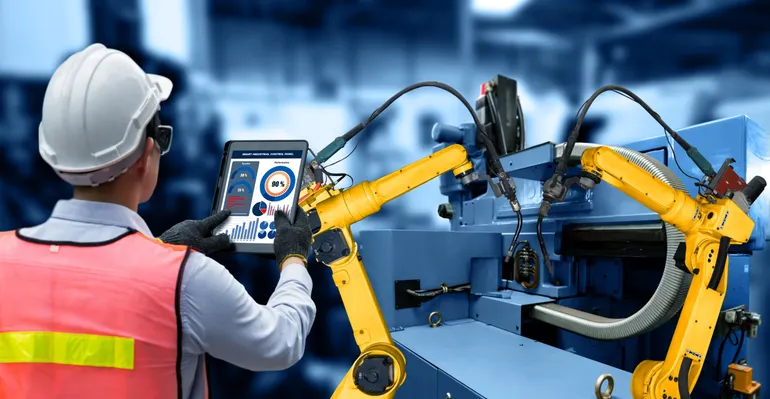
Manufacturers are increasingly leveraging data from automated equipment to enhance operational performance. However, the mere accumulation of data does not guarantee improved decision-making. Organizations must ensure that insights from recurring issues are communicated across teams to prevent repeated failures and to track the effectiveness of process changes.
The significance of effective data feedback loops is highlighted by NIST's definition of smart manufacturing decision systems, which emphasizes the importance of context provided by knowledgeable personnel. Schneider Electric's smart factory in Lexington, Kentucky, exemplifies this approach by integrating equipment data and operator insights through its EcoStruxure platform, resulting in a 20% reduction in mean time to repair critical equipment.
Looking ahead, the focus will be on how manufacturers can further utilize technology to bridge the gap between data collection and actionable insights. For instance, Sachsenmilch's implementation of Siemens Senseye Predictive Maintenance software demonstrates the potential of predictive analytics in preemptively addressing equipment failures, thus optimizing maintenance schedules and minimizing production disruptions. No further timeline was disclosed at the time of publication.
Editor's Note
The integration of closed-loop automation in manufacturing is reshaping how organizations approach data-driven decision-making. By emphasizing the importance of context and collaboration among teams, companies can transform raw data into actionable insights, ultimately enhancing operational efficiency and reducing downtime. This trend highlights the critical need for advanced technologies that facilitate real-time data analysis and communication across departments.



























Leave a comment