

Industry Briefing
A single destination for timely, editor-curated robotics news from around the world.

Chinese Scientists Aim to Enable Atomic-Level Manipulation in Manufacturing Precision
Chinese scientists are making strides in advancing manufacturing precision from the micron level to the atomic level. This groundbreaking research aims to empower humanity with the capability to manipulate atoms, which could revolutionize various industries. The significance of this development lies in its potential to enhance manufacturing processes, leading to unprecedented accuracy and efficiency. By achieving atomic-level manipulation, industries could see improvements in product quality and innovation, impacting sectors such as electronics, materials science, and nanotechnology. Looking ahead, it will be crucial to monitor the progress of these scientific endeavors and their implications for manufacturing. As research continues, the ability to manipulate atoms could pave the way for new technologies and applications that were previously unimaginable. No further timeline was disclosed at the time of publication.
Robotics Automation AI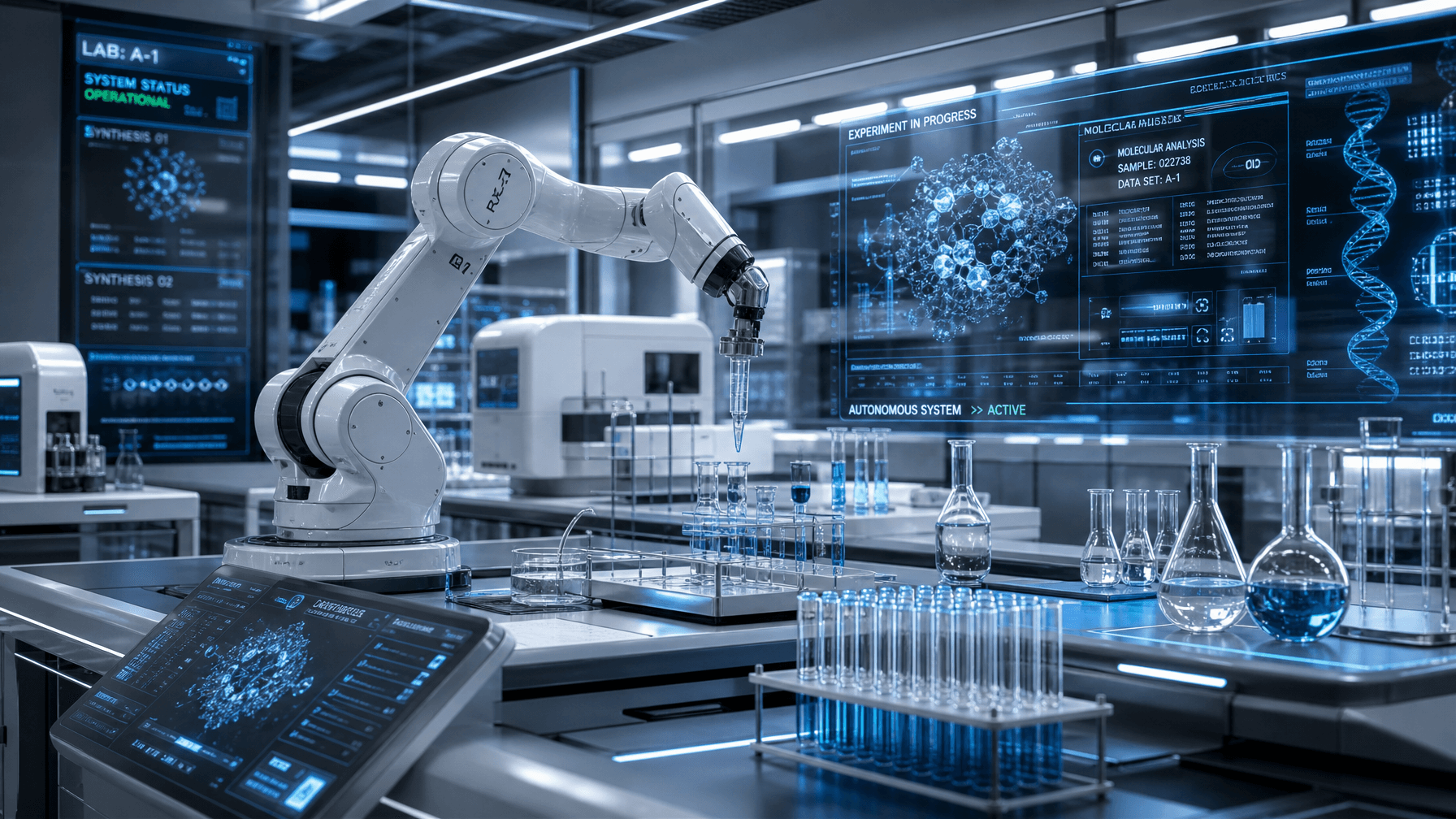
Beijing AI for Science Labs Launch Autonomous Robotic Scientists for Material Discovery
Beijing AI for Science labs have introduced autonomous robotic scientists that can design experiments, collect data, and discover new materials within a rapid timeframe of 20 seconds. This deployment represents a significant advancement in the capabilities of AI in scientific research, particularly in material science. The introduction of these robotic scientists is crucial as it signifies a paradigm shift in research methodologies, allowing for faster and more efficient experimentation. By automating the design and data collection processes, researchers can focus on higher-level analysis and innovation, potentially accelerating the pace of scientific discovery. Looking ahead, the impact of these robotic scientists on the research landscape will be closely monitored. The labs have not disclosed further timelines for additional capabilities or expansions, but the initial deployment marks a pivotal moment in the integration of AI and robotics in scientific exploration.
Technology
Chinese Military Scientists Support Trump's Battleship Plan with Large-Caliber Gun Defense Against Drones
Chinese military scientists have endorsed a segment of Donald Trump’s proposed battleship fleet, suggesting that large-caliber naval guns could effectively counter drone swarms. Their research indicates that explosive shells could scatter fragments over a wide area, potentially damaging multiple drones in a single shot. This approach aligns with ongoing discussions within the US Navy regarding the need to adapt naval defense strategies in response to the increasing threat posed by inexpensive drones. The significance of this research lies in its implications for naval warfare, particularly as modern warships typically rely on advanced missile systems and lasers. The study highlights the potential for large-caliber guns to serve as area weapons, offering a cost-effective solution to engage swarms of drones without the need for direct hits. The findings suggest that a single shell could damage approximately 1.19 drones in a swarm of 30, emphasizing the need for a reevaluation of ammunition expenditure in the face of mass drone attacks. Looking ahead, the researchers advocate for a comprehensive defense strategy that integrates large-caliber guns with electronic warfare and laser systems. This multi-layered approach could enhance the defensive capabilities of warships, addressing the challenge posed by the cost disparity between inexpensive drones and costly interceptors. No further timeline was disclosed at the time of publication.
Military
Researchers Develop Scalable Robot Fish Ranging from 2 to 10 Feet with Tail Adjustment
Researchers have successfully created a robot fish that can scale in size from 2 feet to 10 feet by simply adjusting its tail. This innovative design allows for versatile applications in various aquatic environments, showcasing the potential for adaptive robotics in real-world scenarios. The ability to modify the size of the robot fish is significant as it opens up new possibilities for underwater exploration and research. This advancement highlights the ongoing efforts in robotics to create adaptable machines that can operate effectively in diverse conditions, enhancing our understanding of aquatic ecosystems. Looking ahead, the implications of this technology could extend beyond research, potentially influencing industries such as marine biology, environmental monitoring, and even entertainment. No further timeline was disclosed at the time of publication.
AI and Robotics
Perceptron Launches Isaac 0.5 to Enhance Visual AI for Industrial Automation
Perceptron, a startup founded by former Meta scientists, has launched Isaac 0.5, a new model designed to enhance machine interaction in industrial environments. This software enables vision-guided robots to navigate complex settings like warehouses and factory floors, extracting visual intelligence from recorded videos. The significance of Isaac 0.5 lies in its general-purpose design, allowing flexibility in various tasks rather than being limited to repetitive functions. Co-founders Armen Aghajanyan and Akshat Shrivastava emphasize that their model addresses the limitations of existing AI solutions, which often require dedicated resources or are too narrow in scope. Looking ahead, Perceptron aims to revolutionize industrial automation with its innovative approach to visual AI. The model has been trained on a million hours of diverse video data, including ego and UMI video, to enhance its operational capabilities. No further timeline was disclosed at the time of publication.
AI Robotics Meta perceptron Startups
University of Illinois Researchers Challenge Traditional Views on Brain Decision Making
Researchers at the University of Illinois Urbana Champaign have revealed new insights into brain decision-making processes, suggesting that these processes begin earlier than previously thought. This research, led by Professor Yurii Vlasov, indicates that early sensory brain regions play a crucial role in decision-making, contradicting the long-held belief that decisions are made only after information passes through a strict hierarchy of brain regions. The implications of this study are significant for both neuroscience and artificial intelligence. By understanding that decision-making involves interconnected feedback loops rather than a linear progression, researchers can design AI systems that mimic this biological architecture. This could lead to the development of AI that is not only more capable but also more energy-efficient, addressing current limitations in AI technology. Moving forward, the research team aims to further explore how biological intelligence, refined through evolution, can inform AI development. No further timeline was disclosed at the time of publication.

Former JD.com Executive Zhuang Yuzheng Joins Beta Infinity as Chief Scientist
Zhuang Yuzheng, the former head of embodied intelligence at JD.com, has officially joined Beta Infinity as Chief Scientist. This move comes approximately seven months after he left Huawei to work at JD.com, marking a significant transition to the consumer-focused embodied AI startup founded less than a year ago. Zhuang's expertise in embodied intelligence is notable, having led pioneering algorithm research at Huawei's Noah's Ark Lab, where his team achieved top recognition at ICLR 2023 and broke 24 human world records in Atari game environments. His experience at JD.com, where he contributed to the development of the JoyAI-RA model with a 73.5% success rate in real-world operations, positions him to enhance Beta Infinity's research capabilities. Looking ahead, Beta Infinity, co-founded by Liu Wulong and Tao Shuai, aims to capture the consumer-grade embodied intelligence market. The company has successfully completed seed funding rounds totaling several hundred million yuan and plans to unveil its first consumer prototypes within the year. Zhuang's addition is expected to strengthen the company's research in foundational models, raising expectations for its technological advancements.
Embodied AI Artificial Intelligence Startup Research and Development
University of Hong Kong Develops RoboDojo, a Benchmarking Platform for Robotic Manipulation
The University of Hong Kong's Multimedia Laboratory has developed 'RoboDojo,' a comprehensive platform for assessing robotic manipulation in both simulated and real-world settings. This initiative, led by Professor Ping Luo and Ph.D. student Tianxing Chen, involved collaboration with researchers from nearly 20 prestigious universities worldwide, including the University of California, Berkeley, and Tsinghua University. RoboDojo is significant as it aims to standardize the evaluation of embodied AI, providing a unified framework that can enhance the development and testing of robotic systems. The collaborative effort underscores the importance of international partnerships in advancing technology and research in the field of robotics. Looking ahead, the implications of RoboDojo could influence future research and development in robotic manipulation. The project has been documented in a paper available on the arXiv preprint server, indicating ongoing interest and potential for further advancements in this area. No further timeline was disclosed at the time of publication.
Robotics
Tencent Open-Sources Three Embodied Foundation Models for Enhanced Robot Performance
Tencent has announced the open-source release of three embodied foundation models during the WAIC 2026 event. These models include a Visual Language Model (VLM) designed for scene understanding, the RxBrain cognitive model that facilitates planning with visual states, and the VLA model, which supports continuous action at frequencies between 500 to 1000Hz. This development is significant as it aims to enhance robot reaction speed and cognitive capabilities, addressing critical challenges in robotic performance. The introduction of these models is expected to advance the field of robotics by providing developers with powerful tools to improve the efficiency and effectiveness of robotic systems. Looking ahead, the industry will be keen to observe how these open-source models are adopted and integrated into various robotic applications. No further timeline was disclosed at the time of publication.
Technology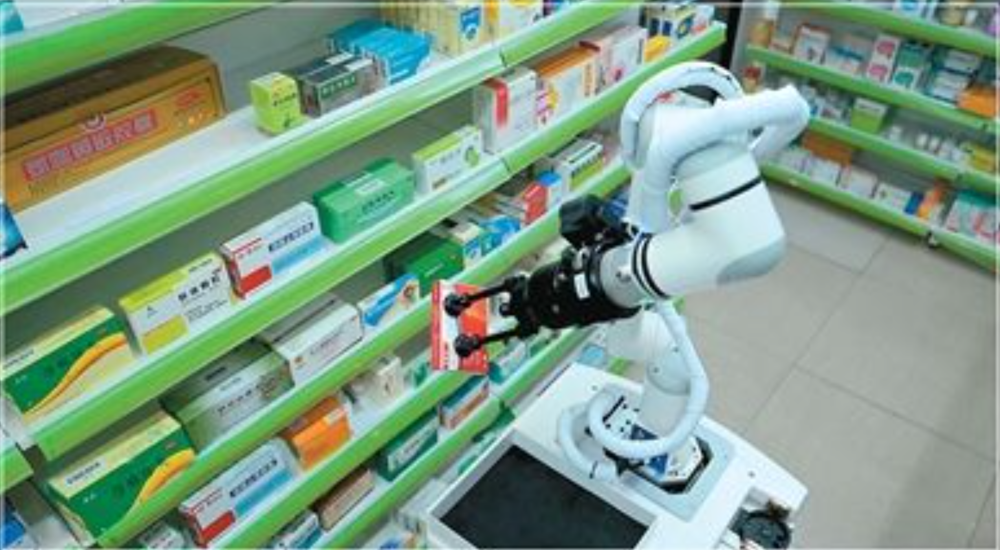
Lu Ce Wu Advances Embodied Intelligence at Qiongche Intelligent in China
Lu Ce Wu, a scientist from Chaoshan, has made significant strides in the field of embodied intelligence, establishing Qiongche Intelligent in 2023. This venture aims to enhance robotic capabilities, with a focus on real-world applications. In 2025, Qiongche's robots will be deployed in a pharmacy in Shenyang, demonstrating autonomous navigation and product recognition without altering existing systems. The significance of Lu's work lies in his commitment to embodied intelligence, a concept he believes should extend beyond digital confines to interact with the physical world. His journey began in 2012 when he recognized the potential of AI after witnessing AlexNet's success. Despite initial challenges in promoting embodied intelligence in China, Lu's persistence has led to recognition, including the Science Exploration Award in 2023, making him the first recipient in this field. Looking ahead, Lu plans to further develop Qiongche Intelligent's capabilities and has established the first AI doctoral program in China. He emphasizes the importance of strategic planning and talent cultivation to prepare for the future of embodied intelligence. No further timeline was disclosed at the time of publication.
Embodied Intelligence Robotics Artificial Intelligence Technology Innovation
Scientists used AI to crack one of water's biggest mysteries
Researchers at the University of Osaka have made significant strides in understanding the unique properties of supercooled water, a substance known for its unusual behavior at low temperatures. By employing an artificial intelligence model trained on various computer simulations, the team evaluated 16 different structural descriptors to analyze water's microscopic structure. This innovative approach allowed them to identify the most effective methods for distinguishing between water's two competing liquid states. The findings provide a clearer framework for future studies, shedding light on one of nature's most enigmatic substances and potentially paving the way for advancements in various scientific fields.
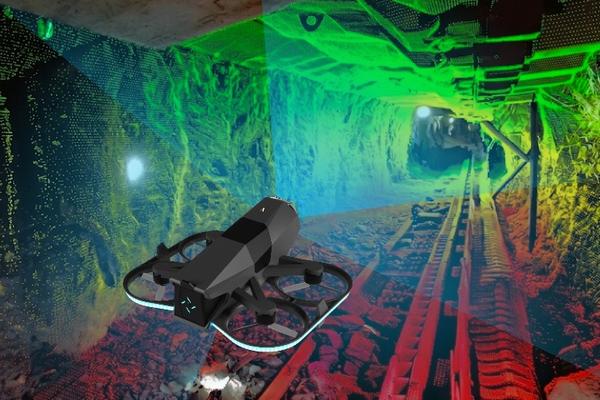
Former DJI scientist raises billions in four funding rounds within six months, backed by YaoTu Capital and JinQiu Fund.
Silicon Feather Technology (SPARO), a company specializing in general aerial intelligence, has successfully completed four rounds of financing totaling hundreds of millions of yuan within six months. Following initial seed funding from Yaotu Capital, subsequent investments came from Jin Qiu Fund, Alibaba, Hongyi Investment, ProLogis Yingshan Capital, and Yunshi Capital. The funds will primarily be used to expand key team positions, commercialize product lines, and accelerate the iteration of their technology platform. Founded in February 2026, SPARO aims to evolve traditional remote-controlled aircraft into autonomous aerial agents capable of understanding their environment and making decisions. The core team comprises experts from top research institutions and leading companies like DJI and Huawei, bringing over a decade of technological expertise and industrial experience. SPARO has developed a comprehensive technology stack that enables aircraft to operate in complex environments without GPS, including low-light and dynamic conditions. Founder Zhang Fu, a prominent figure in robotics, emphasizes that the future of the industry lies in autonomous capabilities rather than hardware specifications. He believes that current drones can only observe and not interact with their environment, which SPARO aims to change. The company has already secured dozens of seed customers and partners in the drone and logistics sectors. Investors have expressed confidence in SPARO's potential, highlighting its unique position in the aerial intelligence market and the team's ability to transform cutting-edge academic research into commercially viable products. With plans for a comprehensive ecosystem that includes a simulation platform for developers, SPARO is poised to redefine the capabilities of aerial robotics.

Tencent’s chief AI scientist dismisses lag concerns, says race a ‘long-term game’
Yao Shunyu, the chief AI scientist at Tencent Holdings and a former researcher at OpenAI, addressed concerns regarding the company's perceived slow progress in artificial intelligence. Speaking recently, Yao emphasized that the AI race is only beginning, highlighting significant untapped potential in areas such as coding agents and embodied intelligence. He likened the current phase of AI development to the early days of personal computers in the 1970s, suggesting that the most crucial advancements are yet to come. Yao's comments reflect Tencent's commitment to advancing its AI capabilities amid a rapidly evolving technological landscape.
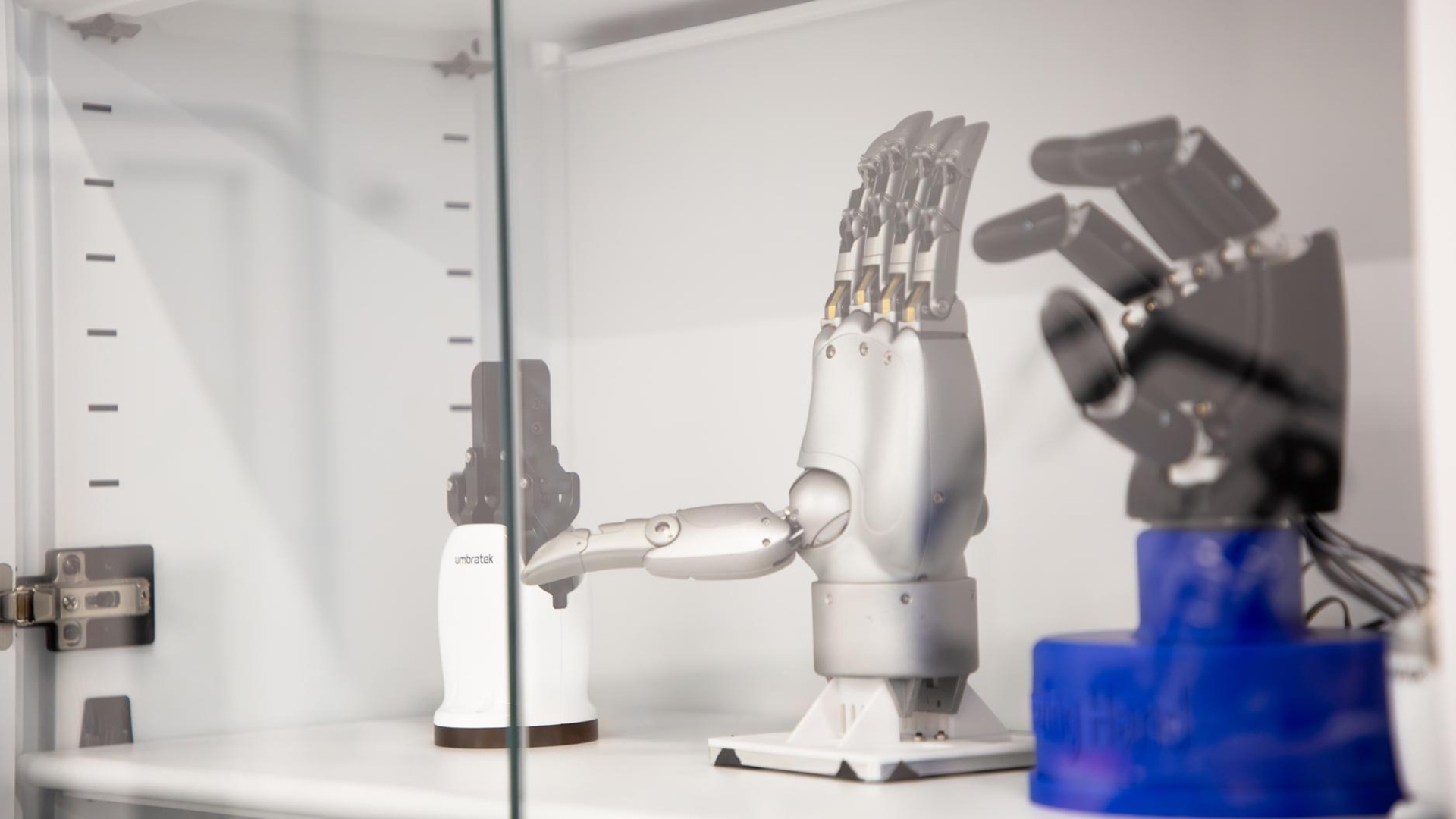
Scientists show predictable training can outperform complex robot learning data
Researchers are making significant strides in developing robots capable of manipulating objects with human-like dexterity, a challenge that has long posed difficulties in the field of robotics. This advancement is crucial as it could enhance the ability of robots to perform complex tasks in various settings, including homes, hospitals, and manufacturing plants. The ongoing work, which has gained momentum in recent months, is taking place in laboratories across the globe, where teams are experimenting with advanced algorithms and machine learning techniques. The motivation behind this research stems from the increasing demand for robots that can assist in everyday tasks, improve efficiency in industrial processes, and provide support in healthcare environments. By mimicking the intricate movements of the human hand, researchers aim to create robots that can handle delicate objects and perform tasks that require precision and adaptability. To achieve this, scientists are employing a combination of innovative hardware designs and sophisticated software programming. They are utilizing sensors and artificial intelligence to enable robots to learn from their interactions with various objects, refining their skills over time. This iterative learning process is essential for developing robots that can operate effectively in unpredictable environments. As the field progresses, the implications of these advancements could revolutionize how robots are integrated into daily life, making them more versatile and capable of performing a wider range of functions. The ongoing research highlights the potential for robots to not only assist but also enhance human capabilities in numerous domains.

Think AI "knows" what it’s doing? Scientists say think again
A recent study has revealed that news writers exercise caution when describing artificial intelligence, often avoiding overly human-like language that could mislead the public about AI's capabilities. Conducted by researchers analyzing media language, the study found that while journalists occasionally use terms that suggest human traits, such instances are infrequent and vary in intensity. The research highlights the importance of accurate language in reporting on AI, particularly as the technology becomes increasingly integrated into society. By maintaining a careful approach, writers aim to prevent misconceptions about AI's functions and limitations, ensuring that audiences have a clearer understanding of this evolving field.

With navigating nematodes, scientists map out how brains implement behaviors
Scientists at MIT have developed a comprehensive map detailing the neural processes in C. elegans worms as they navigate toward appealing odors or steer clear of unpleasant ones. This groundbreaking research, which sheds light on the decision-making mechanisms in these simple organisms, was conducted to better understand the fundamental principles of sensory processing and behavior. By employing advanced imaging techniques, the team was able to observe the specific neural pathways activated during these olfactory-driven behaviors. The findings, published recently, could have broader implications for understanding similar processes in more complex organisms, including humans, and may contribute to advancements in neuroscience and behavioral studies.
Research Neuroscience Animals Behavior Brain and cognitive sciences Picower Institute
AI uses as much energy as Iceland but scientists aren’t worried
Recent research indicates that while artificial intelligence (AI) significantly increases electricity consumption, its overall impact on global climate change may be less severe than previously thought. Conducted by a team of scientists, the study reveals that the emissions associated with AI usage are minimal on a global scale, with the most significant effects observed in localized areas, particularly around data centers where AI operations are concentrated. This finding suggests that the environmental footprint of AI may not be as dire as anticipated. Furthermore, the researchers highlight the potential of AI to contribute positively to environmental efforts by aiding in the development of greener technologies. As the conversation around AI and energy consumption evolves, this study provides a nuanced perspective on the balance between technological advancement and environmental sustainability.

Scientists discover AI can make humans more creative
New research from Swansea University challenges the common perception of artificial intelligence as a mere replacement for human labor, presenting it instead as a valuable creative collaborator. Conducted with over 800 participants tasked with designing virtual cars, the study revealed that AI-generated design galleries significantly enhanced user engagement. Participants not only explored the designs for longer periods but also achieved better outcomes in their projects. This finding highlights the potential of AI to augment human creativity rather than supplant it, suggesting a shift in how technology can be integrated into creative processes. The study underscores the importance of viewing AI as a partner in innovation, paving the way for more collaborative approaches in various fields.

Scientists built the hardest AI test ever and the results are surprising
As artificial intelligence systems increasingly excel at traditional assessments, researchers have acknowledged that these benchmarks no longer present adequate challenges. In a significant response, nearly 1,000 experts collaborated to develop Humanity’s Last Exam, a comprehensive 2,500-question assessment designed to cover a wide array of specialized topics. The exam was meticulously crafted to exclude any questions that could be answered by existing AI models. Preliminary results indicate that even the most advanced AI systems face considerable difficulties, highlighting a notable disparity between AI capabilities and the depth of knowledge possessed by true experts in various fields.
Scientists build a “periodic table” for AI
Emory University physicists have developed a groundbreaking mathematical framework aimed at enhancing multimodal AI, which integrates text, images, and other data types. This innovative approach, unveiled recently, reveals that various AI techniques share a fundamental principle: the ability to compress data while retaining the most predictive elements. By employing what the researchers describe as a “control knob” method, this framework enables scientists to design more effective algorithms, reduce data requirements, and minimize unnecessary computing power. The team believes that their findings could significantly improve the accuracy and efficiency of AI systems, while also promoting environmentally sustainable practices in technology development.
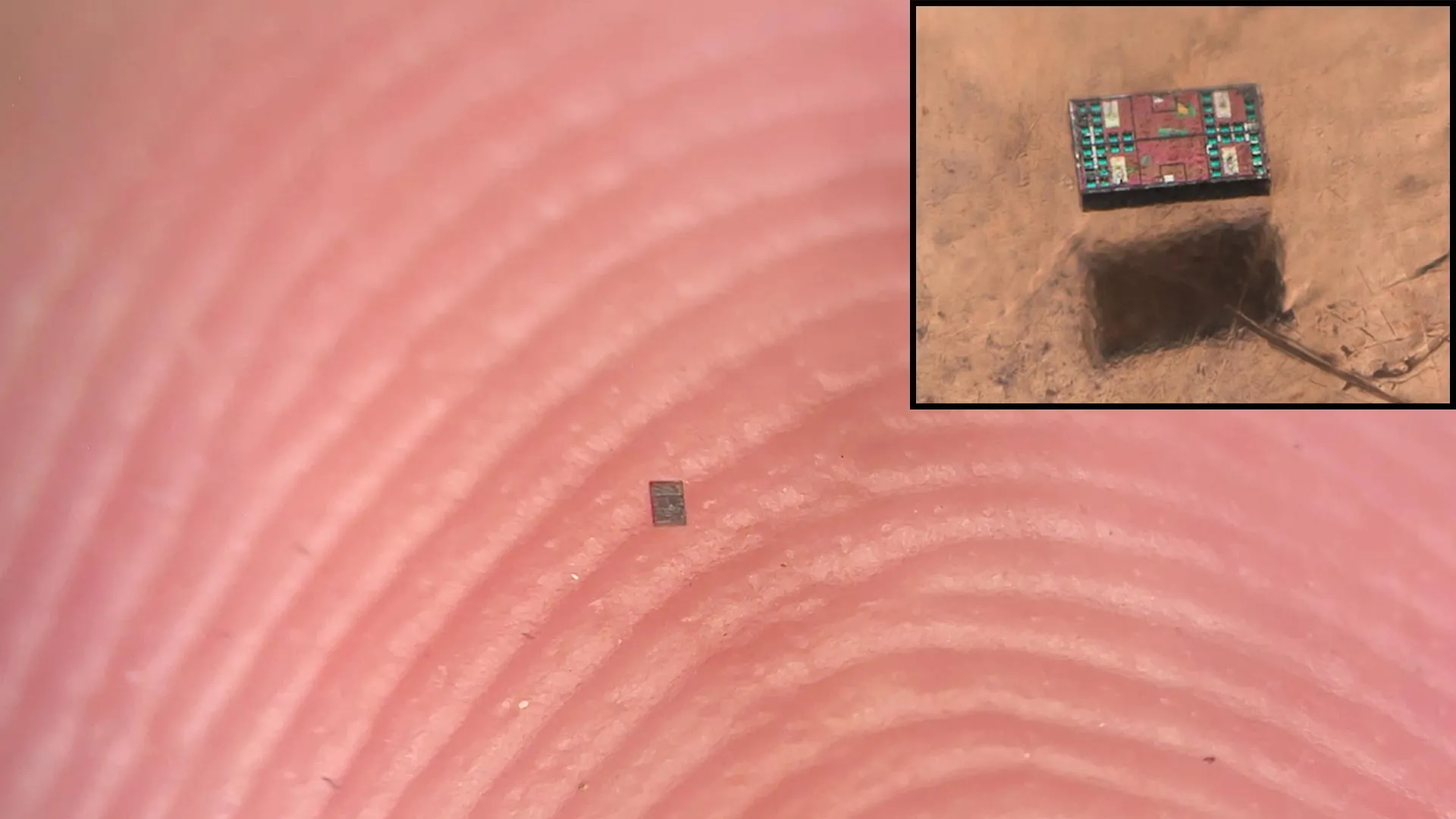
Scientists create robots smaller than a grain of salt that can think
A team of researchers has developed groundbreaking microscopic robots that operate independently, demonstrating advanced capabilities such as sensing, decision-making, and movement. These tiny robots, which are nearly invisible to the naked eye, are powered by light and utilize electric fields for propulsion instead of traditional moving parts. They possess the ability to detect temperature variations, adhere to programmed routes, and collaborate in groups. This innovation represents a significant milestone in robotics, as it introduces the first truly autonomous machines at such a diminutive scale. The research highlights the potential for these microscopic robots to revolutionize various fields, including medicine and environmental monitoring, by enabling precise and efficient operations in previously inaccessible areas.

Scientists reveal a tiny brain chip that streams thoughts in real time
Researchers have developed BISC, an ultra-thin neural implant designed to establish a high-bandwidth wireless connection between the brain and computers. This innovative device features a compact single-chip design that incorporates tens of thousands of electrodes, enabling it to support sophisticated AI models for decoding movement, perception, and intent. Initial clinical trials have demonstrated that BISC can be safely inserted through a small opening in the skull, where it remains stable while capturing intricate neural activity. This groundbreaking technology holds the potential to revolutionize treatments for conditions such as epilepsy, paralysis, and blindness, offering new hope for patients facing these challenges.

Scientists uncover the brain’s hidden learning blocks
Researchers at Princeton University have discovered that the human brain's ability to learn is significantly enhanced by its use of modular "cognitive blocks" that can be repurposed across various tasks. This finding emerged from experiments involving monkeys that were tasked with switching between visual categorization challenges, revealing that the prefrontal cortex can assemble these cognitive blocks in a manner akin to building with Legos, thereby facilitating the creation of new behaviors. The study, conducted recently, sheds light on the brain's remarkable flexibility, which accounts for the rapid learning capabilities of humans compared to artificial intelligence models that often struggle to retain previously acquired skills. These insights hold promise for advancing the development of more effective AI systems and could lead to innovative clinical treatments aimed at enhancing cognitive adaptability in individuals with impairments.
Robotics needs a service framework.
RSF defines a common language for robot service capability, lifecycle operations, certification pathways, and service-provider networks.
Join the RobotToday community on LinkedIn
Daily robotics news, in-depth analysis, conference highlights, and discussions with professionals worldwide.







