

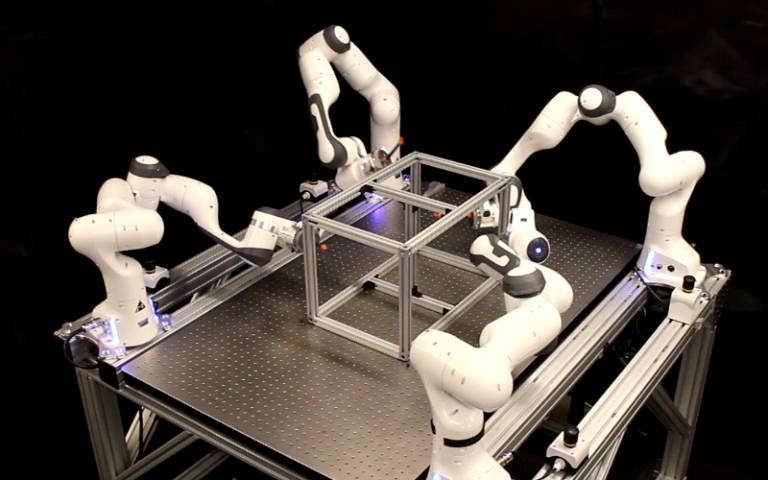
York University has made significant advancements in humanoid robot vision by integrating eye movement into depth perception. Their research, published in 'Science Robotics', demonstrates that the geometric information generated by eye movements can enhance a robot's understanding of the three-dimensional world. This approach, termed Convergent Binocular Stereo (CBS), allows robots to calculate depth by using the rotation of their cameras to focus on the same target, improving accuracy in depth perception.
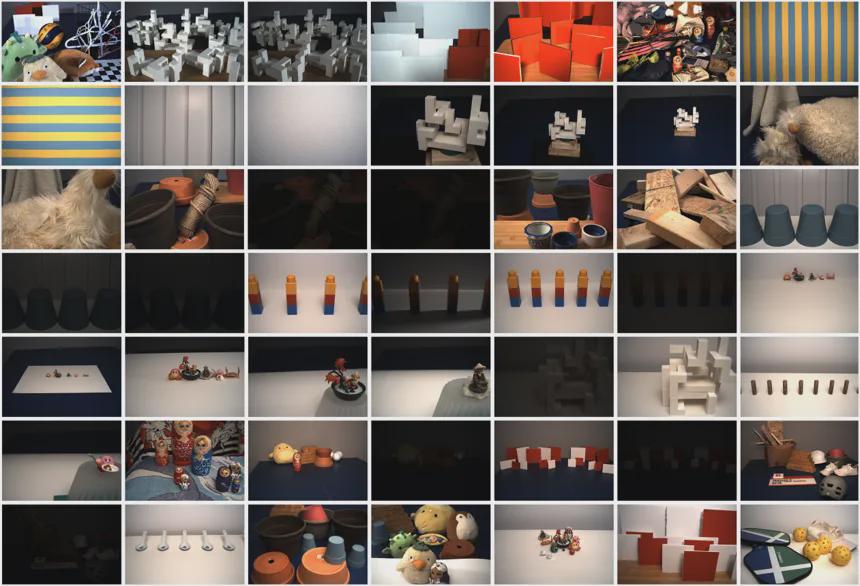
The importance of this development lies in its potential to overcome limitations in traditional robotic vision systems, which often rely on fixed parallel camera setups. By enabling robots to utilize both horizontal and vertical disparities in visual data, CBS provides a more nuanced understanding of spatial relationships. The study shows that CBS outperforms several conventional and deep learning methods in various scenarios, particularly in cases with repetitive patterns where traditional algorithms struggle.
Looking ahead, the research highlights challenges that remain before CBS can be effectively implemented in real-time robotic applications. Current processing times are too slow for immediate perception, and the system's accuracy is sensitive to motor precision and camera calibration. Future work will focus on optimizing the algorithm, enhancing motor accuracy, and addressing the issue of determining the next point of focus, which is crucial for mimicking human-like vision in robots.
Editor's Note
The integration of eye movement into robotic vision systems represents a significant leap forward in enhancing depth perception capabilities. This advancement could lead to more sophisticated humanoid robots that can better navigate and interact with their environments. As the industry moves towards more intelligent automation, understanding the implications of such technologies on manufacturing and service sectors will be crucial for decision-makers and investors alike.




























Leave a comment