Convergent Information Technologies GmbH
Austrian software company specializing in robot offline programming, vision-based bin-picking, and automatic robot motion planning.
Contact Convergent Information Technologies GmbH
WEBSITE
https://convergent-it.comPHONE
+43 681 10722 671HEADQUARTERS
Austria

Company Facts
Founded
2007
Primary Role
Software/Algorithm
Company Size
-
Primary Region
Europe
Annual Sales
-
Funding Stage
-
Funding Total
-

Monumental's CEO Discusses Robotics Potential in Construction Industry
In a recent episode of Lexicon, Salar al Khafaji, founder and CEO of Monumental, highlighted the overlooked potential of robotics in the construction industry. He emphasized the challenges of deploying autonomous robots on unpredictable building sites and the need for specialized machines to address rising construction costs and housing shortages. Al Khafaji pointed out that construction has not received the technological attention it deserves, despite its significant economic and social impact. He believes that the industry is vast and underappreciated by tech founders, which is why he pivoted from data visualization to focus on tangible impacts in construction. Monumental has developed autonomous robots capable of transporting materials and constructing brick walls on commercial sites. However, al Khafaji noted that real-world deployment presents unique challenges, such as varying environmental conditions that affect sensors and computer vision systems. No further timeline was disclosed at the time of publication.
AI and Robotics Innovation
Dyson Introduces Nurovi Robot Cleaners and First Oral-Care Device with AI Vision
Dyson has unveiled a new family of robot cleaners named Nurovi and its first oral-care device, CameraJet, at the Dyson Unveiled event in Berlin. This marks a significant shift towards appliances that utilize artificial intelligence, vision systems, and sensor-based automation to interpret and respond to their environments. The introduction of the Nurovi robot cleaners, which includes three models with advanced cleaning mechanisms, highlights Dyson's commitment to moving beyond traditional mechanical performance. The r2 Nurovi Wash+Dry features a triangular rotating mop and real-time dust particle measurement, while the r3 Nurovi Spot+Scrub UV employs AI for stain detection and enhanced suction capabilities. Looking ahead, Dyson aims to integrate AI and machine learning across its product lines, including oral care and home appliances. No further timeline was disclosed at the time of publication.
All News
Lyte Secures $165 Million in Series C Funding to Enhance Robot Sensing Capabilities
Lyte AI Inc. has successfully raised $165 million in Series C funding, achieving a post-money valuation of $1.6 billion. Founded in 2021, the Sunnyvale-based company specializes in designing processors, multimodal sensors, and software that enable robots to accurately perceive their surroundings. This funding will accelerate the deployment of LyteVision, their perception platform, into various robotics applications. The significance of this funding round lies in Lyte's innovative approach to solving the sensing challenges faced by robots. According to co-founder and CEO Alexander Shpunt, the company focuses on creating a comprehensive perception foundation, from custom silicon to spatial data generation. With this investment, Lyte aims to expand its reach across industries such as inspection, logistics, and manufacturing, where accurate sensing is crucial for operational safety and efficiency. Looking ahead, Lyte plans to significantly grow its workforce, hiring across multiple domains including silicon, software, and operations. The company has already raised a total of $272 million since its inception and is poised to become a key player in the robotics sector, as indicated by the strong demand for its technology from early customers. No further timeline was disclosed at the time of publication.
Artificial Intelligence Artificial Intelligence / Cognition Design / Development Financial Investments News
World Labs Launches Atlas World Model for 3D Environment Simulation
World Labs has unveiled Atlas, a new world model aimed at generating, reconstructing, and simulating 3D environments. This model supports Real-to-Sim workflows, allowing robots to navigate and manipulate spaces reconstructed from images or videos. Atlas can create RGB and depth data that robots would encounter, enhancing their operational capabilities. The introduction of Atlas is significant as it enables developers to recreate interactions with various objects and simulate different training scenarios. By using a limited number of real-world recordings, Atlas can generate complex environments, which is crucial for advancing robotic applications. This multimodal model combines text, images, video, and 3D information, providing a comprehensive tool for robotics and beyond. Looking ahead, Atlas is entering early access with select partners and will also enhance future versions of World Labs' Marble world-generation product. The capabilities of Atlas in producing explicit 3D outputs and supporting diverse applications will be key areas to monitor as the technology evolves.
AI AI Use Cases Robotics Atlas real-to-sim World Labs
Leading Research Institutions Unite to Advance Soft Robotics and Physical AI
In recent years, advancements in large models have enhanced machines' language, visual, and reasoning capabilities. Concurrently, robotics is transitioning from traditional rigid systems to more flexible, perceptive forms. A significant intersection is emerging between Physical AI and Soft Robotics, prompting a shift in focus towards integrating materials, structures, mechanics, and perception systems into robotic intelligence. In 2026, the prestigious journal ACS Nano will publish a collaborative article by 37 scientists from 28 global research institutions, including Nanyang Technological University, Hebrew University of Jerusalem, MIT, ETH Zurich, Tsinghua University, Cornell University, and Northwestern University. The article, titled "Emerging Frontiers and Technological Challenges in Soft Robotics," will explore the paradigm shift in soft robotics and outline key scientific questions and technological challenges for the future. This article not only serves as a roadmap for soft robotics technology but also points towards a broader future of Embodied Physical Intelligence, where the body itself becomes part of the intelligence. The research framework connects fundamental scientific questions with cutting-edge studies in soft robotics, focusing on issues related to intelligence, perception, functionality, and adaptability, which are crucial for overcoming key technical challenges in deployment and integration.
Soft Robotics Physical AI Adaptive Systems Machine Learning Biomimicry
Ouster Expands into Drone Mapping and Autonomous Vehicles with Physical AI Technology
Ouster is advancing its technology that enables machines to perceive and navigate their environments, contributing to the growth of physical AI. The company is entering the drone mapping sector through a collaboration with GeoCue, while John Deere is integrating Ouster sensors into its GUSS autonomous vehicles. This expansion is significant as it highlights the increasing demand for physical AI solutions across various industries. Ouster's CEO, Angus Pacala, emphasized the company's commitment to exploring new markets and addressing the evolving needs for advanced sensing technologies in automation. Looking ahead, industry stakeholders should monitor Ouster's developments in drone mapping and its partnership with John Deere. No further timeline was disclosed at the time of publication.

Lyte Secures $165 Million Series C Funding Led by Maverick Silicon for Robot Perception
Lyte has announced a successful $165 million Series C funding round, led by Maverick Silicon. This financing values the company at $1.6 billion post-money and marks a significant step as Lyte prepares for production deployments. The funding is crucial for Lyte, a company specializing in physical AI perception, as it aims to enhance robots' understanding of their environments. With this investment, Lyte is positioned to advance its technology and expand its market presence, which is vital in the rapidly evolving robotics sector. Looking ahead, Andrew Homan from Maverick Silicon will join Lyte's board, indicating a strategic partnership that could influence future developments. No further timeline was disclosed at the time of publication.

Addressing the Critical Gap in Robot Safety Assurance Amidst AI Manipulation Risks
Recent advancements in robotics highlight a significant gap in safety assurance, particularly concerning the integrity of data that guides robotic decisions. Traditional safety assessments may not adequately address the risks posed by adversarial manipulations of sensory inputs, which can redirect robot behavior without any apparent system failure. Research has shown that even subtle alterations in what a robot perceives can lead to significant deviations in its actions, raising concerns about the reliability of current safety protocols. The implications of these findings are profound, as they challenge the conventional understanding of robot safety. For instance, studies have demonstrated that backdoor attacks can manipulate a robot's actions based on hidden triggers, such as specific visual patterns or ordinary objects. This vulnerability underscores the necessity for enhanced validation processes that account for adversarial conditions, ensuring that robots remain within their operational and safety boundaries even when faced with manipulated inputs. Looking ahead, the development of simulation tools like NVIDIA Isaac Sim™ combined with VicOne Radeis offers a promising avenue for testing the effects of manipulated inputs prior to deployment. However, as highlighted by the recent UniPwn exploit affecting major robotic systems, even well-trained models can be compromised if the underlying system is vulnerable. No further timeline was disclosed at the time of publication.
Sponsored Content VicOne
TU Delft Develops Drone Using Touch Sensors for Perching on Branches
Researchers at TU Delft have created an innovative drone that utilizes tactile sensors to perch on branches, moving beyond traditional camera reliance. This technology allows the drone to detect and adjust its position as it approaches a branch, enabling it to grip securely and conserve battery power by shutting down its motors once perched. The significance of this development lies in its potential to enhance drone operations in complex environments like forests, where conventional vision-based systems often struggle. By employing touch sensing, the drone can locate and grip branches effectively, which could lead to longer operational periods in cluttered settings. Looking ahead, the drone's control architecture, which includes a series of dynamic states for flight and perching, will be crucial for its adaptability. No further timeline was disclosed at the time of publication.
AI and Robotics
Quadrupedal Robot Learns Agile Jumping Through Narrow Openings Using AI
Researchers at the University of Hong Kong and the Oxford Robotics Institute have developed a learning-based system that enables four-legged robots to navigate through narrow gaps autonomously. This innovative approach allows quadrupedal robots to perform agile movements, inspired by the natural jumping abilities of dogs, without relying on pre-programmed sequences. The technology, demonstrated on the 48-pound Unitree Aliengo robot, utilizes a hierarchical reinforcement learning framework called ConsJump. This system allows the robot to assess obstacles and dynamically decide when to jump, enhancing its ability to traverse confined spaces quickly and efficiently. The robot's onboard Intel D435i RGB-D camera plays a crucial role in identifying obstacles and adjusting its movements accordingly. Future developments may focus on refining the robot's adaptability to various environments and conditions. The researchers believe that the same architecture could be applied to other complex robotic tasks, potentially leading to advancements in robotic agility and autonomy in challenging terrains. No further timeline was disclosed at the time of publication.
AI and Robotics
Skip the Gate, Own the Liability: Phase 2 and the Stage Gate Mechanism
RSF defines two hard stops around robot commissioning. Bypass SG1 and safety liability shifts to you; skip SG2 and your SLA loses its evidence base. Inside.
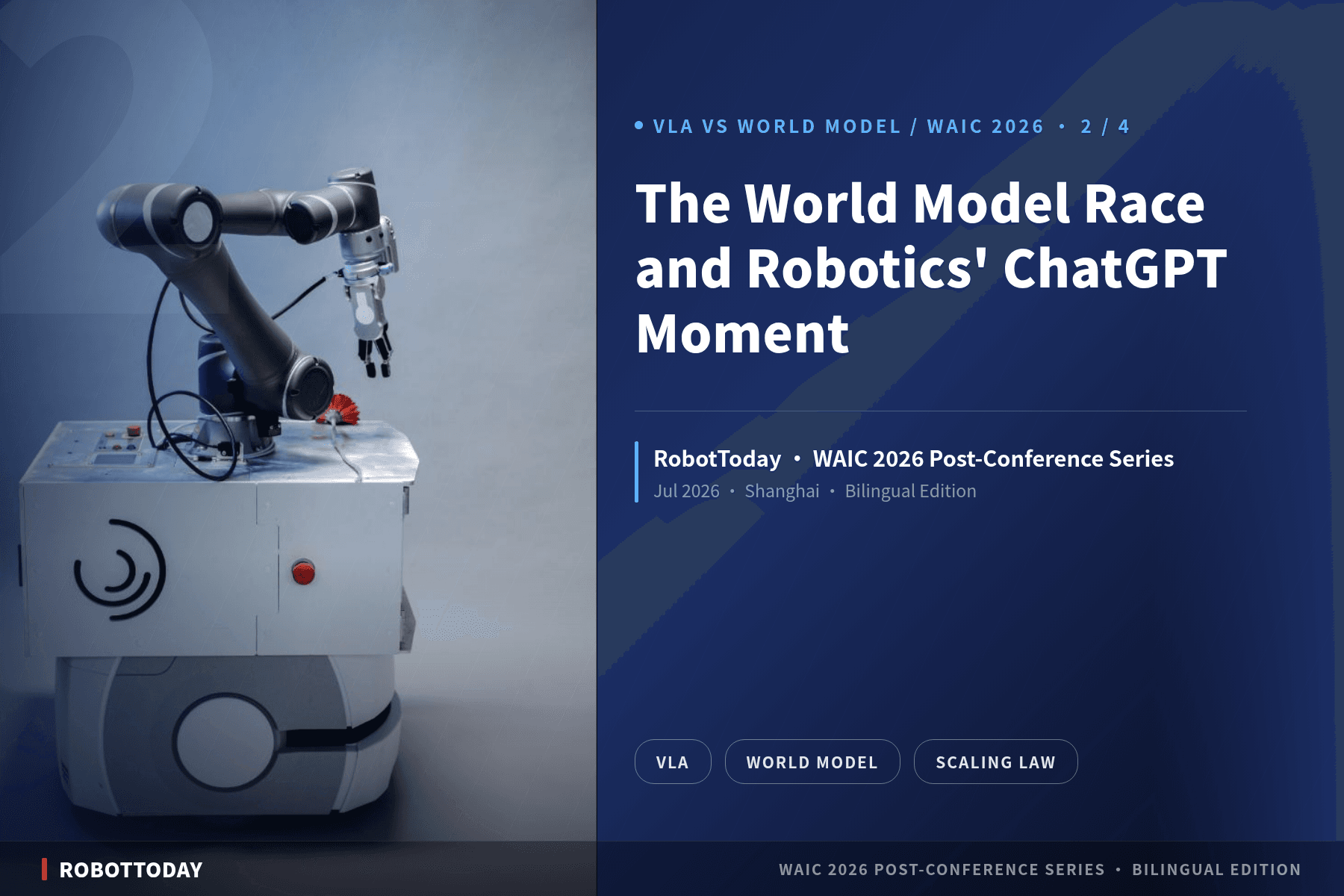
WAIC Review 2/4: World Models vs. VLA: Robotics' Next 'ChatGPT Moment'
At WAIC 2026, world-model and VLA camps staked rival paths to generalist robots; Zhiyuan, SenseTime and NVIDIA predict a robot 'ChatGPT moment' in 2-5 years.

WAIC Review 3/4: What Scientists and Skeptics Really Think About Embodied AI: The Sober Voices at WAIC 2026
UCL and HKUST researchers, plus robotics CEOs, challenged embodied AI hype at WAIC 2026, citing generalization limits and no third-party evaluation standard.

WAIC 2026 Ten Flagship Exhibits
WAIC 2026 named ten Flagship Exhibits from 3,000+ products — spanning domestic AI superclusters, humanoid robots, general-purpose agents, AI wearables, and protein design AI. Engineering breakdown by RobotToday.

The EV Déjà Vu: Why China's Humanoid Robot Blitz May Be Winning the Battle — but Losing the War
China controls 80% of humanoid robot shipments and crushes hardware costs. But is winning the body enough? A deep analysis of the US-China robot war beyond the EV analogy.
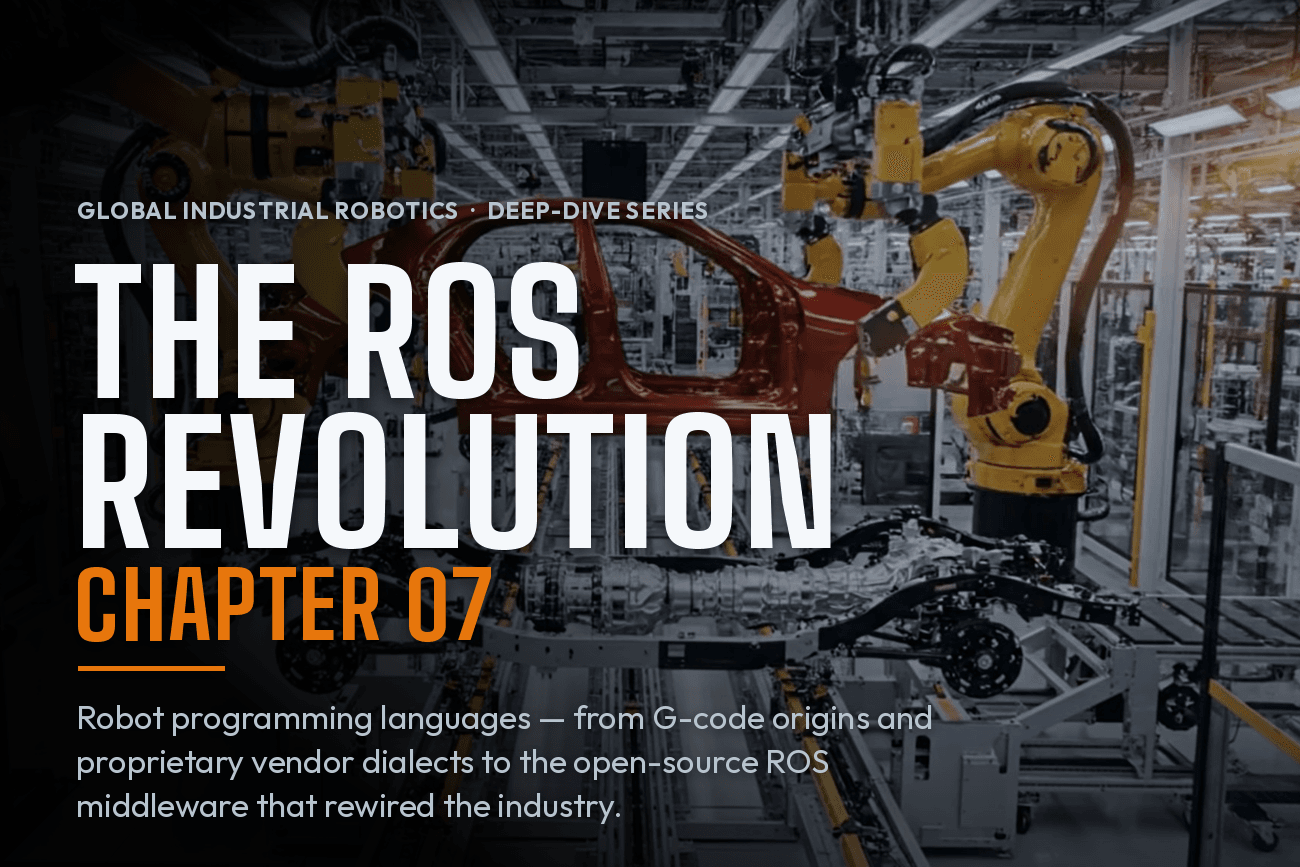
Robot Programming Languages 2026: From G-Code & FANUC KAREL to ROS2 — Complete History & Industrial Guide
A comprehensive guide to industrial robot programming language evolution: G-code and NC origins, FANUC KAREL/TP, ABB RAPID, KUKA KRL, Yaskawa INFORM, the ROS open-source revolution, ROS2 architecture, ROS-Industrial consortium, OPC-UA, TSN, and real-time Linux — how six decades of software history define today's factory floor.
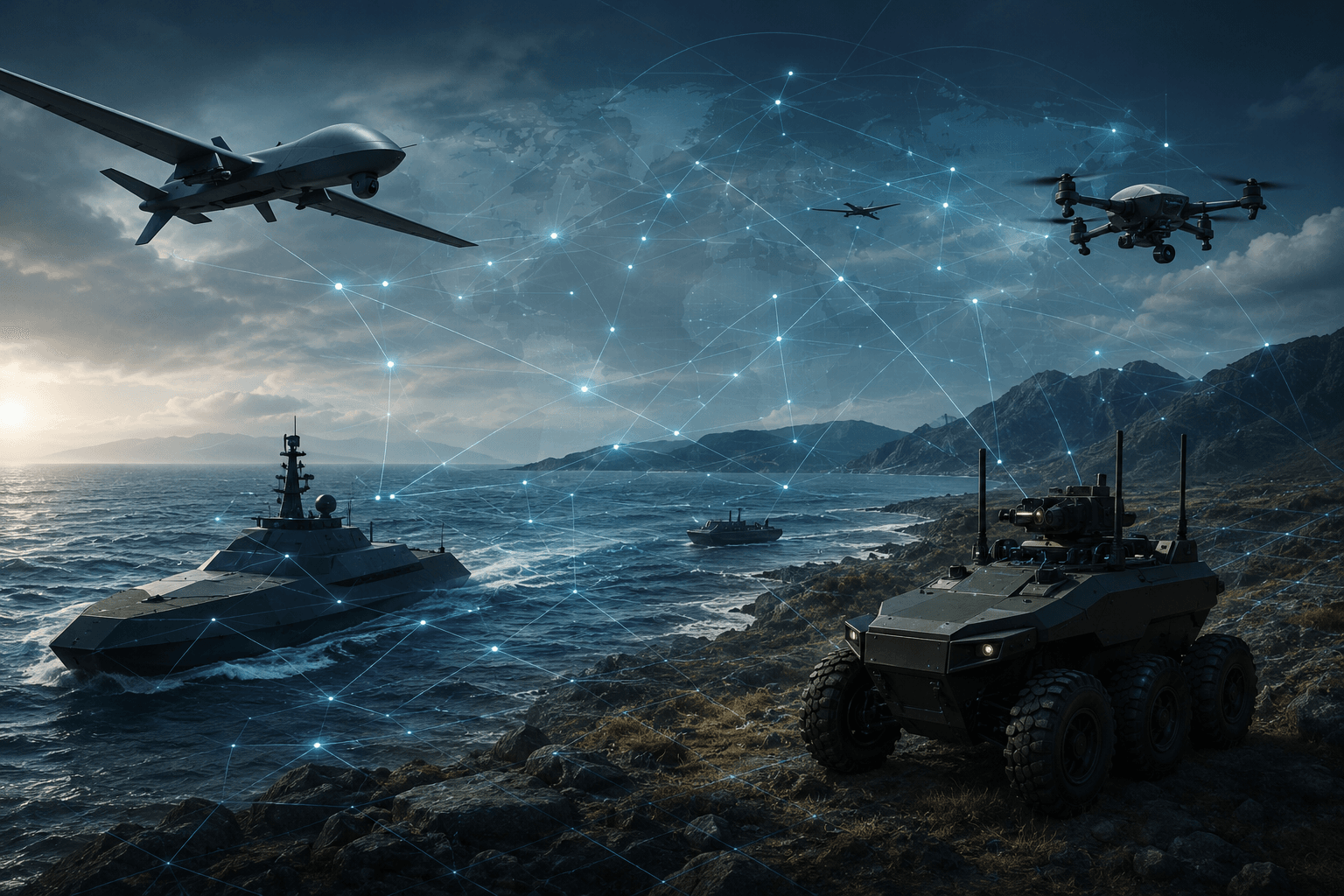
FUTURE WARFARE | Cross-Domain Integration - Integration How Land, Sea, Air and Software Are Converging Into a Single Kill Chain
Cross-domain robotics is reshaping modern warfare as drones, UGVs, AI targeting systems, and autonomous logistics converge into a single networked kill chain across land, sea, air, and software.

Agricultural Robotics | 2025–2030 Outlook: The Labor Cost Reckoning
Agricultural robotics is projecting a $28–48 billion market by 2030 outside China, driven purely by labor cost replacement. Part 10 synthesizes the series: forecasting penetration ceilings, emerging technologies, and regional winners in the most consequential farming transformation since mechanization.
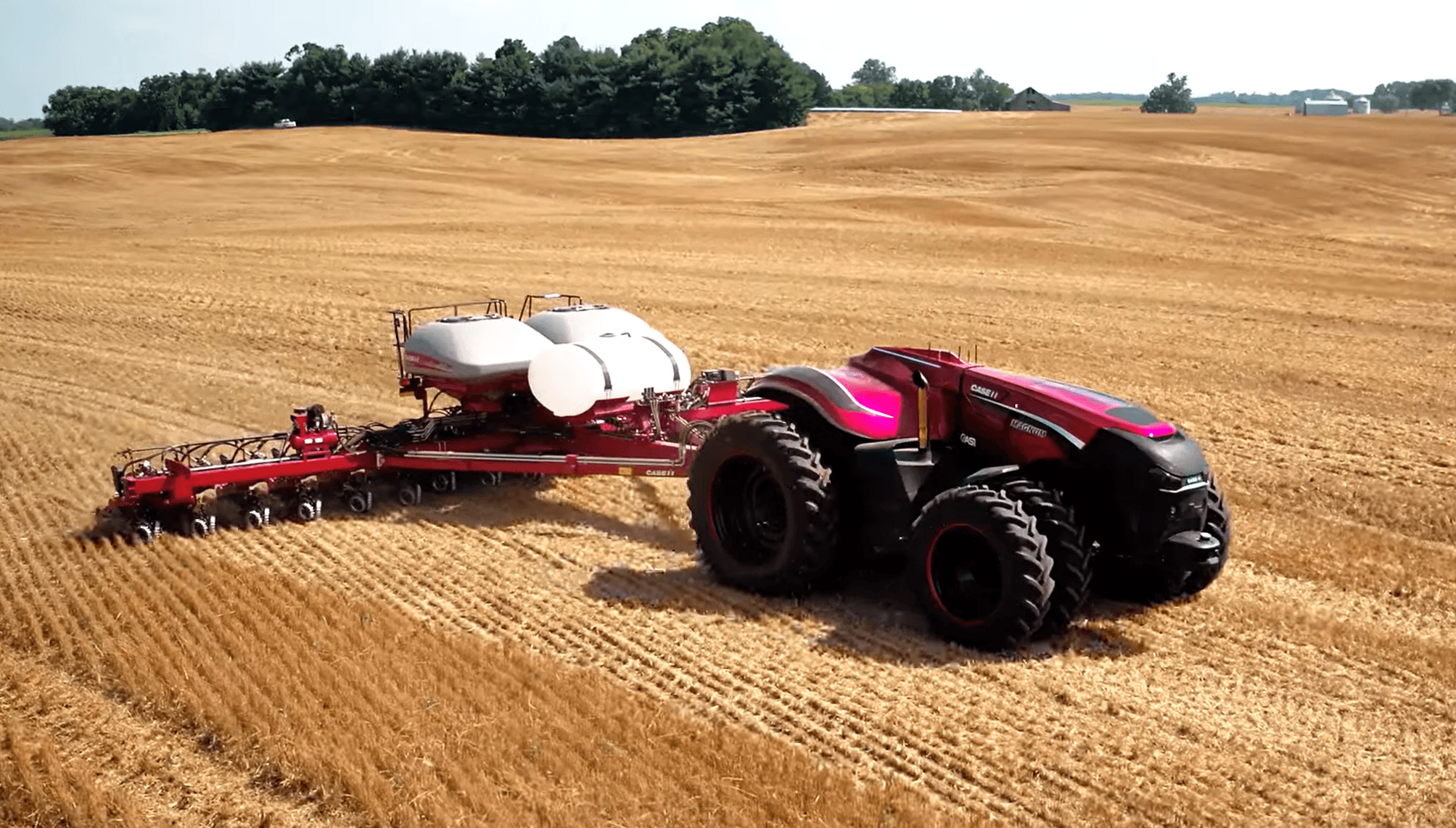
Agricultural Robotics | Autonomous Tractors: The $13B Platform Battle in Plain Sight
Autonomous tractors target a $2.7B market growing at 22% CAGR to 2032. Deep-dive on John Deere 8R, AGCO Fendt, CNH Industrial, Kubota AgriRobo, and Monarch MK-V — and why the platform war matters more than the hardware.
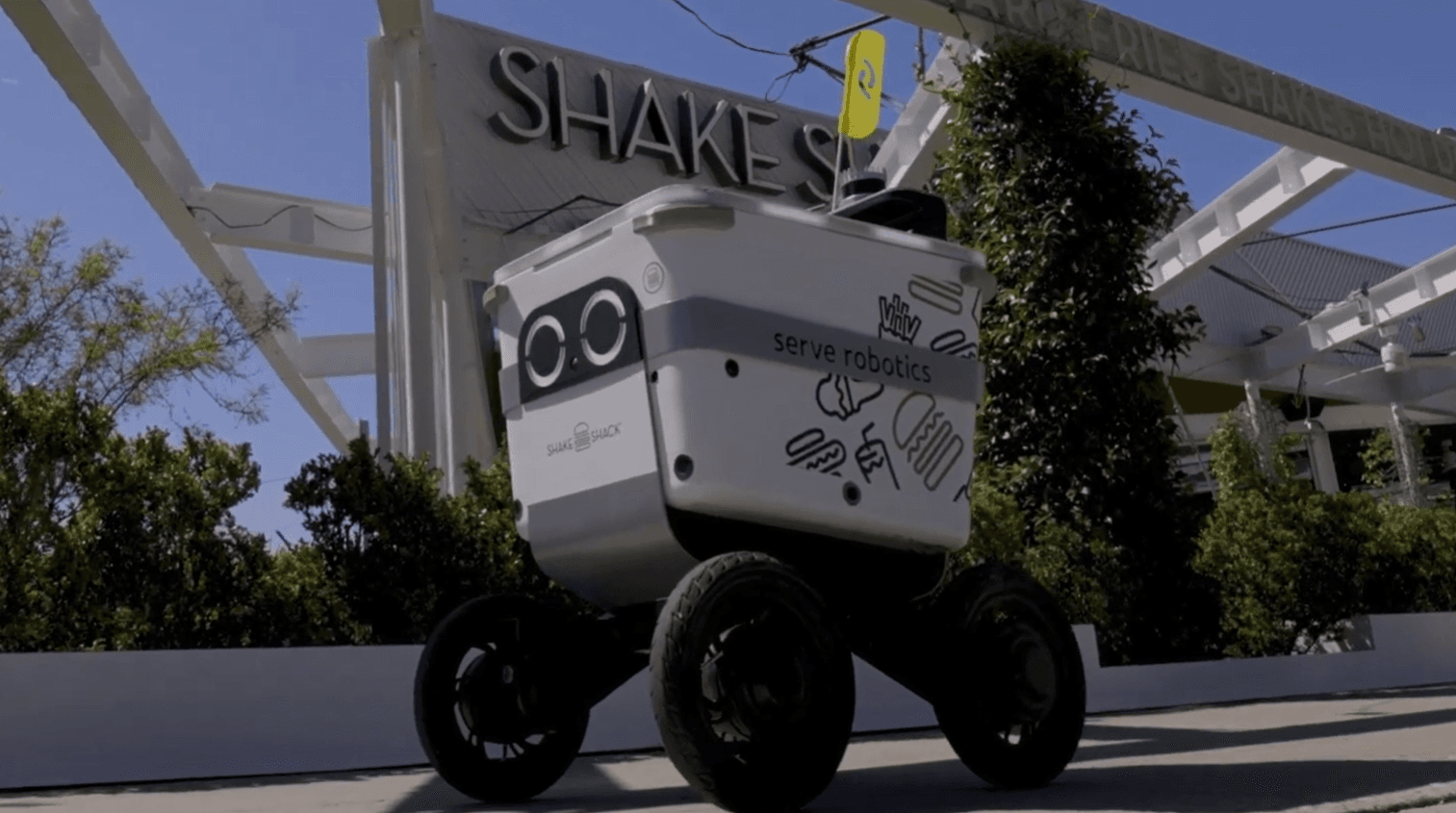
Serve Robotics FY2025: Scaling Sidewalk Delivery Robots Toward <$1 Last-Mile Cost
Serve Robotics (NASDAQ: SERV) scaled its sidewalk delivery fleet 20× to 2,000+ robots in FY2025, posting $2.7M revenue (+50%) and guiding $26M for 2026. An in-depth look at the autonomy stack, unit economics, competitive landscape, and what Level 4 delivery actually means in dense urban environments.