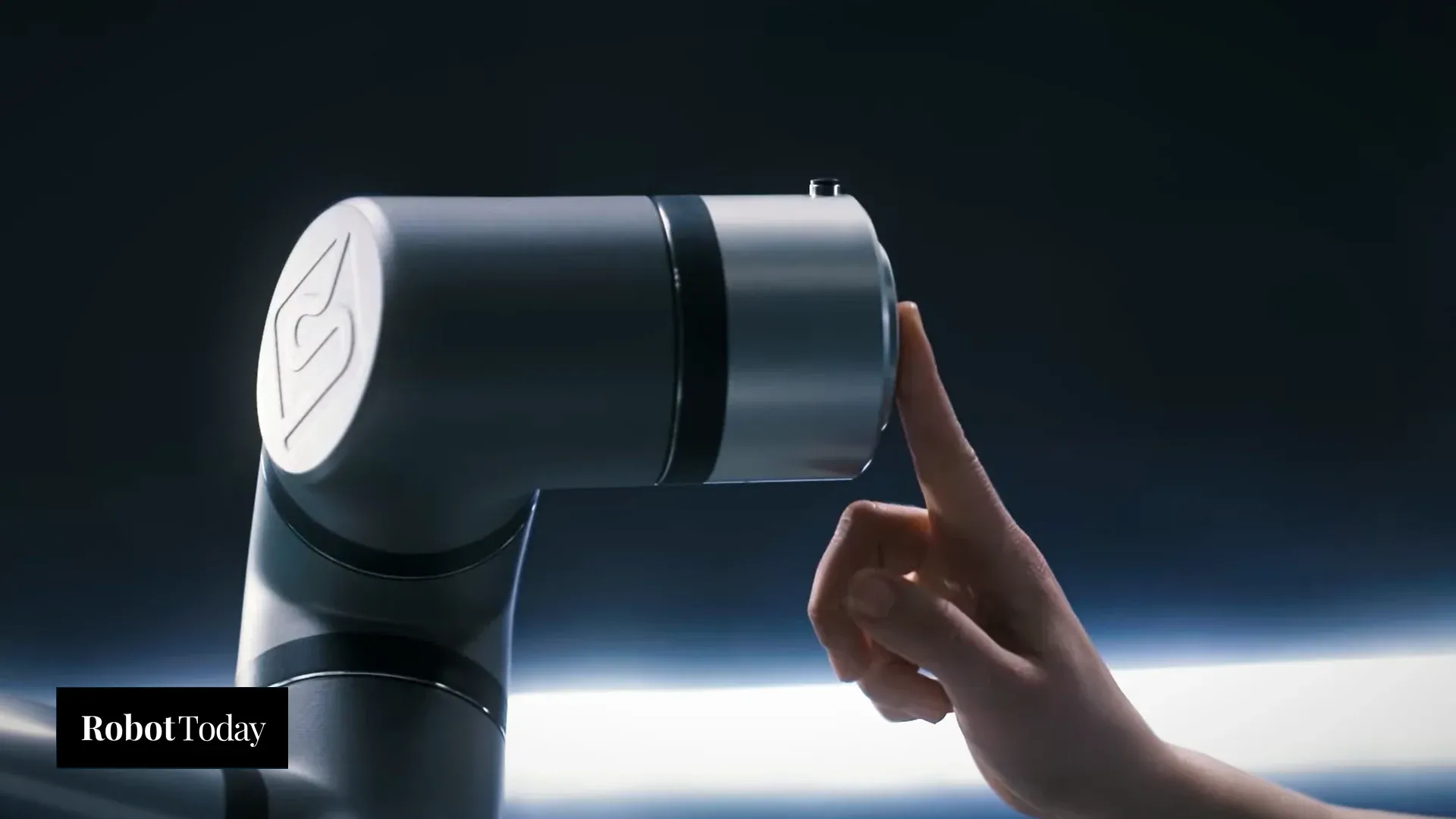
A recent study led by Seung Chan Hong at the University of Melbourne explores the emotional capabilities of collaborative robots as they increasingly work alongside humans. Published on May 18 in IEEE Robotics and Automation Letters, the research investigates how robots can better understand human emotions through contextual cues, beyond just facial expressions. Involving 40 volunteers, the study trained a vision language model (VLM) to interpret emotions based on video interactions where robots handed objects to humans. The VLM outperformed traditional AI systems, scoring 0.86 in emotional accuracy compared to 0.77 for conventional methods. This improvement is attributed to the VLM's ability to consider the entire context of interactions rather than isolated facial expressions. In a follow-up experiment, participants interacted with a robot that was programmed to make an error, receiving either an emotionally adaptive apology or a standard one. The majority preferred the adaptive response, but trust in the robot diminished after it failed to complete its task, highlighting that emotional responses cannot compensate for a lack of functionality. While the VLM effectively recognized emotions from a third-party perspective, its accuracy dropped when compared to participants' self-reported feelings, indicating that robots still struggle to fully understand human emotions. The findings suggest that while emotional adaptivity is valuable, the primary concern for users remains the robot's competence in performing tasks.

Company Profile
Joint University of Pittsburgh and US Department of Veterans Affairs laboratory conducting rehabilitation engineering research. Develops mobility devices, assistive technologies, and medical-grade products for people with disabilities.
Company Profile
Joanneum Research Institute for Robotics and Flexible Production conducts applied R&D in industrial robot systems, production automation and robot safety, offering feasibility analysis, consulting and testing in a robotics solution centre.
Russian leading research university (ITMO University) specializing in information technology, optical engineering, and photonics. Active research programs in AI, robotics, computer vision, and cyber-physical systems.
Technology Collaborative is a US nonprofit organization focused on technology education and workforce development. Connects businesses, educators, and government to advance applied technology skills including automation and robotics training.
Company Profile
AUBO is a Chinese national high-tech enterprise specializing in the R&D, production, and sale of collaborative robots (cobots) with full independent intellectual property rights. They offer various models (3-16KG payload, i/C/iV/iF series) for applications in 3C, automotive, healthcare, and logistics, aiming to increase efficiency and achieve low-cost operations globally.
Company Profile
Chang Robotics is an engineering firm specializing in collaborative robotics and automation integration. It provides customized cutting-edge robotic solutions tailored to workforce needs, serving manufacturing, healthcare, government, food & beverage, and other sectors with engineering, deployment, and advanced automation systems.
Company Profile
Patten Studio is an interactive design studio based at MIT Media Lab roots, creating technology-driven art installations and experiential environments for brands and public spaces. Work involves sensing, embedded computing, and responsive physical interfaces, with peripheral relevance to human-machine interaction.
Macrotellect develops BrainLink EEG headsets and brainwave sensing devices for consumer and research applications. The company focuses on brain-computer interface technology enabling non-invasive neural signal acquisition and human-machine interaction.
New Zealand AI company (now in receivership as of February 2026) that developed lifelike digital human avatars powered by large language models for customer service and enterprise deployment. Created Digital Workers and Workforce Connect platforms.
Company Profile
Australian research centre focused on robotic vision systems, operating under university auspices. Conducts research in computer vision and perception for autonomous robots. Website was inaccessible at time of scrape; inferred from name and known public profile as a vision-focused robotics institute.
Norwegian-based 2D and 3D industrial machine vision software platform (marketed under Tordivel AS). Offers sub-pixel and micron-level non-contact measurement, configurable inspection tools, and advanced calibration capabilities without programming.
US developer of Vision Factory, a 3D machine vision platform enabling industrial robots to locate parts in six degrees of freedom from a single camera image. Targets automated manufacturing lines requiring high-speed, accurate part location without structured environments.
Excepteur sint occaecat cupidatat non proident
Leave a comment