


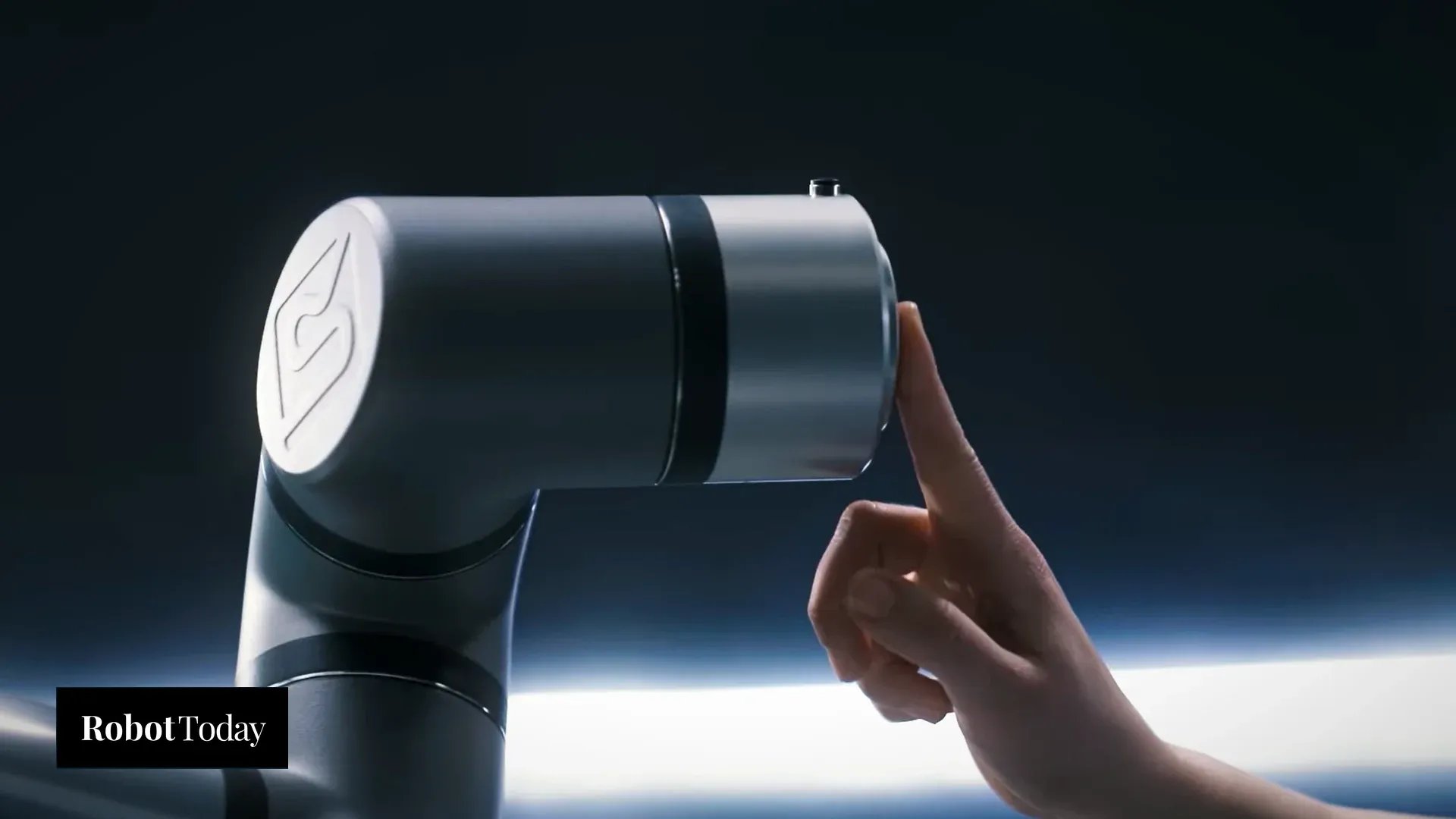
In the space of six months, Teradyne Robotics — parent of Universal Robots — has brought two intellectual property actions in Europe against Chinese collaborative robot makers. One defendant is now publicly pushing back. Neither case has been decided, but together they mark a shift: cobot competition is moving from products and pricing to patents, copyright, and the rules of market access.
1. Summary
Two new cases, two different legal instruments. In February 2026 Teradyne sued the German subsidiary of Elite Robots on software copyright grounds in Germany. On August 27 it filed a patent action against JAKA’s German subsidiary at the Unified Patent Court (UPC) Local Division in Copenhagen.
One preliminary injunction granted, one public dispute underway. The Regional Court of Hamburg issued a preliminary injunction against Elite Robots Deutschland on April 21 (not a final ruling). JAKA publicly denied infringement and, on September 3, said it had begun proceedings of its own.
This is a change of posture, not a one-off. Historically, Teradyne and Universal Robots have also been involved in litigation as defendants. Two plaintiff-side actions within six months are a visible shift in enforcement posture.
The backdrop is a changing market. Universal Robots revenue fell roughly 28% from its 2022 peak and the group cut staff twice before returning to growth in 2026 — while Chinese cobot vendors moved into the top ranks of global shipment tables and accelerated their push into Europe.
Important caveat: as of publication neither case has reached a final judgment. A preliminary injunction is not a finding of infringement, and a public statement is not a finding of fact. This briefing sets out verifiable procedural facts and each side’s stated position.
2. Timeline: Teradyne / Universal Robots IP matters
Placed on a longer timeline, the 2026 filings show a company moving from the defendant’s chair to the plaintiff’s.
Date | Counterparty | Teradyne/UR role | Claim and forum | Public status |
|---|---|---|---|---|
Filed 2020 Ruled Jan 2025 | Astronics Test Systems | Plaintiff | Software copyright C.D. Cal. → Ninth Circuit | Ninth Circuit affirmed a fair use finding on Jan 30, 2025; outcome did not favor Teradyne |
Filed Feb 2021 Closed Oct 2024 | Northwestern University | Defendant | Cobot-related patents D. Del. | Sept 2024 jury awarded roughly $6.6M; the parties settled in Oct 2024 and the case was dismissed with prejudice |
Jan 2026 | Sensor360 LLC | Defendant | Sensor patent E.D. Tex. | Dismissed with prejudice shortly after filing. Sensor360 is a patent assertion entity, not a robotics competitor |
Filed Feb 2026 Injunction Apr 21 | Elite Robots (German subsidiary) | Plaintiff | Software copyright Regional Court of Hamburg | Preliminary injunction barring the software and products containing it in Germany, plus disclosure of supplied customers. Main proceedings continue |
Announced Aug 27, 2026 | JAKA (German subsidiary) | Plaintiff | Patent infringement (hardware and software) UPC Local Division, Copenhagen | Pending. JAKA publicly denies infringement and has responded (see section 4) |
“Role” denotes procedural position only and implies no judgment on the merits.
3. What separates the two 2026 cases
The Elite and JAKA matters are often discussed as one story. They differ substantially in legal instrument, geographic leverage, and intensity — and those differences are informative.
Dimension | Elite Robots (Feb 2026) | JAKA (Aug 2026) |
|---|---|---|
Legal basis | Copyright — alleged copying of software code | Patents — multiple hardware and software patents |
Forum | Regional Court of Hamburg (single country) | Unified Patent Court, Copenhagen Local Division |
Geographic reach | Germany | The UPC covers 18 participating EU member states. Depending on jurisdictional circumstances, a UPC action may also have implications for European patents in non-participating jurisdictions such as Spain and the UK |
Preliminary injunction | Sought and granted (April 21, 2026) | No publicly reported request for interim relief |
Typical proof structure | Software similarity can often be demonstrated directly through code comparison | Requires mapping the accused product to the asserted claims |
Defensive options | Independent development; dispute substantial similarity | Seek revocation of the asserted patents |
Disclosure | Claim and injunction scope made public | Specific patent numbers not disclosed |
Pace | Interim relief in roughly two months | Main proceedings, likely measured in years |
One reading, offered as observation: the copyright route is fast, cheap, and highly visible but narrow in scope; the patent route is slow, costly, and carries a more complex proof structure but, if successful, reaches across the unitary European system. The first looks like deterrence; the second looks like boundary-setting. Teradyne has not publicly described its sequencing this way.
4. Positions on the record (presented side by side)
Teradyne Robotics
Group President Jean-Pierre Hathout said the case “demonstrates that Teradyne Robotics will enforce its patents and IP rights against what we consider to be illegal and unfair copying and infringement,” and described the company as resolute in safeguarding its IP.
David Brandt, VP of R&D and CTO at Universal Robots, said the objective is to stop the conduct rather than to collect damages: “we would like them to stop copying and infringing our IP.” He said the company purchased a competing unit for technical analysis and that the robots “look quite alike.”
Brandt also said the matter is “not about China” but about protecting the company’s innovations, and noted that JAKA “is not the only robot out there that looks suspiciously like ours.”
JAKA
On September 2 the company said it had not yet received formal legal documents, and that its advisers had found no filed or opened patent infringement proceedings against it as of that date.
On September 3 JAKA said it had initiated proceedings seeking to stop what it characterized as “false, misleading and damaging” public statements, adding that it had received no communication from Teradyne or its legal representatives before the announcement.
JAKA said it commissioned two independent freedom-to-operate analyses before entering the European market, neither of which identified potential infringement, and that it holds more than 300 granted patents worldwide.
The company rejected suggestions that its products are of lower quality or less safe, characterizing such framing as rooted in its Chinese origin, and said the effect of the announcement is market uncertainty.
Elite Robots
The company has not publicly responded to press inquiries about the case. It was reported to have covered its cobot display at Hannover Messe following the ruling.
Editorial note: the above are public statements and reported conduct, not judicial findings. A preliminary injunction is an interim, reversible measure. In cross-border litigation, one party’s “documents not yet received” and another’s “case filed” can both be accurate at the same time, because service of process takes time.
5. The competitive read: four structural shifts
5.1 Competition has moved up from the product layer to the rules layer
For a decade, cobot competition ran on performance, price, and ecosystem — UR+ being the clearest example. As performance gaps narrow and price gaps widen, the incumbent’s moat shifts from “we build it better” to “others may not build it this way.” Intellectual property stops being a defensive asset and becomes an active market instrument. Semiconductors, telecoms, and medical devices all passed through this phase, typically once technology matured and easy growth thinned out.
5.2 Europe is the new arena, and the UPC changed the leverage
The Unified Patent Court, operational since 2023, covers 18 participating EU member states and lets a rights holder pursue one action with effect across all of them. For exporters this means European legal exposure is no longer additive country by country but concentrated in a single proceeding. The JAKA case is among the earlier cobot matters to reach the UPC, and its procedural path will be instructive for the whole sector regardless of which way it goes.
5.3 Growth returned, but the share contest got harder
Teradyne’s own robotics curve tells the story. Universal Robots revenue peaked near $326M in 2022 and fell to roughly $232M in 2025, with workforce reductions of about 10% in January 2025 and about 14% in November 2025. Growth resumed in 2026: approximately $91M in Q1 and $100M in Q2, up 33% year over year — a fifth consecutive quarter of growth.
A recovering market has not eased competitive pressure. Over the same period Chinese cobot vendors moved into the leading positions of several third-party global shipment rankings, competing primarily on cost and payload breadth, while Western vendors emphasize ecosystem and integration support. Third-party forecasts put the global cobot market at roughly $1.4B in 2025 rising to about $3.38B by 2030, near 19% CAGR. The pie is growing — so is the number of hands on it.
5.4 Compliance is becoming a real line item for exporters
For Chinese robotics firms, the lesson of these cases is independent of their outcome. Freedom-to-operate analysis, patent portfolios, traceable software provenance, and code compliance auditing are moving from optional risk-management practices toward core elements of European market-entry risk management. That JAKA emphasizes two independent FTO analyses and 300-plus granted patents shows the leading firms have already internalized this cost. For smaller vendors without equivalent capability, it is a new barrier to entry.
6. Who is affected, and how
Stakeholder | Near term | Medium to long term |
|---|---|---|
Teradyne / Universal Robots | Narrative and negotiating leverage in Europe; rising litigation cost and management attention | A win establishes enforceable technical boundaries; a loss or revocation could weaken the asserted rights |
Named Chinese vendors | Uncertainty around European sales and trade show presence; new questions in customer and investor diligence | Successful defense or revocation buys clearer market access; an adverse outcome slows European expansion |
Other Chinese exporters | A wait-and-see posture; intensified FTO and patent self-audits | Compliance cost internalized; sector-wide IP maturity rises by necessity |
European end users and integrators | Procurement decisions add supply chain and legal risk assessment for affected brands | Shifts in bargaining structure; more demand for IP indemnity clauses from suppliers |
The sector overall | High attention, high noise | If precedent forms, it will define what may be referenced and what may not be replicated in cobot design and software |
7. What to watch
Service and docket confirmation. Whether JAKA formally receives UPC documents, and whether the case number and asserted patents become public, is the first real test of progress.
Revocation proceedings. Whether the defense files for revocation at the UPC or the EPO, and how the asserted patents hold up, often determines the outcome.
The Elite main proceedings. Whether the preliminary injunction is upheld, lifted, or modified will show how much the copyright route actually delivers.
Parallel actions elsewhere. Assertions of family patents in the US (including an ITC Section 337 investigation), Japan, or other markets would turn a European dispute into a global one.
Whether more companies are named. Teradyne has said publicly that more than one competitor resembles its products. A third or fourth case would indicate systematic strategy rather than isolated action.
Trade show and association responses. How Hannover Messe, automatica, and similar events handle disputed products materially affects the practical force of any injunction.
Editor’s Note
The cobot industry has moved past the question of who can build a robot cheaply and into the question of who is entitled to build it that way. Two filings in six months is what an incumbent does when share pressure meets a mature technology; the vigor of the response shows Chinese vendors no longer read a European lawsuit as a signal to withdraw. Neither case has been decided, and it is far too early for either side to claim a result. RobotToday’s view: the watershed will not be any single injunction, but whether this cluster of cases produces the first citable line, in this industry, between what may be referenced and what may not be copied.
Disclaimer: None of the cases described has reached a final judgment. Statements attributed to the parties are drawn from public reporting and official announcements. Nothing here constitutes a finding of infringement or legal advice.






Leave a comment