

Study Reveals How Expressiveness Affects Trust in Humanoid Robots
- Published
- Source
- leaderobot.com
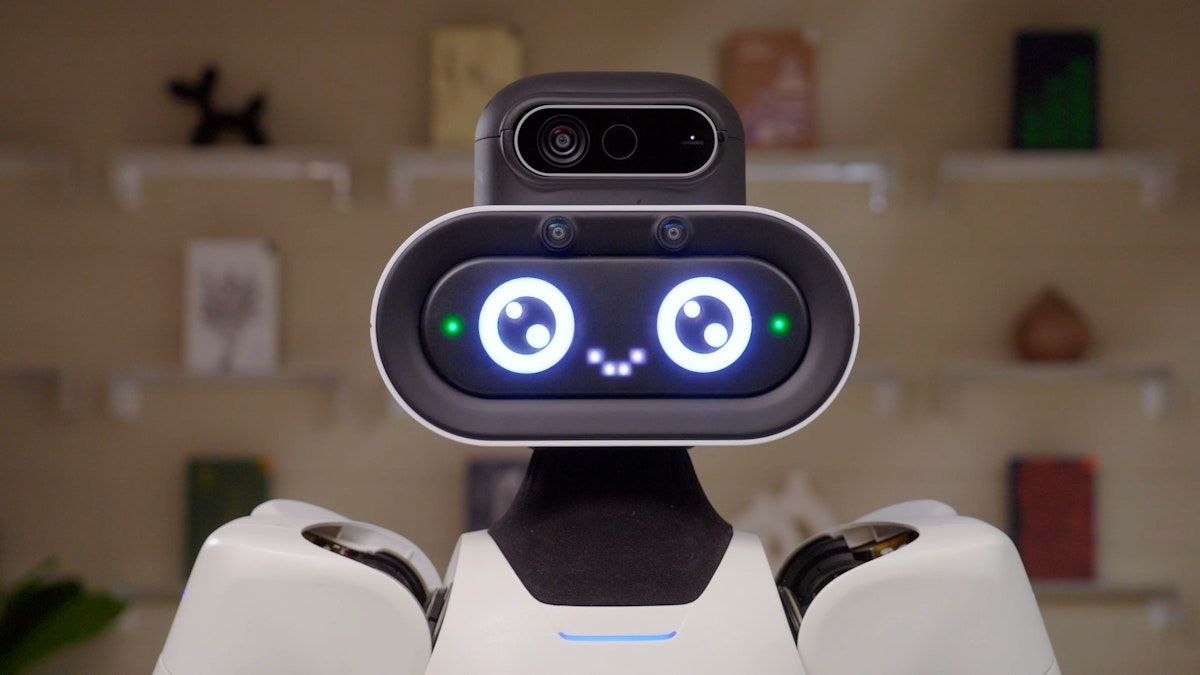
A research team from Drexel University published findings in 'Science Robotics' that simultaneously measured brain activity, hormones, self-reported attitudes, and behaviors, revealing the complete chain of trust formation and breakdown between humans and robots. The study found that 50 participants paid more attention to the expressive Pepper robot, which engaged in eye contact, gestures, and nodding. However, when the robot made mistakes—such as irrelevant comments or illogical justifications—participants' brain responses indicated a violation of social norms rather than a machine malfunction.
This distinction is crucial as it highlights that trust loss is quantifiable. The calculations showed that once the robot began to err, its influence on human decision-making was halved, indicating a significant drop in trust. Surprisingly, the hormone oxytocin increased when the robot made mistakes, suggesting that in human-robot interactions, oxytocin acts more as a 'warning signal' than a 'bonding signal.'
The researchers emphasized that expressiveness comes with risks. Frank Krueger, one of the authors, stated that high expressiveness raises the stakes; once a robot fails, it can lead to greater disappointment than a less expressive counterpart. The study serves as a clear warning for industries investing in social, anthropomorphic robots—such as healthcare, education, and customer service—to prioritize reliability before charm.
Original report
Trust in Humanoid Robots: The Impact of Expressiveness on Reliability
leaderobot.com · LeaderobotThis briefing is an independently written summary based on publicly available reporting and is provided for industry information and news discovery. The original report and source publication are credited and linked where applicable. RobotToday does not claim ownership of third-party source material.
Rights concerns? Contact [email protected] with the relevant URL and details. We will review the matter and take appropriate action where warranted.
More related news
- 1
- 2
- 3
- 4
- 5
- 6
-
7
RobotToday Weekly November 2 – 6, 2026 RobotToday · 1 day ago
- 8
- 9
- 10
- 11
- 12
Related Suppliers

Drexel University
United States
Philadelphia research university with interdisciplinary robotics and autonomy programs across engineering and computing.
RobotLAB Inc.
United States
Southlake, Texas robotics dealer and integrator founded 2007, with a franchise network and 22 service-robot brands plus its own ServeSwift and RobotLAB lines.

Yoshimoto Robotics Laboratory Co., Ltd.
Japan
Japanese entertainment-robotics studio affiliated with Yoshimoto Kogyo that develops robot programs and content, notably applications for the Pepper.
Shifters
Israel
Israeli-US startup founded in 2023 building TRUST legged ground robots and RITA agentic-AI command software for ISR and hazardous missions.

University of Plymouth, Centre for Robotics and Neural Systems
United Kingdom
Plymouth, UK university research centre for cognitive and developmental robotics; uses iCub and Pepper platforms for language learning and social HRI studies.
Tangible Robots
United States
San Francisco startup building Eggie, a wheeled humanoid with humanlike hands for household dexterity tasks, backed by Blume Ventures and Micelio.
Techsoft Robots 深圳市泰科智能机器人有限公司
China
Shenzhen manufacturer of humanoid and collaborative robot joint modules, servo drives, and dual-arm cobots for OEM and end-user customers.
Kiwi Campus Inc. (Robot.com)
United States
Operator of Level 4 autonomous sidewalk delivery, logistics, advertising and humanoid robots deployed across 10 countries for Fortune 500 customers.

Robot Aviation
Norway
Norwegian UAS developer founded 2008, producing fixed-wing and VTOL SkyRobot drones for military surveillance, inspection, and disaster response missions.
Thinking Robots Inc.
United States
Developer of AI software enabling robots to be instructed in natural language without programming or prior training, with on-the-fly learning and task.

Planete Robots
France
France's only newsstand robotics and AI magazine, founded 2009; bimonthly, 14,000 copies per issue, distributed in France, Belgium, Switzerland, and Canada.

Ben-Gurion University of the Negev
Israel
Israeli research university in Beer-Sheva operating the ABC Robotics Initiative covering agricultural, biological, and cognitive robotics research.
Robotics needs a service framework.
RSF defines a common language for robot service capability, lifecycle operations, certification pathways, and service-provider networks.
Join the RobotToday community on LinkedIn
Daily robotics news, in-depth analysis, conference highlights, and discussions with professionals worldwide.