

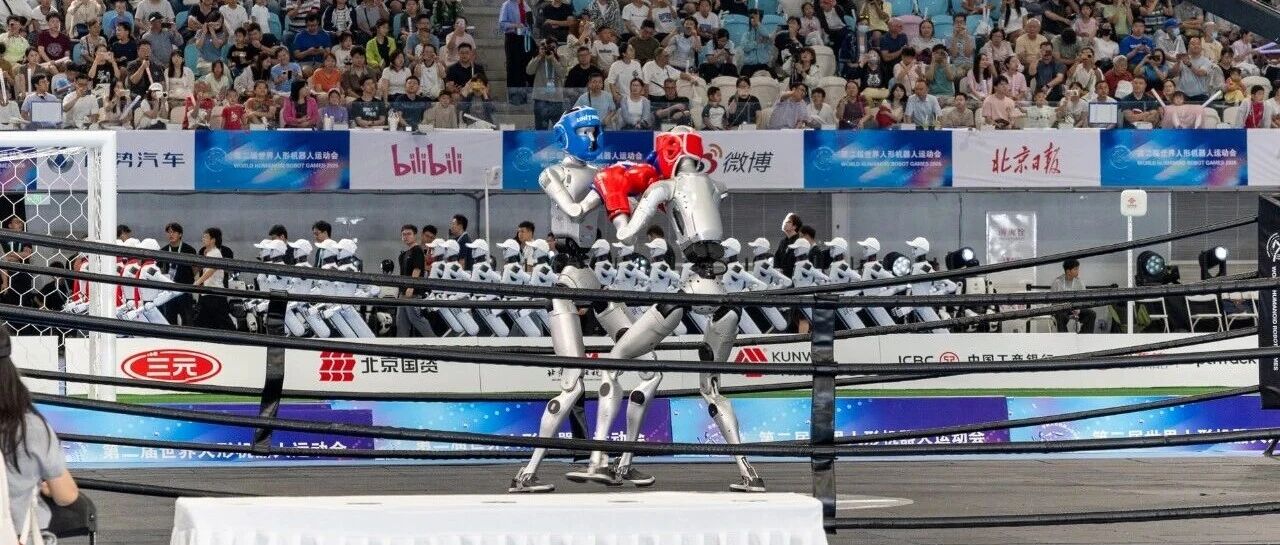
On August 22, 2026, the Second World Humanoid Robot Games officially opened at the National Speed Skating Hall in Beijing. Compared to the inaugural event, this year's competition saw significant growth in the number of participating teams and robots, expanding from 26 to 51 events. Notably, high-intensity events like long jump, weightlifting, tug-of-war, and table tennis were included, showcasing the robots' dynamic capabilities in real-world environments.
The upgrade in competitive dimensions emphasizes the need for advanced perception technologies, as robots must now demonstrate explosive power, joint torque distribution, and collision force perception. Kunwei Technology, as the official force control technology provider, showcased its six-dimensional force sensors and joint torque sensors, which support the robots' performance in various events, highlighting the critical role of force control technology in determining success on the competition field.
As the competition progresses, the focus will be on how robots adapt to dynamic interactions and complex operations, pushing the boundaries of AI capabilities. The integration of force sensing and control technologies will be crucial for robots to navigate real-world challenges, marking a significant step towards practical applications in industrial automation and service sectors.
Editor's Note
The Second World Humanoid Robot Games represents a pivotal moment in the robotics industry, showcasing advancements in force control technology that are essential for enhancing robot performance in dynamic environments. As robots transition from laboratory settings to real-world applications, the integration of sophisticated sensing and control systems will be critical for their success in various sectors, including manufacturing and service industries.























Leave a comment