Construction Humanoid Robot Manufacturer Autonomous Vehicle / UGV Special / Extreme Environments
Optimus Robots to Construct Lunar Outpost by End of 2026 Under Musk's Plan
Original from leaderobot.com: Robots to Lead Lunar Construction: Optimus to Build Human Outpost by Year-End

Optimus Robots to Construct Lunar Outpost by End of 2026 Under Musk's Plan

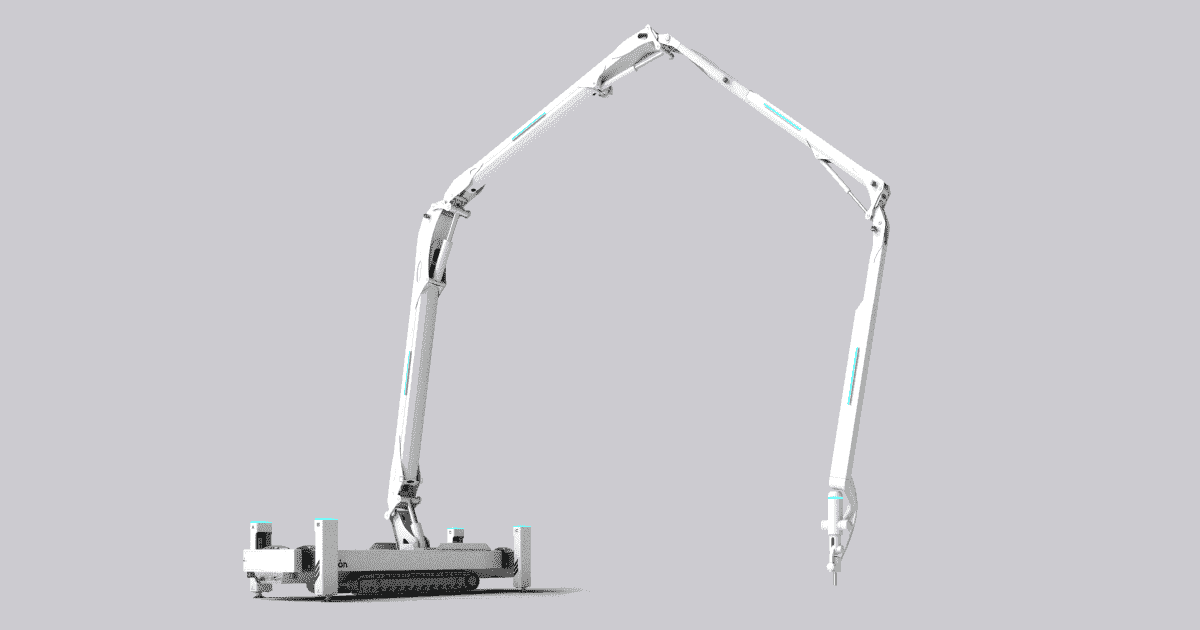
Elon Musk has announced that Tesla's Optimus humanoid robots will lead the construction of a lunar outpost by the end of 2026. SpaceX plans to launch essential construction materials, including modular living quarters and energy equipment, to the Moon using the Starship rocket. The deployment of robots aims to minimize human safety risks and efficiently handle repetitive heavy labor tasks.

The rationale behind using robots instead of humans is to reduce complexity and enhance operational efficiency. According to Jim Cantrell, a member of the SpaceX founding team, robots only require sunlight and occasional maintenance, allowing them to work continuously. Upon arrival on the Moon, the Optimus robots will autonomously unload materials, prepare the lunar surface, and assemble prefabricated habitats while also extracting water ice for life support and fuel.

Musk envisions the Moon as a testing ground for Mars colonization, with plans to send astronauts to the Moon within 2-3 years and establish a self-sustaining city by 2036. However, challenges remain, including the need for successful orbital refueling of the Starship and overcoming harsh lunar conditions. No further timeline was disclosed at the time of publication.

Editor's Note

The ambitious lunar construction plans led by SpaceX highlight a significant shift in how robotics can be utilized in extreme environments. This initiative not only emphasizes the potential of humanoid robots in construction but also raises questions about the feasibility and timeline of such projects. Industry stakeholders should monitor advancements in robotic capabilities and the challenges posed by lunar conditions as these developments unfold.

RobotToday Initiative

Robotics needs a service framework.

RSF defines a common language for robot service capability, lifecycle operations, certification pathways, and service-provider networks.

Share

Related Articles/News

Musk Foresees Optimus as Tesla's Largest Product Amidst Strong Chinese Competition

Musk Foresees Optimus as Tesla's Largest Product Amidst Strong Chinese Competition

Elon Musk predicted during Tesla's earnings call in January 2026 that Optimus will become the company's largest product, potentially ten times bigger than its next biggest offering. Tesla is transitioning its Fremont factory to focus on Optimus production, increasing the annual capacity target for the Optimus V3 line from 50,000 to approximately 70,000 un...

Humanoid Robots AI Robotics Manufacturing
Tesla Completes Dismantling of 14-Year-Old Production Line for Optimus Robots

Tesla Completes Dismantling of 14-Year-Old Production Line for Optimus Robots

Tesla has officially dismantled the production line for its Model S and Model X vehicles at its Fremont factory, marking the end of a 14-year era. The entire process took just 46 days, as captured in a video released by Tesla, which stated, 'End of an era.' These flagship models have been pivotal in establishing Tesla's reputation in the luxury electric v...

Humanoid Robots Robotics AI
Tesla, Inc. Targets 418,000 Vehicle Deliveries Amid Robotics Shift and Price Adjustments

Tesla, Inc. Targets 418,000 Vehicle Deliveries Amid Robotics Shift and Price Adjustments

Tesla, Inc. (NASDAQ:TSLA) has been highlighted as one of the top stocks to buy in 2026 by billionaire D.E. Shaw. The electric vehicle manufacturer has seen its shares increase by 37% over the past year, although they have decreased by 7.2% year-to-date. Barclays recently maintained an Equalweight rating with a price target of $360, noting that Tesla could...

ROBOTTODAY Weekly July 6 – 10, 2026

ROBOTTODAY Weekly July 6 – 10, 2026

This week in robotics: AI² Robotics raises $735M for wheeled humanoids, Unitree G1 performs first live surgery, Dexmal launches DexOS platform, Agility Robotics announces SPAC, and Ondas acquires DZYNE for $875.8M. July 6–10, 2026.

RobotToday Weekly
Subversive Capital Launches Ex-Elon ETFs Excluding Tesla and SpaceX from Major Indices

Subversive Capital Launches Ex-Elon ETFs Excluding Tesla and SpaceX from Major Indices

Subversive Capital has filed with the SEC for two new actively-managed ETFs, the Nasdaq-100 Ex-Elon Enterprises ETF (QQNE) and the S&P 500 Ex-Elon Enterprises ETF (SPNE). These funds aim to provide capital appreciation by excluding companies founded or led by Elon Musk, specifically targeting large-cap U.S. equities. The Nasdaq-100 ETF will notably exclud...

Physical AI Landscape: From Digital Intelligence to the Embodied Physical World

Physical AI Landscape: From Digital Intelligence to the Embodied Physical World

A comprehensive industry analysis of Physical AI — covering Embodied AI, Field AI, Factory AI, VLM, World Model, VLA, and the VLA vs WAM architecture debate. Includes 20+ companies, 28 references, and the RobotToday Physical AI Landscape diagram. July 2026.

Artificial Intelligence
RBC Capital Increases Tesla Price Target to $500 Amid Robotaxi Potential

RBC Capital Increases Tesla Price Target to $500 Amid Robotaxi Potential

On July 7, 2026, RBC Capital raised its price target for Tesla, Inc. (NASDAQ:TSLA) from $475 to $500, maintaining an Outperform rating. This adjustment reflects a 25% to 30% premium to current trading levels, considering a potential acquisition scenario involving SpaceX. The firm highlighted the robotaxi market as Tesla's most significant opportunity, wit...

The robotaxi law that could ban Tesla

The robotaxi law that could ban Tesla

For more than a decade, one question has loomed over the race to build autonomous vehicles: Are cameras alone enough to safely replace human drivers, or do truly driverless cars need additional, overlapping sensors like lidar and radar to navigate the world reliably? Tesla has bet billions of dollars that artificial intelligence and cameras are […]

Autonomous Cars Electric Cars Report
SpaceX's Starmind Project: Supplier Strategy and Chip Manufacturing Plans for 2026

SpaceX's Starmind Project: Supplier Strategy and Chip Manufacturing Plans for 2026

SpaceX's Starmind project, aimed at deploying up to 1 million AI satellites, was filed with the FCC on January 30, 2026. The initiative is designed to minimize reliance on external suppliers, with CEO Elon Musk stating that current chip production capabilities only meet 2% of the projected needs. The first satellite, AI1, is set for prototype launches in ...

SpaceX's $1.75 Trillion Valuation Driven by Starmind's Future Potential

SpaceX's $1.75 Trillion Valuation Driven by Starmind's Future Potential

Starmind is a pivotal element in SpaceX's estimated $1.75 trillion IPO valuation, despite currently generating no confirmed revenue. The stock price reflects optimistic projections regarding AI infrastructure growth, which Starmind has yet to substantiate. As of early July 2026, SpaceX's stock has decreased from its 52-week high of $225.64 to around $150,...

SpaceX Launches Starmind Project for 1 Million AI Satellites by 2028

SpaceX Launches Starmind Project for 1 Million AI Satellites by 2028

SpaceX has officially named its orbital AI infrastructure project 'Starmind,' which aims to deploy a constellation of up to 1 million satellites. This initiative, confirmed by Elon Musk on June 22, 2026, will enable AI inference directly in space, utilizing solar energy rather than terrestrial power sources. The first satellite, designated AI1, was unveil...

SpaceX's Starmind Plans 1 Million AI Satellites Amid Collision Risks

SpaceX's Starmind Plans 1 Million AI Satellites Amid Collision Risks

SpaceX has announced its ambitious Starmind project, which aims to deploy 1 million AI satellites in orbits between 500 and 2,000 km. This initiative, confirmed by Elon Musk on June 23, 2026, follows a merger with xAI, valuing the combined entity at $1.25 trillion. The satellites will function as orbital data centers, processing AI workloads powered by so...

Related Suppliers

Airobotics

OptimusIron provides autonomous drone solutions for urban infrastructure and defense applications. The system integrates a network of UAVs with a centralized control center, enabling real-time data collection and aerial surveillance. Key features include automated flight operations, data analytics, and compliance with regulatory standards. The platform supports public safety, law enforcement, and commercial services through advanced aerial capabilities and mission planning.

Space Machines Company

Builds Optimus series orbital servicing vehicles (e.g., Optimus Viper: >500 W power, 600 m/s Δv, LEO-GEO operations, high-thrust rapid response); proximity ops/intelligence (1 cm resolution multi-band imaging); SolsticeOS AI command/control for distributed assets; supports in-orbit assembly, logistics, threat mitigation.

Starship Technologies

Starship's autonomous delivery robots utilize Level 4 autonomy, integrating advanced sensor fusion, including radar, cameras, and machine learning algorithms. These robots navigate complex environments, achieving 99% autonomy. With over 9 million deliveries completed, they operate in diverse settings like university campuses and industrial sites, optimizing last-mile logistics through real-time data processing and adaptive learning capabilities.

GITAI

The company specializes in the development of standard spacecraft platforms and satellite components, including robotic systems such as the Inchworm Robot and Lunar Rover. Services encompass on-orbit operations and lunar infrastructure construction. The focus is on enhancing space labor efficiency through innovative robotics and modular spacecraft design, addressing the growing demands of extraterrestrial exploration and habitation.

Lunar Outpost

The product focuses on lunar exploration, specifically the development of a robotic infrastructure to support sustainable human presence on the Moon. Key technologies include payload capacity optimization, autonomous navigation systems, and habitat construction methodologies. The technical profile emphasizes integration with existing aerospace frameworks and compliance with international space regulations, ensuring operational efficiency and safety in extraterrestrial environments.

LT Automation (DK)

Danish automation company designing robotic laboratory systems for pharmaceutical and hospital applications. Specializes in blood sample handling automation, cobot-based dispensing, and lab entry robot cells.

Industrial Manufacturing Healthcare & Senior Care Robot Manufacturer

Jet Propulsion Laboratory (JPL)

Develops robotic planetary exploration systems: rovers (Perseverance, Curiosity), orbiters (Mars Reconnaissance Orbiter), landers; instruments for remote sensing, sample analysis; autonomy software for hazard avoidance/navigation; Deep Space Network for S/X/Ka-band telemetry/command/tracking (70m/34m antennas, G/T >60 dB/K); electric propulsion testing; deep space mission design/operations.

Robot Manufacturer Research Institute Education & Research

Turtle Rover of Kell ideas ltd.

Turtle Rover is the World's first remote robot designed to work in harsh environment and yet available for everyday user. The rover allows for special equipment mounting, such as cameras, sensors, as well as own electronics modules. The robot architecture provides great mounting surface (also inside watertight casing) and open connection to internal electronics and software. Turtle will be available on Kickstarter in August 2017.

Innate (YC F24)

Mars is a programmable robot utilizing an agentic operating system (OS) designed for real-time adaptability. It features onboard computing and supports modular hardware integration for enhanced functionality. The BASIC framework allows users to create, test, and share behaviors, enabling a wide range of applications from gaming to security. The platform is open for customization and skill enhancement.

Generation Robots (HumaRobotics) (FR)

Generation Robots (NGX Robotics Group) distributes and develops mobile robots, humanoid robots, and robotic arms for R&D, education, and industry. Engineering team builds autonomous outdoor security robots and custom software for SLAM navigation and sensor fusion.

Mobile Robot (AGV/AMR) Mobile Manipulator Collaborative

Rotaku (humanoid robotics; limited public info)

The humanoid robots developed feature a height of 1.7m, a weight of 45kg, and 22 degrees of freedom, enabling complex manipulation tasks. The system utilizes a robust SDK for high- and low-level control, alongside a data analytics stack for telemetry management. Advanced simulation environments support reinforcement learning for policy optimization, ensuring effective deployment in real-world scenarios.

U of Hawaii Autonomous Systems Lab

The Autonomous Systems Lab at the University of Hawaii researches unmanned ground and aerial vehicles for remote sensing and field robotics. Projects include autonomous navigation in unstructured terrain and multi-vehicle coordination for ocean and land environments.

Education & Research Robot Manufacturer Industrial