

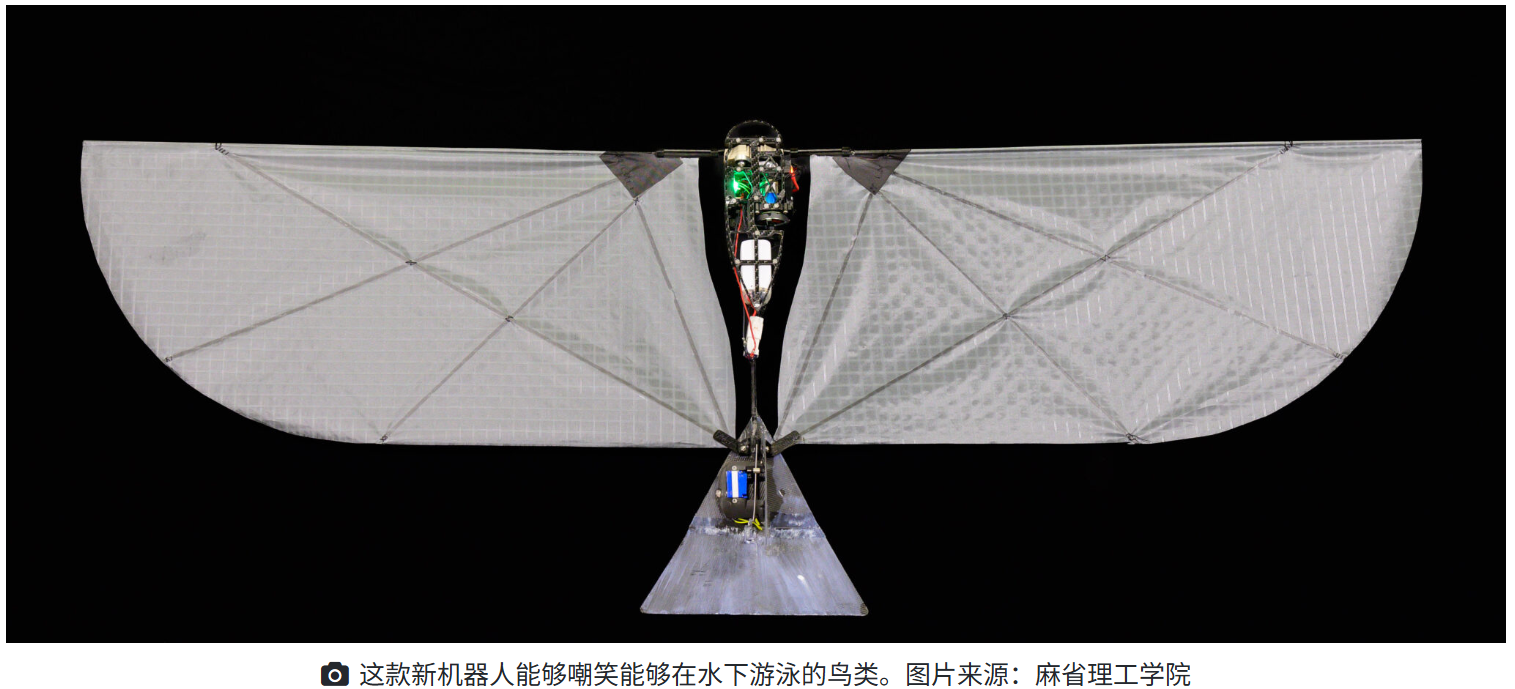
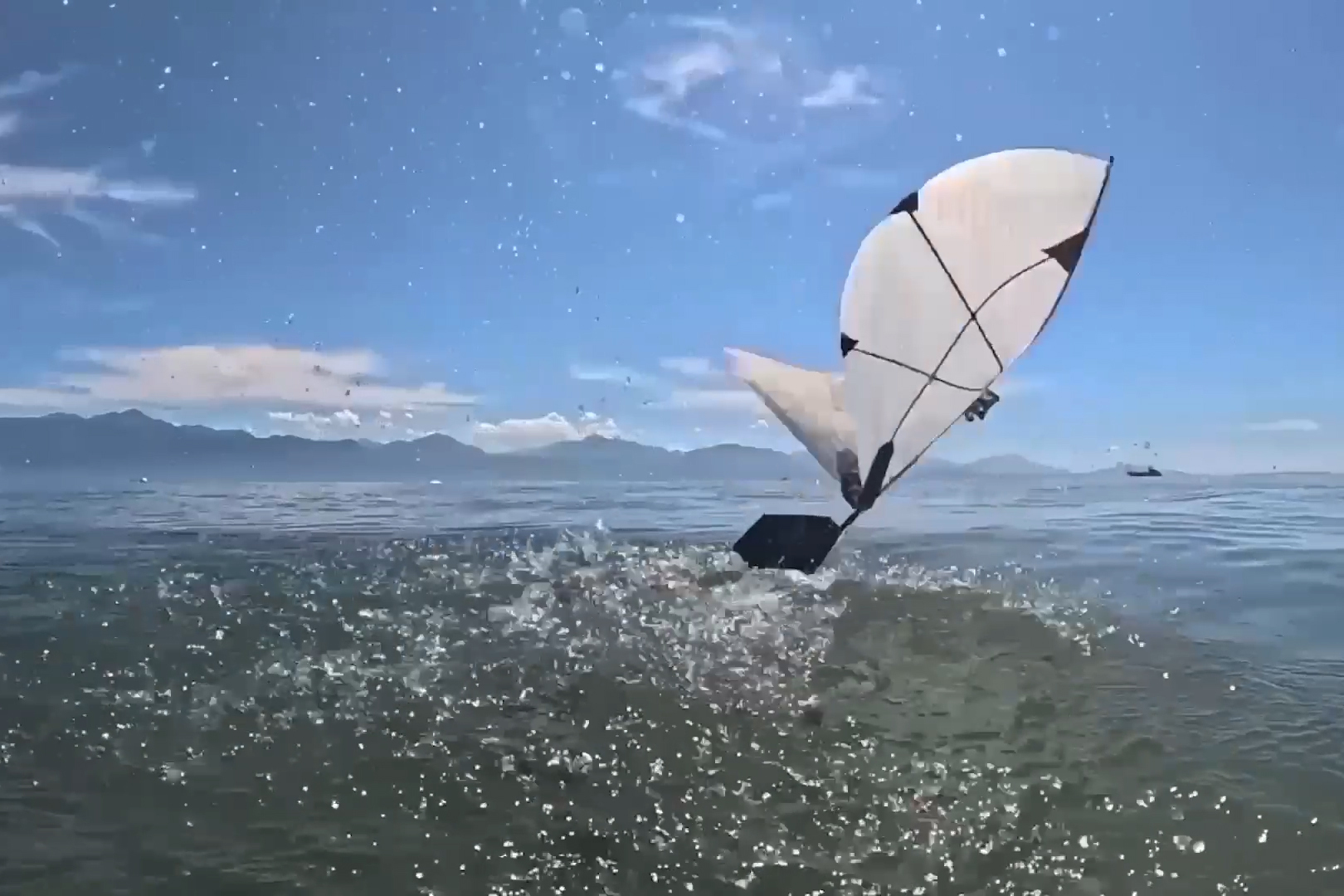
MIT and EPFL have developed the Flapping-wing Aerial-Aquatic Vehicle (FAAV), weighing just 250 grams. This innovative robot can navigate both air and water, achieving a cruising speed of 6.3 meters per second in the air and 1 meter per second underwater. Remarkably, it can take off from water using only its wings, without any additional propulsion systems.
The significance of the FAAV lies in its ability to overcome the challenges of transitioning between air and water, which have historically hindered the development of amphibious robots. The wings of the FAAV passively deform underwater, allowing for efficient movement and reduced motor load. This design enables the robot to exploit the surface tension of water for takeoff, a feat that has been difficult for previous models reliant on complex propulsion mechanisms.
Looking ahead, the research team aims to complete the full flight-dive-flight cycle, which is yet to be validated. The FAAV has already demonstrated its capability to breach the water's surface, marking a significant milestone in the evolution of cross-medium robotic systems. No further timeline was disclosed at the time of publication.
Editor's Note
The development of the FAAV highlights a growing trend in robotics towards creating versatile systems capable of operating in multiple environments, which could enhance data collection in marine research.




























Leave a comment