

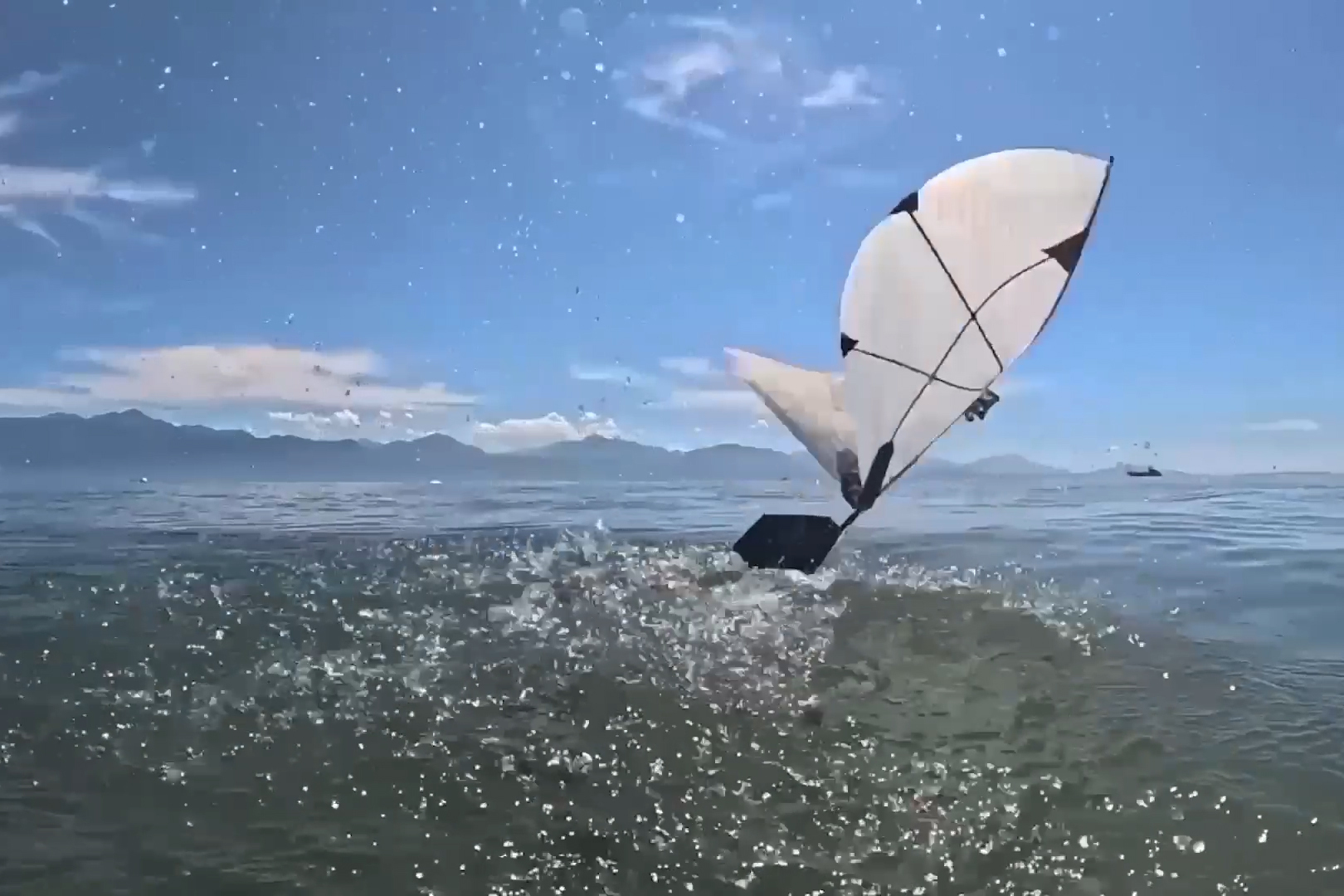
Engineers from MIT and EPFL have created a flapping-wing aerial-aquatic vehicle (FAAV) that weighs under 300 grams. This robot can swim underwater and transition to flight, mimicking the behavior of diving birds. The research, published in Science, showcases the robot's ability to adapt its mechanics for both mediums, which differ significantly in density and resistance.
The significance of this development lies in its potential applications in oceanography and environmental monitoring. The FAAV can access areas that are typically hazardous for traditional vessels, allowing scientists to collect data from locations such as icebergs or marine habitats. This innovation could reduce operational costs and enhance data collection efficiency in marine research.
Looking ahead, the research team aims to refine the FAAV's design and functionality. Future experiments will likely focus on optimizing the robot's performance in various aquatic environments. No further timeline was disclosed at the time of publication.
Editor's Note
The development of aerial-aquatic vehicles signals a shift in how marine research may be conducted, potentially reducing costs and increasing safety in data collection efforts.

























Leave a comment