

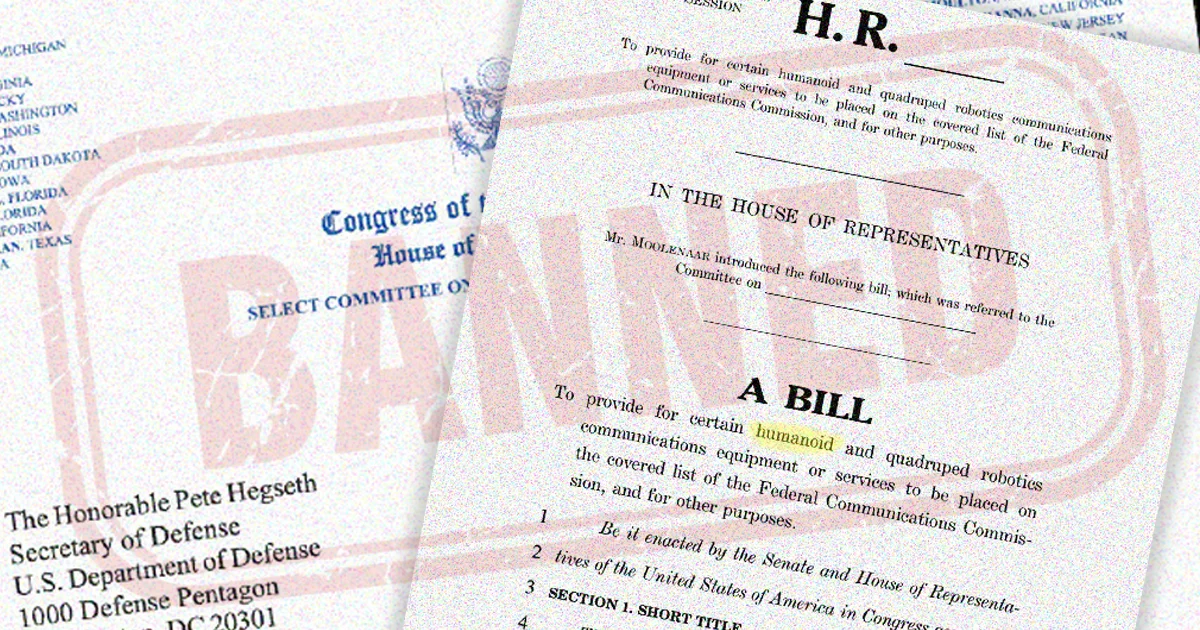
On June 3, 2026, U.S. lawmakers introduced the Guarding the U.S. Against Adversarial Robotics Dominance (GUARD) Act, a bipartisan initiative aimed at banning the importation of Chinese-made humanoid and quadruped robots. Spearheaded by Chairman John Moolenaar and other representatives, the bill seeks to leverage the FCC’s Covered List to block high-risk machines from entering the U.S. market.
The GUARD Act represents a significant escalation in U.S. legislative efforts to address national security concerns related to foreign robotics. Lawmakers have cited severe data security vulnerabilities associated with Chinese robotics, including potential espionage risks. The legislation mandates a one-year review period for national security agencies to assess foreign robotic platforms, with any deemed a risk being added to the FCC's ban list.
As the GUARD Act could disrupt the supply of critical robotics hardware to American research labs, it poses a challenge for institutions relying on Chinese manufacturers like Unitree Robotics. The timing of the bill coincides with NVIDIA's introduction of its NVIDIA Isaac GR00T Reference Humanoid Robot, which utilizes Unitree's hardware, raising concerns about the future of collaborative AI research in the U.S.
Editor's Note
The introduction of the GUARD Act highlights the growing intersection of national security and technological innovation in robotics. As the U.S. seeks to protect its infrastructure from potential foreign threats, the implications for research and development could be profound. Stakeholders in the robotics and AI sectors should closely monitor the legislative landscape and its impact on supply chains and technological partnerships.
































Leave a comment