

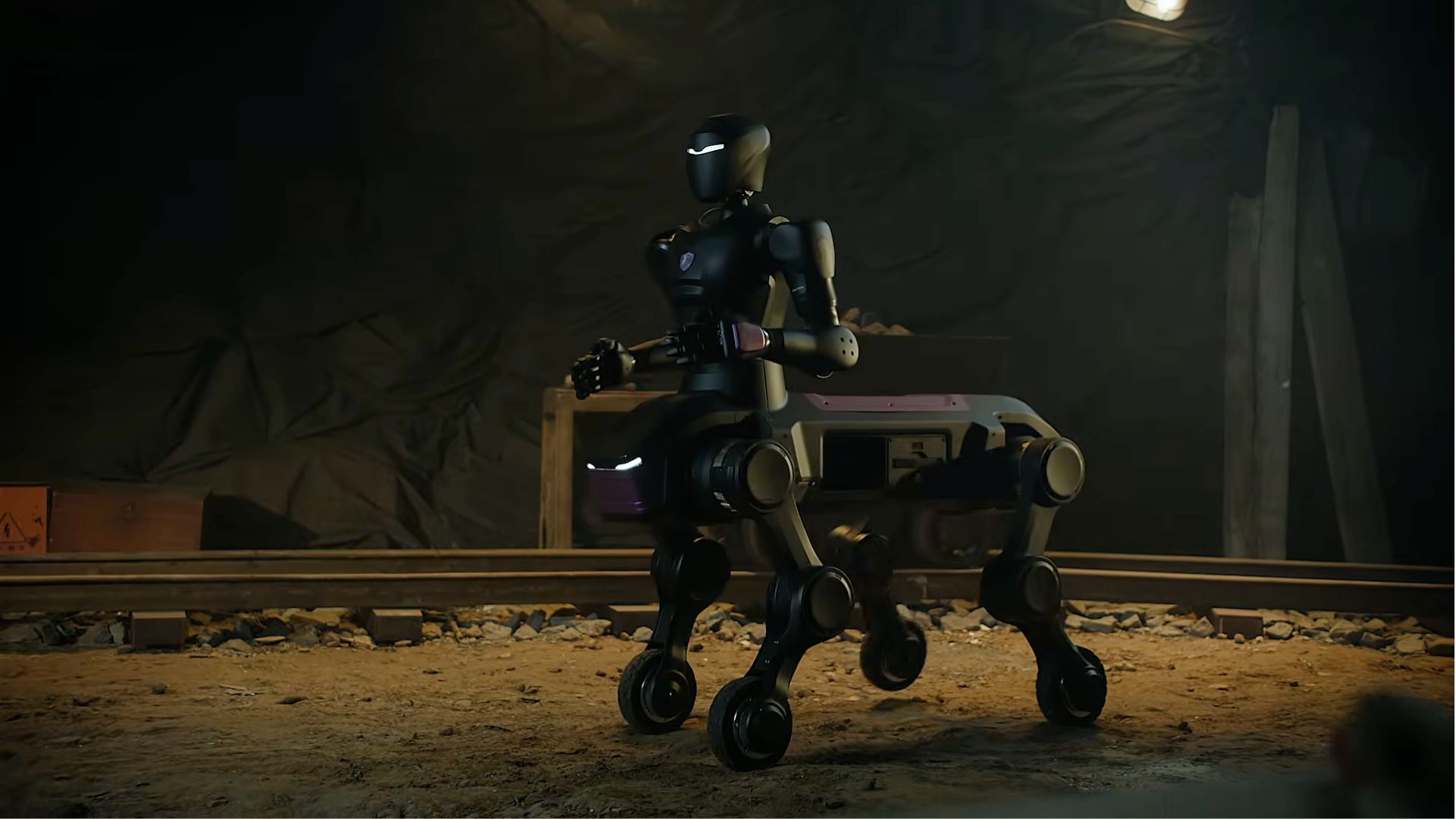
Bioinspired multimodal robots are advancing rapidly, aiming to match the versatility of animal movement by integrating flying, walking, swimming, and climbing capabilities. Researchers from Beihang University, Dalian University of Technology, and EPFL are addressing engineering challenges such as limited onboard space and the need for body transformations to facilitate seamless movement.
The significance of this research lies in its potential to enhance robot adaptability in diverse environments, allowing for applications like search-and-rescue operations and environmental monitoring. The study proposes five performance metrics to evaluate these robots, focusing on improving overall performance rather than merely adding movement options.
Looking ahead, the development of soft materials, flexible structures, and multirobot architectures may enhance future robots' capabilities. The researchers emphasize the importance of advanced algorithms for planning and control to enable effective transitions between movement modes, which is crucial for autonomous decision-making in complex scenarios. No further timeline was disclosed at the time of publication.
Editor's Note
The evolution of bioinspired multimodal robotics represents a significant shift in the capabilities of robotic systems. As these technologies advance, they promise to enhance operational efficiency across various sectors, including search and rescue, environmental monitoring, and exploration. The integration of multiple movement modes could redefine how robots interact with their environments, presenting new opportunities and challenges for engineers and decision-makers in the field.




























Leave a comment