


REVOBOTS
"Defining Task-Adaptive Robotics"
AI-driven 3D-printed task-adaptive humanoid robots for industrial workforce automation, offering TASKBOT AVA humanoid and TASKBOT SCOUT patrol platforms.
Contact REVOBOTS
WEBSITE
https://revobots.aiPHONE
+1 707-247-5777HEADQUARTERS
United States

Company Facts
Founded
2023
Primary Role
Manufacturer
Company Size
-
Primary Region
North America
Annual Sales
-
Funding Stage
-
Funding Total
-
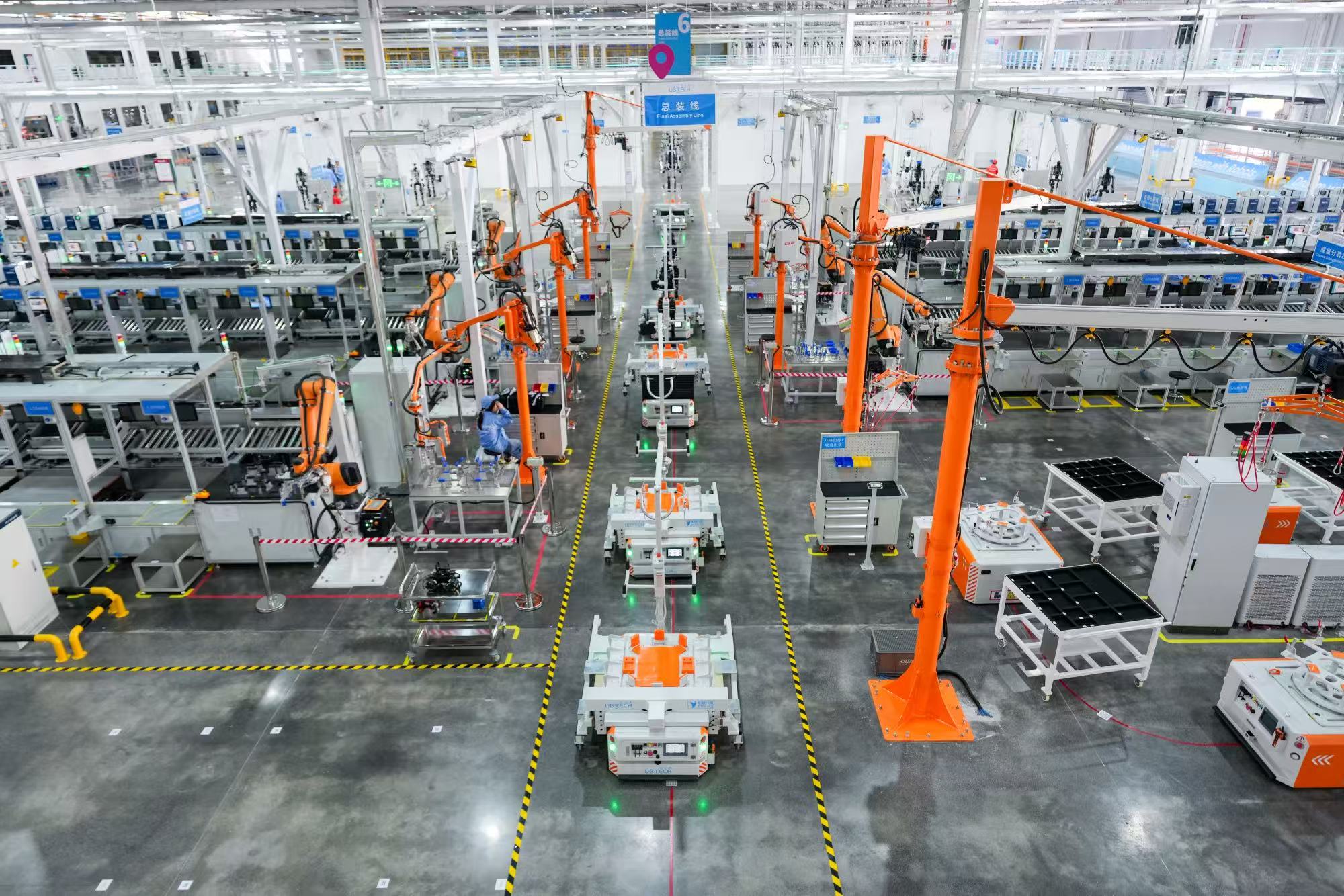
Company Producing 10,000 Humanoid Robots Annually, with Non-Human Workers Dominating Factory Operations
A newly established company has begun producing 10,000 humanoid robots each year, highlighting a significant advancement in robotics manufacturing. This development is noteworthy as it reflects the growing reliance on automation in production processes, where non-human workers are increasingly taking on roles traditionally held by humans. The implications of this trend are profound, as it raises questions about the future of labor and the potential for robots to replace human jobs. The fact that a company can produce such a high volume of humanoid robots annually indicates a shift towards more automated and efficient manufacturing practices. Looking ahead, it will be important to monitor how this company and others in the industry adapt to the challenges and opportunities presented by automation. No further timeline was disclosed at the time of publication.
Robotics Automation AI
FF Unveils Nine New Robots, Yet U.S. Market Demands More Than Variety
On September 19, FF launched nine new robot models, including humanoid, quadruped, and wheeled-arm types, along with four industry solutions targeting K12 education, research, security, and inspection. This ambitious rollout stands out in an industry where many competitors are still refining single products for mass production. The significance of this launch lies in FF's strategy to cover a wide range of scenarios, betting that this breadth will attract orders. However, the simultaneous release of nine products introduces complexities in supply chains and after-sales systems, which could be as challenging as manufacturing a vehicle. The company aims to establish a strong foothold in the U.S. robotics market with its comprehensive offerings. Looking ahead, the market will soon see the specifications and pricing for these nine robots. However, the critical factor will be which model successfully integrates into real-world applications, such as inspection routes or classrooms. The challenge remains that while having a diverse product lineup is beneficial, the true test will be in delivering proven performance in specific scenarios.
Robotics Automation Security Solutions K12 Education Manufacturing
Tianjin Robot Town Pursues Advanced Humanoid Robotics Development and Innovation
Tianjin Robot Town is taking a unique approach in the robotics industry by focusing on the establishment of a joint laboratory for intelligent robots, led by Hebei University of Technology and several key enterprises. This initiative aims to create China's first innovation service platform for intelligent robots using domestic products, with a launch expected in October. The significance of this development lies in the shift from mere assembly of robotic components to the integration of domestic chips and operating systems, which is crucial for the future of the robotics ecosystem. Tianjin's strategy emphasizes overcoming challenges related to chip and software dependencies, while also addressing the gap between laboratory results and mass production. Looking ahead, the performance of the upcoming robot, set to be unveiled in October, will serve as a critical test for Tianjin Robot Town's ambitions. The success of this initiative will depend on the speed of domestic adaptation and the depth of scenario validation, which are essential for fostering competitive robotics enterprises in the region.
Intelligent Robots Robotics Innovation Domestic Chips Research and Development Industry Collaboration
Q1 and T1 Robots from Qiyuan Robotics Set to Transform Home Interaction
Qiyuan Robotics is preparing to deliver its Q1 robot, which stands 88 cm tall and weighs 15 kg, designed for companionship and entertainment. The company, part of the Upwind New Materials group, is also launching the T1, a transformable robot. CEO Tian Hua emphasizes that personal robots should not merely replicate industrial robots but instead create a new form of human-robot interaction. The significance of these developments lies in the potential for personal robots to become a primary interface in homes, connecting AI, digital services, and everyday life. Unlike structured factory environments, homes present unpredictable challenges, which is why Qiyuan has opted for a smaller, safer design for the Q1. The T1, standing about one meter tall, can switch between wheeled and quadrupedal forms, indicating a shift in the industry towards robots that better fit human lifestyles. Looking ahead, Qiyuan Robotics faces the challenge of moving from prototypes to mass production, with plans for a production line capable of handling thousands of units. The company has secured 210 million yuan in prepayments for its consumer-grade robots and is investing significantly in R&D. Analysts remain cautious, noting that while the home market is promising, it may take longer to reach commercialization compared to industrial applications. The real test will be whether users will keep these robots in their homes after initial trials.
Personal Robots Home Automation AI Consumer Robotics
Microduck Emerges as a Contender in Consumer Robotics Amid Yush's Market Struggles
On its market debut, Yush's stock surged over sixfold, briefly surpassing a market value of 440 billion yuan, only to plummet in the following days, losing over 200 billion yuan in value. This volatility has reignited skepticism about the future of humanoid robots. Meanwhile, the Microduck, a $399 open-source robot from Hugging Face's Pollen Robotics, has gained significant attention, with over $2.6 million in orders within 24 hours of its launch. Microduck's appeal lies not only in its affordability but also in its innovative open-source reinforcement learning pipeline, allowing users to train virtual models before deploying them on the physical robot. This democratizes access to robotics, enabling developers and consumers to engage with robotics in ways previously limited to laboratories and enterprises. In just four days, Microduck received 10,500 orders, indicating a strong demand for accessible robotics solutions. As the robotics industry shifts focus towards consumer markets, the success of Microduck raises questions about the future of personal robots. Unlike traditional companionship robots, Microduck offers physical interaction capabilities, making it a more relatable robotic form. The ongoing developments in the open-source ecosystem, particularly with Hugging Face's growing community, suggest a potential shift in how consumer robotics will evolve, especially with Nvidia's recent acquisition plans for Hugging Face, which could further enhance the landscape of accessible robotics.
Consumer Robotics Open Source Robotics Affordable Robots AI Development
UBTECH Launches Liuzhou Super Smart Factory for Humanoid Robot Production
UBTECH has officially commissioned its Liuzhou plant, which spans approximately 14,000 square meters. The facility features a production takt time of around 10 minutes and includes dedicated lines for the Walker S and Cruzr humanoid robots. Additionally, the factory employs robots-building-robots logistics and a Siemens digital-twin stack, targeting an annual output of over 10,000 units. This development is significant as it marks a major step in UBTECH's efforts to enhance its production capabilities for humanoid robots. The integration of advanced technologies and efficient logistics systems is expected to streamline operations and improve overall productivity. With a focus on high-volume manufacturing, UBTECH aims to solidify its position in the competitive robotics market. Looking ahead, industry observers will be keen to see how the new factory impacts UBTECH's production efficiency and market share. The ambitious target of producing more than 10,000 units annually will be a key performance indicator for the company. No further timeline was disclosed at the time of publication.
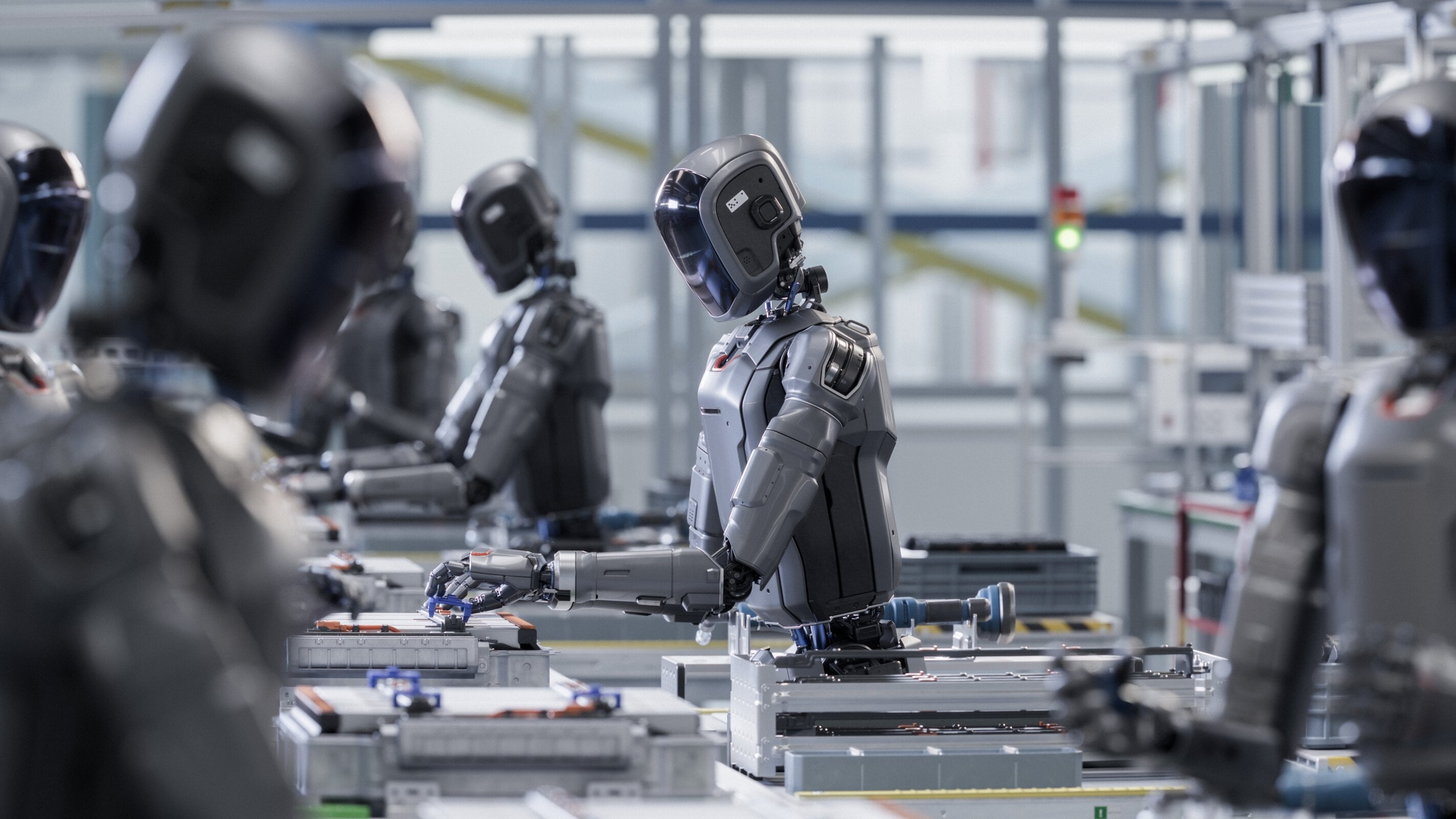
Goldman Sachs Projects 6.5 Million Humanoid Robots by 2035, Driving Market Growth
Goldman Sachs has projected that 6.5 million humanoid robots will be shipped globally by 2035, marking a significant increase from previous estimates. The firm anticipates a phased ramp-up, with 75,000 units expected in 2026 and 890,000 by 2030, representing a $138 billion market opportunity primarily in logistics, warehousing, and automotive sectors. This projection highlights the growing demand for humanoid robots and the necessary infrastructure to support their production, including dedicated production lines and factory-floor automation. The anticipated growth is also linked to a broader AI capital expenditure cycle, which is expected to influence various industries and technologies. Investors should monitor the developments in this sector, particularly the impact of potential AI regulation as flagged by leaders at Anthropic and OpenAI. No further timeline was disclosed at the time of publication.
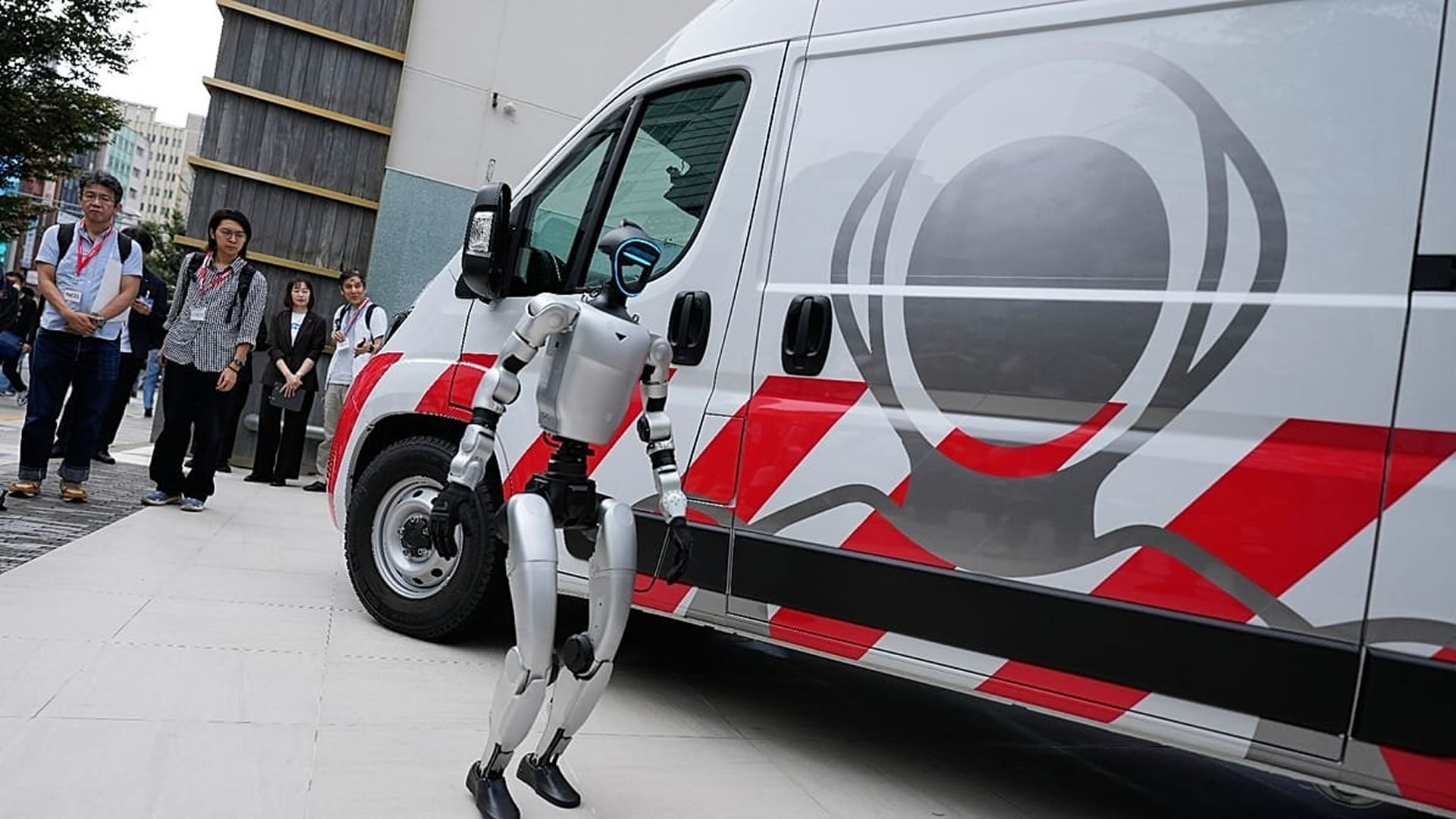
Japan Launches First Robot Ambulance for On-Site Humanoid Repairs
GMO Internet Group has introduced Japan's first 'robot ambulance' designed for humanoid robots. This vehicle will operate in Tokyo, providing on-site repairs and carrying engineers, equipment, and spare humanoids to assist in emergencies. The service aims to minimize downtime for humanoid robots used in various sectors, such as hospitality and warehousing, by allowing engineers to diagnose and repair issues on-site. If repairs cannot be completed, the ambulance will provide a replacement robot, ensuring continued service for customers. Currently, only one robot ambulance is in operation at GMO Air's Tokyo headquarters, serving as a pilot project. The company plans to expand the fleet based on customer demand, highlighting the growing need for maintenance services as humanoid robots become more prevalent in commercial applications.
Innovation Transportation
Seven Humanoid Robot Manufacturers Transforming Factory Operations Worldwide
Humanoid robots are increasingly transitioning from research labs to real-world applications in factories, warehouses, and service centers. These robots, equipped with artificial intelligence, are capable of understanding instructions, recognizing objects, and performing complex tasks. While American companies are pivotal in developing advanced AI and robotic technologies, Chinese manufacturers have gained a significant edge in production, dominating over 80% of global humanoid robot installations by 2025. California-based Figure AI is at the forefront, creating general-purpose humanoids like the Figure 03, which utilizes the Helix AI system to translate visual and language inputs into physical actions. The company has successfully showcased its technology on active production lines, including a BMW facility, where its Figure 02 robot has already loaded over 90,000 components and contributed to the assembly of more than 30,000 vehicles. This practical application highlights the potential of humanoid robots in enhancing manufacturing efficiency. AgiBot, founded in Shanghai in 2023, has rapidly become a leading producer of embodied AI robots, capturing 30.4% of the global market share in 2025. Its diverse portfolio includes humanoids, industrial machines, and service robots, driven by mass production and an open-source approach. The ongoing advancements in humanoid robotics will be crucial to watch as they continue to integrate into various sectors, reshaping the landscape of automation.
AI and Robotics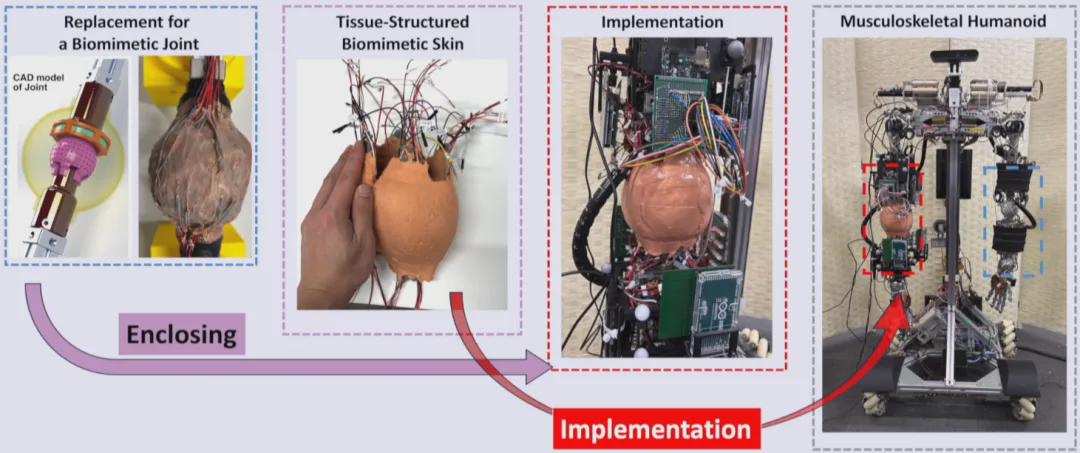
Tokyo University Innovates Artificial Skin for Enhanced Joint Angle Sensing in Robots
Tokyo University's research team has developed an artificial skin that enables robots to accurately sense joint angles through its deformation. This bionic skin, designed with a tissue-like layered structure, was tested on the Musashi-W humanoid robot. The results indicated that the average estimation error for joint angles could be maintained within approximately 3 degrees, and further accuracy was achievable by integrating skin and muscle information. This advancement is significant as traditional muscle-driven humanoid robots face challenges in measuring joint angles directly, unlike conventional robotic joints that utilize encoders. Current methods rely on limited sensors, such as muscle length and tension sensors, to infer joint angles. The research team's approach mimics biological structures by embedding numerous small sensors within soft tissues, enhancing the robot's ability to discern between external disturbances and internal state changes. Moving forward, the integration of these sensors into robotic systems could revolutionize how robots perceive their own movements and interactions with the environment. No further timeline was disclosed at the time of publication.
Humanoid Robots Proprioception Biomimetic Technology Robotic Sensors
ROBOTTODAY WEEKLY September 7 – 11, 2026
This week in robotics: JD.com plans to deploy three million robots across its logistics network, XPeng commissions its IRON humanoid production line, FANUC and Google launch an AI arc-welding agent, and Unitree shares fall 53% from their post-IPO high. September 7–11, 2026.

China’s Dexterous Hand Industry, 2026 Part 3 — The Players
Five vendor archetypes, MIR’s composite top ten, eight company profiles and six field deployments — every firm linked to the RobotToday supplier directory.

RobotToday Weekly Briefing August 31 – September 4, 2026
This week in robotics: NVIDIA agrees to buy Hugging Face for $12.93 billion, Figure signs a $3.5 billion compute deal with Nscale for up to 100,000 GPUs, Tesla launches steering-wheel-free Cybercabs in Austin under NHTSA scrutiny, and Uber and Wayve bring the UK its first autonomous rides. August 31 – September 4, 2026.
China’s Dexterous Hand Industry, 2026 Part 1 — The Demand Picture
MIR Databank puts China dexterous hand shipments above 30,000 units in 2026, yet only 3.5% of 2025 demand came from factory production. Part 1 of 3.
China’s Dexterous Hand Industry, 2026 Part 2 — The Technology
Linkage, tendon, direct drive or hybrid — and why hardware is converging while the DL1–DL5 manipulation scale decides who wins. Part 2 of 3.
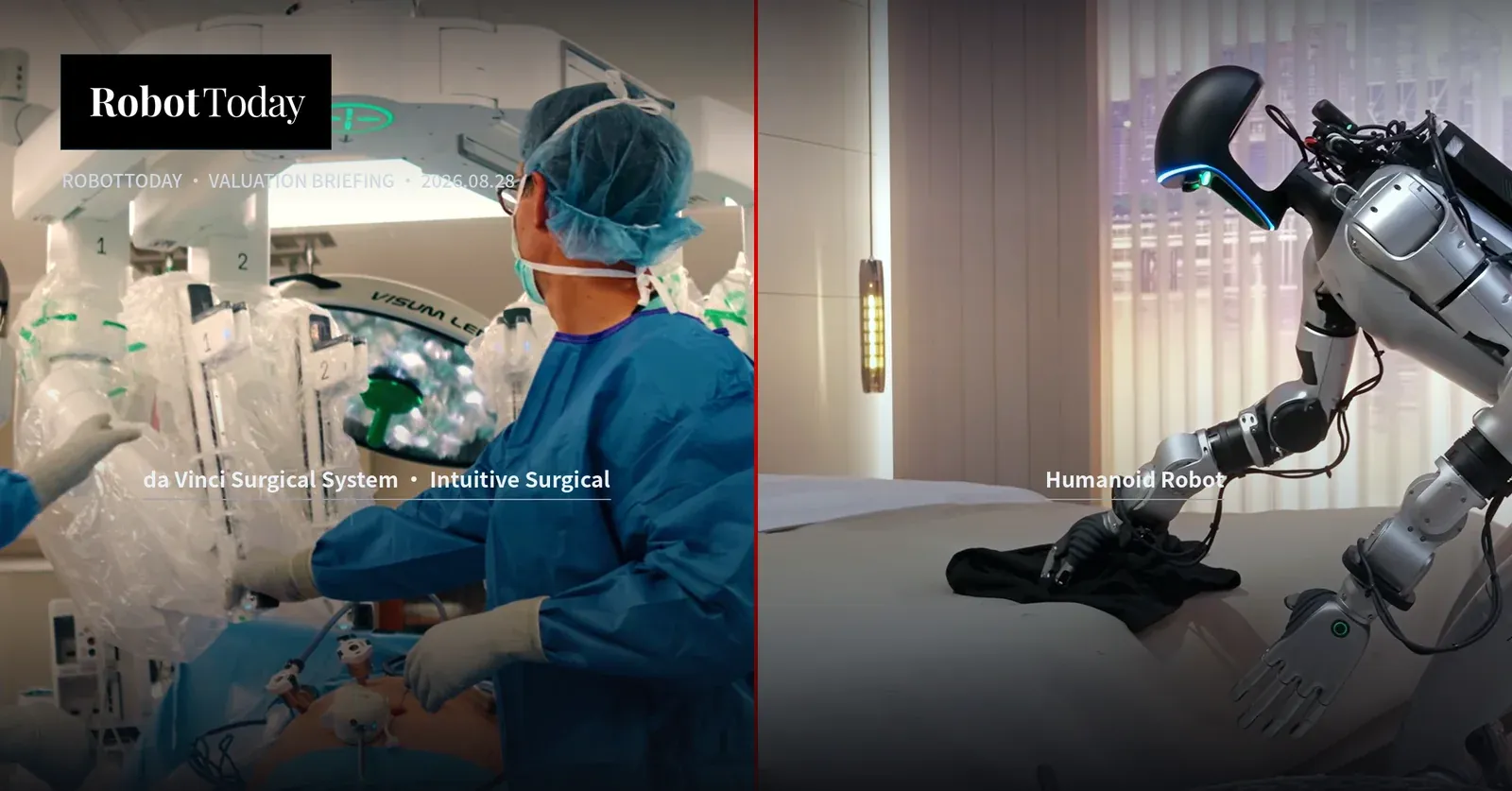
Robotics Investing: Intuitive Surgical or Unitree?
Unitree (STAR 688836) trades near 410x earnings after a 46% drawdown; Intuitive Surgical sits at 42.5x. A definition-aligned comparison of both companies.
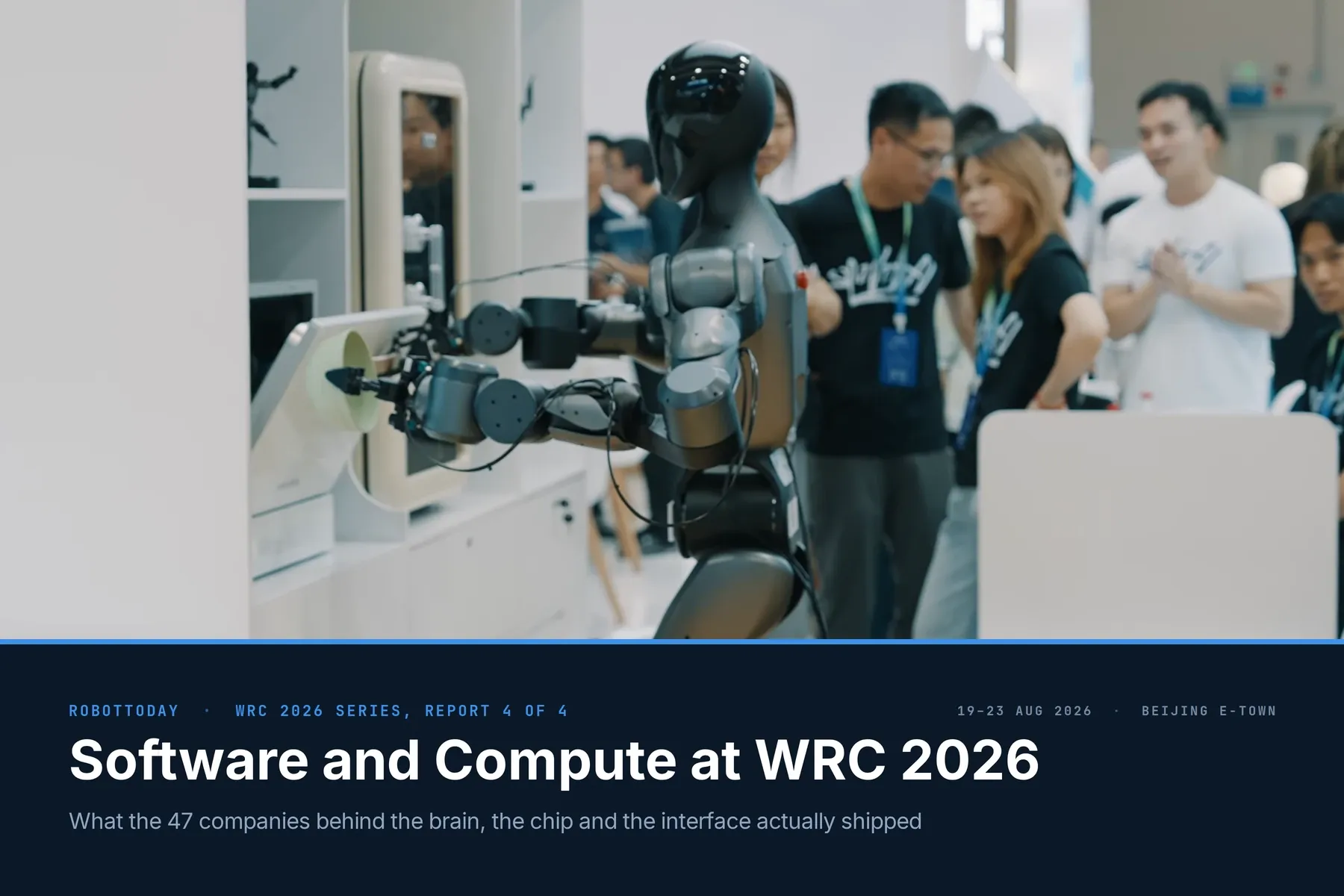
Software, Compute and Interaction at WRC 2026
47 WRC 2026 exhibitors supply robot software, compute or interaction — but only 19 call themselves software companies. Five open artefacts, licence-checked.
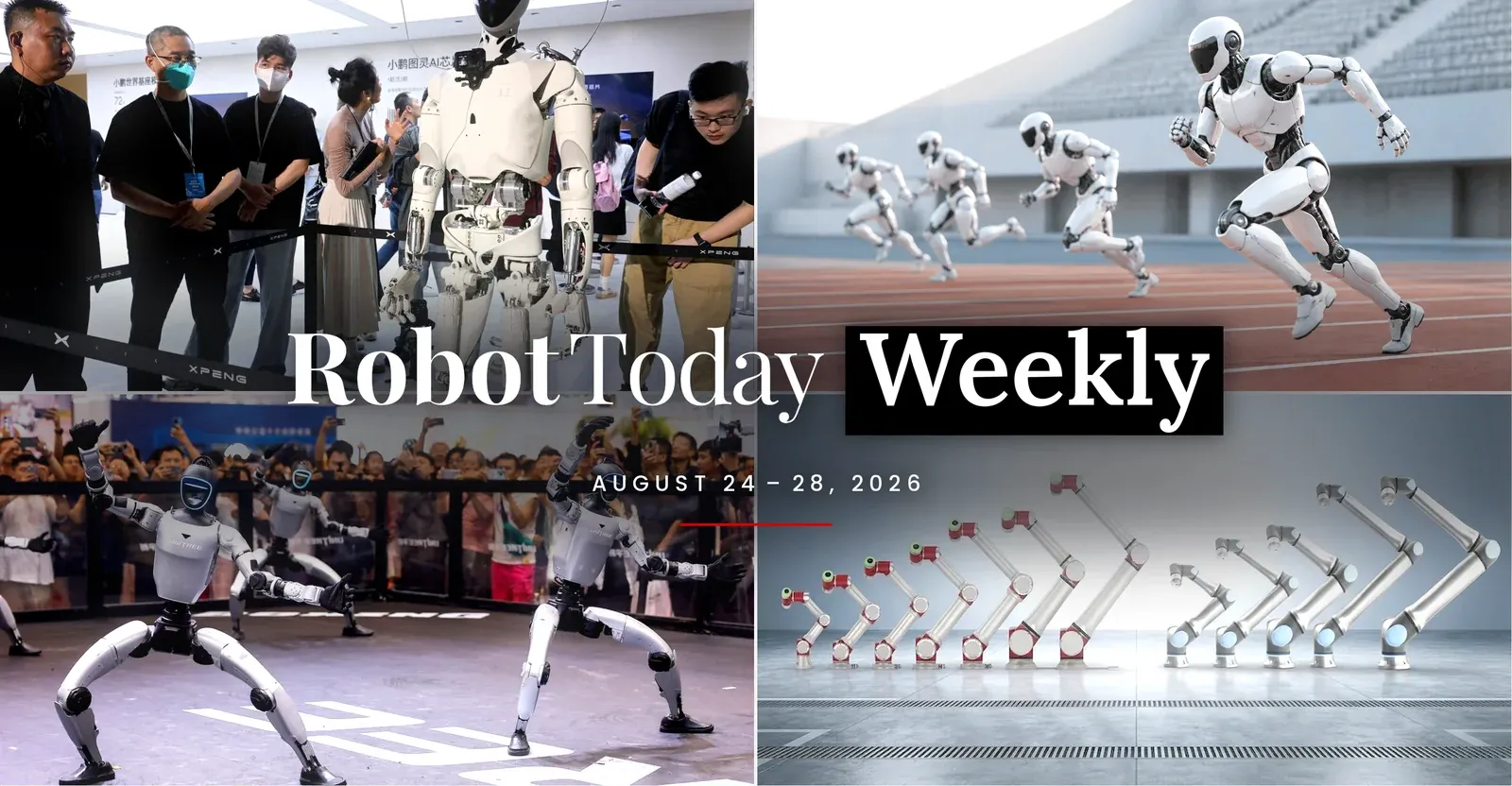
ROBOTTODAY WEEKLY BRIEFING August 24 – 28, 2026
This week in robotics: XPeng's Dogotix raises over $900 million at a $6.3 billion valuation, Unitree's post-IPO slump revives bubble talk, Beijing's World Humanoid Robot Games close with a shift to real-world tasks, and Teradyne sues JAKA at Europe's Unified Patent Court. August 24–28, 2026.
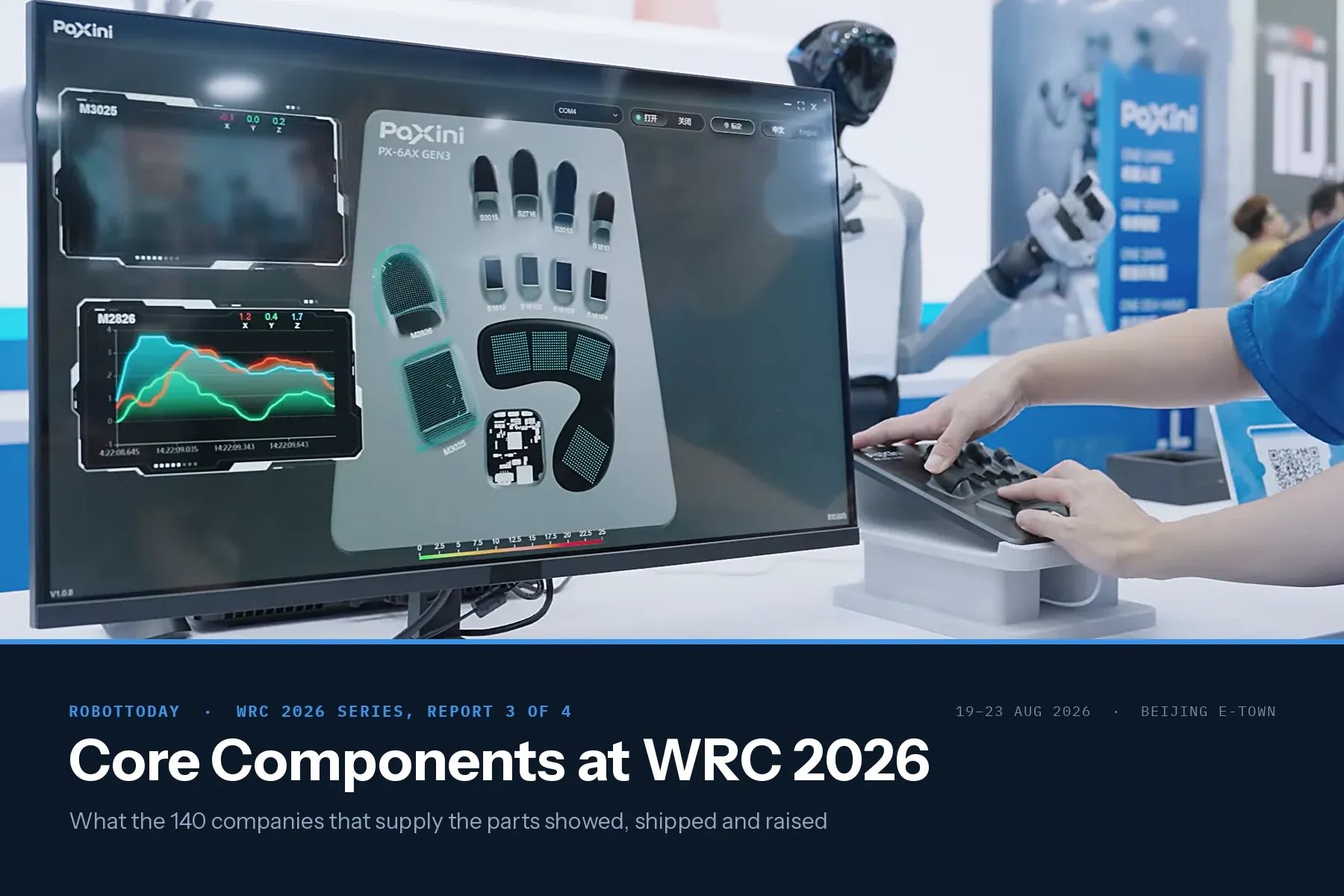
WRC 2026 Core Components: 137 Robot Parts Suppliers
The third report in the WRC 2026 series. Report 1 mapped all 248 exhibitors by category and Report 2 covered the 139 that build finished robots. This one covers the 137 that build what goes inside them.
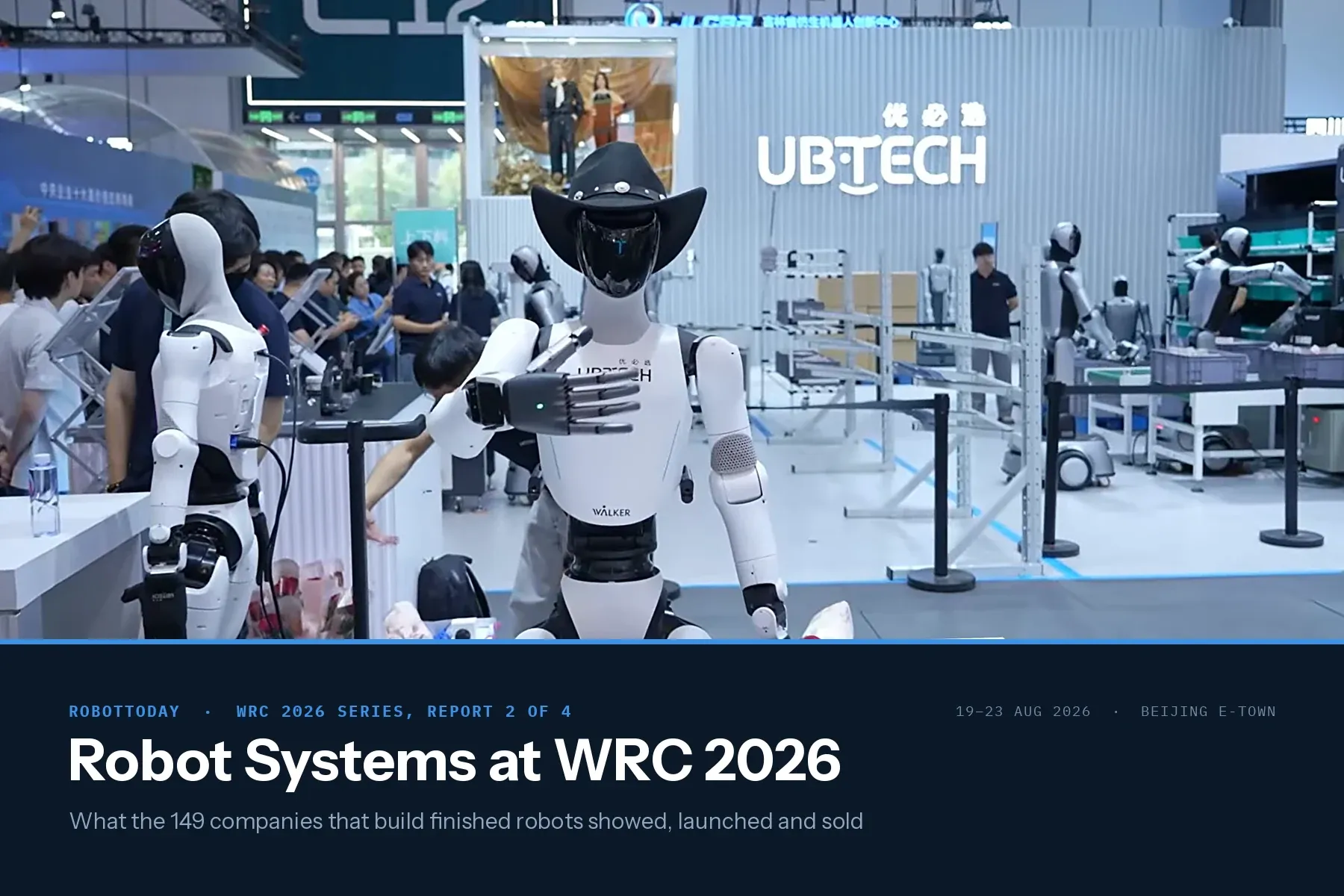
WRC 2026 Robot Systems: 149 Companies That Build Robots
149 of the 248 classified WRC 2026 exhibitors build finished robots. 93 build humanoid or legged machines. The audited humanoid sales number is one unit.


