

Markforged
"Strong Parts. Right Now."
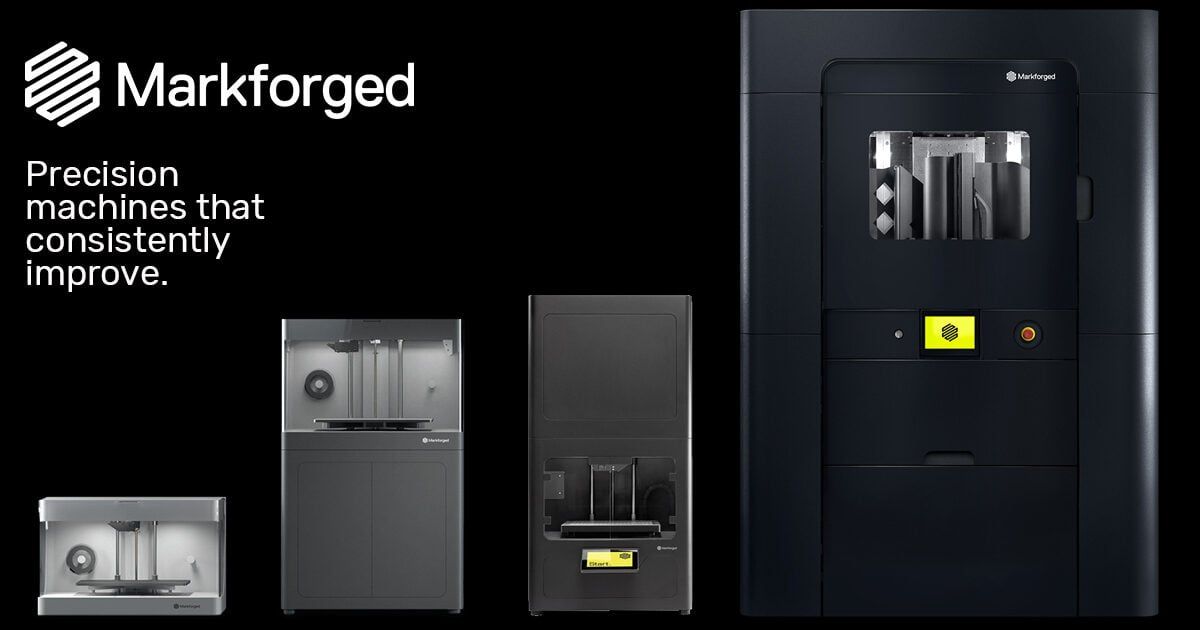
Industrial additive manufacturing platform producing continuous carbon fiber and metal 3D printers for on-demand parts.
Listed in RobotToday Supplier Discovery.
Verified Profile
More related news
- 1
- 2
- 3
- 4
- 5
- 6
- 7
- 8
- 9
- 10
-
11
Stratasys at IMTS 2026: GM Scales Additive to 20+ Plants RobotToday · Sep 15, 2026
-
12
IMTS 2026 Preview: Record Orders and the Automation Story RobotToday · Sep 14, 2026
-
13
WRC 2026 Robot Systems: 149 Companies That Build Robots RobotToday · Aug 27, 2026
-
14
WRC 2026 Exhibitor Map: 248 Robotics Companies Mapped RobotToday · Aug 26, 2026
-
15
Pittsburgh Regional Alliance Convenes Nine CMU-Rooted Robotics Firms at Automate 2026 RobotToday · Jun 29, 2026
-
16
CONSTRUCTION ROBOTICS | MODULAR, PREFAB & 3D PRINTING RobotToday · May 01, 2026
-
17
CONSTRUCTION ROBOTICS | INSPECTION, SCANNING & DIGITAL TWIN RobotToday · Apr 13, 2026
-
18
Space Robot- Building Skyscrapers in Space: ISMA's Industrial Revolution RobotToday · Feb 18, 2026
-
19
Robotics Exits: Why 2026 May Define Founder Leverage for Years RobotToday · Feb 11, 2026
-
20
How Titanium Is Quietly Rewiring the Future of Robotics RobotToday · Nov 01, 2025
Contact Markforged
WEBSITE
https://markforged.comPHONE
+1 866-496-1805HEADQUARTERS
60 Tower Rd
Waltham , Massachusetts 02452
United States

Company Facts
Founded
2013
Primary Role
Manufacturer
Company Size
-
Primary Region
North America
Annual Sales
-
Funding Stage
-
Funding Total
-
Certifications & Memberships


