Industry Briefing
A single destination for timely, editor-curated robotics news from around the world.

Honda Advances Development of Multi-Fingered Robotic Hands for Assembly Precision
Honda is advancing the development of multi-fingered robotic hands aimed at tackling the most challenging tasks in factory assembly, such as screwing, connecting, and handling parts designed for human hands. These actions, while routine for humans, present significant control challenges for robots. According to researcher Kenichiro Sugiyama, many existing robotic hands are essentially extensions of traditional robotic arms, lacking the necessary strength, responsiveness, and precision for fine manipulation. Honda's approach involves the collaborative development of mechanical hardware, control systems, and artificial intelligence, emphasizing the importance of embodied AI, which learns through physical interactions with objects. Despite advancements, dexterous manipulation remains a significant challenge, particularly with deformable or slippery objects. Sugiyama describes the remaining issues as the 'last millimeter' problem, which, if solved, could enable robots to replace tasks traditionally performed by humans. Honda's exploration of multi-fingered hands aims to push the boundaries of automation in manufacturing.
Robotic Hands Embodied AI Manufacturing Automation Precision Control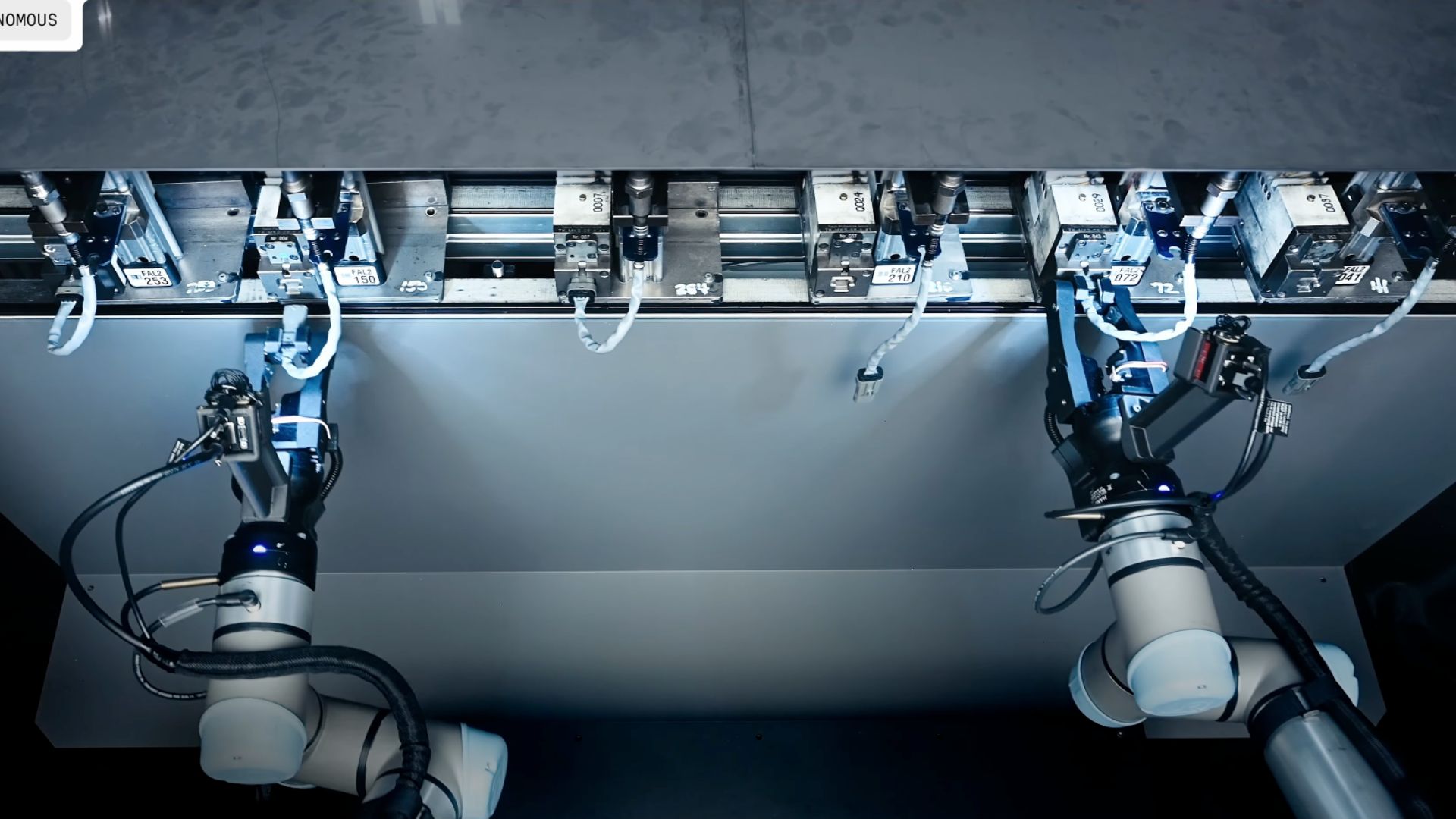
Video: New robotic system achieves 99.5% success in fast auto factory wire assembly
Sanctuary AI, a Canadian robotics company, has announced a major breakthrough in industrial automation. The firm has developed advanced AI-driven robots capable of performing complex tasks traditionally handled by human workers. This innovation comes as industries increasingly seek to enhance productivity and efficiency amid labor shortages and rising operational costs. The robots, which are designed to seamlessly integrate into existing workflows, utilize sophisticated machine learning algorithms to adapt to various environments and tasks. This development was unveiled during a press conference held in Toronto on October 15, 2023, where company executives highlighted the potential of these robots to revolutionize sectors such as manufacturing and logistics. By automating repetitive and labor-intensive processes, Sanctuary AI aims to not only improve operational efficiency but also allow human workers to focus on more strategic and creative roles.
AI and Robotics
N Ways Robotic Arms Are Transforming the Automotive Assembly Line
The automotive manufacturing industry is experiencing a significant transformation driven by the integration of advanced robotic arms, particularly collaborative robots, which enhance production efficiency, precision, and flexibility. JAKA, a leader in intelligent manufacturing, is at the forefront of this shift, implementing its robotic technology to address challenges such as low efficiency, inconsistent quality, and high labor costs in automotive assembly. As consumer demand evolves towards smaller batches and diverse product varieties, JAKA's collaborative robots, exemplified by the JAKA S12, offer high-precision adaptive assembly capabilities. With built-in force sensors and a lightweight design, these robots can be quickly deployed on assembly lines, minimizing downtime and adapting to various workpiece shapes and sizes. In the critical welding phase of automotive assembly, JAKA's robotic arms improve quality and efficiency by optimizing the welding process. Their user-friendly configuration interface and safety features ensure reliable operation, while compatibility with various welding machine brands enhances their versatility. Moreover, JAKA's collaborative robots lower the barriers to automation with zero-cost deployment and straightforward operation, allowing companies to implement these systems without specialized technical staff. This innovation not only reduces training costs but also enables manufacturers to quickly adapt to automation in their assembly lines. As the automotive sector increasingly embraces intelligent and flexible manufacturing, JAKA is committed to continuous innovation, providing high-quality robotic solutions that empower enterprises to enhance production efficiency and sustainability in the evolving market landscape.

Chef Robotics Advances Bi-Manual Physical AI System for Prep Table Food Assembly Powered by a Food Foundation Model
Chef Robotics has announced the development of a bi-manual physical AI system aimed at enhancing food assembly tasks on prep tables, such as burger and burrito preparation. This innovative system, which is set to launch on May 19, 2026, will cater to various sectors including ghost kitchens, fast-casual restaurants, and catering services, focusing on lower-volume yet more complex meal assembly compared to traditional food manufacturing processes. The new AI system utilizes two robotic arms for coordinated and dexterous manipulation, mimicking human-like capabilities to handle a variety of food items and utensils. It is powered by Chef's Food Foundation Model (FFM), which employs imitation learning to adapt quickly to diverse tasks and environments, overcoming the limitations of existing robotic systems that struggle with the variability of food materials. Chef Robotics aims to automate manual prep table assembly, a critical area in the food industry that has remained largely reliant on human labor. By leveraging the FFM, the system is designed to learn from demonstrations, allowing it to generalize across different tasks and robotic platforms. This advancement is expected to improve operational efficiency, yield, and consistency in food preparation, ultimately transforming how food assembly is approached in various culinary settings.

Chef Robotics Expands into Component Assembly for CPG Manufacturing
Chef Robotics has announced an expansion into component assembly for consumer packaged goods (CPG) manufacturing, enabling automation of secondary packaging and kitting processes. This development, revealed on May 11, 2026, allows Chef robots to efficiently handle a variety of items, including sauce sachets, seasoning packets, and even non-food inserts like cutlery kits and instruction cards. Historically, CPG assembly lines have relied heavily on manual labor due to the challenges posed by lightweight and deformable items. Chef Robotics aims to address this issue by utilizing AI-powered computer vision, which enables robots to assess and manipulate items in real time, ensuring precise placement without damage. The technology adapts to the variability of items in unstructured bins, eliminating the need for pre-sorting. The new assembly application features three key capabilities: detecting and reorienting items mid-pick for accurate placement, picking and placing multiple components simultaneously, and ensuring correct item allocation in multi-compartment products. This innovation promises higher throughput, reduced labor dependency, and consistent item placement across production shifts. Chef's CPG assembly application is available in the US, Canada, the UK, and Germany, and operates on existing robotic hardware and software, allowing for seamless integration into current manufacturing setups. The service is offered under Chef's robotics-as-a-service (RaaS) pricing model, further solidifying the company's position as a leader in AI-driven food robotics solutions.
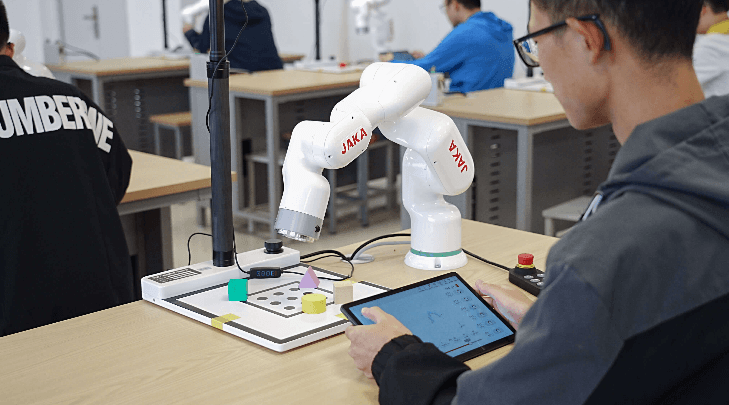
How a Small Robotic Arm Reduces Footprint in Electronics Benchtop Assembly
In the rapidly evolving field of electronics manufacturing, JAKA has introduced the MiniCobo, a compact robotic arm designed to optimize workspace efficiency. This innovative solution addresses the challenges of limited bench space, allowing manufacturers to streamline assembly tasks without sacrificing operational capability. The MiniCobo's lightweight construction ensures easy positioning and minimal structural modifications, making it particularly beneficial in crowded electronics assembly environments. Launched recently, the MiniCobo enables quick setup and seamless integration into existing workflows, automating repetitive tasks to enhance productivity and reduce error rates. This small robotic arm not only improves throughput but also maintains high operational reliability, making it an attractive option for small-scale production and pilot assembly lines. By offering a cost-effective alternative to larger robotic systems, the MiniCobo reduces energy consumption and simplifies maintenance, leading to significant operational savings. Its adaptability allows for the deployment of multiple units in parallel, catering to varying production demands without substantial investment. Overall, JAKA's MiniCobo represents a strategic advancement in benchtop assembly, combining compact design, precise operation, and flexible deployment to meet the evolving needs of modern electronics production.
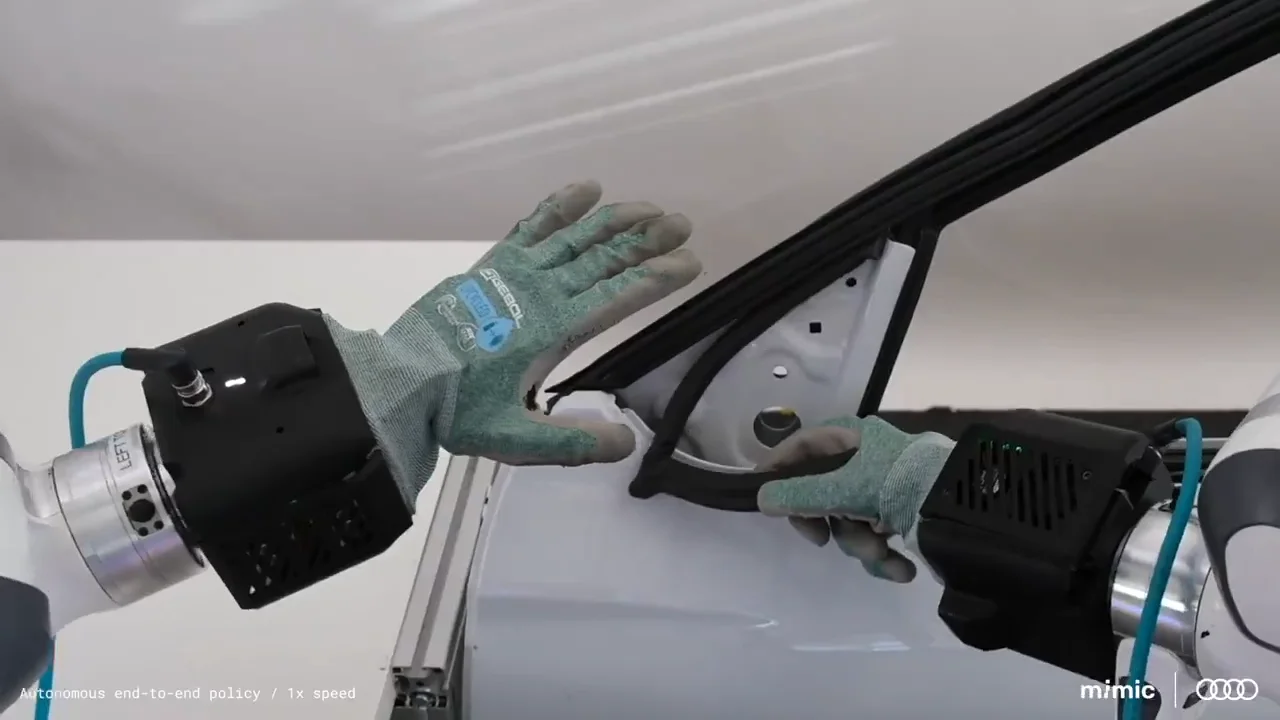
Audi Partners with Mimic Robotics for AI-Driven Automotive Assembly
Audi has announced a partnership with Zurich-based startup Mimic Robotics to enhance its manufacturing processes by incorporating learning-based, end-to-end robotic systems. This collaboration signifies a significant transition from traditional rigid programming methods to a more adaptable approach known as "Physical AI." By leveraging advanced robotics, Audi aims to improve efficiency and flexibility in its production lines, responding to the evolving demands of the automotive industry. The integration of these innovative technologies is expected to streamline operations and foster a more responsive manufacturing environment.
Mimic Robotics Europe Audi ETH Zurich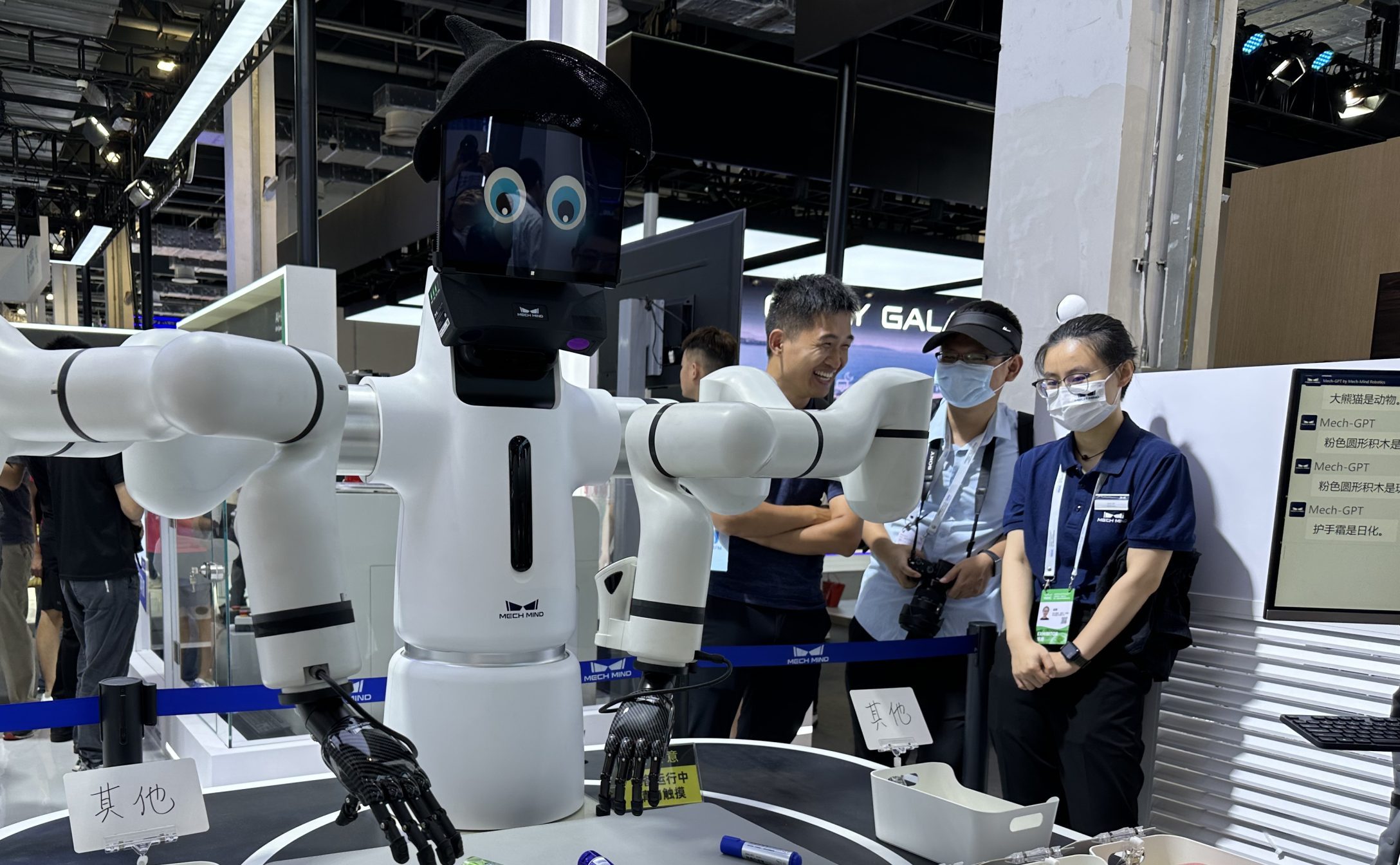
From retro streets and robot assembly to robot boxing, WAIC 2025 unveils China’s latest robotics tech
The 2025 World Artificial Intelligence Conference (WAIC) took place in Shanghai from July 26 to 28, focusing on the theme of "Global Solidarity in the AI Era." This year’s event marked a significant increase in participation, with over 80 companies involved in embodied intelligence, compared to just 18 robotics companies at last year's conference. The surge in attendance underscores the growing interest and investment in artificial intelligence technologies. The conference featured various discussions and showcases aimed at fostering collaboration and innovation in the AI sector.
Heavy Hitters Content and entertainment government Highlight NewsRobotics needs a service framework.
RSF defines a common language for robot service capability, lifecycle operations, certification pathways, and service-provider networks.
Join the RobotToday community on LinkedIn
Daily robotics news, in-depth analysis, conference highlights, and discussions with professionals worldwide.