

Industry Briefing
A single destination for timely, editor-curated robotics news from around the world.

US Manufacturing Faces Chip Shortages and Rare Earth Production Challenges: IndustryWeek Review
In the latest edition of IndustryWeek's Weekly Review, key topics included the ongoing shortage of memory chips and the revival of rare earth production in the U.S. The report highlights that the chip supply constraint could hinder progress and increase costs for American consumers, raising concerns within the manufacturing sector. The significance of these issues is underscored by the potential impact on the overall financial performance of companies listed in the IW U.S. 500. Following a decline in 2024, the financial metrics for these companies stabilized last year, indicating a critical moment for the industry as it navigates these supply challenges. Looking ahead, the manufacturing community is urged to monitor developments in both chip production and rare earth mining, especially as the U.S. seeks to reduce reliance on foreign sources. No further timeline was disclosed at the time of publication.
Leadership
Cyclic Materials Launches First U.S. Rare Earth Recycling Facility in Arizona
Cyclic Materials has inaugurated its first U.S. facility in Mesa, Arizona, aimed at enhancing domestic rare earth supply chains. This initiative aligns with the Trump administration's strategy to reduce reliance on foreign materials, particularly from China, as highlighted by William Kimmitt of the Commerce Department. The facility, which spans 144,000 square feet, utilizes proprietary MagCycle technology to recycle rare earth magnets, producing a material known as Mag-Xtract. The establishment of the Mesa facility is significant for U.S. manufacturing, as it promises to strengthen supply chains and provide additional materials for American manufacturers. Kimmitt emphasized the importance of reliable access to foundational materials for future technological advancements. With over 7,000 metric tons of scrap already processed, the facility is expected to begin shipments soon, contributing to the local economy by creating more than 30 jobs. Looking ahead, Cyclic Materials aims to further develop its infrastructure for rare earth and critical minerals in the U.S., with plans for a second facility in McBee, South Carolina. This expansion is projected to create 90 additional jobs and underscores the company's commitment to closing gaps in the domestic supply chain for critical materials essential for sectors like AI and defense. No further timeline was disclosed at the time of publication.

MP Materials Initiates Rare-Earth Magnet Production for Domestic Drone Manufacturing
MP Materials has launched an initiative to produce neodymium-iron-boron (NdFeB) magnets, essential for drone motors, aiming to reduce U.S. dependence on foreign sources. Currently, 75% of U.S. imports of these magnets come from China, highlighting the need for domestic production. The initiative will allow manufacturers to reserve up to 2 million drone magnet capacities annually, as stated by Chairman and CEO James Litinsky. This initiative is crucial as it seeks to aggregate demand and provide certainty for companies developing new technologies in the drone sector. MP Materials plans to create a fully integrated American magnetic solution, from mining to magnetization, in collaboration with the Department of Defense. The project aims to standardize production processes and enhance the domestic supply chain for rare-earth materials. The initiative is expected to commence with the operation of MP's 10X plant in 2028. As MP Materials forms agreements with various drone manufacturers, it also intends to expand its reach to motor manufacturers and defense technology companies, responding to China's dominance in the drone market and its recent export restrictions on related technologies.

NASA's Perseverance Rover Captures Earth Behind Phobos in Rare Occultation Event
NASA's Perseverance rover recently observed a rare occultation event, where Earth briefly disappeared behind Mars' moon Phobos. This occurrence was captured on July 2, 2026, during the 1,907th Martian day of the rover's mission, using its Mastcam-Z instrument to take nine composite images of the event. This event is significant as it highlights the unique observational capabilities of the Perseverance rover and the intricate planning required to capture such moments. Mark Lemmon, a co-investigator at the Space Science Institute, noted that while Phobos crosses the Martian sky three times daily, aligning Earth directly behind it is a rare occurrence that necessitates both planning and luck. Looking ahead, Perseverance continues to explore Mars and document its moons, having previously recorded Phobos passing in front of the sun, creating a Martian solar eclipse. No further timeline was disclosed at the time of publication.
Mars Rovers Space Exploration Missions
The Next Drone Supply Chain Challenge: Rare Earth Magnets
A new bipartisan bill has been introduced in Congress to bolster the United States' domestic supply chain for rare earth magnets, which are essential components in drone motors. The legislation, spearheaded by Chairman John Moolenaar (R-MI) and Ranking Member Ro Khanna (D-CA), addresses the growing concern over America's reliance on China for these critical materials. The initiative comes amid increasing recognition of the challenges faced by the drone industry, particularly regarding the sourcing of permanent magnets necessary for electric motor functionality. By enhancing domestic production capabilities, the bill aims to ensure a more secure and reliable supply chain for the burgeoning drone sector.
Drone Manufacturing Drone News Drone News Feeds drone parts drone technology Feature 1
AI breakthrough could replace rare earth magnets in electric vehicles
Researchers at the University of New Hampshire have harnessed artificial intelligence to accelerate the search for advanced magnetic materials. This initiative involves the creation of an extensive database comprising 67,573 magnetic compounds, which includes 25 newly identified materials that maintain their magnetic properties at elevated temperatures. The team's efforts aim to facilitate the development of more affordable and sustainable technologies, potentially transforming various industries reliant on magnetic materials.

Hylenr Technologies Discovers 32 Elements in Nuclear Fusion Experiment for Strategic Applications
Hylenr Technologies, a startup based in Hyderabad, has reported the detection of 32 elements, including rare earths and uranium, through its experimental nuclear fusion system. This finding follows over two years of material analysis linked to their lattice confinement fusion research, suggesting a potential new method for nucleosynthesis. The implications of this discovery are significant, as it could provide an alternative means of producing critical materials that are currently reliant on mining and concentrated supply chains. Hylenr co-founder Siddhartha Durairajan emphasized the potential to engineer the material environment necessary for creating selected elements, which could reshape access to vital resources. Looking ahead, the research team believes that this technology may extend beyond nuclear energy applications, potentially impacting sectors such as electric vehicles, robotics, and defense. No further timeline was disclosed at the time of publication.
Energy
Pentagon works with U.S. rare earths company to counter China's dominance
The Trump administration is collaborating with a U.S. company to counter China's stronghold on rare earth elements, which are crucial for manufacturing components in various technologies, including smartphones, robotics, fighter jets, and drones. This initiative comes amid growing concerns over supply chain vulnerabilities and national security, as China currently dominates the production of these essential metals. The partnership aims to enhance domestic production capabilities and reduce reliance on foreign sources, thereby ensuring a more secure supply chain for critical technologies. The administration's efforts reflect a broader strategy to strengthen the U.S. position in the global market for rare earth elements and to promote economic independence.

The American rare earths company seeking to topple China's dominance | 60 Minutes
The Trump administration is collaborating with a U.S. company to confront China's significant control over rare earth elements, which are crucial for manufacturing various high-tech products, including smartphones, robotics, fighter jets, and drones. This initiative aims to reduce dependency on Chinese supplies and enhance national security by securing a more stable and independent source of these vital materials. The effort comes amid rising tensions between the U.S. and China, highlighting the strategic importance of rare earth elements in modern technology and defense. The administration's actions reflect a broader strategy to bolster domestic production capabilities and ensure that the U.S. remains competitive in critical industries.

China Targets U.S. Rare Earths Firms in Response to Pentagon List
In a significant development this month, the Pentagon announced the inclusion of several major Chinese companies on a list of entities allegedly supporting the Chinese military. This decision has prompted a swift reaction from Beijing, which condemned the move as an unjustified attack on its businesses. The Chinese government has expressed concerns that such actions could escalate tensions between the two nations, further complicating an already fraught relationship. The Pentagon's actions are part of a broader strategy to counter perceived threats from China, reflecting ongoing geopolitical rivalries. As the situation unfolds, both countries are navigating a complex landscape of economic and military considerations, with potential implications for international trade and security.

Japan to develop deep-sea drone in hunt for rare earths
A Japanese marine research agency is set to develop an advanced autonomous underwater vehicle (AUV) by fiscal 2028 to enhance the search for rare earth elements and other mineral resources in the seabed near Minamitorishima, Japan's easternmost territory. This initiative, announced on June 3, 2026, aims to secure a stable supply of these critical materials, which are essential for various high-tech industries. The project reflects Japan's ongoing efforts to reduce its dependence on foreign sources, particularly China, amid rising global demand for rare earths. The development of this hybrid vessel is expected to significantly accelerate exploration and retrieval processes in the region, positioning Japan as a key player in the global rare earth supply chain.
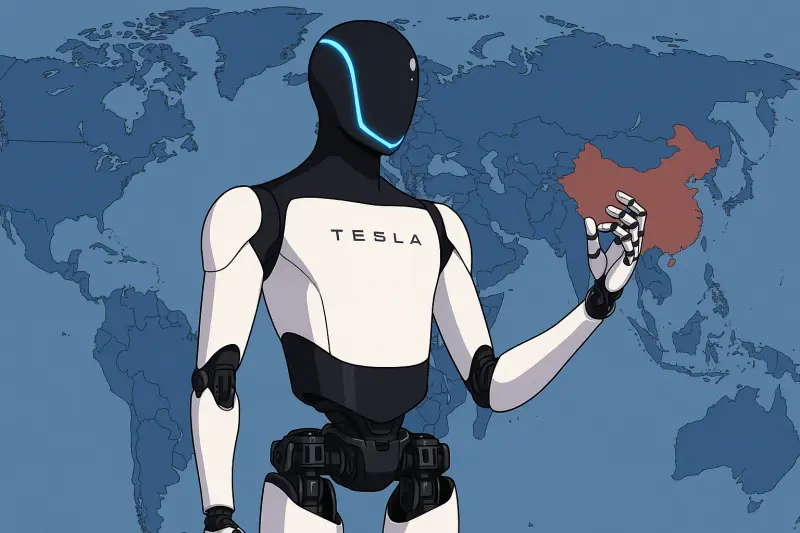
Tesla Optimus Production Delayed by China's Rare Earth Export Controls
Tesla is experiencing delays in its production schedule for the Optimus humanoid robot, primarily due to new export restrictions imposed by China on rare earth minerals. During a recent earnings call, CEO Elon Musk highlighted a significant 'magnet issue' as a key challenge affecting the project. To address this setback, Tesla is actively seeking licenses from the Chinese government to secure the essential components needed for the robot's development. The situation underscores the growing complexities of global supply chains and the impact of geopolitical factors on technological advancements.
Optimus Tesla UBTECH RoboticsRobotics needs a service framework.
RSF defines a common language for robot service capability, lifecycle operations, certification pathways, and service-provider networks.
Join the RobotToday community on LinkedIn
Daily robotics news, in-depth analysis, conference highlights, and discussions with professionals worldwide.






