

Industry Briefing
A single destination for timely, editor-curated robotics news from around the world.
Security Vulnerabilities in Embodied Intelligence: Risks and Implications for Physical Safety
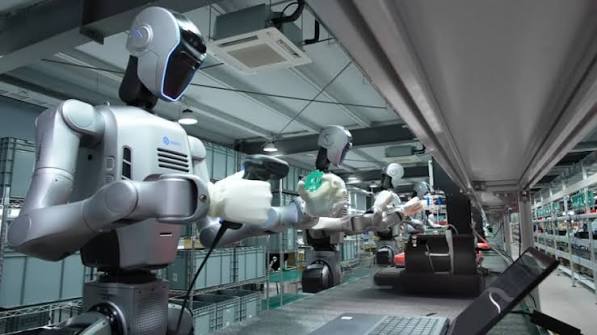
In April 2026, a security demonstration showcased a commercial robotic dog being remotely hijacked, activating its camera to gather information and subsequently attacking a dummy model. Zhou Hongyi, founder of 360 Group, emphasized that the essence of embodied intelligence security issues has evolved from 'data security' to 'production safety' and 'life safety.' The DARKNAVY white paper revealed alarming data: while it takes months to breach a flagship smartphone or a smart car, penetration testing on a well-known brand of embodied intelligent robot can be completed in under eight hours. The paper highlighted that many domestic robots lack even basic security measures, with some shipping with unchangeable hotspot passwords, allowing unauthorized control. In September, a more severe issue was uncovered involving the Yushu G1 humanoid robot, which had a vulnerability chain named 'UniBLEed,' allowing attackers within Bluetooth range to gain full control. The embodied intelligence industry is on the brink of explosive growth, with projections estimating a market size of 19.2 billion yuan by 2025. However, funding primarily focuses on core technology and application development, with little emphasis on security investments.
Embodied Intelligence Robotics Security AI Safety Cybersecurity Industrial Automation
Exploring the Role of FPGAs in Enhancing Physical AI Security
In Episode 260 of The Robot Report Podcast, Eric Sivertson, vice president of security at Lattice Semiconductor, discusses the significance of FPGAs in physical AI security. He highlights how these field-programmable gate arrays are crucial for building safe and secure robots, emphasizing their role in enhancing trust in embedded systems. The conversation underscores the growing importance of security in robotics, particularly as the industry shifts towards more advanced AI applications. Sivertson's extensive experience in developing technologies for security and connectivity positions him to provide valuable insights into the challenges and opportunities within this sector. Listeners should pay attention to the evolving landscape of physical AI security and the potential for FPGAs to serve as foundational elements in safeguarding robotic systems. No further timeline was disclosed at the time of publication.
Artificial Intelligence Autonomous Mobile Robots (AMRs) Humanoids Manufacturing Markets / Industries Microprocessors / SoC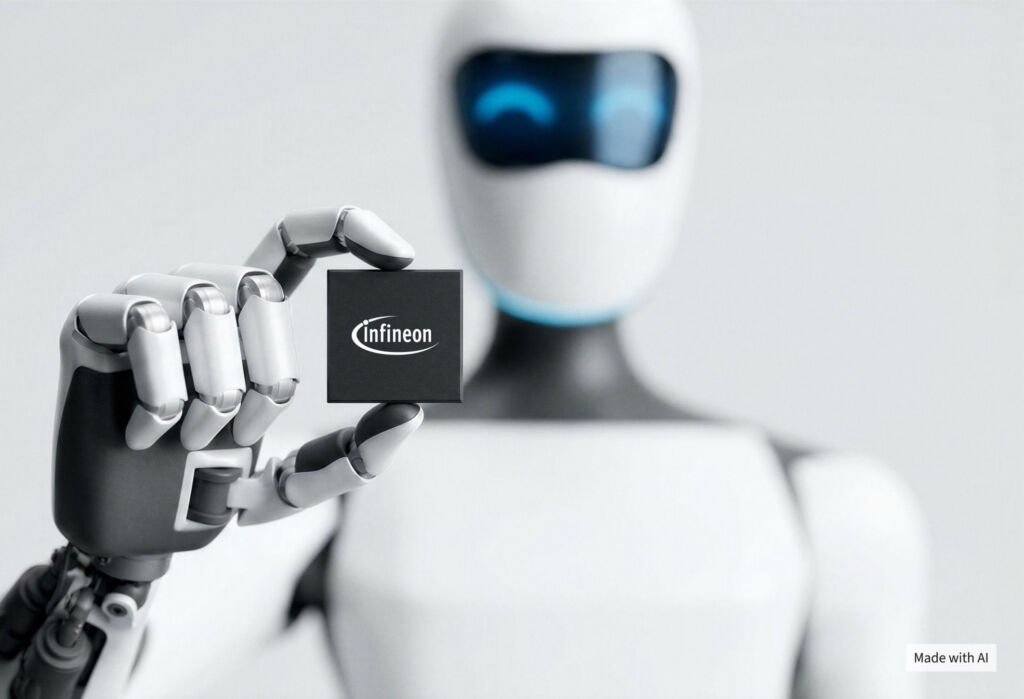
Increased Security for Physical AI
Infineon Technologies has announced the integration of its Optiga TPM SLB 9672 hardware security module into Nvidia's Jetson Thor computing platform, which is designed for robotics and autonomous systems. This collaboration aims to enhance security measures for physical artificial intelligence applications. By incorporating advanced security features, the partnership seeks to address growing concerns regarding data protection and system integrity in increasingly automated environments. The integration is expected to provide developers with robust tools to build secure and reliable robotic solutions.
Allgemein Robotersteuerung & Digital Twin RobotikRobotics needs a service framework.
RSF defines a common language for robot service capability, lifecycle operations, certification pathways, and service-provider networks.
Join the RobotToday community on LinkedIn
Daily robotics news, in-depth analysis, conference highlights, and discussions with professionals worldwide.







