A single destination for timely, editor-curated robotics news from around the world.
Nvidia has introduced the Nvidia Isaac GR00T Reference Humanoid Robot, an innovative open platform aimed at advancing research and development in physical artificial intelligence and general-purpose robotics. The announcement was made during the Nvidia GTC event in Taipei. This new platform integrates several cutting-edge technologies, including the Unitree H2 Plus humanoid robot, Sharpa Wave tactile five-finger hands, and the Nvidia Jetson Thor onboard computing system. The initiative is part of Nvidia's broader strategy to enhance capabilities in robotics, providing researchers and developers with a versatile tool to explore and innovate in the field of robotics and AI.
RoboticsAndAutomationNews.com By Sam Francis 6 hours ago Computing Humanoids News automation news embodied ai humanoid robots
StoreClaw, an emerging AI startup, has recently garnered significant attention by achieving the top ranking on Product Hunt. The company is focused on revolutionizing the cross-border e-commerce landscape by offering a comprehensive multi-channel AI platform designed to replace the currently fragmented tools available to businesses. This innovative solution aims to streamline operations for e-commerce companies looking to expand their reach internationally. By leveraging advanced artificial intelligence technology, StoreClaw seeks to enhance efficiency and simplify the complexities associated with global online sales. The startup's launch comes at a time when the demand for integrated e-commerce solutions is on the rise, as businesses increasingly look for ways to optimize their operations in a competitive market.
PanDaily.com By [email protected] (Pandaily) 12 hours ago Technology
A recent study has revealed that individuals tend to anticipate reciprocal generosity primarily in their interactions with friends or peers of similar social standing. Conducted by a team of researchers, the study highlights the social dynamics that influence expectations of generosity, suggesting that people are less likely to expect such behavior from those they perceive as having a lower social status. The findings, published in October 2023, shed light on the underlying motivations for generosity and the importance of social equality in fostering reciprocal relationships. The research involved a series of experiments designed to assess participants' expectations of generosity across various social contexts, ultimately concluding that social status plays a significant role in shaping these expectations. This study could have implications for understanding social interactions and the development of community ties, emphasizing the need for equitable relationships to promote mutual generosity.
MITNews By Anne Trafton | MIT News 12 hours ago Research Behavior Brain and cognitive sciences Behavioral economics McGovern Institute School of Science
Neura Robotics, a leader in cognitive robotics and the developer of the Neuraverse, has secured a significant Series C financing round totaling up to $1.4 billion. This funding aims to expedite the company's goal of establishing what it describes as the world's foremost physical AI platform. The substantial investment indicates a strong market valuation for Neura Robotics, reflecting investor confidence in its innovative technology and future potential.
RoboticsAndAutomationNews.com By Sam Francis 12 hours ago Artificial Intelligence News Robot simulation ai robotics automation news Autonomous robots
Amazon has introduced a new AI-powered merchandise design feature within its Shopping app, aimed at enhancing user experience for customers in the United States. This innovative tool allows users to create custom products simply by providing prompts to Alexa, eliminating the need for any design skills. Leveraging the existing Merch on Demand print-on-demand service, customers can articulate their ideas to Alexa, which then generates a corresponding design for various products. This launch reflects Amazon's commitment to integrating advanced technology into its services, making personalized product creation accessible and straightforward for all users.
AIInsider By James Dargan Jun 10, 2026 Uncategorized
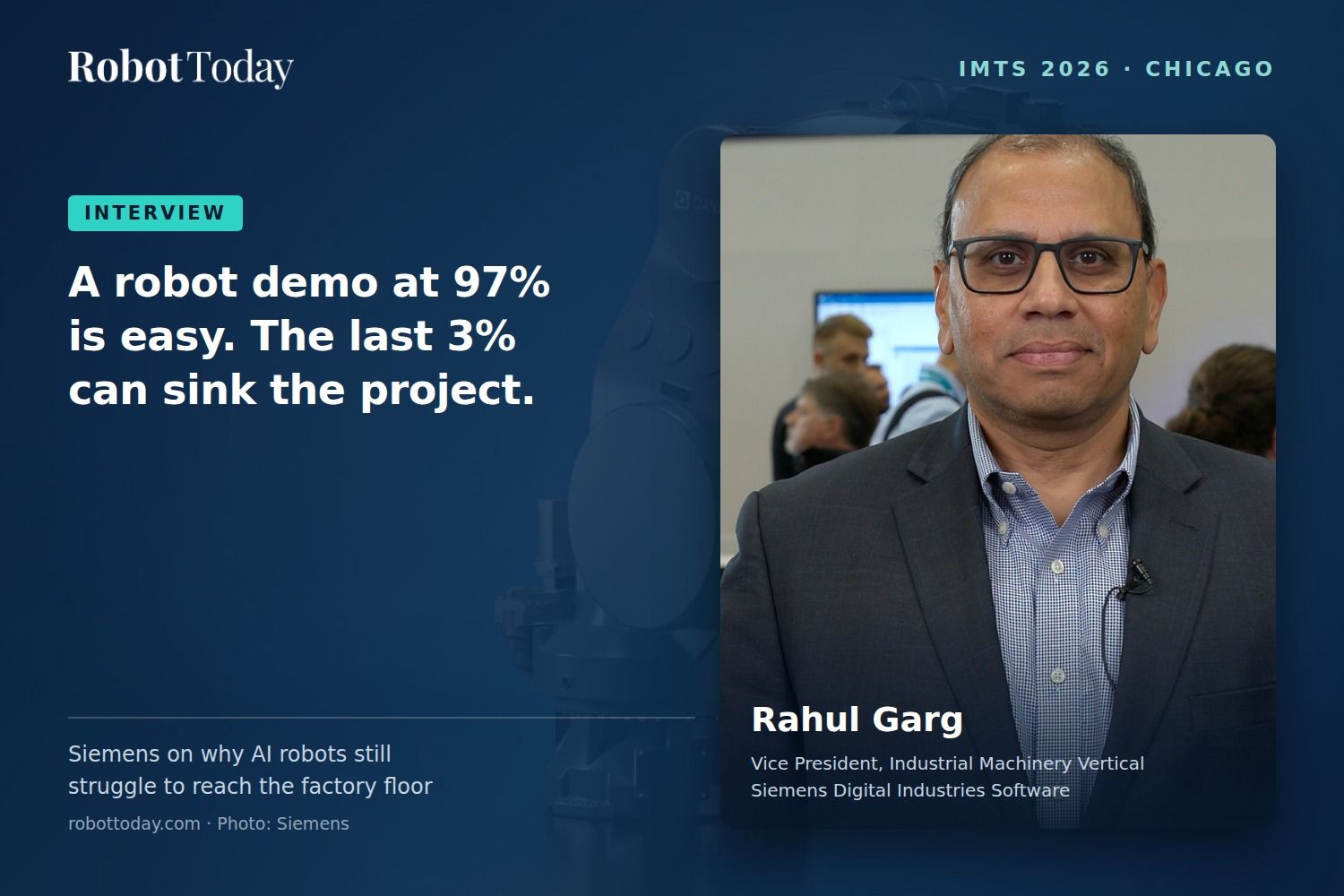
In the evolving field of robotics, experts suggest that a significant breakthrough will not simply be the availability of downloadable policies for robotic systems. Instead, the true milestone will occur when teams can effectively adapt these policies to their specific robots, integrate them into customer processes, and subsequently analyze failures that arise weeks later when production halts. This insight highlights the ongoing challenges in robotics, emphasizing the need for robust adaptability and failure analysis in automated systems. The discussion reflects broader concerns within the industry about achieving seamless integration and operational reliability in robotic applications.
RoboticsBusinessReview.com By Deepak Jayaraj Jun 10, 2026 Analysis Artificial Intelligence News Opinion
DJI has introduced a perplexing situation for consumers in the drone market with its latest offerings in the first-person view (FPV) category. The company, known for its innovative drones, has launched two FPV models that, while appearing similar in specifications, cater to distinctly different user groups. This divergence in target audiences has created confusion among potential buyers, complicating the decision-making process. As the drone industry continues to evolve, DJI's strategy highlights the challenges consumers face when navigating a rapidly expanding array of options.
Dronedj.com By Ishveena Singh Jun 10, 2026 News
Waymo has developed an advanced computer model aimed at enhancing its understanding of human behavior during crash scenarios involving its robotaxis. This initiative, which comes as part of the company's ongoing efforts to improve safety and reliability, utilizes extensive data analysis to simulate various accident situations. By accurately predicting how individuals might react in these critical moments, Waymo seeks to refine its autonomous driving technology and ensure better decision-making capabilities for its vehicles. The model is expected to play a crucial role in the company's safety protocols and regulatory compliance as it continues to expand its robotaxi services.
TechCrunch By Sean O'Kane Jun 10, 2026 TC Transportation
Researchers at Osaka Metropolitan University have introduced a groundbreaking method for creating synthetic training data aimed at enhancing agricultural AI systems. This innovative approach utilizes realistic virtual tomato farms, addressing a significant challenge in the development of autonomous harvesting robots. The findings of this study, published in the journal Smart Agricultural Technology, highlight the potential of virtual environments to effectively train AI models. By simulating diverse farming scenarios, the researchers aim to improve the efficiency and accuracy of AI systems in agricultural applications, ultimately paving the way for more advanced robotic solutions in the field.
AIInsider By Greg Bock Jun 10, 2026 AI AI Research & Advances Robotics agriculture AI autonomous harvesting robots Osaka Metropolitan University
In a groundbreaking study published in the June 2026 issue of Science Robotics, researchers from leading universities have unveiled a new robotic system designed to assist in disaster relief efforts. This innovative technology aims to enhance the efficiency and effectiveness of rescue operations in the aftermath of natural disasters. The research team, comprised of experts in robotics and emergency management, conducted extensive field tests to evaluate the robot's capabilities in various simulated disaster scenarios. These tests demonstrated the robot's ability to navigate challenging terrains, locate survivors, and deliver essential supplies, significantly improving response times compared to traditional methods. The motivation behind this development stems from the increasing frequency and severity of natural disasters worldwide, which necessitates advanced solutions to aid first responders. By integrating artificial intelligence and machine learning, the robotic system can adapt to dynamic environments and make real-time decisions, thereby optimizing rescue strategies. The study's findings highlight the potential for robotics to transform disaster response, offering a promising tool for humanitarian efforts. As the world faces escalating climate-related challenges, this innovative approach could play a crucial role in saving lives and mitigating the impact of future disasters.
AAAS:ScienceRobotics By Liangfang Zhang and Joseph Wang Jun 10, 2026 Focus
Sharpa has unveiled the integration of its Wave tactile robot hands into the Unitree H2 Plus humanoid robot reference design, marking a significant advancement in robotics technology. This collaboration makes the Unitree H2 Plus the first dexterous humanoid platform to utilize Sharpa's tactile manipulation technology within Nvidia’s Isaac GR00T development framework. The companies aim to enhance the capabilities of robotics developers and researchers by providing a sophisticated platform that combines advanced tactile feedback with humanoid robotics. This integration is expected to facilitate innovative developments in the field, enabling more nuanced and effective interactions between robots and their environments.
RoboticsAndAutomationNews.com By Sam Francis Jun 09, 2026 Humanoids News automation news dexterous manipulation humanoid robots nvidia
Nebius, a prominent AI cloud company, has launched the Physical AI Living Lab, a six-month initiative aimed at supporting robotics startups across Britain and Europe. This program provides participants with access to Nvidia’s advanced physical AI development tools alongside Nebius’s robust AI cloud infrastructure. The initiative addresses a significant challenge faced by early-stage robotics companies, which often lack the resources to create large-scale simulations, generate synthetic data, and utilize accelerated computing necessary for their development. By offering these essential tools and support, Nebius aims to foster innovation and growth within the robotics sector, ultimately enhancing the capabilities of emerging technologies in the field.
RoboticsAndAutomationNews.com By Sam Francis Jun 09, 2026 Artificial Intelligence Computing AI cloud computing AI infrastructure automation news nebius
Festo has launched GripperAI, an innovative AI-driven software designed to enhance robotic handling capabilities. This solution allows robots to manage a variety of mixed, unfamiliar, and randomly positioned products without requiring extensive programming or specialized vision systems. The introduction of GripperAI aims to provide manufacturers with increased flexibility in their automated handling processes. By automatically determining the best gripping point for each item, the software streamlines operations and improves efficiency in manufacturing environments. This advancement reflects Festo's commitment to integrating cutting-edge technology into automation solutions, catering to the evolving needs of the industry.
RoboticsAndAutomationNews.com By Sam Francis Jun 09, 2026 Components Industrial robots News AI software automation news cobots
The Curiosity rover, which has been exploring Mars for 13 years, continues to operate effectively despite the challenges of its hostile environment. Since its successful landing in August 2012 at the Jet Propulsion Laboratory (JPL) in Pasadena, California, Curiosity has traveled nearly 37 kilometers, drilled into 42 rocks, and captured approximately 763,000 images. JPL engineers, including assistant team chief Alexandra Holloway, have implemented ongoing software updates and innovative solutions to keep the rover functional, even as it faces wear and diminishing power. Holloway highlighted the rover's longevity, attributing it to robust engineering and continuous maintenance efforts. While Curiosity and the younger Perseverance rover share similar hardware, Perseverance features additional capabilities for autonomous navigation, reflecting their distinct mission objectives. Curiosity's operational challenges include wheel wear from sharp rocks and power consumption from its nuclear source, which decreases over time. Engineers have developed strategies to optimize power usage, such as reducing computer activation time and parallel processing tasks. Looking ahead, Holloway noted that while Curiosity's arm may eventually fail, the rover still possesses valuable remote sensing instruments that will contribute to future Mars exploration. With its power source expected to remain viable through at least 2035, Curiosity's mission continues to yield significant scientific insights, paving the way for future missions.
IEEESpectrumRobotics By Evan Ackerman Jun 09, 2026 Curiosity-rover Mars Jpl
In a significant advancement for robotics, researchers are increasingly relying on virtual environments to develop and refine robots before they are deployed in the real world. This trend allows robots, such as those used in warehouses, autonomous vehicles, and humanoid designs, to undergo extensive training and testing in simulated settings. By utilizing these virtual platforms, developers can enhance the robots' navigation and operational skills without the risks and costs associated with real-world trials. This approach not only accelerates the development process but also improves the overall safety and efficiency of robotic systems. As the technology evolves, the reliance on virtual training is expected to grow, paving the way for more sophisticated and capable robots in various industries.
RoboticsAndAutomationNews.com By Sam Francis Jun 09, 2026 Computing Features Robot simulation Software automation news Autonomous robots
A recent study published in the Journal of Field Robotics explores advancements in autonomous robotic systems designed for agricultural applications. Researchers from various institutions conducted the study to address the growing need for efficient farming solutions amid increasing global food demands. The findings, released in early October 2023, highlight innovative technologies that enhance the capabilities of robots in tasks such as planting, harvesting, and monitoring crops. The research was conducted in diverse agricultural settings, showcasing how these robotic systems can adapt to different environments and crop types. By integrating artificial intelligence and machine learning, the robots are able to optimize their performance, reducing labor costs and increasing productivity for farmers. This initiative stems from the urgent necessity to improve agricultural efficiency and sustainability in response to climate change and population growth. The study emphasizes that the implementation of these robotic systems could significantly transform traditional farming practices, making them more resilient and resource-efficient. The research team utilized a combination of field tests and simulations to demonstrate the effectiveness of the robotic technologies, providing a comprehensive analysis of their potential impact on the agricultural sector. As the industry continues to evolve, the insights from this study may pave the way for broader adoption of robotics in farming, ultimately contributing to food security and environmental sustainability.
JournalofFieldRobotics By Fan Yang, Qiang Lu, Xiongding Liu, Na Huang, Botao Zhang, Youngjin Choi Jun 09, 2026 RESEARCH ARTICLE
RLWRLD, a company specializing in physical AI, has partnered with Nvidia to establish new industry standards for humanoid robot artificial intelligence. This initiative, announced recently, aims to enhance the capabilities of humanoid robots through three key components. The first is DexBench, a universal benchmark designed to assess dexterity performance in robotic systems. The second component focuses on creating a standardized data framework for training robots in dexterous manipulation. Lastly, the collaboration will ensure deep integration with Nvidia's open-source platforms, Isaac Lab and Isaac Lab-Arena, facilitating advanced development and testing of robotic technologies. This initiative is set to advance the field of robotics by providing essential tools and standards for evaluating and improving robot dexterity and functionality.
RoboticsAndAutomationNews.com By Sam Francis Jun 09, 2026 Computing Software automation news DexBench dexterous manipulation embodied ai
A family-owned grocery chain has introduced autonomous shelf-scanning technology to enhance its operational efficiency and improve customer experience. This initiative, aimed at boosting shelf visibility and ensuring pricing accuracy, was implemented in stores across the region in October 2023. By utilizing advanced scanning systems, the grocer seeks to streamline in-store execution and maintain optimal inventory levels. The decision to adopt this technology stems from a commitment to providing customers with reliable pricing and well-stocked shelves, ultimately fostering customer loyalty and satisfaction. The integration of this innovative solution is expected to transform the shopping experience by allowing staff to focus more on customer service rather than manual inventory checks.
RoboticsTomorrow.com Jun 09, 2026
Nvidia is enhancing its presence in South Korea by forming strategic partnerships with Doosan Group and LG Group. This initiative aims to advance the development of industrial robots, autonomous equipment, robotics training data, and AI-powered manufacturing systems. The collaborations, announced recently, seek to transcend conventional factory automation by emphasizing the creation of software, simulation, and other innovative technologies. These efforts reflect Nvidia's commitment to driving AI integration in manufacturing processes, positioning the company as a key player in the rapidly evolving industrial landscape of South Korea.
AIInsider By Greg Bock Jun 08, 2026 AI AI Funding & Investment Robotics Doosan Group LG Group Partnership
AGIBOT has announced the launch of the World Challenge 2026, an initiative aimed at evaluating the performance of artificial intelligence models through closed-loop testing on actual robots engaged in real-world tasks. This event marks a significant shift in the robotics industry, moving away from traditional simulation scores to a more practical assessment of AI capabilities. The challenge is set to take place in 2026, providing a platform for developers and researchers to showcase their advancements in AI technology. By focusing on real tasks, AGIBOT aims to enhance the reliability and effectiveness of AI applications in robotics, ultimately driving innovation and improving performance in various sectors.
RoboticsBusinessReview.com By The Robot Report Staff Jun 07, 2026 Artificial Intelligence Artificial Intelligence / Cognition Design / Development Development Tools / SDKs / Libraries Humanoids Mobility / Navigation
At this year's London Tech Week, NVIDIA founder and CEO Jensen Huang, alongside U.K. Prime Minister Keir Starmer, reaffirmed their commitment to establishing the U.K. as a leader in artificial intelligence development. This declaration follows a similar announcement made a year prior, emphasizing the nation's ambition to become an AI maker rather than merely adopting existing technologies. During the event, NVIDIA and its partners are demonstrating innovative AI solutions and advancements, highlighting the collaborative efforts to foster a robust AI ecosystem in the U.K. The initiative aims to position the country at the forefront of AI innovation, leveraging partnerships and investments to drive growth in this critical sector.
NvidiaNews By NVIDIA Jun 07, 2026
The robotics industry is currently experiencing a significant influx of investment and media coverage, driven by ambitious projections regarding the future of humanoid machines. Numerous companies have unveiled plans to produce thousands of robots, leveraging recent advancements in artificial intelligence that have heightened expectations for the integration of general-purpose robots into various environments, including factories, warehouses, workplaces, and homes. This surge in interest reflects a growing belief that robots could soon become a standard presence in everyday life. However, amidst the enthusiasm, there are underlying challenges and considerations that the industry must address to realize these ambitious goals.
RoboticsAndAutomationNews.com By Sam Francis Jun 05, 2026 Artificial Intelligence Features Robotics ai robotics artificial intelligence automation news
In a recent interview with CNBC, Amazon executive John Boumphrey asserted that the integration of robots within the company has led to an increase in employment opportunities rather than a decrease. Boumphrey emphasized that the use of automation technology has not replaced jobs but has instead created new roles, contributing positively to the workforce. This statement comes amid ongoing debates about the impact of automation on employment across various industries. By leveraging robotic technology, Amazon aims to enhance operational efficiency while simultaneously fostering job growth, highlighting a shift in the narrative surrounding automation's role in the economy.
CNBCTechnology Jun 05, 2026
A team of researchers from Ace Robotics, a start-up supported by a Hong Kong-listed artificial intelligence firm, has announced a significant advancement in the training of robots for real-world home environments. This development addresses a persistent data bottleneck in robotics, potentially speeding up the integration of robots into everyday household settings. The researchers introduced Kairos-HomeWorld, the first unified framework designed to create coherent, accurate, and simulation-ready home environments using simple text prompts. This innovation marks a pivotal step forward in making robotic assistance more accessible and practical for consumers.
SCMPTech By Ben Jiang Jun 05, 2026
A recent competition has marked a significant advancement in the evaluation of embodied artificial intelligence, emphasizing the importance of closed-loop testing with real robots and practical tasks. This shift away from traditional simulation scores aims to establish standardized benchmarks that better reflect the capabilities of AI systems in real-world scenarios. By focusing on tangible outcomes and interactions, the competition seeks to enhance the reliability and applicability of embodied AI technologies. The event, which took place in October 2023, gathered experts and innovators in the field, showcasing the latest developments and fostering collaboration to push the boundaries of AI performance in practical applications.
RoboticsTomorrow.com Jun 05, 2026
The AGIBOT WORLD CHALLENGE 2026 took place in Vienna, showcasing a pivotal shift in embodied artificial intelligence as it moved from simulation-based assessments to real-robot testing. The event attracted 526 teams from 27 countries, competing across two distinct tracks: Reasoning to Action and World Model. This competition aimed to address practical deployment requirements by emphasizing the execution of real-world tasks and adaptability of AI systems. The focus on tangible applications is expected to significantly enhance the evaluation framework for embodied AI, marking a notable advancement in the field.
agibot.com By AgiBot Jun 05, 2026 Embodied AI Robotics Artificial Intelligence Technology Competition Benchmarking
Amazon has introduced an upgraded version of its autonomous Proteus robot, designed to enhance warehouse operations by interpreting plain-language commands. This announcement was made during a recent tech showcase, highlighting the company's commitment to advancing automation in its logistics processes. The new Proteus robot aims to streamline tasks such as inventory management and product transportation within Amazon's fulfillment centers, ultimately improving efficiency and reducing operational costs. The development comes as part of Amazon's broader strategy to leverage cutting-edge technology to meet the increasing demand for faster delivery services. By enabling the robot to understand natural language, Amazon hopes to simplify interactions between human workers and machines, making it easier for staff to deploy and manage robotic assistance in their daily tasks. The Proteus robot's enhanced capabilities are expected to play a crucial role in optimizing warehouse workflows, allowing for quicker response times and improved accuracy in handling inventory. As Amazon continues to invest in automation, this latest innovation reflects the company's ongoing efforts to stay at the forefront of the e-commerce industry and address the challenges posed by rising consumer expectations.
InterestingEngineering.com By Neetika Walter Jun 04, 2026
A groundbreaking lightweight robotic device has enabled children suffering from spinal muscular atrophy (SMA) to reach significant developmental milestones. This innovative technology was introduced during a recent clinical trial conducted at a leading pediatric rehabilitation center. The device, designed to assist with mobility and physical therapy, aims to enhance the quality of life for these children by promoting movement and independence. The trial, which took place over several months, involved a group of young participants diagnosed with SMA. Researchers observed notable improvements in their physical capabilities, allowing them to engage in activities that were previously challenging or impossible. The motivation behind this initiative stems from the urgent need to provide effective therapeutic solutions for children affected by this debilitating condition. By integrating advanced robotics with tailored rehabilitation programs, the device not only supports physical movement but also encourages social interaction among peers. The positive outcomes from this trial highlight the potential for robotic technology to transform treatment approaches for SMA and similar neuromuscular disorders. As the research progresses, the team aims to refine the device further and explore its long-term benefits, with hopes of making it widely available to families in need.
InterestingEngineering.com By Jijo Malayil Jun 04, 2026
Recent advancements in robotics are shifting focus from enhancing processors and mechanical designs to improving data quality, particularly through realistic training environments. This emerging field, known as Physical AI, emphasizes the creation of 3D assets and simulation environments that incorporate genuine physical properties. By accurately mimicking real-world behaviors, these simulations aim to enhance the training of robotic systems, enabling them to perform more effectively in various applications. As researchers and developers prioritize realistic data over traditional methods, the potential for breakthroughs in robotic capabilities is becoming increasingly evident. This evolution in robotics is expected to redefine how machines interact with their environments, paving the way for more sophisticated and adaptable technologies.
RoboticsAndAutomationNews.com By Sam Francis Jun 04, 2026 Artificial Intelligence Robotics ai robotics automation news Autonomous robots digital twins
At booth #236807 in the North Building, KUKA is showcasing live demonstrations that illustrate their innovative approach to robotic machine tending. This initiative aims to simplify automation for manufacturers by offering a scalable, service-based solution that minimizes complexity and adapts to changing production requirements. The demonstrations are designed to engage visitors and provide insights into how KUKA's technology can enhance manufacturing processes.
RoboticsTomorrow.com Jun 04, 2026
Amazon engineers have expressed their concerns regarding the company's decision to implement mass layoffs, despite its commitment to invest $200 billion in artificial intelligence infrastructure this year. The layoffs have sparked criticism among employees who question the prioritization of AI spending over job security. This situation highlights a growing tension within the tech giant as it navigates its workforce reductions while simultaneously pursuing significant advancements in AI technology. The engineers' outcry reflects a broader sentiment within the industry about the balance between innovation and employee welfare.
CNBCTechnology Jun 04, 2026
Cubic Defense has been awarded a contract by the Italian Army to enhance its live training capabilities and implement data-driven methodologies throughout its operations. This initiative aims to modernize the army's training processes, ensuring that personnel are equipped with advanced skills and knowledge. The contract reflects a growing trend among military forces to leverage technology and data analytics to improve training effectiveness and operational readiness. The collaboration is expected to take place over the coming months, with Cubic Defense providing innovative solutions tailored to the specific needs of the Italian Army.
Army-Technology By Jangoulun Singsit Jun 03, 2026 News
Quantum computers are poised to tackle problems beyond the capabilities of today's most advanced supercomputers, but their operation relies heavily on classical computing infrastructure. As the industry prepares for the anticipated scale of quantum computing, major players like Nvidia, Q-CTRL, IBM Quantum, and Google Quantum AI are developing innovative classical hardware and software solutions to support these machines. In April, Nvidia unveiled AI-based software designed to enhance the classical tasks essential for quantum computing. Sydney-based Q-CTRL has created an automatic calibration algorithm that utilizes Nvidia’s system to streamline the calibration process, which is crucial for maintaining the reliability of qubits—quantum bits that are inherently unstable and require regular adjustments. Calibration involves a meticulous two-stage process that traditionally demands significant time and expertise, prompting a push for automation. Q-CTRL's intelligent software analyzes calibration data in real-time, allowing for dynamic adjustments to improve efficiency. Additionally, quantum error correction is a critical focus, as it enables the detection and compensation of errors in qubits, a process that must occur rapidly to maintain quantum states. While AI is gaining traction in simplifying hardware control, challenges such as latency and computational expense remain. Experts suggest that a hybrid approach combining traditional and AI methods may be necessary to optimize performance. As quantum technology evolves, the demand for robust classical support will grow, necessitating new strategies to manage the increasing complexity of quantum systems.
IEEESpectrumAI By Edd Gent Jun 03, 2026 Quantum-computers Quantum-error-correction Internal-calibration Nvidia Quantum-computing
Researchers at the University of Colorado Boulder are pioneering the use of digital twin technology to enhance environmental monitoring and management. This innovative approach involves creating virtual replicas of physical systems, allowing scientists to simulate and analyze real-world conditions in real time. The project, which commenced in late 2023, aims to address pressing environmental challenges by providing more accurate data and predictive insights. Located in Boulder, Colorado, the initiative seeks to improve understanding of climate change impacts and resource management by integrating advanced modeling techniques with real-time data collection. The motivation behind this research stems from the urgent need to develop effective strategies for sustainability and resilience in the face of environmental degradation. By employing sensors and data analytics, the researchers are able to create dynamic models that reflect current environmental conditions, enabling stakeholders to make informed decisions. This method not only enhances the accuracy of environmental assessments but also facilitates proactive responses to potential ecological threats. The team at CU Boulder is collaborating with various stakeholders, including government agencies and conservation organizations, to ensure that the findings are applicable and beneficial for real-world applications.
InterestingEngineering.com By Jijo Malayil Jun 03, 2026
Researchers are exploring advancements in robotics, focusing on the versatility of robot grippers and the safety of autonomous vehicle systems. The study highlights that the true utility of a robot gripper lies not only in its ability to grasp a single object but also in its capacity to adapt and handle various unfamiliar items consecutively. Similarly, the effectiveness of autonomous vehicles is assessed not just on their reasoning capabilities but on their overall safety in diverse driving conditions. This research, conducted by a team of engineers and computer scientists, aims to enhance the functionality of robotic systems and improve public trust in autonomous technology. The findings, which are expected to influence future designs and applications, were presented at a technology conference in early October 2023. By integrating advanced algorithms and machine learning techniques, the team is developing systems that can learn from experience, thereby increasing their efficiency and reliability in real-world scenarios.
NvidiaNews By NVIDIA Jun 03, 2026
A new connector series has been developed to facilitate simultaneous power and data transmission through a single cable connection. This innovative technology is designed to streamline connectivity solutions, making it easier for users to manage their devices without the clutter of multiple cables. The introduction of this connector series comes in response to the growing demand for efficient and versatile connectivity options in various industries, particularly in the realms of consumer electronics and telecommunications. By integrating power and data transfer capabilities, the connector aims to enhance user experience and improve overall device performance. The launch of this series is expected to take place in the coming months, with manufacturers and tech companies eager to adopt this advancement to meet the evolving needs of their customers.
AutomationWorld.com By (undefined) Jun 02, 2026 Factory / Digital Transformation
NVIDIA has unveiled its first open-source humanoid robot reference design, named the NVIDIA Isaac GR00T Reference Humanoid Robot, aimed at advancing robotics research. This announcement was made recently, highlighting NVIDIA's commitment to fostering innovation in the field of robotics. The new design is expected to provide researchers and developers with a versatile platform to explore and develop robotic applications. By making the design open-source, NVIDIA aims to encourage collaboration and accelerate advancements in humanoid robotics, allowing a broader community to contribute to and benefit from this technology.
RobotStart.info Jun 02, 2026
Honda Research Institute showcased its latest multi-fingered robotic hand at the Humanoids Summit Tokyo 2026, held in Takanawa, Tokyo. This event highlighted the ongoing evolution of Honda's humanoid robotics, continuing the legacy of its renowned ASIMO robot. The demonstration aimed to illustrate Honda's commitment to advancing robotics technology and exploring future possibilities in human-robot interaction. The innovative design of the robotic hand is expected to enhance the functionality and versatility of humanoid robots, marking a significant step in the company's research and development efforts.
RobotStart.info Jun 02, 2026
Accelerated computing has transformed the field of industrial engineering by significantly reducing simulation times from weeks to mere hours. Despite these advancements, experts indicate that challenges persist in the end-to-end workflow associated with simulations, which includes critical processes such as computer-aided design, meshing, and the simulations themselves. As industries continue to adopt these technologies, addressing these workflow issues is essential for maximizing efficiency and effectiveness in engineering practices. The ongoing developments in accelerated computing are expected to further streamline these processes, enhancing productivity and innovation in the sector.
NvidiaNews By NVIDIA Jun 02, 2026
Nvidia is poised to revolutionize the accessibility of artificial intelligence by developing a method to deploy AI agents that are not only user-friendly but also safe and effective. This breakthrough could significantly impact various sectors, making advanced AI technology available to a broader audience. The initiative comes at a time when the demand for AI solutions is surging, with businesses and consumers alike seeking innovative tools to enhance productivity and efficiency. By leveraging its expertise in AI and machine learning, Nvidia aims to simplify the integration of these agents into everyday applications, potentially transforming how individuals and organizations interact with technology. If successful, this advancement could mark a pivotal moment in the evolution of AI, democratizing its benefits and fostering a new wave of innovation across industries.
TechCrunch By Julie Bort Jun 01, 2026 AI Hardware TC AI PC cpus Microsoft
NVIDIA has unveiled a suite of open-source tools and skills designed for developers working with physical AI agents, alongside the introduction of the Isaac GR00T humanoid reference robot. This announcement, aimed at enhancing the capabilities of AI in real-world applications, reflects NVIDIA's commitment to advancing robotics and AI technology. The release is part of the company's ongoing efforts to foster innovation within the AI community, providing developers with the resources necessary to create more sophisticated and capable physical AI systems. The tools and the humanoid robot were made available recently, signaling a significant step forward in the integration of AI into practical robotics.
RoboticsBusinessReview.com By The Robot Report Staff Jun 01, 2026 Artificial Intelligence Artificial Intelligence / Cognition Automotive Autonomous Mobile Robots (AMRs) Development Tools / SDKs / Libraries Healthcare Robotics
ZTO Express has established a new logistics company, Guangzhou Zhongjing Logistics Co., Ltd., in Guangzhou with a registered capital of 500 million RMB. The company, wholly owned by ZTO Express, will engage in domestic freight transportation, equipment leasing, and computer system services. OpenAI has announced its entry into the robotics sector, focusing on developing assistive robots. CEO Sam Altman stated the company is looking for engineers to create robots that can aid in building future infrastructure. The initiative, which has evolved from a world simulation research project, aims to integrate hardware and machine learning for practical applications. Nan Er, Vice President of Zhejiang Chint Electric, has been recognized as a "2026 Zhejiang Youth Technology Entrepreneur" as part of a program to support technology entrepreneurs in the region. Foxconn and French company Bull will collaborate to manufacture AI and cloud infrastructure, with an initial investment of over 120 million euros. The project will utilize facilities in both France and the Czech Republic. On June 1, new regulations for online food delivery were implemented, with Taobao Flash collaborating with various local regulatory bodies to label the first batch of "no dine-in" merchants, enhancing compliance among 60,000 restaurants this year. Muyu Group has partnered with Alibaba Cloud to develop an AI model for the livestock industry, significantly improving the efficiency of health checks for pigs. In investment news, a new venture capital fund, Guoxin Qianjiang, has been established in Hangzhou with a capital of 1 billion RMB, while Zhi Mi has opened a financing window with a pre-IPO valuation of approximately 70 billion RMB. In product developments, a new automotive brand resulting from a collaboration between Sairus and ByteDance is set to launch a hybrid vehicle this year, while Sharpa has introduced a humanoid robot equipped with advanced tactile capabilities in partnership with NVIDIA. Lastly, the Tianjin AI Sensor Industrial Park has officially opened, with ten companies signing contracts, and Shanghai is focusing on advancing core software technologies as part of its development plan. Zhejiang Province is also seeking to implement the "Spark Plan" to accelerate the application of quantum technology products.
36kr.com Jun 01, 2026
In a recent development within the automotive industry, transmission engineers have encountered unexpected challenges when testing new electric vehicle (EV) drivetrains on test benches originally designed for internal combustion engine (ICE) components. During these tests, while the data appears to be accurate, engineers have noted an unusual high-pitched whine at 3,200 rpm, indicating a harmonic issue not accounted for in initial simulations. This phenomenon raises concerns about the compatibility of existing testing equipment with the unique characteristics of EV drivetrains. The findings highlight the need for updated testing protocols and equipment that can adequately address the distinct sound signatures and performance metrics of electric vehicles. As the industry shifts towards electrification, understanding and resolving these discrepancies will be crucial for ensuring the reliability and efficiency of EV technology.
RoboticsAndAutomationNews.com By Sam Francis Jun 01, 2026 Engineering Technology automation news automotive automation automotive engineering automotive R&D
OpenAI CEO Sam Altman announced via social media that the company is seeking talented full-stack hardware, operations, systems, and machine learning engineers to collaborate on developing socially beneficial robots. He emphasized that artificial intelligence should assist humans in the real world. In the short term, OpenAI aims to create robots that can help technical workers build future infrastructure, while in the long term, the company envisions a future where everyone has a personal robot capable of fulfilling various needs. Altman revealed that OpenAI's world simulation research project has rapidly evolved over the past year into OpenAI Robotics, led by Aditya Ramesh. The project is making significant strides, grounded in the deep integration and collaborative design of robotics hardware and machine learning research.
36kr.com Jun 01, 2026
Researchers have developed an innovative antenna system aimed at enhancing communication between underwater robots, particularly in challenging environments such as murky waters. This advancement comes as part of ongoing efforts to improve the efficiency and effectiveness of robotic operations in marine settings. The new system was unveiled during a technology conference held in San Diego on October 15, 2023. The motivation behind this development stems from the increasing reliance on underwater robots for various applications, including environmental monitoring, search and rescue missions, and marine research. Traditional communication methods often struggle in low-visibility conditions, which can hinder the performance of these robots. The newly designed antenna system utilizes advanced signal processing techniques to facilitate clearer and more reliable communication between multiple robots operating simultaneously. By overcoming the limitations posed by murky water, this technology promises to enhance collaborative efforts among underwater robots, leading to improved outcomes in their respective missions. As the demand for autonomous underwater vehicles continues to grow, this breakthrough could play a crucial role in advancing the capabilities of marine robotics, ultimately contributing to better data collection and exploration of underwater environments.
InterestingEngineering.com By Mrigakshi Dixit Jun 01, 2026
SAP SE and Cyberwave have successfully deployed fully autonomous, AI-powered robots in SAP's logistics warehouse located in St. Leon-Rot, Germany, as of May 11, 2026. This initiative represents a significant advancement for SAP, transitioning its Physical AI technology from research to practical application. The robots, powered by SAP’s cloud-native Logistics Management solution and the SAP Business Technology Platform, are now capable of performing various tasks including box folding, packaging, and shipping fulfillment. The deployment addresses common challenges in logistics robotics, such as unpredictable environments and diverse object shapes that often hinder traditional systems. Cyberwave's innovative platform utilizes Vision-Language-Action and Reinforcement Learning models, enabling non-expert operators to teach robots new tasks through simple demonstrations. This approach significantly reduces training time from weeks to hours and allows robots to adapt to dynamic conditions in real-time. As a result of this integration, SAP has reported increased warehouse throughput and a decrease in physically demanding tasks for human workers. The project serves as a successful reference implementation, showcasing how a robust digital infrastructure combined with adaptive AI can enhance logistics operations. Both SAP and Cyberwave are now focused on further developing these Embodied AI capabilities to support future large-scale deployments.
YahooFinance Jun 01, 2026
Unitree Robotics has unveiled the H2 Plus, a groundbreaking humanoid robot designed for academic research, which integrates advanced technologies from NVIDIA. Announced on June 1, 2026, the H2 Plus combines the Unitree H2 chassis with Sharpa five-fingered hands and is powered by the NVIDIA Jetson Thor, utilizing the NVIDIA Isaac GR00T development platform. This innovative reference design aims to streamline humanoid robotics research by providing a comprehensive hardware and software solution that eliminates the need for proprietary systems. The H2 Plus stands nearly six feet tall and weighs 150 pounds, featuring 31 degrees of freedom in its body and 22 in its hands, allowing for sophisticated manipulation and interaction. Equipped with multi-view sensing capabilities, including a stereo camera and wrist cameras, the robot is designed for real-world applications, enhancing its utility in various industries. Unitree's CEO, Xingxing Wang, emphasized that the H2 Plus offers developers a validated starting point for creating robotic skills, while NVIDIA's CEO, Jensen Huang, highlighted the potential economic opportunities that humanoid robots could unlock. By unifying the development process, the H2 Plus aims to accelerate advancements in physical AI, enabling researchers to transition from initial setup to skill development and practical validation more efficiently.
RoboticsTomorrow.com Jun 01, 2026
A new generation of systems is emerging that not only simulates the physical world but also engages in real-time reasoning and actions. This advancement is driven by a sophisticated spatial computing stack that integrates foundation models, AI-generated software, and high-fidelity 3D sensing technologies. These systems aim to enhance interactions with the environment, providing more intuitive and responsive experiences. The development is part of a broader trend in technology aimed at creating smarter, more adaptive solutions across various industries, including gaming, robotics, and virtual reality. As these innovations continue to evolve, they promise to transform how users interact with digital and physical spaces, paving the way for more immersive and effective applications.
roboticstomorrow-Robotics Jun 01, 2026
Nvidia has announced a collaboration with Unitree Robotics, a leading Chinese robotics company, and Singapore-based Sharpa, a manufacturer of robotic hands, to introduce a new humanoid robot reference design aimed at fostering innovation in the global humanoid robotics sector. CEO Jensen Huang revealed the initiative on Monday, highlighting the design, named H2+ or Isaac GR00T, which is intended to enhance industry-wide research in humanoid robotics. This new reference design will facilitate a more efficient development process for developers by streamlining essential workflows, including data collection, policy training, and real-world application testing. The partnership underscores Nvidia's commitment to advancing robotics technology and supporting developers in creating more sophisticated humanoid robots.
SCMPTech By Vincent Chow,Ann Cao Jun 01, 2026
In 1987, British photographer Richard Greenhill, driven by a passion for robotics, initiated a weekly gathering in his attic to develop a life-size humanoid robot, the Shadow Walker, capable of performing practical tasks like carrying luggage. Unable to secure support from his startup, Intergalactic Robots, Greenhill enlisted the help of a group of DIY enthusiasts, known as the Shadow Group, who met every Wednesday to work on the project, fueled by homemade spaghetti dinners. With contributions from robotics expert David Buckley, the team designed the robot using a simplified skeletal structure and pneumatic "air-muscles" for movement, aiming to achieve balance and mobility. Despite their efforts, the Shadow Walker struggled to walk, ultimately failing to compete effectively at the 1st International Robot Olympics held in Glasgow in September 1990, where it was outperformed by other entries. The Olympics showcased over 50 robots from various countries, highlighting both the advancements and limitations in robotics at the time. While the Shadow Walker did not succeed in its primary goal, it laid the groundwork for future developments in robotics. In 1997, the Shadow Group transitioned into a registered company, Shadow Robot, which now focuses on creating advanced robotic hands, reflecting a shift from walking robots to specialized dexterity in robotic technology. Despite significant progress in robotics, the journey toward creating truly functional humanoid robots continues.
Spectrum.ieee.orgAutomaton By Allison Marsh May 31, 2026 Past-forward Type-departments Humanoid-robots Shadow-robot Walking-robots Pneumatic-robotsExcepteur sint occaecat cupidatat non proident