

Industry Briefing
A single destination for timely, editor-curated robotics news from around the world.

Chinese Automakers Embrace Humanoid Robots Following Tesla's Lead for Profit Potential
Chinese automakers are increasingly investing in humanoid robots, inspired by Tesla's advancements in the field. Xpeng's robotics unit recently raised over $900 million, achieving a valuation exceeding $6.3 billion, marking the largest single-round private financing in China's embodied AI sector. This surge in investment reflects a growing belief in the profitability of humanoid robots, with several companies, including Chery Automobile and BYD, also entering the market. The interest from Chinese automakers is significant as they leverage their manufacturing capabilities to develop humanoid robots. Xpeng, in particular, is closely following Tesla's initiatives, with CEO Michael Dunne noting their commitment to autonomy and humanoid robotics. The investment from Xpeng's founders, totaling around $100 million, underscores their confidence in the potential of robots like Iron, designed for commercial use. As the competition intensifies, the focus will be on whether these companies can match Tesla's AI advancements. Other players in the humanoid robot space, such as Agility Robotics and Apptronik, are also striving for large-scale commercial deployment. No further timeline was disclosed at the time of publication.
Robotics Transportation Tesla Xpeng
Flapping-Wing Micro Aerial Vehicles Enhance Stability with Advanced Control Amid Wind Disturbances
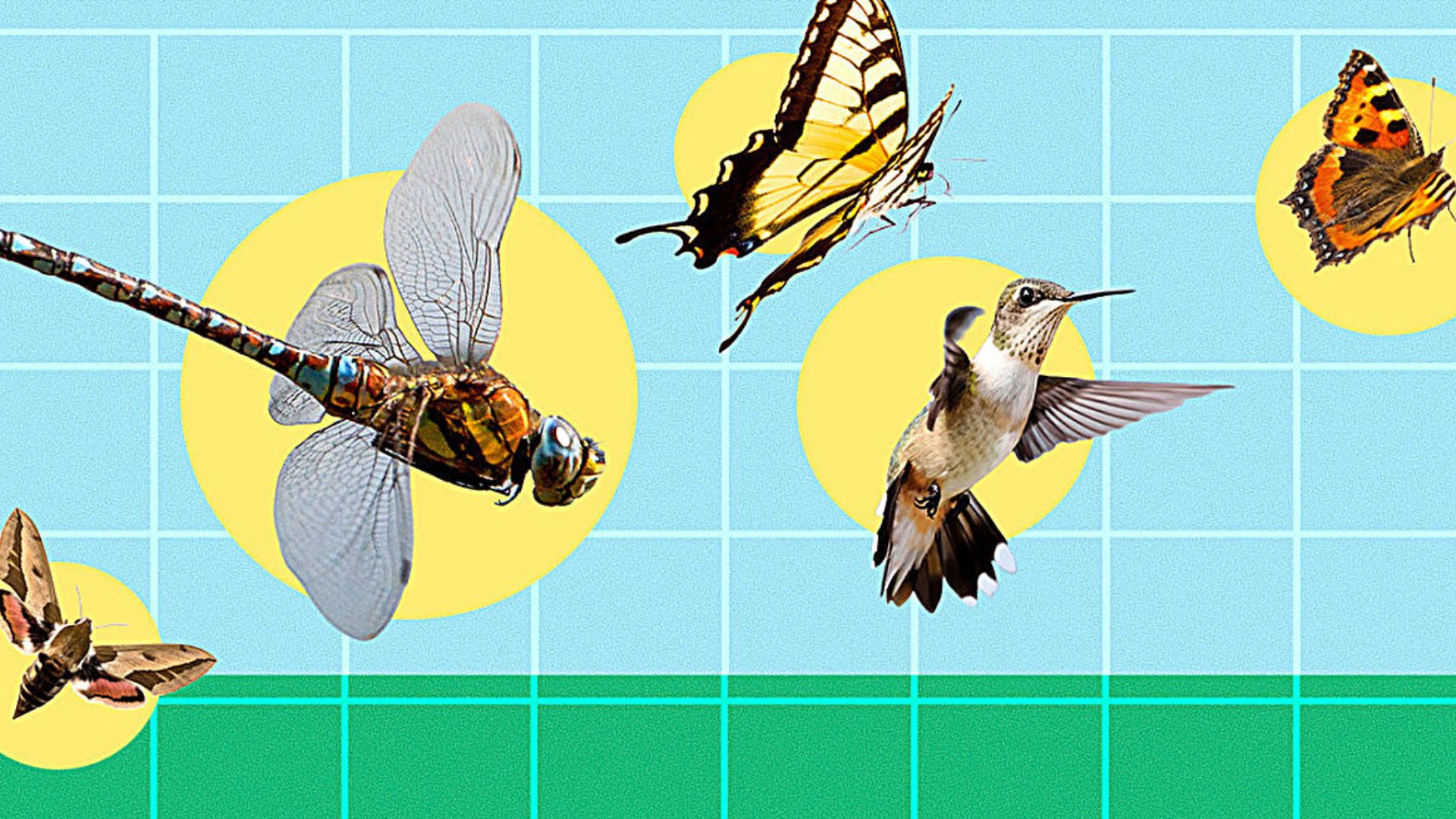
Flapping-wing micro aerial vehicles (FW-MAVs) have been developed to improve stability during flight, particularly in wind-like disturbances. These small, lightweight robots mimic the flight mechanisms of birds and insects, utilizing rapidly moving wings instead of traditional propellers. The significance of this advancement lies in the unique flight capabilities FW-MAVs offer, such as the ability to hover like hummingbirds and independently control their wings akin to dragonflies. This technology could enhance various applications, including surveillance, environmental monitoring, and search and rescue operations. Looking ahead, the continued development of FW-MAVs may lead to further improvements in their flight stability and control mechanisms. No further timeline was disclosed at the time of publication.
Robotics
Chiba University Researchers Enhance Control System for Flapping-Wing Robots in Windy Conditions
Researchers from Chiba University in Japan have developed a new control method for flapping-wing micro aerial vehicles (FW-MAVs) that significantly improves stability in windy conditions. This method addresses the limitations of existing control systems, reducing X-axis position error by 53.1 percent, which is crucial for applications like inspection and search-and-rescue operations. The importance of this advancement lies in the unique flight capabilities of FW-MAVs, which are inspired by birds and insects. Their ability to hover and maneuver in confined spaces makes them ideal for various applications, but their susceptibility to disturbances such as wind gusts has posed challenges. The new control method enhances their performance, enabling more stable and accurate flight. Looking ahead, the research paper detailing these findings will be published in the October issue of Control Engineering Practice, following its online release on June 4, 2026. The study's insights into non-minimum-phase behavior and its impact on disturbance correction will be critical for future developments in the field of aerial robotics.
Features Science aerial robotics autonomous flight Autonomous robots bio-inspired robotics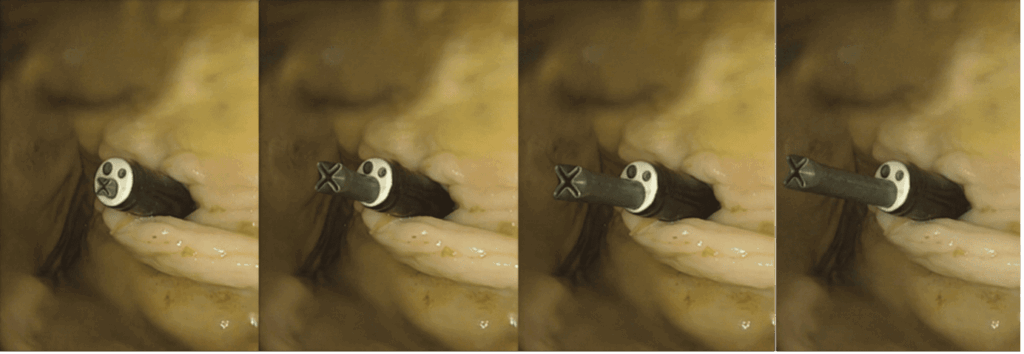
University of Leeds Develops Pressure-Free Growing Robots for Medical Applications
Researchers from the University of Leeds and the University of California San Diego received the Best Paper Award at RoboSoft for their innovative work in soft robotics. They developed a 1.8 mm soft growing robot that operates without internal pressure, allowing for safer interactions with delicate tissues during medical procedures. This advancement is significant as it addresses critical issues in minimally invasive surgeries, such as reducing friction and improving patient comfort. The robot's ability to grow and steer simultaneously enhances its usability, making it a promising tool for complex anatomical regions where precision is vital. Looking ahead, the implications of this technology could lead to improved patient outcomes in various medical applications. No further timeline was disclosed at the time of publication.

OpenAI's CEO Confirms Plans for Humanoid Robots After GPT-6 Astra Launch
Just two days before the launch of the next-generation flagship model GPT-6 Astra, OpenAI's CEO Sam Altman made a definitive statement regarding the company's plans to develop humanoid robots. This announcement positions OpenAI as a formidable competitor in the humanoid robot market, traditionally dominated by Tesla's Optimus robot, which has already influenced Tesla's stock price with expectations of a robot monopoly. The significance of OpenAI's entry into the humanoid robot space cannot be understated, as it introduces a well-funded and top-tier AI brain into the competition. Investor Gene Munster noted that the humanoid robot market is becoming a two-horse race between Tesla and OpenAI, with OpenAI holding a substantial capital advantage. This dynamic complicates the narrative surrounding Tesla's ambitions, which may be seen as speculative and harder to justify. As the competition heats up, it is crucial to observe how these three major players—OpenAI, Tesla, and NVIDIA—navigate their distinct infrastructure paradigms in the humanoid robot arena. OpenAI's historical involvement in robotics dates back to 2017 with the development of Dactyl, showcasing their long-standing commitment to the field despite their recent focus on large language models.
Humanoid Robots AI Robotics Machine Learning
Companion Robots Transitioning from Concept to Daily Life in China
In a Shenzhen nursing home, companion robots are actively engaging with elderly residents through activities like chess, poetry reading, and Tai Chi. This shift comes as China's aging population is projected to exceed 320 million by the end of 2025, highlighting the urgent need for elder care solutions. The companion robot market in China is expected to reach approximately 79.6 billion yuan in 2024 and rise to around 90 billion yuan in 2025. By the end of 2026, the market could expand to between 110 billion and 140 billion yuan, driven by advancements in edge AI. The elder care robot segment alone is anticipated to surpass 10 billion yuan by 2026. As the industry evolves, challenges such as data privacy, ethical human-robot interaction, and addiction risks are emerging. The development of emotional AI models capable of recognizing nuanced emotions is crucial for enhancing the companionship experience, marking the beginning of a significant market opportunity.
Companion Robots Elder Care AI Technology Emotional Recognition Robotics Market
China Warns of Retaliation Following US Import Restrictions on Humanoid Robots
China has issued a warning of potential retaliation against the United States following new restrictions on imports of foreign-made humanoid robots. The US Federal Communications Commission (FCC) has added these advanced robotic devices to its Covered List, which prevents new models from receiving necessary authorizations for import and sale in the US. This decision stems from concerns raised by US national security agencies regarding cybersecurity and supply chain risks associated with these devices. The implications of these restrictions are significant, as they threaten to destabilize economic and trade relations between the two largest economies in the world. China's Ministry of Commerce criticized the FCC for disregarding its measured approach to product restrictions, asserting that the latest actions could severely harm China-US economic stability. The ongoing technology rivalry, particularly in artificial intelligence and advanced robotics, is intensifying as both nations navigate their competitive landscapes. Looking ahead, the situation may complicate the prospects for Chinese robotics companies aiming for public offerings, as noted by Marc Einstein from Counterpoint Research. The potential for China to retaliate by restricting rare earth sales or limiting market access for American firms adds another layer of complexity. No further timeline was disclosed at the time of publication.
Business Economy News advanced robotics agibot artificial intelligence
Reviewing Intelligent Operation and Maintenance Robots for Urban Water Supply Networks
The Journal of Field Robotics published a review focusing on intelligent operation and maintenance robots designed for urban water supply networks. This review highlights the current advancements in robotic technologies that enhance the efficiency and reliability of water supply systems. The significance of this review lies in its potential to improve urban infrastructure management. By integrating intelligent robotic solutions, cities can address challenges such as aging infrastructure, maintenance costs, and service interruptions, ultimately leading to more sustainable water supply systems. Looking ahead, stakeholders should monitor the ongoing development of these robotic technologies and their implementation in urban settings. No further timeline was disclosed at the time of publication.
SURVEY ARTICLE
AI Robots Achieve 3,500 Garment Sorts Per Hour in South Korean Warehouse
In a warehouse located in Icheon, South Korea, a fleet of AI-guided robots is sorting garments at a remarkable rate of 3,500 items per hour, approximately four times the output of human workers. Since their deployment, the women's clothing company has reported 'zero losses'—no picking errors and no stockouts due to logistics mistakes. Despite this advancement, the sewing automation challenge remains unsolved, often referred to as the 'last mile' of textile automation. The system, developed by Baba Fashion in collaboration with South Korean automation firm Cotek Electronics, utilizes autonomous mobile robots equipped with SLAM navigation technology, eliminating the need for ground magnetic strips or embedded wires. The logistics deployment by Baba Fashion serves as a successful commercial case, while other companies, such as the leading fashion platform MUSINSA, are also investing in automated logistics solutions. The ongoing challenge of sewing automation, likened to the complexities of autonomous driving, continues to impact the future of millions of garment workers as the industry transitions into a more automated era.
AI Robotics Warehouse Automation Sewing Automation Fashion Technology
MIT and EPFL Develop Flapping Robot for Seamless Water-Air Transition with Advanced Wing Design
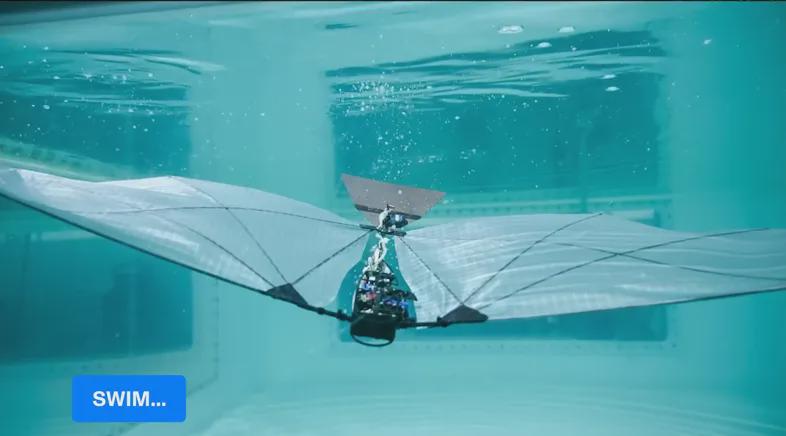
Researchers from MIT and EPFL have created a flapping robot capable of transitioning between water and air without legs. Weighing approximately 250 grams, the robot features a streamlined body, two flexible wings, and a controllable tail. It can flap its wings at frequencies of up to 6 Hz underwater and 5.2 to 11 Hz in the air, mimicking the behavior of diving birds, as detailed in a recent Science publication. This innovation is significant as it addresses the complex physical challenges of transitioning from water to air, a feat that most diving birds achieve with the aid of their legs. The robot's flexible wings reduce drag and allow for a higher flapping frequency underwater compared to rigid wings. This design not only enhances its swimming efficiency but also aligns with biological observations of diving birds, providing insights into their locomotion strategies. Looking ahead, the research team is exploring optimal wing configurations and has tested various sizes and stiffnesses. Future experiments will focus on the robot's ability to transition from water to air solely through wing flapping, a critical milestone that could reveal more about the mechanics of avian flight and inspire advancements in robotic design. No further timeline was disclosed at the time of publication.
Flapping Robots Aerial Robotics Aquatic Robotics Bio-inspired Engineering
MIT and EPFL Develop Flapping-Wing Robot for Air and Water Navigation
Engineers from MIT and EPFL have created a flapping-wing aerial-aquatic vehicle (FAAV) inspired by puffins. Weighing under 300 grams, the robot features a central fuselage, flexible wings, and a steerable tail. Field tests in Lake Geneva demonstrated its ability to swim and then take flight, showcasing its dual-medium capabilities. This innovation is significant for oceanography and marine biology, as it allows for cost-effective data collection from both air and water. The FAAV can fly at speeds of 6 meters per second and swim at 1 meter per second, providing a versatile tool for researchers. The design mimics the natural mechanics of birds, which maintain similar physical dynamics in both environments by adjusting their speed. Looking ahead, the team aims to refine the robot's ability to breach the water's surface, a challenging transition requiring a precise 70-degree pitch. No further timeline was disclosed at the time of publication, but the potential applications for environmental monitoring and research are substantial.
AI and Robotics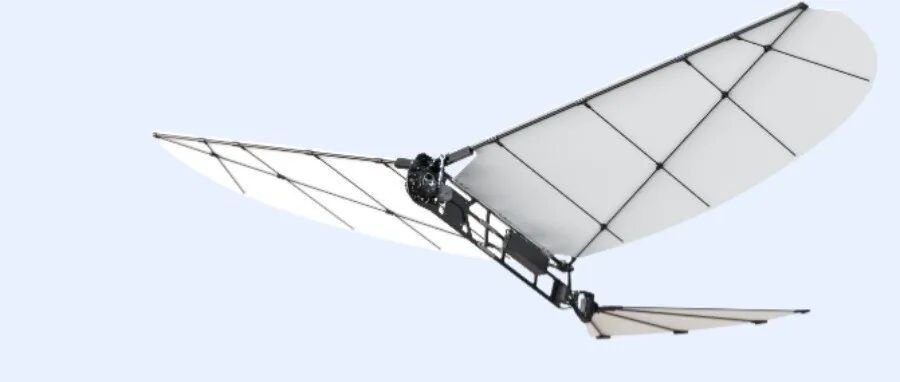
This 22-Year-Old SJTU PhD Is Building Flapping Wing Robots — and Sequoia Just Backed Him
Yingkong Zhivi, a pioneering company established by four PhD students from Shanghai Jiao Tong University, has successfully secured tens of millions of RMB in a Pre-A funding round. The investment was led by Yuanhe Origin, marking a significant milestone for the startup, which is recognized as the world's first entity dedicated to developing flapping wing robots with embodied intelligence. This innovative approach aims to enhance the capabilities of robotic systems, potentially transforming various applications in fields such as robotics and artificial intelligence. The funding will enable Yingkong Zhivi to further its research and development efforts, positioning it at the forefront of this emerging technology.
Robotics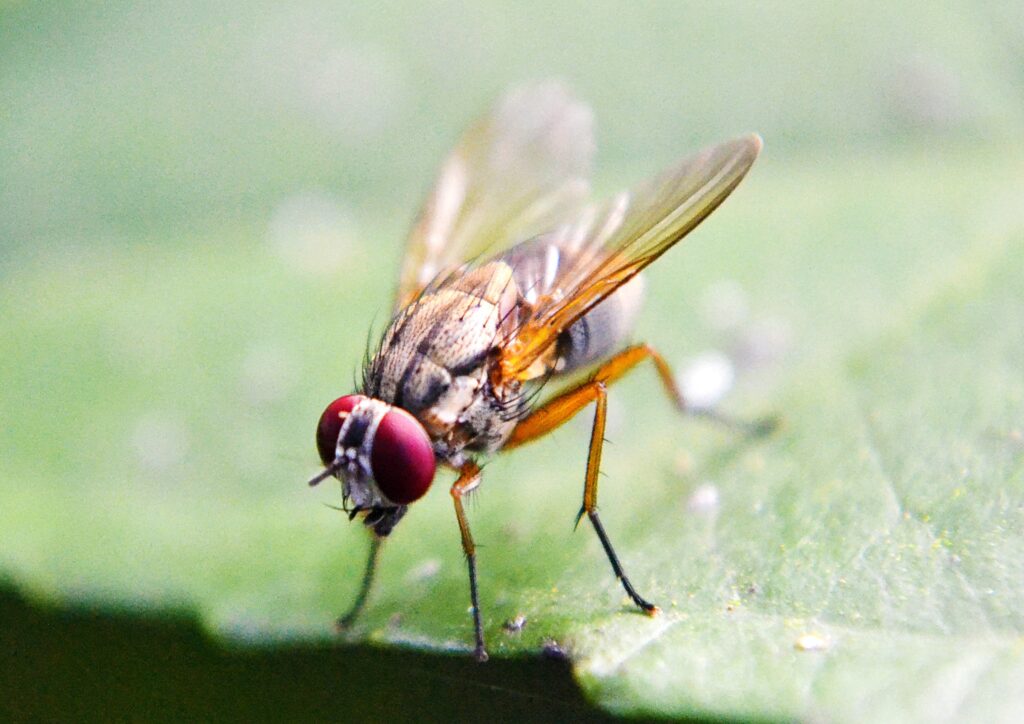
New understanding of insect flight points way to stable flapping-wing robots
Cornell University researchers have developed a sophisticated computational model to analyze the intricate dynamics of insect flight. This groundbreaking study, led by David Nutt, reveals how the physical structure, or morphology, of insects influences their ability to stabilize during flight. The research aims to deepen the understanding of flight mechanics in both insects and birds, which, despite their seemingly effortless wing movements, operate under complex aerodynamic principles. The findings could pave the way for advancements in fields such as robotics and aerodynamics, enhancing the design of flying machines by mimicking the natural flight patterns observed in these creatures.
Cornell’s insect-inspired 3D model could allow flapping-wing robots to fly stably
Researchers at Cornell University have unveiled a groundbreaking 3D computational model designed to decode complex physical phenomena. This innovative model, which was developed over the past year, aims to enhance our understanding of various scientific processes by simulating intricate interactions within physical systems. The research team, led by a group of physicists and engineers, conducted extensive experiments and simulations to refine the model's accuracy and applicability. The development of this model is particularly significant as it addresses longstanding challenges in the field of physics, providing a tool that can potentially revolutionize how scientists approach problem-solving in areas such as material science, fluid dynamics, and even climate modeling. By leveraging advanced algorithms and high-performance computing, the researchers were able to create a more precise representation of physical interactions, which could lead to new discoveries and innovations. This work not only showcases the capabilities of modern computational techniques but also underscores the importance of interdisciplinary collaboration in advancing scientific knowledge. The findings of this research are expected to be published in a leading scientific journal, contributing to ongoing discussions and developments in the field.

New understanding of insect flight points way to stable flapping-wing robots
Researchers at Cornell University have developed a groundbreaking computational model that analyzes how the physical characteristics of insects influence their flight stability. This innovative study sheds light on the intricate dynamics that allow both bugs and birds to soar gracefully through the air, a phenomenon that has long been challenging to quantify. Conducted recently, the research aims to deepen our understanding of the evolution of animal flight. Additionally, the findings could serve as a valuable framework for the design of advanced flapping-wing robots, potentially revolutionizing the field of robotics.
Robotics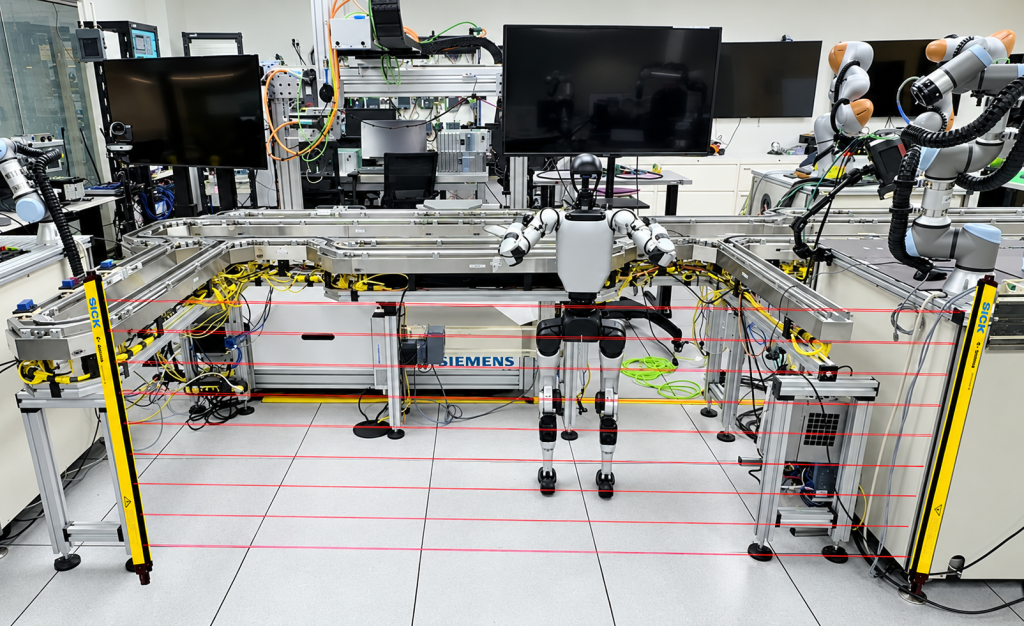
Carnegie Mellon Researchers Develop New Safety Measures for Humanoid Robots
Researchers at Carnegie Mellon University are exploring innovative safety measures for humanoid robots as they become more prevalent in various environments. Changliu Liu, an associate professor at CMU's Robotics Institute, emphasizes the importance of improved safety protocols, especially after observing numerous incidents where humanoids have caused harm. The partnership with Siemens has led to the development of a method to assess the 'safe stoppability' of these robots, aiming to enhance their operational safety. The significance of this research lies in the increasing integration of humanoid robots into workplaces, public spaces, and homes, where the potential for accidents is heightened. Liu and her team are working towards a future where humanoids can autonomously assess their safety and avoid dangerous situations. Current emergency stop mechanisms are inadequate for humanoids, as simply cutting power can lead to falls and injuries, necessitating a more nuanced approach to robot safety. Looking ahead, the researchers are focused on defining the operational conditions under which humanoids can safely stop. This involves understanding the context in which a robot operates, as various factors such as surrounding obstacles or the robot's current actions can influence its ability to halt safely. No further timeline was disclosed at the time of publication.
Research
U.S. Becomes Second-Largest Market for Industrial Robots After China
The International Federation of Robotics has released the World Robotics 2026 Report, revealing that the United States installed 38,400 industrial robots in 2025. This figure represents a 12% increase compared to the previous year and positions the U.S. as the second-largest market for industrial robots globally, following China. This development is significant as it highlights the growing demand for automation in U.S. industries, surpassing Japan's installation of 36,200 robots. The increase in industrial robot installations reflects a broader trend of technological adoption aimed at enhancing productivity and efficiency in manufacturing processes. Looking ahead, the U.S. robotics market is expected to continue expanding, driven by advancements in automation technology and increasing investment in industrial robotics. No further timeline was disclosed at the time of publication.

Unitree CEO Predicts 'ChatGPT Moment' for Robotics Industry Following IPO
Unitree's CEO, Wang Xingxing, stated that the robotics industry is approaching a 'ChatGPT moment' for robot intelligence, following the company's significant IPO in Shanghai. This event underscores China's ambition to lead in AI-powered machines, despite a recent 11% drop in share prices after an initial surge. The CEO emphasized that advancements in embodied intelligence could enable robots to perform around 80% of tasks in unfamiliar environments through simple voice or text commands. This potential breakthrough is seen as a critical tipping point for the robot industry, which is expected to experience explosive growth as AI capabilities evolve. Wang cautioned that while a major leap in robot software could occur in two to three years, it may take up to ten years for full realization. As the largest producer of robot dogs and the second-largest maker of humanoid robots, Unitree's developments will be closely watched as the industry progresses towards this pivotal moment.
MIT Develops 250-Gram Robotic Bird Capable of Swimming and Flying
MIT has unveiled a groundbreaking 250-gram robotic bird that can seamlessly transition between swimming and flying. This innovative design utilizes a unique 'water-to-air switching' mechanism, making it as simple as flapping its wings. The development represents a significant advancement in robotics, showcasing the potential for versatile applications in various environments. The importance of this robotic bird lies in its ability to operate efficiently in both aquatic and aerial settings. This dual functionality could revolutionize how robots are deployed for tasks such as environmental monitoring, search and rescue operations, and wildlife observation. The lightweight design enhances maneuverability, allowing for more agile movements in diverse conditions. Looking ahead, industry experts will be monitoring the potential applications of this technology in real-world scenarios. The implications for robotics in both land and water environments are vast, and further developments from MIT could lead to even more sophisticated robotic systems. No further timeline was disclosed at the time of publication.
Robotics Automation AI
Zhejiang Humanoid Robot Innovation Center Expands Global Reach with 2,000-Unit NAVIAI Order
The Zhejiang Humanoid Robot Innovation Center has successfully deployed NAVIAI robots at SUPCON JACK GREE and FOTILE. This deployment marks a significant step in the center's expansion efforts. The center has signed a substantial order for 2,000 NAVIAI robots with Jack Technology, highlighting the growing demand for humanoid robots in the apparel industry. This order is a testament to the increasing integration of robotics in manufacturing processes. Additionally, the center is expanding its operations internationally, with deployments planned in BEKO Turkey and KION Germany. This move signifies a strategic effort to enhance global partnerships and broaden the application of humanoid robotics in various sectors. No further timeline was disclosed at the time of publication.
Industry
Robot Revolution Brewing: Cainiao's ZeeBot Climbing Robots Transform Global Warehousing
Cainiao, the logistics arm of Alibaba, has introduced over 100 ZeeBot climbing robots at its European fulfillment center, significantly enhancing operational efficiency. This deployment, announced recently, aims to triple floor efficiency and double labor productivity within the facility. The initiative is part of Cainiao's broader strategy to leverage advanced automation technologies to streamline logistics and meet the growing demands of e-commerce in Europe. By integrating these robots into their operations, the company seeks to optimize space utilization and improve the speed of order processing, ultimately enhancing service delivery to customers.
Technology
LUMOS Robotics Offers 100 NIX Robots for Global Co-Creation After Mind-Blowing Street Dance Showcase
A startup has unveiled its upgraded NIX robots, which now feature enhanced dance, flipping, and dynamic motion capabilities. This development marks a significant advancement in robotic technology, showcasing the potential for more expressive and versatile machines. The company plans to distribute 100 of these advanced robots to selected global partners, allowing them to explore various applications and integrations. Additionally, the startup will provide access to a software development kit (SDK) for these partners, facilitating further innovation and customization. This initiative aims to expand the use of robotics in entertainment and other industries, highlighting the growing intersection of technology and creativity.
RoboFly.D—A Bio‐Inspired Hover‐Capable Flapping Wing Robot
In a recent publication in the Journal of Field Robotics, researchers have unveiled significant advancements in robotic navigation systems, particularly focusing on enhancing the accuracy and efficiency of autonomous vehicles. This study, released in May 2026, highlights innovative algorithms that enable robots to better interpret complex environments, thereby improving their decision-making capabilities. Conducted by a team of experts in robotics and artificial intelligence, the research aims to address the growing need for reliable navigation solutions in various applications, from urban transportation to agricultural automation. The findings suggest that by integrating advanced sensor technologies and machine learning techniques, robots can now navigate challenging terrains with unprecedented precision. The study was carried out in diverse settings, including urban landscapes and rural fields, to test the algorithms under real-world conditions. The motivation behind this research stems from the increasing reliance on autonomous systems in everyday life, necessitating improvements in their operational reliability and safety. Through extensive field trials and simulations, the researchers demonstrated that the new navigation systems significantly reduce the likelihood of errors, thereby enhancing the overall performance of autonomous vehicles. This work not only contributes to the field of robotics but also paves the way for future innovations in automated systems, ultimately aiming to facilitate safer and more efficient transportation solutions.
RESEARCH ARTICLE
AGIBOT's Humanoid Robots Take Home Multiple Best of CES 2026 Awards Following U.S. Debut
At CES 2026, AGIBOT showcased its advanced humanoid and quadruped robots, marking a significant milestone in the company's U.S. debut. The innovative designs garnered multiple Best of CES awards, underscoring AGIBOT's emergence as a leader in the robotics industry. The A2 Series and other models were praised for their operational maturity and practical applications across various sectors, demonstrating AGIBOT's effective transition from research and development to market deployment. This achievement reflects the company's commitment to advancing robotics technology and addressing real-world challenges.
Robotics Humanoid Robots Artificial Intelligence Technology CES 2026
Figure CEO Brett Adcock Says Company ‘Will Not Teleoperate’ Robots, Drawing Contrast with 1X Strategy
During a panel discussion at the NVIDIA GTC, Brett Adcock, CEO of Figure, expressed skepticism about the future of teleoperation, labeling it as "soy stuff." He emphasized that the true competition between the United States and China lies in the development of general-purpose artificial intelligence rather than in manufacturing capabilities. Adcock's remarks reflect a growing sentiment in the tech industry that prioritizes advancements in AI technology as a critical factor in global competitiveness. The event, which took place recently, highlighted the ongoing dialogue surrounding the strategic directions of AI development and the implications for both nations.
Brett Adcock 1X-technologies nvidia-gtc teleoperation FigureRobotics needs a service framework.
RSF defines a common language for robot service capability, lifecycle operations, certification pathways, and service-provider networks.
Join the RobotToday community on LinkedIn
Daily robotics news, in-depth analysis, conference highlights, and discussions with professionals worldwide.







