

MIT and EPFL Develop Flapping Robot for Seamless Water-Air Transition with Advanced Wing Design
- Published
- Source
- leaderobot.com
Researchers from MIT and EPFL have created a flapping robot capable of transitioning between water and air without legs. Weighing approximately 250 grams, the robot features a streamlined body, two flexible wings, and a controllable tail. It can flap its wings at frequencies of up to 6 Hz underwater and 5.2 to 11 Hz in the air, mimicking the behavior of diving birds, as detailed in a recent Science publication.
This innovation is significant as it addresses the complex physical challenges of transitioning from water to air, a feat that most diving birds achieve with the aid of their legs. The robot's flexible wings reduce drag and allow for a higher flapping frequency underwater compared to rigid wings. This design not only enhances its swimming efficiency but also aligns with biological observations of diving birds, providing insights into their locomotion strategies.
Looking ahead, the research team is exploring optimal wing configurations and has tested various sizes and stiffnesses. Future experiments will focus on the robot's ability to transition from water to air solely through wing flapping, a critical milestone that could reveal more about the mechanics of avian flight and inspire advancements in robotic design. No further timeline was disclosed at the time of publication.
Original report
Innovative Flapping Robot Can Transition from Water to Air Without Legs
leaderobot.com · LeaderobotThis briefing is an independently written summary based on publicly available reporting and is provided for industry information and news discovery. The original report and source publication are credited and linked where applicable. RobotToday does not claim ownership of third-party source material.
Rights concerns? Contact [email protected] with the relevant URL and details. We will review the matter and take appropriate action where warranted.
More related news
- 1
- 2
- 3
- 4
- 5
- 6
- 7
- 8
- 9
- 10
- 11
- 12
Related Suppliers

EPFL (École Polytechnique Fédérale de Lausanne)
Switzerland
Switzerland's federal technical university in Lausanne, founded 1969, hosting 27+ robotics labs spanning intelligent systems, biorobotics and aerial robotics.
Northeastern University — Institute for Experiential Robotics
United States
Boston-based Northeastern University institute at 815 Columbus Avenue; researches legged, soft and medical robotics through labs led by Lipton, Padir and Song.

GIPSA-lab (UMR 5216)
France
GIPSA-lab is a Grenoble signal, control and speech lab (UMR 5216) of 320 members that builds custom flying robots and the NINA humanoid robot.

Tangent Robotics
United States
New York City spin-out of Columbia Engineering building tactile multi-finger robot hands and learned dexterity policies; raised a 4.5M pre-seed round in 2026.

Apave
France
French risk management group founded 1867; 18,500 staff in 60 countries providing inspection, testing, training, certification & consulting.

Owens Design
United States
Owens Design is a USA system integrator founded in 1983 that designs and builds custom automation equipment for semiconductor, life science, and high-tech.
Biomimetic Robotics Lab, MIT
United States
MIT Mechanical Engineering lab led by Prof. Sangbae Kim that created the Cheetah 3 and backflipping Mini Cheetah quadrupeds and the MIT Humanoid.
Beijing HARIBIT Intelligent Technology Co., Ltd. 北京理工华汇智能科技有限公司
China
Beijing-based BIT spinoff HARIBIT builds bipedal and wheel-legged humanoid robots and the high-torque actuators that power them.

Robot Aviation
Norway
Norwegian UAS developer founded 2008, producing fixed-wing and VTOL SkyRobot drones for military surveillance, inspection, and disaster response missions.

UAV Works
Spain
Spanish UAV manufacturer founded 2014, specializing in convertible VTOL fixed-wing drones for maritime surveillance, courier delivery, and aerial mapping.
TripleA Robotics
Denmark
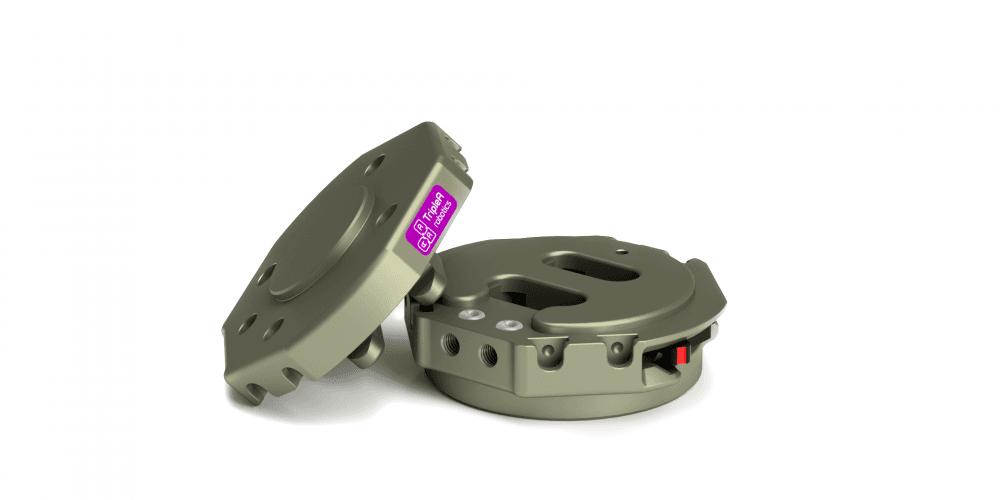
Odense, Denmark cobot accessory maker founded 2019; its WINGMAN tool changer holds a 33 kg payload in a 30 mm, 260 g housing.

High Eye BV
Netherlands
Dutch SME designing and manufacturing the Airboxer long-range VTOL UAV for maritime surveillance, defense ISR, and border security missions.
Robotics needs a service framework.
RSF defines a common language for robot service capability, lifecycle operations, certification pathways, and service-provider networks.
Join the RobotToday community on LinkedIn
Daily robotics news, in-depth analysis, conference highlights, and discussions with professionals worldwide.


