Industry Briefing
A single destination for timely, editor-curated robotics news from around the world.

Enhancing Urban Traffic Management Efficiency with IoT-Aided Robotics and Graph Neural Networks
Recent advancements in IoT-aided robotics have shown significant potential for improving urban traffic management. By utilizing a multi-component attention graph convolutional neural network, these systems can enhance real-time traffic monitoring capabilities, leading to more efficient traffic flow and reduced congestion. This development is crucial as urban areas continue to face increasing traffic challenges. The integration of advanced robotics and IoT technologies can provide city planners and traffic management authorities with the tools needed to optimize traffic patterns and improve overall urban mobility. Looking ahead, the focus will be on the implementation of these technologies in real-world scenarios. Continued research and development in this area will be essential to fully realize the benefits of IoT-aided robotics in urban traffic systems. No further timeline was disclosed at the time of publication.
RESEARCH ARTICLE
Emerson Introduces Ovation Curation Tool for Enhanced Control Systems Management
Emerson has launched the Ovation Curation Tool, a synchronization software designed for power and water control systems. This tool aims to maintain version control and change history across multiple Ovation systems and simulators, automating the management of changes between production systems and their digital twins. The introduction of the Ovation Curation Tool is significant as it addresses the challenges of keeping digital twins synchronized with live systems, especially amid workforce shortages. By improving testing and training accuracy, the tool is expected to save engineering time and facilitate faster troubleshooting, enhancing overall operational efficiency. Looking ahead, the software's ability to automatically track changes and provide an intuitive dashboard for users will be crucial for organizations seeking to optimize their control systems. No further timeline was disclosed at the time of publication.
Factory / Digital Transformation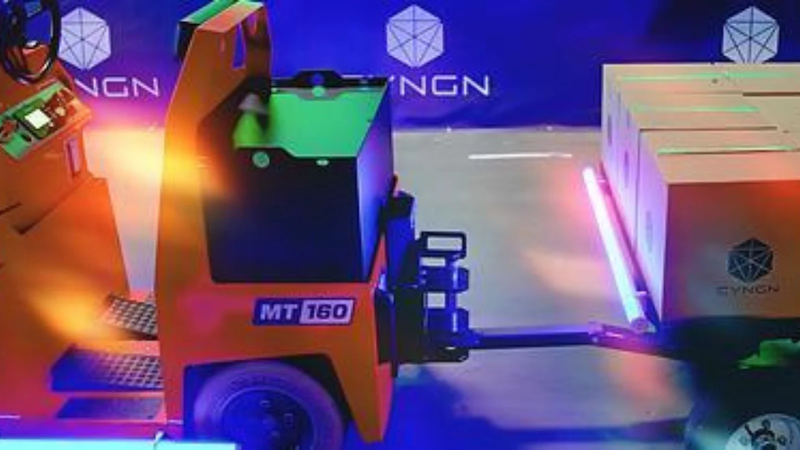
Cyngn Achieves ISO 27001 Certification for Information Security Management Systems
Cyngn, a maker of autonomous warehouse robots, has successfully obtained ISO/IEC 27001:2022 certification, which is a globally recognized standard for information security management systems. This certification confirms that Cyngn has established an Information Security Management System (ISMS) that complies with the ISO/IEC 27001:2022 requirements, specifically for its cloud-based fleet management platform, Cyngn Insight. The significance of this certification lies in its role in meeting the security and governance needs of large enterprise customers. As the integration of autonomous vehicle deployments with customer networks and enterprise infrastructure becomes more prevalent, cybersecurity and information governance are critical factors in the evaluation and procurement processes. Lior Tal, CEO of Cyngn, emphasized that this certification provides independent validation of their security systems and helps eliminate barriers when collaborating with sophisticated enterprise organizations. Looking ahead, Cyngn aims to complete its SOC 2 Type II examination by October 2026, which will further enhance its readiness for deployments with security-focused organizations. This move is crucial as manufacturers and logistics operators increasingly demand stringent security measures for connected technologies in their operations. No further timeline was disclosed at the time of publication.

Improving Traffic Management in Automated Logistics Parks with Integrated Systems
Recurring vehicle queues at logistics facilities are increasingly seen as reflections of broader operational issues rather than just infrastructure problems. Andrei Iacobiță, managing director at IESYS, emphasizes the importance of an integrated Traffic Management System (TMS) to manage vehicle flow effectively. By analyzing operational indicators such as throughput and dwell time, facilities can better understand their capacity and respond to fluctuations in demand. The timing of operational information is crucial for logistics facilities to adapt to changing traffic conditions. Strategic decisions made during site design, including the placement of vehicle identification technologies, can significantly impact operational performance. When vehicle data is shared with the TMS, it can facilitate proactive routing and loading decisions, preventing congestion before it occurs. As logistics parks become more automated, the connection between vehicle movements and operational processes will be vital. By integrating various systems through the TMS, operators can gain a comprehensive view of how different factors influence traffic performance, enabling them to address underlying issues more effectively. No further timeline was disclosed at the time of publication.
Couriers and Express CV, Trucks, Vans and Trailers Loading Bay and Doors Road Transport and Haulage TMS and Telematics Transport and Distribution
Tattu Launches 5.0 Smart Battery Platform as Heavy-Lift Drones Demand Faster Charging and Smarter Fleet Power Management
A new platform has been developed for 100kg-class agricultural and logistics unmanned aerial vehicles (UAVs), showcasing advanced technological features aimed at enhancing operational efficiency. This innovative system integrates high-discharge performance capabilities, enabling rapid energy release during flight. Additionally, it supports 6C fast charging, significantly reducing downtime for UAVs between missions. The platform also incorporates an intelligent Battery Management System (BMS) that optimizes battery performance and longevity, while providing access to lifecycle data for better maintenance and operational planning. This development is expected to revolutionize the agricultural and logistics sectors by improving the reliability and efficiency of UAV operations, ultimately contributing to increased productivity in these industries.

Airspace Management Systems Help Prioritize Emergency Drones
NASA is advancing its airspace management initiatives to enhance public safety for drones, particularly in response to the increasing challenges posed by congested urban environments. As urban areas become more populated and the use of drones expands, the agency is focusing on innovative solutions to ensure safe and efficient air traffic management. This initiative aims to address the complexities of integrating drones into existing airspace systems, thereby reducing the risk of accidents and improving overall safety for both drone operators and the public. Through research and development, NASA is exploring new technologies and strategies that will facilitate the seamless operation of drones in crowded cityscapes, ultimately paving the way for a safer and more organized airspace.
Robotics needs a service framework.
RSF defines a common language for robot service capability, lifecycle operations, certification pathways, and service-provider networks.
Join the RobotToday community on LinkedIn
Daily robotics news, in-depth analysis, conference highlights, and discussions with professionals worldwide.