Top News

Industry Briefing

A single destination for timely, editor-curated robotics news from around the world.
Chinese AI company offers a new solution for physical AI in the uncertain trillion-dollar market.

Chinese AI company offers a new solution for physical AI in the uncertain trillion-dollar market.

In 2026, the field of physical AI is set to emerge as a transformative force, following a consensus reached by industry leaders at the CES in Las Vegas, where NVIDIA's CEO Jensen Huang heralded the arrival of "physical AI's ChatGPT moment." Over the past two years, significant advancements have been made in five key areas: brain models, imagination engines, training environments, ontology, and commercial ecosystems, laying the groundwork for real-world applications. In the first half of 2026, global investment in physical AI surged, with over $6.4 billion raised in just the first quarter, including notable funding rounds from AMI Labs and World Labs. The industry is witnessing a clear technological divergence, with three primary paths emerging: Visual Language Models (VLM), Visual Language Action (VLA), and world models. The anticipated future architecture for physical AI is expected to integrate VLA's decision-making capabilities with world models' predictive simulations. Despite the rapid growth, the competitive landscape remains uncertain, with various companies pursuing different strategies, including those focusing solely on VLA or world models, and others exploring hybrid approaches. The ultimate goal is to develop AI that can effectively navigate and understand the complexities of the physical world, moving beyond mere reactive capabilities to proactive, autonomous decision-making. As the physical AI market is projected to expand significantly, reaching an estimated $3.26 trillion by 2040, the industry faces the challenge of ensuring that technology translates into tangible business value. Companies like Om AI are pioneering innovative models that prioritize continuous perception and spatial understanding, aiming to redefine how AI interacts with its environment. The ongoing evolution of physical AI emphasizes the importance of real-world applications and the need for AI systems that can adapt and respond to dynamic physical spaces.

Former Baidu autonomous driving lab head raises millions in angel funding for global robot model startup.

Former Baidu autonomous driving lab head raises millions in angel funding for global robot model startup.

Nuwa Robotics, a company specializing in embodied intelligence, has successfully secured 50 million yuan in angel funding, led by Blue Lake Capital with participation from various investors including Qiongcheng Puyi Investment. This funding follows a seed round completed two months prior, led by Plug and Play China. Founded in February 2026 by Dr. Yang Ruigang, a former director at Baidu’s autonomous driving and robotics lab, Nuwa aims to advance robotic capabilities in navigating complex human environments. As the field of embodied intelligence gains momentum, industry consensus is forming around the need for a "layered decoupling" approach. Nuwa is focusing on developing a "World Traversal Model" (WTM) that enables robots to autonomously navigate, interact, and complete tasks in human settings, addressing a critical gap in the industry. This model is designed to be compatible with various robotic platforms, including humanoid robots and delivery vehicles. Nuwa's technology integrates high-fidelity physical simulation with advanced data generation techniques to create a robust training environment for its WTM. The company has made significant strides in motion control and navigation capabilities, allowing robots to navigate complex terrains without relying on high-precision maps. Additionally, Nuwa is prioritizing social behavior compliance, essential for robots operating in public spaces. With plans to deploy the WTM in real-world applications by 2026, Nuwa aims to validate its core capabilities and expand its operational scale. Blue Lake Capital expressed confidence in Nuwa’s vision, highlighting the potential for the company to overcome key industry challenges and pioneer advancements in intelligent navigation.

IACLEA Launches National Campus Drone Program with Draganfly

IACLEA Launches National Campus Drone Program with Draganfly

The International Association of Campus Law Enforcement Administrators (IACLEA) has introduced a national initiative aimed at assisting colleges and universities in developing compliant drone programs that prioritize public safety, training, and governance. This program, launched recently, seeks to provide a structured framework for educational institutions to effectively integrate drone technology into their safety protocols. To enhance this initiative, IACLEA has partnered with Draganfly, a leading drone manufacturer, to ensure that the programs align with best practices and regulatory standards. The collaboration aims to equip campus law enforcement with the necessary tools and knowledge to utilize drones effectively, thereby improving safety measures on campuses across the nation.

Applications Defense defense Drone News Drone News Feeds drone security
Robot hand company settles Tesla trade secret suit and announces $11M raise

Robot hand company settles Tesla trade secret suit and announces $11M raise

Proception, a startup focused on advancing robotics, is innovating in the field of training data collection to address the complex challenges associated with robotic hand functionality. Established with the aim of enhancing robotic dexterity, the company is developing methods to gather and analyze data that will improve the performance of robotic hands. This initiative comes in response to the growing demand for more sophisticated and capable robotic systems in various industries. By leveraging cutting-edge technology and research, Proception aims to overcome the limitations currently faced in robotic manipulation, ultimately contributing to the evolution of robotics as a whole. The startup's efforts are expected to play a significant role in shaping the future of automation and robotics, particularly in applications requiring intricate hand movements.

AI Robotics Exclusive proception robotics
HKU Professor Li Hongyang secures hundreds of millions in seed funding for his startup on embodied AI.

HKU Professor Li Hongyang secures hundreds of millions in seed funding for his startup on embodied AI.

Archon Robotics, a Shanghai-based company specializing in whole-body humanoid models, has successfully secured hundreds of millions in seed funding from prominent investors, including ZhenFund, Gao Rong Capital, IDG Capital, and others. The financing round, which took place recently, aims to enhance the development of humanoid models, collect multimodal motion data, expand the talent team, and establish research centers and industry partnerships, with the goal of launching an open-source humanoid model by the end of this year. Founded in April 2026, Archon Robotics focuses on creating whole-body intelligence for humanoid robots, enabling them to perform complex tasks that require full-body coordination. The company's founder, Dr. Hongyang Li, is an assistant professor at the University of Hong Kong and has received accolades for his work in autonomous driving. Co-founder and CEO Dr. Tianyu Li, along with the core team, brings expertise from top institutions and has a strong background in robotics and AI. The humanoid robotics sector is at a pivotal moment, with significant investments occurring but lacking a unified technical consensus. Current limitations in training data restrict robots to simple tasks, as they often lack the necessary information for complex human-like interactions. Archon Robotics aims to address these gaps by redefining data collection methods to better capture human coordination and movement dynamics. The company plans to release its first humanoid model in late 2026, emphasizing the need for robots to operate effectively in dynamic home environments. By focusing on comprehensive data collection and understanding physical interactions, Archon Robotics seeks to advance the capabilities of humanoid robots beyond current limitations.

Danish robotics startup enters the industrial truck market already crowned a winner

Danish robotics startup enters the industrial truck market already crowned a winner

The Mobile Robot Company has been awarded the prestigious IFOY Industrial Truck of the Year Award for 2026, recognizing its innovative self-driving pallet jack. This advanced technology is designed to enhance operational efficiency in warehouses by automating repetitive transport tasks while allowing operators to maintain control over the process. The award highlights the company's commitment to improving logistics and warehouse management through automation. The recognition comes as the industry increasingly seeks solutions that balance automation with human oversight, addressing the growing demand for efficiency in supply chain operations.

What lessons is Ideal learning to catch up with FSD V14?

What lessons is Ideal learning to catch up with FSD V14?

The competitive landscape of the intelligent driving industry has undergone significant changes in recent years, shifting from hardware specifications to advanced model development. Companies are increasingly recognizing that merely having larger models is insufficient for achieving generational advantages; instead, the integration of models, data, computing power, and chips into a continuous iterative loop is becoming crucial. This realization has prompted many automakers to invest in in-house research and development. Tesla has established a comprehensive ecosystem that spans data collection, training infrastructure, and self-developed chips, while Chinese companies like Li Auto, Xpeng, and NIO are also deepening their technological foundations. Li Auto has introduced its self-developed Mach M100 chip in its L8 and L9 models, which it views as a significant advancement in AI technology. In a recent discussion with Li Auto's autonomous driving and chip leaders, they emphasized that the industry should focus on the practical problems these investments aim to solve rather than merely the existence of in-house development. They outlined their strategies to achieve performance comparable to Tesla's Full Self-Driving (FSD) system, highlighting the importance of safety, efficiency, and comfort in user experience. As the industry moves towards higher levels of autonomy, the integration of vision and language models is seen as essential for developing systems that can handle complex, unforeseen scenarios. The executives noted that achieving higher levels of autonomy (L3 and L4) requires models that can reason and think like humans, underscoring the growing significance of language in AI systems. Overall, the conversation revealed the industry's focus on enhancing AI capabilities through innovative chip design and data utilization, aiming for a future where autonomous driving technology can meet the challenges of real-world driving conditions.

General Intuition raises $320M to use video game data to train robots

General Intuition raises $320M to use video game data to train robots

General Intuition has secured $320 million in funding to enhance its innovative approach to artificial intelligence training for robotics. The company is leveraging video game clips that feature embedded action labels to accelerate the training process for AI systems. This funding will enable General Intuition to further develop its technology, which aims to improve the efficiency and effectiveness of robotic learning. By utilizing the rich data from video games, the company seeks to provide robots with a more nuanced understanding of actions and environments, ultimately advancing the field of robotics. The investment comes at a time when the demand for sophisticated AI solutions in various industries is on the rise, highlighting the potential impact of General Intuition's work in shaping the future of robotics.

Artificial Intelligence Artificial Intelligence / Cognition Design / Development Financial Investments News
Video: Robot dog delivers pulse-powered firefighting for safer emergency operations

Video: Robot dog delivers pulse-powered firefighting for safer emergency operations

DEEP Robotics, a prominent Chinese robotics company, has unveiled a groundbreaking fire-extinguishing robot dog that aims to enhance firefighting efforts. This innovative technology was showcased during a recent demonstration in Hangzhou, China. The robot dog is equipped with advanced sensors and firefighting capabilities, allowing it to navigate hazardous environments and effectively combat fires in areas that may be too dangerous for human firefighters. The motivation behind this development stems from the increasing need for efficient firefighting solutions, especially in urban areas where traditional methods can be limited by accessibility and safety concerns. By integrating robotics into emergency response, DEEP Robotics seeks to improve safety for firefighters and increase the effectiveness of fire control measures. The demonstration highlighted the robot dog's agility and precision, showcasing its ability to operate autonomously while also being remotely controlled by operators. This dual functionality ensures that the robot can adapt to various situations, providing crucial support during emergencies. As urbanization continues to rise, the introduction of such technology could significantly transform firefighting strategies, making them safer and more efficient.

AI and Robotics
AI in warfare – friend or foe?

AI in warfare – friend or foe?

Military organizations are increasingly integrating artificial intelligence into various facets of warfare, significantly enhancing their operational capabilities. This shift includes advancements in targeting systems, which utilize AI to improve accuracy and efficiency in combat scenarios. Additionally, training simulations are being revolutionized through AI, providing soldiers with more realistic and adaptive training environments. The use of autonomous drones, powered by AI, is also on the rise, allowing for more strategic and precise missions without direct human intervention. This trend has gained momentum as military leaders recognize the potential of AI to transform traditional warfare tactics. The integration of these technologies is seen as essential for maintaining a competitive edge in modern conflicts. As of October 2023, the focus on AI in military applications reflects a broader commitment to innovation and modernization within defense strategies. The ongoing development and deployment of these technologies are expected to reshape the future of military operations, emphasizing the importance of adapting to rapidly evolving technological landscapes.

Analyst Comment
Empowering STEM Education and Research in the Americas: Elephant Robotics Introduces Integrated Educational Robotics Solutions

Empowering STEM Education and Research in the Americas: Elephant Robotics Introduces Integrated Educational Robotics Solutions

In recent years, STEM education has seen significant growth, fueled by a rising demand for practical engineering skills, artificial intelligence literacy, and interdisciplinary innovation. Despite this progress, schools, universities, and research laboratories continue to face challenges in creating effective robotics environments. Educators often struggle to integrate various components such as robotic arms, mobile platforms, sensors, and open-source software from multiple sources, complicating the development of comprehensive robotics programs. This ongoing issue highlights the need for streamlined solutions that can enhance the teaching and learning of robotics in educational settings.

Design Research Robotics AI education americas automation news
Students from across the Northeast step inside MIT.nano’s cleanroom

Students from across the Northeast step inside MIT.nano’s cleanroom

A hands-on boot camp is currently underway, aimed at teaching integrated photonics to students from community and four-year colleges in the region. This educational initiative, which focuses on practical skills and knowledge in the rapidly evolving field of photonics, is designed to equip participants with the necessary tools to excel in this technology-driven industry. The program is taking place in local educational institutions, fostering collaboration and learning among students from diverse backgrounds. By providing this training, organizers hope to enhance the workforce's capabilities and address the growing demand for expertise in integrated photonics. The boot camp emphasizes experiential learning, allowing students to engage directly with the technology and gain valuable insights into its applications and implications.

Materials Research Laboratory MIT.nano Education, teaching, academics STEM education Manufacturing Industry
How Cold Chain Operators Are Turning Energy Flexibility Into a Competitive Advantage

How Cold Chain Operators Are Turning Energy Flexibility Into a Competitive Advantage

Cold storage facilities, known for their high energy consumption, face increasing challenges as the cost of electricity becomes more dependent on consumption timing rather than just the volume used. This shift in energy pricing creates a difficult situation for operators who have traditionally viewed electricity costs as fixed. As refrigeration systems must run continuously to maintain product integrity, the significant energy load required raises concerns about operational expenses and sustainability. The industry is now compelled to adapt to these changing dynamics, prompting a reevaluation of energy management strategies to mitigate costs and enhance efficiency.

Business Logistics automation news cold chain cold chain logistics cold storage
BMW’s smart factory in US gets Figure 03 humanoid robot for advanced logistics work

BMW’s smart factory in US gets Figure 03 humanoid robot for advanced logistics work

BMW Group has enhanced its manufacturing processes by integrating next-generation Physical AI technologies. This initiative, announced recently, aims to improve efficiency and precision in production lines. The implementation of these advanced AI systems is taking place at various BMW facilities worldwide, reflecting the company's commitment to innovation and modernization in the automotive industry. By leveraging Physical AI, BMW seeks to streamline operations, reduce costs, and enhance product quality, ultimately responding to the growing demand for smarter manufacturing solutions. The integration process involves upgrading existing machinery and training staff to work alongside AI systems, ensuring a seamless transition into this new era of manufacturing.

AI and Robotics
US firm to deploy humanoid robot teaching assistant in New York schools

US firm to deploy humanoid robot teaching assistant in New York schools

Schools across the United States are preparing to integrate humanoid robots into classrooms as part of an innovative educational initiative aimed at enhancing learning experiences. This initiative is set to roll out in early 2024, with various districts collaborating with technology companies to develop and implement these advanced teaching aids. The introduction of humanoid robots is motivated by the desire to engage students in new and interactive ways, fostering interest in subjects such as science, technology, engineering, and mathematics (STEM). Educators believe that these robots can provide personalized learning support, assist in teaching complex concepts, and promote collaboration among students. The deployment process will involve training teachers on how to effectively incorporate the robots into their lesson plans, ensuring that they complement traditional teaching methods rather than replace them. Pilot programs will be conducted in select schools to assess the impact of these robots on student engagement and learning outcomes before a wider rollout. As schools embrace this technological advancement, the initiative reflects a growing trend in education to leverage artificial intelligence and robotics to prepare students for a rapidly evolving workforce. The integration of humanoid robots is expected to not only enhance educational experiences but also spark discussions about the future of technology in society.

AI and Robotics
The Growing Importance of Media Asset Management in Modern Digital Workflows

The Growing Importance of Media Asset Management in Modern Digital Workflows

In an era where the digital landscape is rapidly evolving, companies across various industries are increasingly relying on extensive collections of digital assets, including videos, images, audio files, graphics, and documents, to enhance their marketing, communication, training, and customer engagement efforts. As these content libraries expand, organizations face the growing challenge of managing these assets efficiently. The need for effective content management solutions has become paramount, prompting businesses to seek innovative strategies and technologies to streamline the organization and distribution of their digital resources. This shift underscores the importance of adapting to the complexities of content management in a digital-first world, ensuring that companies can leverage their assets to meet the demands of modern consumers and maintain a competitive edge.

Business Internet ai automation AI tagging automation news cloud computing
General Intuition’s $2.3B bet that video games can train AI agents for the real world

General Intuition’s $2.3B bet that video games can train AI agents for the real world

General Intuition has successfully secured $320 million in funding to enhance its artificial intelligence capabilities, leveraging extensive data derived from millions of hours of gameplay and betting action. This significant investment aims to advance the development of AI that mimics human intuition more closely. The funding round, which took place recently, underscores the growing interest in AI technologies that can interpret complex patterns and make decisions similar to human behavior. By utilizing this vast dataset, General Intuition seeks to refine its algorithms and improve the performance of its AI systems, positioning itself at the forefront of innovation in the gaming and betting industries.

AI Fundraising Robotics Startups AI training data general intuition
From Fortnite to robots: General Intuition raises $2.3B on bet that video games can train AI agents for the real world

From Fortnite to robots: General Intuition raises $2.3B on bet that video games can train AI agents for the real world

General Intuition has successfully secured $320 million in funding to enhance its artificial intelligence capabilities, which are designed to mimic human intuition by leveraging extensive data from millions of hours of gameplay and betting actions. This significant investment aims to propel the development of AI systems that can better understand and predict human behavior in gaming contexts. The funding round, which reflects growing interest in AI applications within the gaming and betting industries, will enable General Intuition to expand its research and development efforts. The company plans to utilize this capital to refine its algorithms and improve the accuracy of its AI models, ultimately striving to create technology that resonates more closely with human decision-making processes.

Startups AI Robotics Fundraising Khosla Ventures AI training data
Flytrex and Wing Report Zero Airspace Conflicts for Multi-Operator Drone Delivery

Flytrex and Wing Report Zero Airspace Conflicts for Multi-Operator Drone Delivery

Flytrex has reported a significant milestone in drone delivery operations, revealing that its automated Unmanned Traffic Management (UTM) coordination with Wing has successfully eliminated airspace conflicts in the Dallas–Fort Worth area. This achievement comes less than a year after the two companies initiated the first commercial drone delivery service in the U.S. The partnership has enabled thousands of flights per month, all of which have been automatically deconflicted, ensuring a safe and efficient operation in shared airspace. The collaboration aims to enhance the scalability of drone delivery services while maintaining safety standards, demonstrating the effectiveness of advanced UTM systems in managing multiple operators in busy urban environments.

Advanced Air Mobility Delivery Drone News Drone News Feeds fleet management News
ByteDance's Doubao Crosses Production-Grade Threshold with 180 Trillion Daily Tokens

ByteDance's Doubao Crosses Production-Grade Threshold with 180 Trillion Daily Tokens

On June 23, ByteDance unveiled its latest flagship large language model, Doubao-Seed-2.1 Pro, which significantly enhances its capabilities by increasing daily token calls to unprecedented levels. This launch marks a strategic move by the tech giant to strengthen its position in the competitive AI landscape. The Doubao 2.1 Pro aims to provide more efficient and sophisticated language processing, catering to a growing demand for advanced AI solutions across various industries. By leveraging cutting-edge technology and extensive data training, ByteDance seeks to meet the evolving needs of users and businesses alike, further establishing its influence in the AI sector.

AI
Jalapeño, OpenAI’s first custom chip, targets gigawatt-scale data center deployment

Jalapeño, OpenAI’s first custom chip, targets gigawatt-scale data center deployment

OpenAI has introduced its inaugural custom AI accelerator, named Jalapeño, signaling a significant advancement in the company's technological capabilities. This announcement was made recently as OpenAI aims to enhance its AI models' performance and efficiency. The development of Jalapeño is part of OpenAI's broader strategy to optimize its infrastructure and support the growing demand for more powerful artificial intelligence solutions. By designing a specialized accelerator, OpenAI seeks to improve processing speeds and reduce energy consumption, ultimately allowing for more complex computations and faster training times for AI models. This initiative underscores OpenAI's commitment to innovation and its efforts to maintain a competitive edge in the rapidly evolving field of artificial intelligence.

AI and Robotics
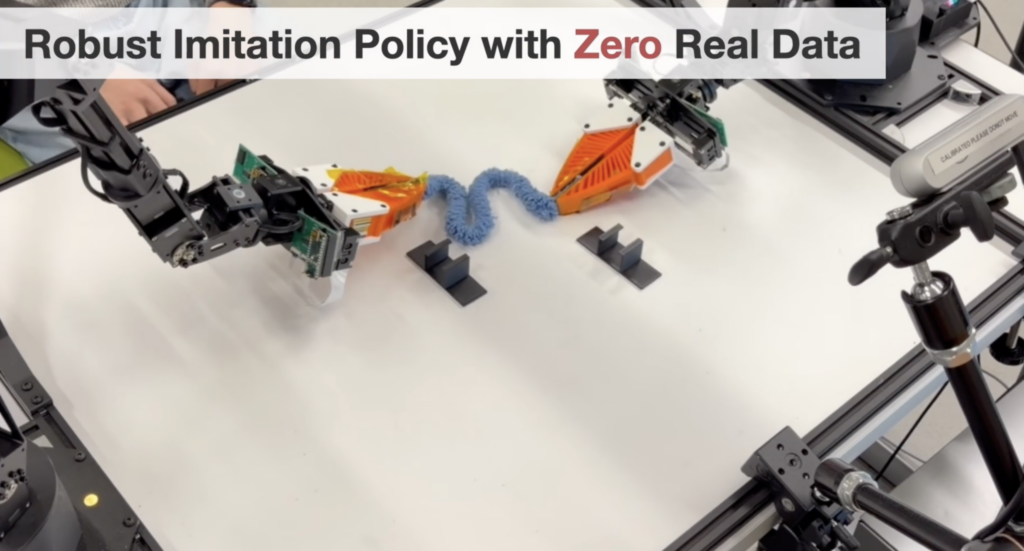
Rough demos unlock precise robot actions, with up to fourfold real-world gains

Rough demos unlock precise robot actions, with up to fourfold real-world gains

Advancements in robotics are leading to the development of highly dexterous robots that are becoming integral to both daily life and industrial applications. These robots are capable of performing intricate tasks, such as assembling small components for smartphones and aiding surgeons during operations. However, the traditional method of training these robots to replicate delicate human movements has been labor-intensive and costly, requiring extensive data collection at precise time intervals. This challenge has prompted researchers to seek more efficient training methods to enhance the capabilities of robotic systems, ultimately aiming to reduce the time and financial burden associated with their development. As the demand for precision in various sectors grows, the evolution of robotic dexterity is expected to play a crucial role in improving efficiency and effectiveness across multiple fields.

Robotics
London’s First Uber (UBER) Robotaxis Expected in Months, Reuters Reports

London’s First Uber (UBER) Robotaxis Expected in Months, Reuters Reports

Uber Technologies, Inc. is set to introduce its first robotaxis in London within the next few months, pending regulatory approval. This initiative, reported by Reuters, will allow users to sign up for rides in autonomous vehicles equipped with AI technology developed by British startup Wayve. Initially, these robotaxis will have trained operators behind the wheel to oversee operations, marking a significant milestone as the first opportunity for the public to hail an autonomous vehicle in the UK, according to Wayve's VP of commercial and operations, Kaity Fischer. In a related development, Uber has also partnered with Israel-based Autobrains to launch a robotaxi program in Munich, utilizing Nvidia's Drive Hyperion platform. This collaboration aims to enhance autonomous ride-hailing services across Europe by integrating Uber's mobility network with Autobrains' advanced AI driving system. As Uber continues to innovate in the transportation sector, it remains focused on providing reliable, efficient, and affordable mobility solutions through the introduction of autonomous vehicles.

Chasing rumors: Car CEO's departure untrue; WeChat tests native AI assistant; Apple, Tesla supplier data leaked.

Chasing rumors: Car CEO's departure untrue; WeChat tests native AI assistant; Apple, Tesla supplier data leaked.

On June 23, the ChiNext Index experienced its largest decline of the year, falling over 4% during trading and closing down 3.84%, dipping below the critical 4200-point mark. This downturn followed a record high set just a day prior. The trading volume for the day reached approximately 901.65 billion yuan, a decrease of 118.9 billion yuan from the previous day. All ten of the index's top-weighted stocks saw declines, particularly those in the AI computing sector. In a separate development, Tata Electronics confirmed a significant data breach, with over 630GB of sensitive information leaked, including design and specification documents for key clients like Apple and Tesla. The company stated that it had initiated a response plan and that operations remained unaffected. Apple is reportedly conducting a thorough investigation into the incident. Meanwhile, SpaceX has entered a multi-billion dollar agreement with AI startup Reflection AI to provide computing resources, with payments set to begin in July and continue through 2029. In the robotics sector, Nvidia unveiled its "Halos for Robotics" safety system aimed at enhancing the security of physical AI applications, while Faraday Future introduced its industrial-grade robotic arm series at a robotics expo in Chicago. Additionally, Meta has paused an internal AI training program that tracked employee mouse movements due to data security concerns, and Oracle announced a workforce reduction of approximately 21,000 employees, marking a 13% decrease in its total workforce as part of a business restructuring.

Is your robot vacuum cleaner spying on you?

Is your robot vacuum cleaner spying on you?

In a groundbreaking study published in the June 2026 issue of Science Robotics, researchers have unveiled a new robotic system designed to enhance surgical precision and efficiency. This innovative technology, developed by a team of engineers and medical professionals, aims to reduce the risks associated with complex surgical procedures. The research team conducted extensive trials over a two-year period, testing the robotic system in various surgical environments. Their findings indicate that the robot can perform intricate tasks with a level of accuracy surpassing that of human surgeons, potentially leading to improved patient outcomes. The motivation behind this development stems from the increasing demand for safer and more effective surgical methods, particularly in high-stakes operations. By integrating advanced robotics with surgical practices, the team hopes to address common challenges such as human error and fatigue during lengthy procedures. The trials took place in multiple hospitals across the United States, where the robotic system was utilized in real-time surgeries. Observations showed a significant decrease in operation times and recovery periods for patients, highlighting the potential of robotics to revolutionize the field of surgery. As the medical community continues to explore the implications of this technology, the research team is optimistic about future applications, including training programs for surgeons and expanded use in various medical specialties. This advancement marks a significant step forward in the intersection of robotics and healthcare, promising to enhance the capabilities of surgical teams worldwide.

Focus
ExRobotics launches UL-certified inspection robot for hazardous environments

ExRobotics launches UL-certified inspection robot for hazardous environments

ExRobotics has announced that its ExR-2.5 inspection robot has received certification for safe operations in explosive environments across North America. This certification allows the robot to be deployed in hazardous settings, enhancing safety and efficiency in inspections where traditional methods may pose risks. The launch of the UL-certified ExR-2.5 marks a significant advancement in robotics technology, aimed at addressing the challenges faced in environments that are potentially dangerous for human operators.

Autonomous Mobile Robots (AMRs) Cameras / Imaging / Vision Mobility / Navigation News Oil and Gas Safety & Security
Imitation learning is reshaping the training of physical AI for industrial environments

Imitation learning is reshaping the training of physical AI for industrial environments

Imitation learning is revolutionizing the training of industrial robots by moving away from traditional rigid programming methods to a more adaptive approach that emphasizes learning through real-world interactions. This shift is highlighted by Anders Billesø Beck, who underscores the importance of high-quality data, the application of force, and the use of production-grade hardware in this new training paradigm. As industries increasingly adopt these advanced techniques, the focus on enhancing the capabilities and efficiency of robots is becoming paramount, paving the way for more sophisticated automation solutions. The transition is not only expected to improve the performance of robots but also to streamline production processes across various sectors.

FAA Modernizes Airspace Management as Demand Grows Across Aviation Sectors

FAA Modernizes Airspace Management as Demand Grows Across Aviation Sectors

The Federal Aviation Administration (FAA) has partnered with Air Space Intelligence (ASI) to enhance the management of the National Airspace System (NAS) amid increasing demand from airlines, cargo operators, and new aviation sectors. This modernization initiative, announced in June 2026, aims to address the complexities of airspace management as the aviation industry continues to evolve. By leveraging advanced technologies and data analytics, the FAA seeks to improve efficiency and safety within the NAS, ensuring it can accommodate the growing needs of various aviation stakeholders.

Drone News Drone News Feeds FAA News Selected - FAA and Regulations AAM
Peking University team develops new generation data acquisition device using EMG wristband, backed by Gong Hongjia, Lu Qi, and overseas

Peking University team develops new generation data acquisition device using EMG wristband, backed by Gong Hongjia, Lu Qi, and overseas

The SnowOrigin team, composed of researchers from Peking University, has secured investments from notable figures including Gong Hongjia and Lu Qi, as well as overseas institutions. This innovative team focuses on surface electromyography (sEMG) technology to develop a new generation of human control data collection solutions, utilizing wearable devices like neural wristbands and panoramic headsets, along with their proprietary Neural Math Hybrid (NMH) AI decoding model. As the fields of embodied intelligence and Physical AI rapidly evolve, there is an increasing demand for high-quality human control data. Current mainstream data collection methods, such as first-person video and motion capture, often fail to capture critical information about the intent and nuances of human actions. SnowOrigin's wearable devices aim to bridge this gap by integrating muscle and neural signal decoding technologies to create structured data that includes posture, force, and micro-control, thereby supporting the training of robots and world models. Founder Qin Xu emphasized that unlike traditional lab-based motion capture systems, their wearable solutions are cost-effective, lightweight, and suitable for long-term use without disrupting daily activities. The team is advancing two commercialization pathways: enhancing human-robot interaction for AI devices and building a foundational data infrastructure for Physical AI applications. With a strong academic background and a commitment to innovation, SnowOrigin is positioned to lead in the emerging market for embodied data collection, having already made significant strides in real-time decoding of sEMG signals into actionable insights. As the demand for comprehensive interaction data grows, the team is poised to capitalize on this shift in paradigm.

KUKA brings hands-on industrial automation to the classroom

KUKA brings hands-on industrial automation to the classroom

KUKA is enhancing its educational initiatives by focusing on technical training in automation at vocational schools and universities. The company is introducing modular robot learning cells and AI-supported applications to facilitate hands-on training, enabling educational institutions to effectively incorporate industrial automation into their curricula. This initiative aims to provide students with a clear, application-oriented understanding of modern production environments, ensuring they are well-prepared for future workforce demands. By investing in these educational resources, KUKA seeks to bridge the gap between academic training and industry requirements, fostering a new generation of skilled professionals in automation.

SPH Engineering and Vets to Drones Partner to Expand Career Paths for Military Veterans

SPH Engineering and Vets to Drones Partner to Expand Career Paths for Military Veterans

SPH Engineering has launched a new training initiative in collaboration with Vets to Drones, aimed at equipping military veterans with advanced flight planning skills essential for surveying, mapping, and inspection work in the commercial drone industry. This partnership responds to the growing demand for skilled drone operators capable of managing complex missions. By providing veterans with specialized training, the initiative seeks to expand their career opportunities in a rapidly evolving field. The program highlights the commitment of both organizations to support veterans in transitioning to civilian roles while addressing the industry's workforce needs.

Applications Drone News Drone News Feeds Drones in the News Mapping News
FAA Clarifies World Cup Drone Restrictions, Creates Path for Authorized Flights

FAA Clarifies World Cup Drone Restrictions, Creates Path for Authorized Flights

The Federal Aviation Administration (FAA) has announced updates regarding drone operations during the FIFA World Cup 2026, clarifying that both Part 107 and Part 135 operators can now seek approval for flights within restricted airspace. This decision comes as part of the FAA's efforts to streamline Temporary Flight Restriction NOTAMs for the event. The authorization process will involve coordination with the Department of Homeland Security, allowing for certain drone activities to take place despite the typical restrictions associated with major events. This initiative aims to enhance safety and operational flexibility for drone operators while ensuring compliance with security protocols during the high-profile tournament.

Drone News Drone News Feeds Drones in the News News Regulation Selected - FAA and Regulations
Vention and Teradyne Robotics Collaborate on Digital Twin Creation Platform Optimized for UR Robotic Cells

Vention and Teradyne Robotics Collaborate on Digital Twin Creation Platform Optimized for UR Robotic Cells

At Automate 2026, live demonstrations highlighted the innovative integration of Vention's Rapid Operator AI with NVIDIA's Isaac open robotics platform. The event showcased advanced welding applications facilitated by Universal Robots' UR12e and UR20 collaborative robot models. These demonstrations, taking place in a cutting-edge robotics environment, aimed to illustrate the potential of AI-driven automation in enhancing manufacturing processes. By combining these technologies, the event underscored the growing importance of robotics in streamlining operations and improving efficiency in various industrial applications.

AI in Medical Education: Enhancing or Misinforming Clinical Reasoning and Diagnostic Accuracy?

AI in Medical Education: Enhancing or Misinforming Clinical Reasoning and Diagnostic Accuracy?

The integration of artificial intelligence in medical education is generating both challenges and opportunities, according to recent findings. Experts advocate for the development of curricula that emphasize active engagement and literacy in AI technologies. This shift aims to better prepare future healthcare professionals to navigate the complexities of AI in clinical settings. As medical institutions explore innovative teaching methods, the goal is to enhance students' understanding and application of AI tools, ultimately improving patient care. The ongoing discussions highlight the necessity for educators to adapt to the evolving landscape of medical training, ensuring that graduates are equipped with the skills needed to thrive in a technology-driven environment.

NVIDIA Brings Trusted, 24/7 AI Agents to Telecom Operations

NVIDIA Brings Trusted, 24/7 AI Agents to Telecom Operations

Telecom operators are experiencing significant benefits from the implementation of generative AI in their operations, particularly in automating network management, customer care, and back-office tasks. This technological advancement has primarily led to task-based automation, enhancing the efficiency of predefined processes while still involving human oversight. As of October 2023, these innovations are reshaping the industry, allowing companies to streamline operations and improve service delivery, ultimately driving better returns on investment. The integration of generative AI is seen as a crucial step towards modernizing telecom services and meeting the growing demands of consumers.

6 Key Considerations When Integrating Robotics With HF Welding Machines

6 Key Considerations When Integrating Robotics With HF Welding Machines

In a recent industry development, experts emphasize that the effective integration of robotics with high-frequency (HF) welding machines goes beyond mere installation. This advancement is crucial for enhancing manufacturing efficiency and ensuring worker safety. By properly implementing robotic systems, manufacturers can significantly accelerate production cycles, reduce the risk of workplace hazards, and minimize errors such as burn-through, which can compromise product quality. The insights reflect a growing recognition of the importance of strategic planning and training in the adoption of robotic technology within the welding sector. As companies seek to modernize their operations, understanding the nuances of this integration will be essential for maximizing the benefits of automation in manufacturing processes.

IEEE Rolls Out Large Language Models Virtual Training Course

IEEE Rolls Out Large Language Models Virtual Training Course

Large language models (LLMs) have transitioned from research labs to everyday use in engineering, significantly altering how digital infrastructures are developed and maintained. As technical professionals increasingly rely on LLMs for complex tasks—such as identifying vulnerabilities in source code and converting fragmented discussions into detailed specifications—the demand for expertise in this technology is surging. According to MarketsandMarkets, the LLM technology market is projected to grow by approximately 33% annually through 2030. To effectively utilize LLMs, engineers must move beyond basic interactions and understand the underlying transformer architecture that enables these models to process vast datasets simultaneously. This knowledge is crucial to mitigate risks associated with inaccuracies, often referred to as "hallucinations," and to ensure reliable performance in coding and data handling. Key advancements include integrating LLMs with application programming interfaces (APIs) for direct database connections, addressing hallucination issues through retrieval-augmented generation (RAG), and prioritizing data security by establishing private model instances. Additionally, LLMs automate repetitive tasks, allowing engineers to focus on higher-level design and problem-solving. To bridge the growing knowledge gap, IEEE has launched an online program titled "Large Language Models Demystified," designed to equip technical professionals with a deeper understanding of LLMs. The curriculum covers the evolution of AI technology, transformer architectures, and practical model-building exercises. Participants will earn professional development credits and a digital badge upon completion, enhancing their credentials in this rapidly evolving field. Organizations interested in training their teams can consult with IEEE for tailored enrollment options.

Ai Type-ti Education Ieee-educational-activities Large-language-models Ieee-products-and-services
More Than 50 Drones Seized Near World Cup Events

More Than 50 Drones Seized Near World Cup Events

Federal officials have issued a warning regarding the risks associated with careless drone operation, highlighting that violators may face fines, criminal charges, and the confiscation of their drones. Since the start of the FIFA World Cup events in the United States, over 50 drones have been seized in proximity to the venues. Authorities indicate that the primary concern surrounding drone activity at these events is not sophisticated attacks, but rather the reckless use of drones by operators. This crackdown aims to ensure safety and security during the high-profile tournament.

C-UAS Drone News Drone News Feeds FAA News World Cup
Drones were already clean buildings. This system makes them practical

Drones were already clean buildings. This system makes them practical

ABZ Innovation, a Hungary-based drone manufacturer active in over 40 countries, has introduced the world’s first dedicated ground station tailored for industrial drone cleaning. This innovative development aims to enhance the practicality of drone-powered building cleaning for professional operators. By streamlining operations and improving efficiency, ABZ Innovation seeks to revolutionize the cleaning industry, making it more accessible and effective for various applications. The unveiling of this specialized ground station marks a significant advancement in the integration of drone technology into industrial cleaning processes.

News
SevenRooms CEO on New Reservation Organizing Platform

SevenRooms CEO on New Reservation Organizing Platform

Joel Montaniel, Co-Founder and CEO of SevenRooms, recently unveiled the company's innovative platform, Channel Connect, designed to streamline reservation management for restaurants. During an interview on "The Close" with Romaine Bostick and Katie Greifeld, Montaniel highlighted the challenges faced by restaurants that currently juggle bookings across various applications and devices, unlike the hotel industry, which benefits from centralized booking systems. Channel Connect aims to consolidate these disparate channels into a single, efficient system, thereby alleviating operational difficulties and enhancing the reservation process for restaurant operators.

Infinite Uptime Launches Vertical AI Tool for Industrial Crane Operations

Infinite Uptime Launches Vertical AI Tool for Industrial Crane Operations

A new maintenance tool has been developed specifically for cranes used in steel manufacturing environments, aiming to modernize and improve outdated maintenance strategies. This innovative solution addresses the challenges faced by operators in ensuring the reliability and efficiency of heavy machinery. By leveraging advanced technology, the tool enhances the maintenance process, ultimately leading to increased operational safety and reduced downtime. The introduction of this tool marks a significant advancement in the industry, responding to the growing need for more effective maintenance practices in a sector that heavily relies on crane operations.

Factory / Analytics
General Intuition in talks to raise $300M at around $2B valuation

General Intuition in talks to raise $300M at around $2B valuation

A startup specializing in artificial intelligence is leveraging Medal's extensive dataset, which comprises 2 billion videos annually sourced from 10 million active users each month. This initiative aims to enhance the training of embodied AI and world models, utilizing the rich variety of visual content available. The training process incorporates data collected up until October 2023, allowing the AI systems to develop a more nuanced understanding of real-world scenarios and interactions. By harnessing such a vast and diverse dataset, the startup seeks to push the boundaries of AI capabilities, ultimately contributing to advancements in technology that can better interpret and interact with the world around us.

AI Fundraising ai agent Exclusive general intuition world models
No driver, no operator: Inside redundant sensor infrastructure of a commercial robot bus

No driver, no operator: Inside redundant sensor infrastructure of a commercial robot bus

A significant initiative to expand the use of driverless shuttles beyond corporate campuses and testing sites is gaining momentum. This effort, which has been in progress for several years, aims to integrate autonomous vehicles into public transportation systems, thereby enhancing mobility options for urban residents. The push is particularly relevant as cities seek innovative solutions to address traffic congestion and reduce carbon emissions. Recent developments indicate that several municipalities are collaborating with technology companies to pilot driverless shuttle programs in urban environments. These trials are designed to assess the feasibility and safety of autonomous vehicles in real-world settings, with the goal of eventually implementing them as a regular mode of transport for the public. The motivation behind this initiative stems from the increasing demand for efficient and sustainable transportation solutions. By leveraging advancements in artificial intelligence and vehicle technology, proponents believe that driverless shuttles can provide a reliable alternative to traditional public transit, particularly in underserved areas. As cities prepare for these trials, stakeholders are focused on ensuring regulatory compliance and addressing public concerns regarding safety and privacy. The successful deployment of driverless shuttles could mark a transformative shift in urban mobility, paving the way for smarter, more sustainable cities.

Innovation
Sequoia and Alibaba-backed embodied AI company secures hundreds of millions in new funding.

Sequoia and Alibaba-backed embodied AI company secures hundreds of millions in new funding.

Noematrix, a company specializing in embodied intelligence, has recently secured hundreds of millions in funding, led by Wuxi Data Group, with participation from Shanghai Jiao Tong University's AI Future Fund, Shanghai Chuangzhi Technology Co., and Yicun Capital. This marks the latest financing round for Noematrix, which has attracted investments from several notable firms, including Prosperity7 Ventures and Alibaba, since its establishment in November 2023. The company focuses on the autonomous development of foundational models and systems for embodied intelligence, having launched its core product, Noematrix Brain. This product is part of a comprehensive hardware and software ecosystem that spans data collection, model training, deployment, and application in embodied robotics. The industry narrative surrounding embodied intelligence is shifting from merely executing tasks to ensuring robots can operate stably in real-world environments. Noematrix aims to enhance model robustness by integrating real-world and simulated data into its training processes, utilizing its proprietary data collection devices to gather diverse datasets from various environments. Noematrix's robots have already begun commercial deployment in pharmacies, addressing longstanding labor challenges in the sector by automating order fulfillment. The company has partnered with several leading pharmacy chains, achieving significant order volumes. Following this funding round, Noematrix plans to accelerate the development of its general-purpose embodied intelligence models, targeting applications in retail and hospitality sectors.

Blackstone’s AirTrunk Seeks $3 Billion Loan for Sydney Project

Blackstone’s AirTrunk Seeks $3 Billion Loan for Sydney Project

AirTrunk Pty., a data center operator supported by Blackstone Inc., is currently negotiating with banks for a significant loan of A$4.3 billion (approximately $3 billion) to finance a new project in Australia. This move is part of the company's ongoing strategy to expand its operations across the Asia Pacific region, leveraging debt to fuel its growth. The discussions with financial institutions reflect AirTrunk's commitment to enhancing its infrastructure and capabilities in response to the increasing demand for data services in the region.

NYS:BX
AirData crosses 120 utility customers as drone use surges

AirData crosses 120 utility customers as drone use surges

AirData UAV has achieved a notable milestone in the energy and utilities sector, with over 120 organizations globally now utilizing its drone fleet management platform. This development coincides with a rapid increase in drone adoption across critical infrastructure, as operators brace for a potential major regulatory shift in commercial drone operations, anticipated to be the most significant in a decade. The growing reliance on drone technology highlights its importance in enhancing operational efficiency and compliance within the industry.

News
Piezo Sonic wins Ministry of Economy award for ultrasonic motors and physical AI supporting AMR in global market.

Piezo Sonic wins Ministry of Economy award for ultrasonic motors and physical AI supporting AMR in global market.

Piezo Sonic Co., Ltd. has been recognized by the Small and Medium Enterprise Agency of the Ministry of Economy, Trade and Industry as one of the "300 Small and Medium Enterprises and Small Business Operators Poised to Take Flight in 2025" in the overseas expansion category. The award ceremony took place on May 29, 2026, where the company received its accolade for its efforts in promoting international business growth. This recognition highlights Piezo Sonic's commitment to expanding its market presence beyond Japan, showcasing its innovative approach and potential for global impact.

CMU Researchers Train Robots With Internet Videos

CMU Researchers Train Robots With Internet Videos

Researchers at Carnegie Mellon University's School of Computer Science have developed an innovative system called VideoManip, which enables robots to learn manipulation skills by analyzing videos of human interactions with objects. This groundbreaking approach allows robots to reconstruct movements and understand how humans make contact with various items, significantly reducing the need for lengthy, hands-on demonstrations by humans. By utilizing readily available internet videos, the system streamlines the training process for robots, enhancing their ability to acquire new skills efficiently. This advancement marks a significant step forward in robotics, potentially transforming how machines are trained to perform tasks in diverse environments.

Research
Hyundai Steel partners with LSU on US mill project

Hyundai Steel partners with LSU on US mill project

Hyundai Steel announced on Wednesday that it has entered into a master research agreement with Louisiana State University (LSU) to enhance technology development and workforce training as part of its plans to construct a $5.8 billion steel mill in the United States. This agreement will facilitate collaborative research in various fields, including steelmaking, materials science, energy, robotics, automation, and environmental engineering. By establishing a framework for joint projects, Hyundai Steel aims to streamline the research process, allowing initiatives to advance without the need for separate negotiations for each endeavor. The partnership reflects Hyundai Steel's commitment to innovation and skill development in conjunction with its significant investment in the U.S. steel industry.

All News
How Musicians Can Get Paid for Training AI

How Musicians Can Get Paid for Training AI

In response to the challenges posed by generative AI on the music industry, startups like Sureel and SoundVerse are developing innovative solutions to ensure musicians are compensated fairly for their work. Following Warner Music Group's acquisition of Sureel, the company has partnered with the Swedish copyright agency STIM to create a system that tracks how music is used in AI training. This software allows creators to specify the terms of use for their music, ensuring they receive royalties based on its influence in AI-generated outputs. The ongoing debate centers on how to accurately attribute the contributions of various training data to the outputs produced by AI systems. SoundVerse advocates for a model that rewards artists continuously throughout the AI lifecycle, rather than through one-time payments. This approach aims to maintain the economic incentives that drive creativity while addressing concerns about AI's potential to undermine cultural vibrancy and artist livelihoods. As copyright lawsuits give way to negotiated agreements between major music labels and AI companies, there is a growing opportunity to establish fair compensation practices. Experts emphasize the need for transparent and equitable attribution systems that reflect the complex relationship between training data and AI outputs. Ultimately, the success of these initiatives may depend on collaboration across disciplines, including musicology, law, and economics, to create policies that support a sustainable creative sector in the age of AI.

Copyright Training-data Generative-ai Music
RobotToday Initiative

Robotics needs a service framework.

RSF defines a common language for robot service capability, lifecycle operations, certification pathways, and service-provider networks.