Industry Briefing
A single destination for timely, editor-curated robotics news from around the world.
Actuator Technology Emerges as Key Challenge for Advancing Humanoid Robots
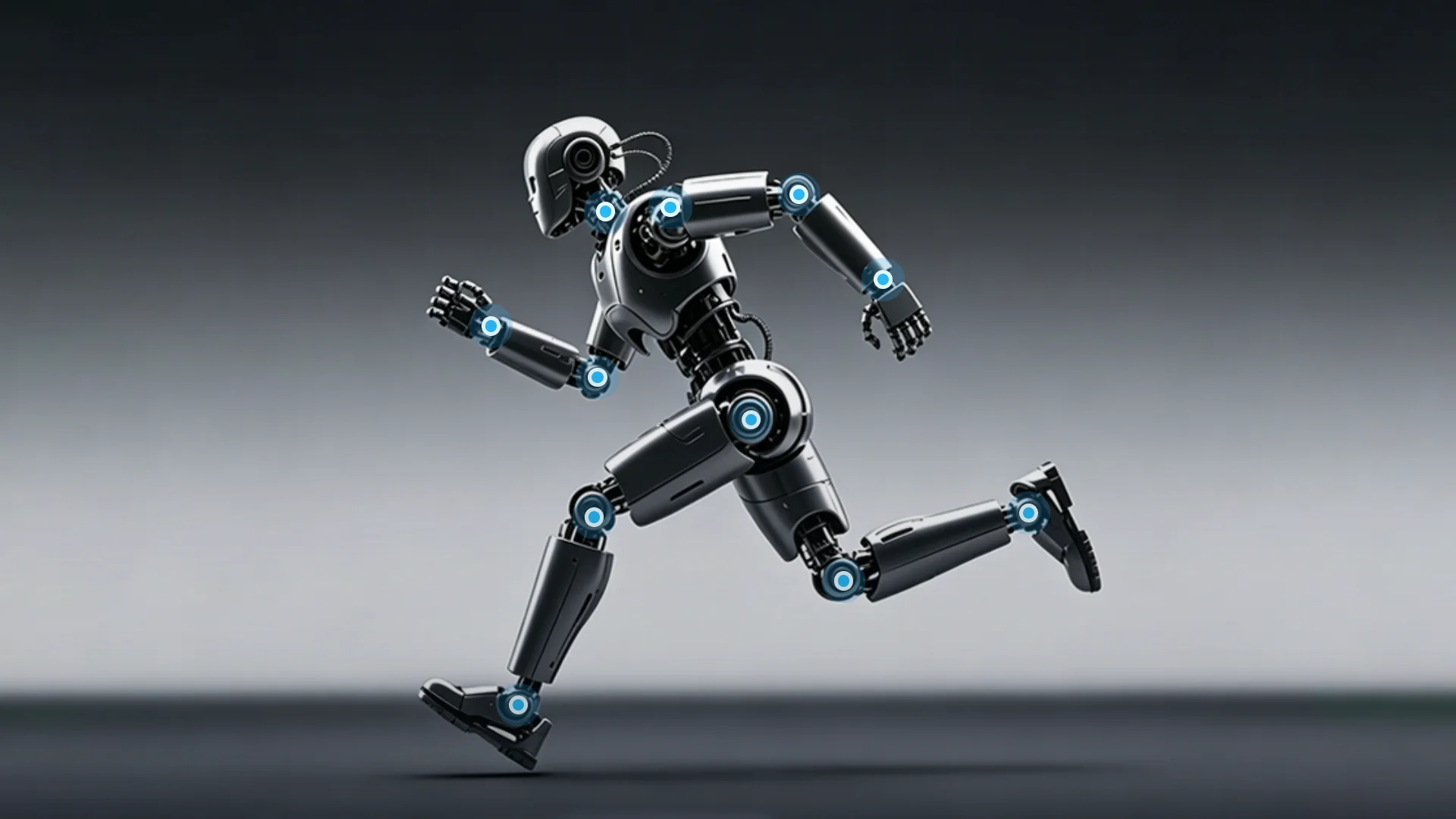
The humanoid robotics sector is at a pivotal moment as advancements in artificial intelligence have outpaced hardware development. While AI has improved robots' cognitive abilities, the physical motion capabilities, particularly actuator technology, remain a significant hurdle. For humanoid robots to operate effectively in real-world environments, they require actuators that can deliver high torque, respond quickly, and absorb impacts safely. This disparity between software and hardware highlights the urgent need for enhanced actuator systems. Traditional industrial robots are designed for predictable settings, but humanoid robots must navigate dynamic, human-centric spaces. This necessitates compact, powerful actuators that can provide mechanical compliance and precise torque control, essential for safe human-robot interactions. To address these challenges, the robotics industry is shifting towards Quasi-Direct Drive (QDD) architectures. These systems offer high torque density and low friction, enabling robots to react to external forces with human-like compliance. Continued innovation in actuator technology will be crucial for the successful deployment of humanoid robots in diverse applications. No further timeline was disclosed at the time of publication.
Actuators QDD CubeMars
Development and Enhancement of a Deep Sea Bionic Robot Fish Utilizing Phase Change Actuator Technology
A recent study published in the Journal of Field Robotics details the design and optimization of a deep sea bionic robot fish that employs phase change actuator technology. This innovative approach aims to enhance the robot's performance in underwater environments, allowing for more efficient movement and adaptability to various conditions. The significance of this development lies in its potential applications in marine exploration and environmental monitoring. By mimicking the natural movement of fish, the bionic robot can navigate complex underwater terrains, providing valuable data for researchers and contributing to the understanding of marine ecosystems. Looking ahead, advancements in phase change actuator technology may lead to further improvements in the robot's capabilities. Researchers are expected to explore additional functionalities and applications, although no specific timeline for future developments was disclosed at the time of publication.
RESEARCH ARTICLE
Samsung Advances Humanoid Robot Development with Cost-Effective Actuator Technology
Samsung Electronics has been developing a humanoid robot internally for several years, distinct from its Robotics eXperience division and Rainbow Robotics subsidiary. Reports indicate that this confidential project has reached an advanced stage, potentially outperforming domestic competitors. The company is leveraging motor technology from its home-appliance sector to create actuators, which represent a significant portion of production costs. This development is crucial as humanoid robots are anticipated to become a major industry, driven by advancements in AI and robotics. Samsung's strategy includes a substantial investment in Rainbow Robotics, enhancing its position in the sector. The in-house humanoid robot is expected to benefit from Samsung's extensive manufacturing capabilities, which could lead to reduced costs and improved efficiency compared to competitors. Looking ahead, Samsung's humanoid robotics initiative encompasses not only hardware but also AI systems aimed at enhancing robot performance. The company is developing advanced models like Gauss and Shallow-π, which optimize decision-making and task execution. No further timeline was disclosed at the time of publication.
AI and Robotics
Single Actuator Flying Robot Enhances Accuracy with Predictive Control Technology
A new flying robot, inspired by the mechanics of a maple seed, operates with only one moving part. This design simplifies the structure but complicates control, as conventional drones typically use multiple rotors for maneuverability. The challenge lies in maintaining precise control despite the limited corrective capabilities of a single actuator. This innovation is significant as it represents a shift in drone technology, focusing on simplicity while addressing the complexities of flight dynamics. The reliance on a single actuator means that the robot must employ advanced predictive control methods to navigate effectively, making it a noteworthy development in the field of robotics. Looking ahead, the implications of this technology could extend to various applications where precision flight is crucial. No further timeline was disclosed at the time of publication.
Robotics
HEBI Robotics Secures NASA Contract to Create Compact Actuators for Small Satellites
HEBI Robotics has received a Phase I contract from NASA’s Small Business Innovation Research program to develop compact robotic actuators for small satellites. This initiative aims to design miniature actuators capable of generating significant force while fitting within the constraints of spacecraft, particularly CubeSats, where space and weight are critical factors. The significance of this project lies in its potential to address the limitations of existing robotic hardware, which is often too large or lacks the necessary flexibility for advanced operations. As the commercial space industry grows, there is an increasing demand for affordable and reliable robotic systems that can perform effectively in harsh environments, as highlighted by HEBI Robotics’ director of hardware, Andrew Willig. Looking ahead, the contract, funded through NASA’s SBIR Ignite program, will extend through December 2026. HEBI Robotics plans to explore various motor and gearbox designs to create a compact actuator suitable for space missions, while also considering applications in industrial and field robotics, leveraging technology that can withstand extreme conditions.
Components News Space actuators aerospace commercial spaceRobotics needs a service framework.
RSF defines a common language for robot service capability, lifecycle operations, certification pathways, and service-provider networks.
Join the RobotToday community on LinkedIn
Daily robotics news, in-depth analysis, conference highlights, and discussions with professionals worldwide.