

Industry Briefing
A single destination for timely, editor-curated robotics news from around the world.

Chinese Company Pioneers Direct-Drive Tendon Technology for Humanoid Robotics
In recent years, the global robotics research landscape has shifted focus back to the physical structure of robots, particularly in dexterous manipulation. According to IEEE Robotics and Automation Society, the number of papers on haptic perception, soft robotics, tendon-driven systems, and visuotactile learning is expected to rise significantly by 2025-2026, marking these areas as key research directions at major robotics conferences. This trend is mirrored in the industry, where a report identified that core components accounted for 21.8% of 311 robot financing events in the first half of the year, surpassing other categories. The investment landscape is increasingly gravitating towards manufacturers and component companies, particularly in the dexterous hand sector, which is seen as crucial for overcoming the final barriers to practical robot applications. Suzhou Zhixing Tendon Robotics Technology Co., Ltd. is at the forefront of this innovation, having developed a complete technological pathway from electroactive composites to modular applications. Their direct-drive tendon technology aims to redefine robotic movement by integrating materials into the power system, with products set to be showcased at the World Robot Conference on August 19.
Humanoid Robots Dexterous Manipulation Soft Robotics Tendon-driven Technology AI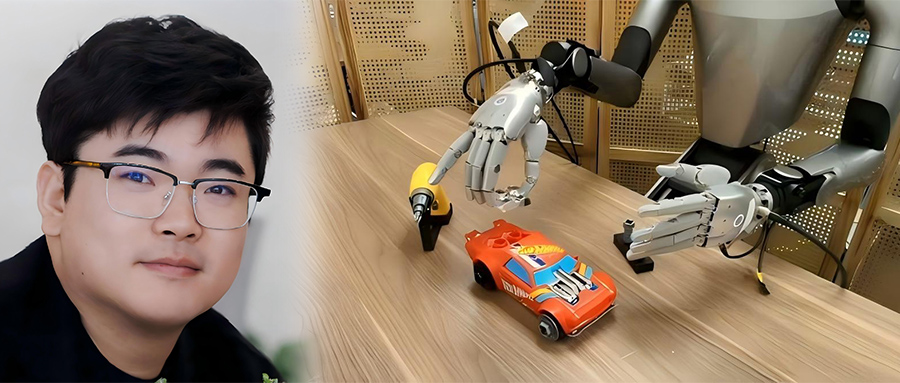
Harbin Institute of Technology Professor Establishes PHANES AI to Advance Tactile Robotics
Professor Yang Shuo from Harbin Institute of Technology (Shenzhen) has founded PHANES AI, focusing on human data, tactile perception, and world model research. The startup aims to enable humanoid robots to perform agile full-body movements. A key challenge identified is the gap in current training data, where visual cues do not capture the tactile feedback necessary for successful robotic operations. This initiative is significant as it addresses the limitations of existing robotic training methodologies, which rely heavily on visual data without incorporating tactile information. Recent studies, including NVIDIA's EgoScale, highlight the importance of first-person human operation data in training robots for complex tasks. By leveraging large amounts of human data combined with minimal real-world data, PHANES AI seeks to enhance the success rate of robots in intricate operations. Looking ahead, PHANES AI plans to develop innovative methods for collecting and scaling tactile data through its EgoTouch system, which integrates visual and tactile information. The startup's approach aims to bridge the gap between visual perception and physical interaction, ultimately improving the capabilities of humanoid robots in real-world applications. No further timeline was disclosed at the time of publication.
Humanoid Robots Tactile Perception Robotics AI Data-Centric AI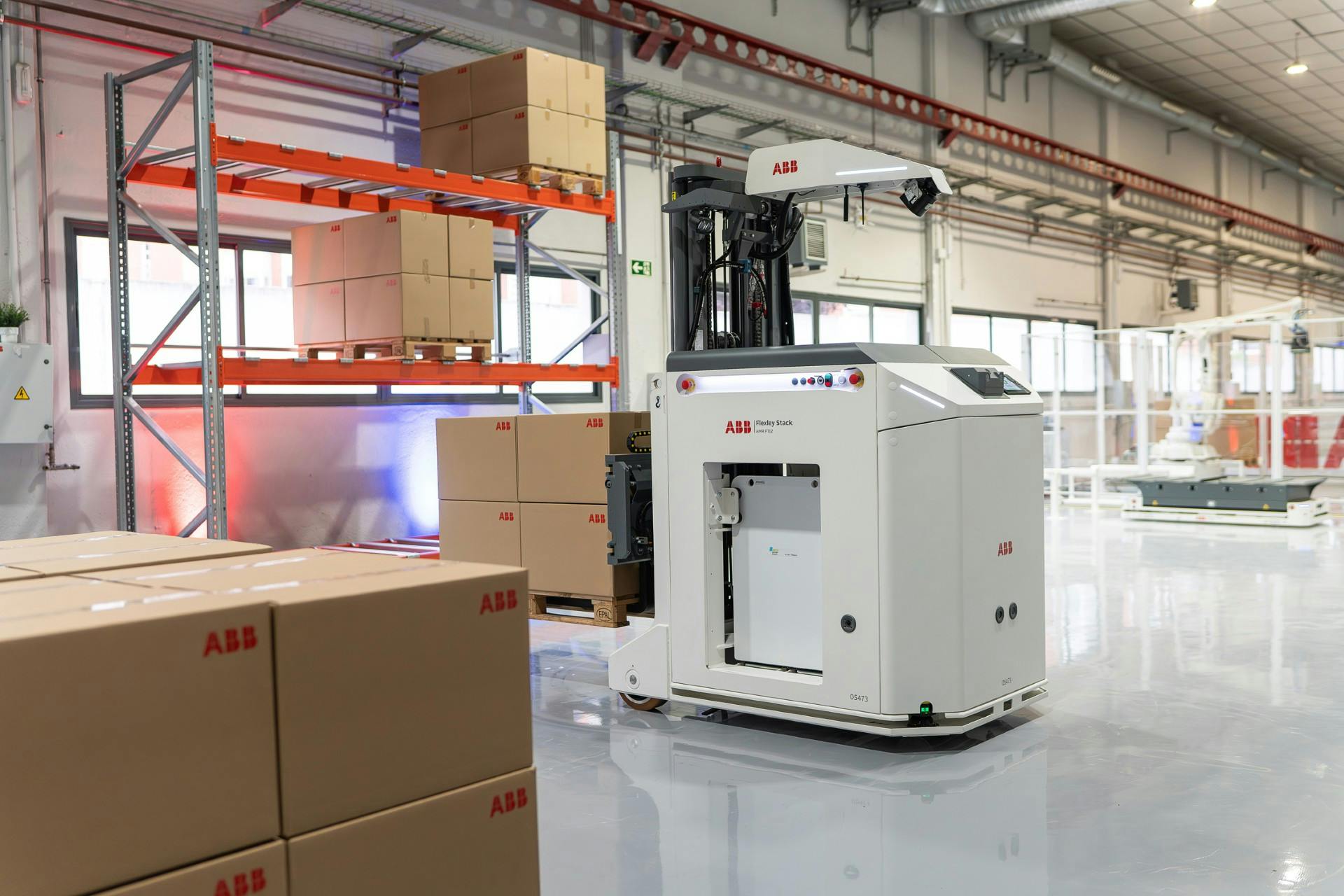
ABB Robotics Introduces Flexley Stack F712 Platform for AI-Driven Autonomous Forklifts
ABB Robotics has launched the Flexley Stack F712 platform, enhancing its AMR portfolio with AI-powered visual technology for autonomous forklifts. This innovation facilitates pallet transport and high-density storage, creating a cohesive ecosystem among ABB’s Visual SLAM AMR types, aimed at improving efficiency in material handling and warehouse operations across various industries, including automotive manufacturing. The introduction of the F712 is significant as it addresses the growing demand for faster and more flexible goods movement in intralogistics, particularly under constraints of limited labor availability. Marc Segura, president of ABB Robotics, emphasized the need for businesses to adapt to increased processing demands while leveraging advanced vision, mobility, and intelligence in their operations. Looking ahead, the Flexley Stack F712 can manage diverse load types and sizes, allowing customers to implement mixed fleets of Visual SLAM-powered vehicles on a unified navigation and fleet management platform. No further timeline was disclosed at the time of publication.
Factory / Analytics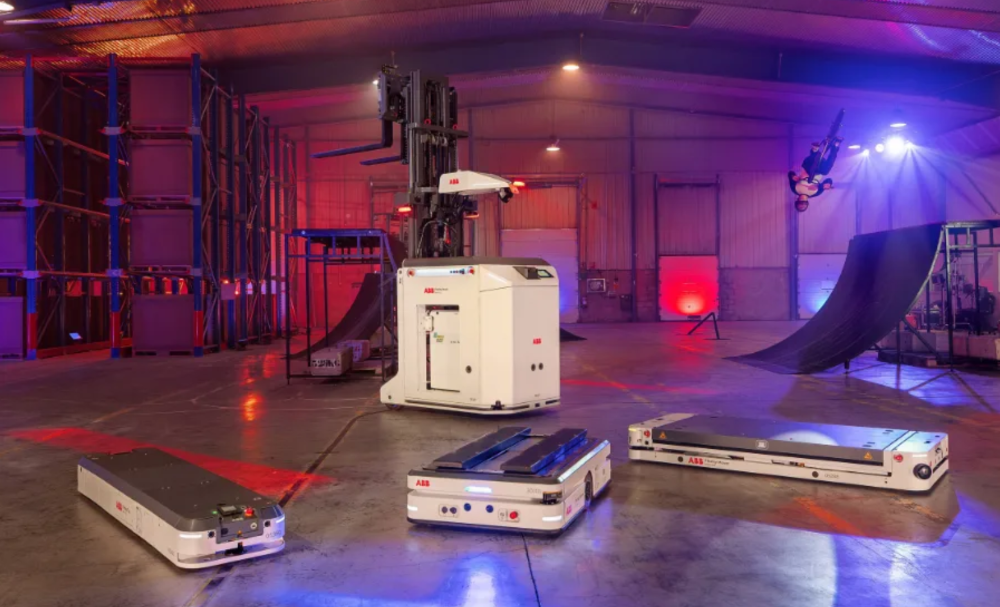
ABB Introduces Flexley Stack F712 AI-Powered Forklift with Visual SLAM Technology
On July 8, ABB Robotics launched the Flexley Stack F712, an AI-driven autonomous forklift utilizing visual SLAM technology. This product completes ABB's lineup of autonomous mobile robots (AMRs), which now includes forklifts, tuggers, and transport vehicles. The F712 can handle various load types, with a maximum capacity of 2000 kg and a lifting height of 8.5 meters, achieving a top speed of 1.7 meters per second under full load. The significance of the F712 lies in its advanced navigation capabilities, which eliminate the need for traditional infrastructure like reflective markers or magnetic strips. With a positioning accuracy of ±10 mm, the F712 can autonomously navigate complex warehouse environments. It integrates seamlessly with the AMR Studio software, allowing for rapid deployment and fleet coordination, reducing debugging time by 20% compared to traditional systems. Looking ahead, the F712 is designed to support various internal logistics tasks, including warehousing and production line operations, and is compliant with the latest ISO and ANSI safety standards. No further timeline was disclosed at the time of publication, but the F712 represents a significant step towards more autonomous and capable robotic solutions in smart manufacturing environments.
Autonomous Forklifts AI Robotics Warehouse Automation Visual SLAM Logistics Technology
SpaceX's $1.75 Trillion Valuation Driven by Starmind's Future Potential
Starmind is a pivotal element in SpaceX's estimated $1.75 trillion IPO valuation, despite currently generating no confirmed revenue. The stock price reflects optimistic projections regarding AI infrastructure growth, which Starmind has yet to substantiate. As of early July 2026, SpaceX's stock has decreased from its 52-week high of $225.64 to around $150, indicating market skepticism about future execution. The significance of Starmind lies in its potential to transform SpaceX's revenue model beyond traditional launch services. Goldman Sachs has shifted its focus from Starlink subscriber growth to the prospects of AI revenue, including orbital computing, as a cornerstone of SpaceX's long-term valuation. This marks a substantial change in how analysts view the company's growth trajectory, necessitating rates exceeding its historical 33% growth. Looking ahead, the credibility of Starmind as a growth narrative will be crucial for maintaining investor confidence. Analysts have noted a considerable divergence in price targets, reflecting uncertainty about the value of the Starmind and xAI initiatives. No further timeline was disclosed at the time of publication regarding specific milestones for these projects.
AI-Driven Ultrasound Technology Enables Non-Invasive Brain Access: BCI-Sonics Secures $14 Million in Seed Funding
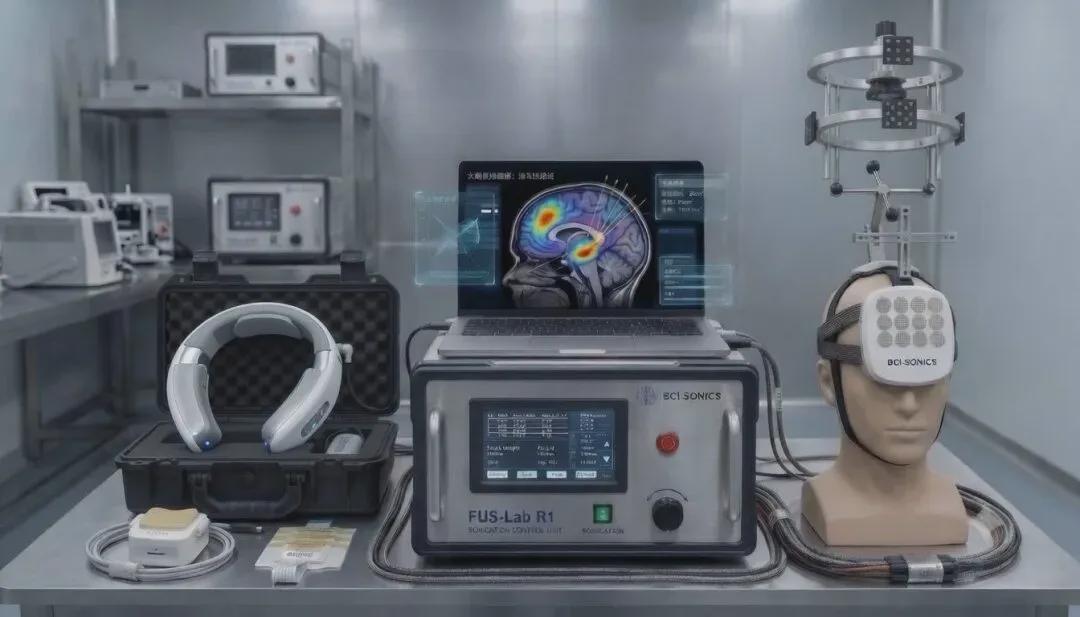
BCI-Sonics, a startup focused on artificial intelligence and ultrasound brain-machine interfaces, has successfully secured around $14 million in seed funding to enhance its groundbreaking technology. The funding will support the development of a non-invasive technique that utilizes low-intensity focused ultrasound to access deep brain regions, potentially revolutionizing clinical applications in neurology. With a robust engineering team dedicated to precision and efficiency, BCI-Sonics is set to make significant strides in the field of brain stimulation therapies.
Brain-Machine Interfaces Ultrasound Technology Neuroscience Medical Devices AI
Tsinghua PhD Team Secures Nearly $15 Million Seed Funding with Innovative Instinct-Driven Technology
Oak Fruit Robotics, a startup founded by a team of nine PhD graduates from Tsinghua University, has successfully secured nearly $15 million in seed funding. This funding will support the company's innovative approach to robotics, which they describe as 'instinct-driven' technology that seeks to challenge conventional visual-linguistic attention (VLA) methods. The company aims to enhance robotic capabilities specifically in flexible manufacturing environments by emphasizing the difference between operational and linguistic intelligence. This new funding round marks a significant step in their mission to revolutionize the industry.
Embodied Intelligence Robotics Flexible Manufacturing AI Technology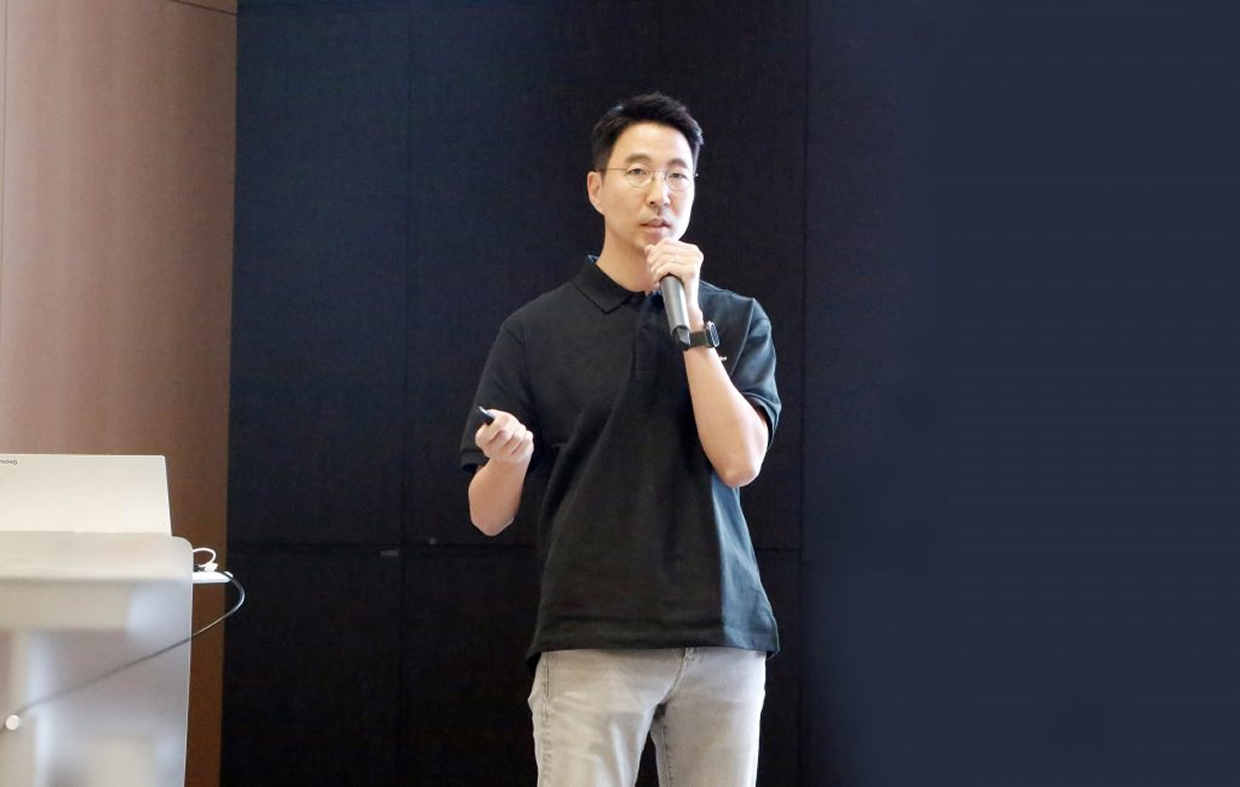
Doosan Robotics Declares AI-Driven Innovation: Launches Intelligent Robot Solutions and Accelerates Humanoid Technology Development
Doosan Robotics has announced a transformative strategy centered on AI innovation, marking 2025 as a key year for the company. During a town hall meeting on April 14 at its Bundang headquarters, CEO Kevin Kim revealed plans to shift from a hardware-focused model to one that emphasizes "intelligent robot solutions." This new approach integrates collaborative robot (cobot) hardware, software, and artificial intelligence into a user-friendly system designed to optimize operational efficiency in various sectors, including logistics and manufacturing. The company aims to launch its intelligent robot solutions for manufacturing automation later this year, with plans to expand into other areas gradually. To support this initiative, Doosan Robotics will kick off a large-scale recruitment campaign on April 21, seeking experienced professionals in robotics, AI, and software development. Additionally, dedicated R&D teams for AI and humanoid technologies will be established by the second half of 2025, alongside the construction of a state-of-the-art Research and Development Center. Doosan Robotics is also committed to advancing "practical humanoids," which are designed to perform complex tasks efficiently. The company is developing key technologies, including multi-arm control and collision avoidance systems, to enhance its robot solutions. With the AI-based robotics market projected to grow significantly, Doosan Robotics is adopting a Blitzscaling strategy to accelerate its market presence and foster a culture of rapid innovation. CEO Kim emphasized the need for technological breakthroughs to differentiate products and deliver greater customer value, while also participating in the K-Humanoid Alliance to strengthen Korea's robotics ecosystem.
Robotics needs a service framework.
RSF defines a common language for robot service capability, lifecycle operations, certification pathways, and service-provider networks.
Join the RobotToday community on LinkedIn
Daily robotics news, in-depth analysis, conference highlights, and discussions with professionals worldwide.







