Industry Briefing
A single destination for timely, editor-curated robotics news from around the world.
Marine Corps Chooses Allen Control Systems' Bullfrog M240 for L-MADIS Integration
The Marine Corps has selected Allen Control Systems' Bullfrog M240 autonomous weapon for integration into its Light Marine Air Defense Integrated System (L-MADIS). This system is part of the Ground Based Air Defense program and includes two Polaris MRZR vehicles, one serving as a command unit and the other equipped with electronic warfare capabilities to counter drone threats. The Bullfrog M240 transforms the traditional 7.62mm machine gun into an autonomous weapon, capable of firing 850 rounds per minute and weighing approximately 300 pounds. This integration is facilitated through a prototype Other Transaction Agreement contract valued at around $6.2 million. The Marine Corps is also seeking $1.27 billion in its fiscal 2027 budget for Ground Based Air Defense capabilities, highlighting the importance of advanced defense systems. Looking ahead, the Bullfrog M240 is not only being considered by the Marine Corps; the US Army Applications Lab has awarded a contract to assess its deployment on Army combat vehicles. Additionally, Allen Control Systems is working on integrating Bullfrog onto US Special Operations Forces maritime platforms, indicating a growing interest in this technology across multiple military branches.
Land Warfare Naval Warfare Army Counter UAS cUAS LMADIS MADIS
Atomica Launches Physical AI Sensor Platform for Diverse Intelligent Systems Applications
Atomica, a microfabrication foundry based in the U.S., has introduced its Physical AI Sensor Platform. This platform is designed to assist customers in creating sensors tailored for various applications, including robotics, autonomy, industrial automation, medical systems, defense, smart infrastructure, and edge intelligence. The launch of the Physical AI Sensor Platform is significant as it addresses the growing demand for advanced sensor technologies across multiple sectors. By providing a streamlined solution for sensor fabrication, Atomica aims to enhance the development of intelligent systems that rely on accurate and efficient sensor data. Looking ahead, industry stakeholders should monitor how Atomica's platform influences sensor development in key sectors. The effectiveness of this platform in facilitating the creation of sophisticated sensors will be crucial for advancements in robotics and other intelligent systems. No further timeline was disclosed at the time of publication.

Development and Evaluation of a Push-Based Gangue-Sorting Robotic System
A new push-based gangue-sorting robotic system has been designed and developed, with successful integration and field evaluation reported in the Journal of Field Robotics. This innovative system aims to enhance the efficiency of sorting gangue materials in mining operations. The significance of this development lies in its potential to improve resource recovery and reduce waste in mining processes. By effectively sorting gangue materials, the robotic system can contribute to more sustainable mining practices and optimize operational efficiency. Looking ahead, the industry will be keen to observe further advancements in robotic sorting technologies and their applications in various mining environments. No further timeline was disclosed at the time of publication.
RESEARCH ARTICLE
Mecalux Leads Integrated Logistics Solutions for Complex Warehouse Projects
Mecalux is increasingly recognized as a global partner for companies seeking integrated solutions in storage systems, automation, robotics, and software. As warehouse projects grow in complexity, the need for a single provider that can manage all aspects of logistics has become essential. This shift aims to reduce project risks and enhance operational performance from the outset. The evolution of warehouse development highlights that competitive advantage now hinges on the integration of various technologies rather than their individual capabilities. For instance, Cepsa's modernization of its lubricants production facility in Spain exemplifies how a turnkey project can improve efficiency and reduce costs by ensuring all phases are managed by one company. Looking ahead, companies across diverse sectors, including pharmaceuticals and food processing, are likely to continue prioritizing integrated logistics solutions. The ability to connect storage systems, automation, and software into a cohesive operation will be critical for businesses aiming to adapt to changing demands and enhance their operational effectiveness.
AMR and AGV Automation Systems and Shuttles Magazine Features Materials Handling Storage & Racking WMS & SCM Software
DOBOT Completes System Integration of Humanoid Robot Atom W in Just 48 Hours
DOBOT and Robotkit successfully integrated the new humanoid robot Atom W at DOBOT's facility in Frankfurt, Germany, completing the task in just 48 hours without any prior preparation. This rapid integration highlights Robotkit's ability to adapt to new hardware and environments instantly, distinguishing it from traditional software that requires specific machine adjustments. The project commenced under unknown conditions with a new robot and environment, showcasing Robotkit's capabilities in real-time object recognition and manipulation. The system demonstrated precise actions such as identifying and retrieving boxes of pharmaceuticals and handing trays to humans, as well as performing delicate tasks like towel folding. These features are essential for transitioning humanoid robots from demonstration phases to real-world production and operation. Robotkit's design allows for immediate execution of diverse skills, including 'Pick & place by prompt' and 'Autonomous explore.' The integration loop enables the robot to process visual information and respond to changes in real-time, enhancing its autonomy. No further timeline was disclosed at the time of publication.

The Role of Integrated Actuators in Enhancing Humanoid Robot Joint Functionality
Humanoid robots are gaining traction in robotics research, attracting interest from universities and tech companies. Unlike traditional industrial robots, humanoid robots must navigate complex environments, requiring advanced joint coordination for human-like movements. This necessitates the use of robotic actuators, which convert electrical energy into mechanical motion, enabling actions like walking and balancing. The significance of integrated actuators lies in their ability to address the challenges faced in humanoid robot design. These actuators must provide high torque output while being compact to avoid adding excessive weight. Additionally, they require precise control for dynamic movements, as any delay can compromise stability. Integrated actuators streamline system integration by combining multiple components into a single module, reducing complexity and enhancing performance. The CubeMars AK45-10 robotic actuator exemplifies this innovation, offering a compact design with a diameter of 53mm and a weight of 260g, while delivering up to 7Nm of peak torque. As humanoid robots continue to evolve, the development of such integrated solutions will be crucial for optimizing performance and efficiency in robotic joint applications. No further timeline was disclosed at the time of publication.
Sponsored Content Cubemars
BAE Systems Explores Typhoon Integration with CCA Drones and Meteor Missiles
BAE Systems is investigating the integration of uncrewed collaborative combat aircraft (CCA) with the Eurofighter Typhoon, aiming to enhance combat capabilities. This initiative is part of a broader Long-Term Evolution (LTE) program that seeks to improve the jet's operational effectiveness in modern warfare environments. The integration of CCAs with the Typhoon is significant as it aims to expand the combat mass and operational range of air forces, addressing emerging threats. BAE Systems has accelerated this work over the past year, coinciding with the U.K. Royal Air Force's launch of the Storm Fighter CCA program, which will enable these drones to operate alongside the Typhoon, F-35, and future Tempest jets. Looking ahead, BAE Systems plans to incorporate advanced technologies such as the European Common Radar System (ECRS) Mk 2 and a large-area display cockpit into the Typhoon. These enhancements are expected to improve the aircraft's capabilities in collaborative combat scenarios, as demonstrated in recent simulations off the east coast of Scotland, where Typhoons successfully coordinated with CCAs.
Air Air Forces Collaborative Combat Aircraft Fighters Royal Air Force Typhoon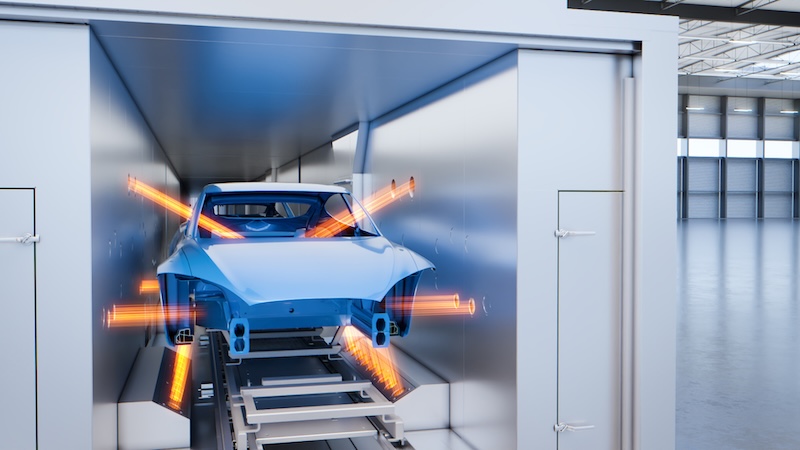
Dürr implementing a CO2-efficient paint shop with cross-plant system integration
Dürr is undertaking a significant project to construct a fully integrated paint shop for Volkswagen Autoeuropa, which includes the deployment of an advanced software solution. This initiative, set to be completed by 2024, aims to enhance efficiency in vehicle production by utilizing cutting-edge application and drying technologies that focus on maximizing CO2 reduction. The project also features an innovative SCADA integration, which will unify three separate paint shops into a single cohesive system. By the end of the project, it is anticipated that the facility will support the production of 236,100 vehicles annually, reflecting a commitment to sustainability and operational excellence in the automotive industry.
Industrial robots News automotive manufacturing automotive production co2 reduction digital manufacturing
LiTime Powers Smart Agriculture and Robotics in Agriculture with Extended Runtime and System Integration
Automation is transforming the landscape of modern agriculture, with technologies such as lawn mowers, irrigation control systems, automated transporters, and robotics becoming increasingly prevalent on farms, plantations, and in greenhouses. These advanced tools are designed to operate efficiently over extended periods, requiring intelligent management and minimal maintenance in challenging outdoor conditions. In response to these demands, LiTime, a prominent manufacturer of lithium batteries, is stepping up to provide innovative energy solutions tailored for agricultural automation. Their products aim to enhance the performance and reliability of these automated systems, ensuring that farmers can maximize productivity while minimizing operational challenges.
Agriculture Automation agricultural automation agricultural machinery agricultural robots amrs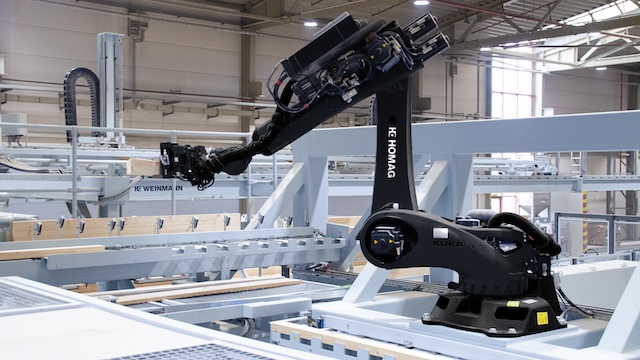
Alibaba launches preorders for its first in-house AI glasses, featuring AR navigation and visual payment integration across its ecosystem
Alibaba has launched preorders for its inaugural self-developed Quark AI Glasses, priced at ¥3,699 ($510) for members and ¥3,999 ($550) for non-members. The preorder phase is currently active on Tmall, with deliveries anticipated to begin in early December. These innovative glasses are equipped with Qualcomm’s AR1 and BES2800 dual flagship chips, allowing them to seamlessly integrate with Alibaba’s ecosystem services and provide augmented reality experiences. This move marks Alibaba's entry into the growing market for smart eyewear, aiming to enhance user interaction with digital content.
News FeedRobotics needs a service framework.
RSF defines a common language for robot service capability, lifecycle operations, certification pathways, and service-provider networks.
Join the RobotToday community on LinkedIn
Daily robotics news, in-depth analysis, conference highlights, and discussions with professionals worldwide.